
French presidential candidate renews call for Israel to free Palestinian doctor
French presidential hopeful Jean‑Luc Mélenchon has once again pressed Israel to release Dr Hussam Abu Safiya, the director of Gaza’s Kamal Adwan Hospital, who has been held without charge since December 2024.
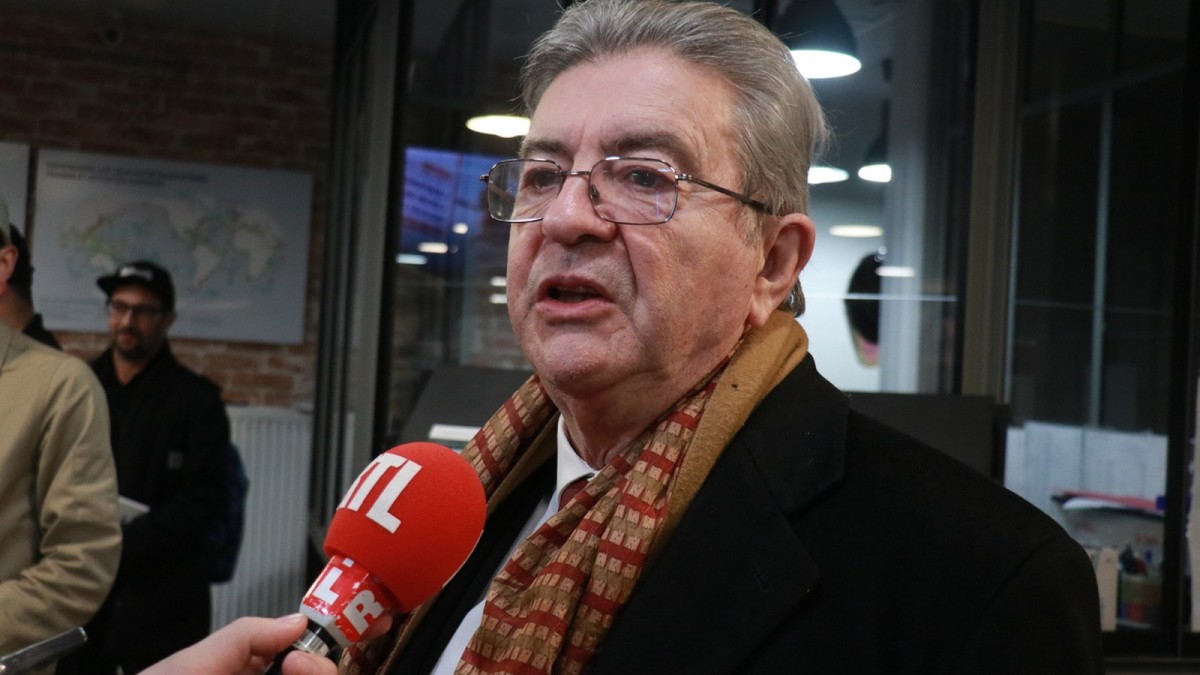
French presidential hopeful Jean‑Luc Mélenchon has once again pressed Israel to release Dr Hussam Abu Safiya, the director of Gaza’s Kamal Adwan Hospital, who has been held without charge since December 2024. Mélenchon’s appeal, shared on the social‑media platform X and accompanied by an Amnesty International petition, underscores a growing international concern that the detention of a senior medical professional violates both humanitarian norms and basic human rights. The case illustrates how the prolonged incarceration of a single doctor reverberates through Gaza’s already strained health system, leaving patients without the care of a seasoned leader and highlighting the broader legal questions surrounding Israel’s use of its Unlawful Combatants Law.
Background to the detention
On 27 December 2024, Israeli forces conducted a raid on Kamal Adwan Hospital, a key medical facility in the Gaza Strip. During the operation, Dr Hussam Abu Safiya, then serving as the hospital’s director, was taken into custody along with several other individuals. Video footage captured before his detention shows Abu Safiya walking alone in his white coat through rubble, approaching Israeli tanks. The image has become emblematic of the precarious conditions under which Gaza’s health workers operate, navigating the wreckage of conflict while attempting to provide care.
Since that day, Abu Safiya has remained in detention. Israeli authorities have not presented formal charges, and the legal basis for his continued imprisonment has been repeatedly extended under the Unlawful Combatants Law, a statute that permits indefinite detention without trial for individuals deemed to be engaged in hostilities. The first extension occurred on 28 April 2025, and a subsequent six‑month extension was ordered by the Beersheba District Court on 18 November 2026. Both extensions have been made without the presentation of evidence or a trial, raising serious concerns under international humanitarian law, which requires that detainees be afforded due process and that any restrictions on movement be proportionate and justified.
The human cost of losing a hospital director
Abu Safiya’s role at Kamal Adwan Hospital extended far beyond administrative duties. As director, he coordinated the delivery of emergency services, oversaw the allocation of scarce medical supplies, and mentored younger physicians working under extreme pressure. His detention has left a leadership vacuum at a facility already grappling with shortages of electricity, water, and essential medicines. Patients who once relied on his expertise now face longer wait times and reduced access to specialized care, a situation that compounds the trauma of living under blockade and intermittent bombardment.
Family members of patients have reported heightened anxiety, fearing that the hospital’s capacity to treat severe injuries and chronic illnesses is diminishing. The psychological impact on health workers is also profound; staff who witnessed the raid and the subsequent removal of their director speak of a lingering sense of vulnerability and helplessness. In a context where medical personnel are already targeted, the removal of a senior figure like Abu Safiya sends a chilling message that even those dedicated to humanitarian service are not immune from punitive measures.
International legal dimensions
Under the Fourth Geneva Convention, medical personnel are afforded special protection, and any detention must be justified, necessary, and accompanied by procedural safeguards. The extension of Abu Safiya’s detention under the Unlawful Combatants Law, without charge or trial, appears to contravene these protections. International human‑rights bodies have repeatedly warned that the use of such legal mechanisms to detain civilians, including health workers, risks eroding the distinction between combatants and non‑combatants, a cornerstone of the law of armed conflict.
The fact that the Beersheba District Court has continued to extend the detention without presenting evidence further deepens the legal controversy. Critics argue that such practices undermine the right to a fair trial, enshrined in the International Covenant on Civil and Political Rights, to which Israel is a party. The lack of transparency surrounding the allegations—if any—against Abu Safiya fuels accusations that the detention is punitive rather than security‑driven.
French political response
Jean‑Luc Mélenchon, founder of the left‑wing La France Insoumise (LFI) party and a candidate for the 2027 French presidential election, has used his platform to highlight Abu Safiya’s plight. In a video message recorded with fellow LFI lawmaker Mathilde Panot, Mélenchon emphasized that the doctor had remained at his post until the day of his arrest, refusing to abandon his patients. He framed the demand for Abu Safiya’s release as a broader call to protect all doctors, asserting that defending one medical professional is tantamount to defending the entire health‑care sector in Gaza.
Beyond his public statements, Mélenchon shared a link to an Amnesty International petition on X, urging the international community to pressure Israel for the doctor’s release. The French candidate’s advocacy reflects a growing trend among European left‑wing politicians to foreground human‑rights concerns in the Israeli‑Palestinian conflict, often clashing with the diplomatic stances of their governments. In this case, the French government has previously sought “functional” ties with the next Israeli administration while also navigating domestic pressures to address alleged Israeli violations of international law.
Israeli security rationale and its limits
Israeli authorities have characterized Mélenchon and Panot as taking an “extremely hostile” stance toward Israel, a label that has been used to justify an entry ban on the two French politicians. The ban reflects a broader pattern of Israel restricting access to foreign officials who publicly criticize its policies in the occupied territories. While Israel maintains that its security measures, including the Unlawful Combatants Law, are necessary to combat terrorism, the lack of formal charges against Abu Safiya raises questions about the proportionality of the response.
The raid on Kamal Adwan Hospital, which resulted in the doctor’s detention, was justified by Israeli forces as a security operation. However, the targeting of a medical facility—protected under international humanitarian law—has been widely condemned. The presence of a doctor in a white coat walking toward tanks underscores the blurred lines between civilian medical work and perceived security threats, a distinction that should be rigorously upheld to preserve the sanctity of health‑care spaces in conflict zones.
Human‑rights advocacy and the road ahead
Human‑rights organizations, including Amnesty International, have mobilized around the petition for Abu Safiya’s release, urging the international community to hold Israel accountable for detaining a medical professional without charge. The petition, amplified by Mélenchon’s social‑media outreach, seeks to pressure Israeli authorities to either prosecute the doctor with transparent evidence or to release him unconditionally.
The case of Dr Hussam Abu Safiya illustrates how individual detentions can become flashpoints for broader debates about the protection of health workers in conflict zones. As the Beersheba District Court’s six‑month extension takes effect, the urgency for a legal review intensifies. International observers and diplomatic actors will be watching closely to see whether Israel will adhere to its obligations under the Geneva Conventions and international human‑rights law, or whether the detention will be prolonged further, deepening the humanitarian crisis in Gaza’s health system.
This article was produced with AI-assisted research and editorial support. Reporting is based on the source material cited below. Sources: Middle East Monitor; middleeastmonitor.com; Global1.News (23 November 2026).
By Fatima Al-Rashid, Staff Writer
What's Your Reaction?
 Like
0
 Dislike
0
 Love
0
 Funny
0
 Wow
0
 Sad
0
 Angry
0
Gulf/MENA Correspondent at Global1.News. Based in Doha, covering Gulf politics, energy markets, diplomacy, and development across the Middle East and North Africa. Tracks the economic transformation of the Gulf states.













Comments (0)