
Rhine at Record Low: Drought Paralyzes Europe's Shipping and Echoes Across Latin America's Lifeline Rivers
Europe's most important river is running out of water — and the alarm is spreading far beyond the continent's industrial heartland. As the Rhine drops to levels unseen since records began in 1880, the crisis is exposing a truth Latin American communities from the Paraná to the Amazon know intimately: when a river dies, the economy, the energy grid and daily life die with it. Rhine at Record Low: Drought Paralyzes Europe's Shipping and Echoes Across Latin America's Lifeline
Europe's most important river is running out of water — and the alarm is spreading far beyond the continent's industrial heartland. As the Rhine drops to levels unseen since records began in 1880, the crisis is exposing a truth Latin American communities from the Paraná to the Amazon know intimately: when a river dies, the economy, the energy grid and daily life die with it.
Rhine at Record Low: Drought Paralyzes Europe's Shipping and Echoes Across Latin America's Lifeline Rivers
Kaub, Germany – August 13, 2026 — The water at Kaub, Germany, does not look like a river anymore. It looks like a wound. On Monday, August 10, 2026, the gauge at this critical bottleneck on the Rhine — the shallowest point on the entire waterway — hit 15 centimeters. By Tuesday, it had slipped to around 14 centimeters. To be clear, this is not the depth of the channel; it is the height of the river's surface relative to a fixed local reference point. But for the captains of the cargo ships that ply this artery, the number is the only one that matters. It is the lowest reading since records began in 1880, breaking the previous record set during the catastrophic drought of 2018. The river is effectively impassable for fully loaded vessels. As Al Jazeera English reported from Kaub on August 13, 2026, the drought has made this crucial bottleneck impassable for cargo ships, causing serious supply problems and driving up prices across the continent. The reporter on the ground, Step Vaessen, described a scene of stranded logistics and anxious industry officials. This is not a slow-motion crisis; it is a sudden, violent rupture in the machinery of European commerce.
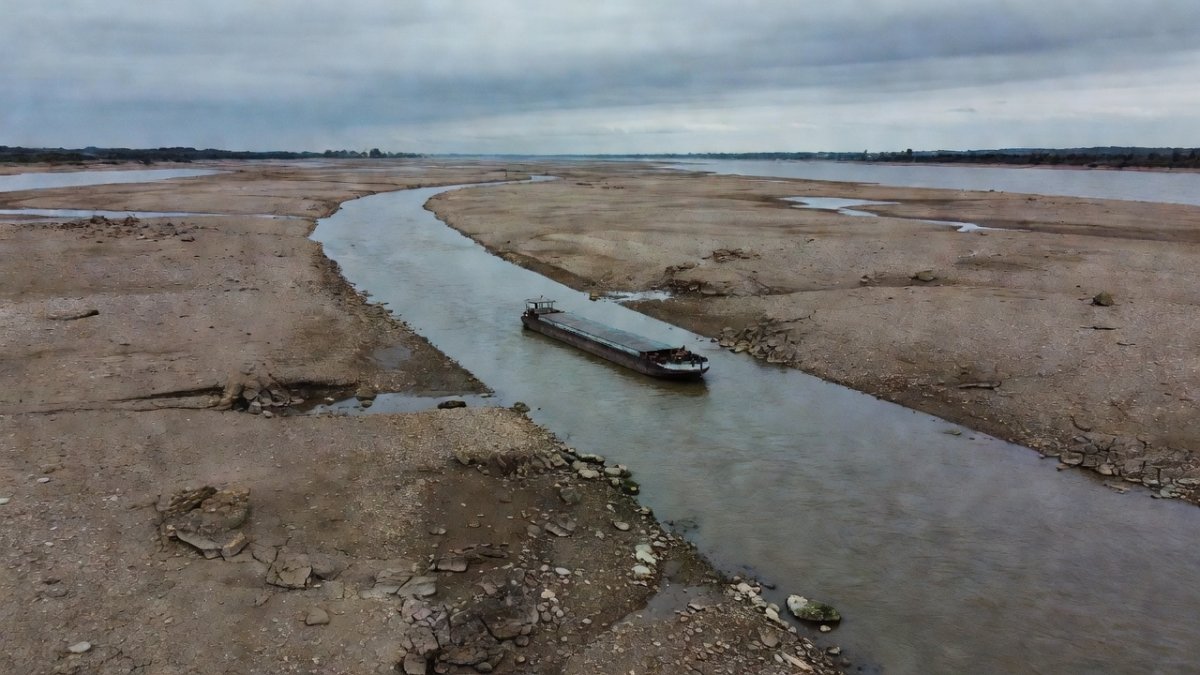
A River at Its Breaking Point
The numbers coming out of the Rhine basin are not just statistical anomalies; they are a physical manifestation of a climate system pushed beyond its limits. At Lobith, on the Dutch-German border, the water flow through the Rijn dropped to 614 cubic meters per second on August 10, according to the NL Times. That is below the previous record low of 620 cubic meters per second set in 1947. For context, the average flow for this time of year is typically several times that amount. The river is not just low; it is critically depleted. Germany's inland shipping association has issued a stark warning: the Rhine could be effectively "split in two" for freight traffic. Commercial shipping and cruise ships are facing halts, and the logistics chain that moves millions of tonnes of goods annually is fracturing in real time.
The situation at Kaub is the epicenter. Barges that would normally carry 1,500 tonnes of cargo are being forced to reduce their loads to a fraction of that capacity — sometimes as little as 300 tonnes — just to avoid running aground. This means more ships are needed to move the same amount of goods, and each ship is burning fuel and crew time for a fraction of the payload. The economics of inland waterway transport, which has long been the cheapest and most efficient way to move bulk goods across Europe, are collapsing. At extreme low water, the price per tonne for inland waterway transport nearly doubles. For companies that rely on the Rhine as their primary logistics channel, this is not an inconvenience; it is an existential threat to their quarterly margins.
Europe's Industrial Artery
The Rhine is not just a river; it is the industrial spine of Europe. It connects the port of Rotterdam — the busiest port on the continent — to the industrial heartlands of Germany, Switzerland, and France. Along its banks sit some of the most important manufacturing facilities in the world. Chemical giant BASF operates its largest integrated production site in Ludwigshafen, directly on the river. Steelmaker Thyssenkrupp relies on the waterway to move raw materials and finished products. Evonik, another specialty chemicals company, has plants that depend on barge traffic for their supply chains. When the river fails, these companies fail to operate at full capacity.
BASF has already deployed extra low-water vessels to keep shipping moving, but this is a costly and inefficient workaround. The company learned this lesson in 2018, when a similar low-water event cost it approximately EUR 250 million in earnings and saw EUR 3.1 billion wiped from its market capitalization. The German economic institute IW Koeln estimated that the 2018 event cost the German economy around EUR 4.5 billion. Now, in 2026, the water levels are even lower than they were in 2018. The disruption is more severe, and the economic damage is projected to be worse. Economists are already warning that this disruption could wipe out Germany's already weak summer growth, pushing the continent's largest economy closer to a technical recession.
The Heat Behind the Drought
To understand the Rhine's collapse, you have to look at the sky. July 2026 was the third consecutive month of exceptional heat in western Europe. According to Samantha Burgess, strategic climate lead at the European Centre for Medium-Range Weather Forecasts (ECMWF), the combined June-July temperature set a new record for the region. This is not a natural fluctuation; it is a clear signal of a warming climate. The heat has evaporated soil moisture, reduced snowpack in the Alps, and starved the river system of its usual summer flow. The result is a hydrological drought that has turned the Rhine into a shadow of its former self.
The heat has also hit the Danube, Europe's second-longest river, which is at historic lows as 40°C temperatures bake the continent. Shipping, energy production, and water supplies are all being disrupted. In Germany, the transport minister has said the government is monitoring fuel-price spikes, with diesel prices already rising at filling stations in western Germany. The knock-on effects are being felt across the economy. German states — including North Rhine-Westphalia, Lower Saxony, Rhineland-Palatinate, and Saarland — have relaxed trucking curbs to ease bottlenecks, allowing more freight to move by road. But this is a stopgap measure, not a solution. The infrastructure for road transport is not designed to absorb the volume that normally moves by barge.
Latin America's Rivers Tell the Same Story
For those of us in Latin America, the images from Kaub are hauntingly familiar. We have seen our own rivers die. The Parana River, which flows through Brazil, Paraguay, and Argentina, dropped to its lowest levels in 77 years during the 2021 drought that began in late 2019. That river is the lifeblood of Argentina's agricultural exports — about 80% of the country's farm goods flow through the Parana toward the Atlantic. For Paraguay, a landlocked nation, the stakes are even higher: its rivers carry 96% of the country's exports. When the Parana dried up, barge operators like Atria, which runs about 600 barges, were forced to take smaller loads and top up at deep-water ports downriver, raising logistics costs across the board.
The parallels are stark. In Argentina, the government looked to reroute $300 million from the Inter-American Development Bank to ease the pain. In Brazil, the Negro River, a major tributary of the Amazon, reached its lowest level in 121 years of records amid a severe drought. Hundreds of thousands of people were affected, and a major Amazon river port recorded its lowest water level in 121 years. Forecasts warned that levels could drop further. The cause is the same: a combination of climate crisis and deforestation that intensifies the phenomenon. The rivers that carry our exports and sustain our communities are becoming unreliable, and the economic consequences are mounting.
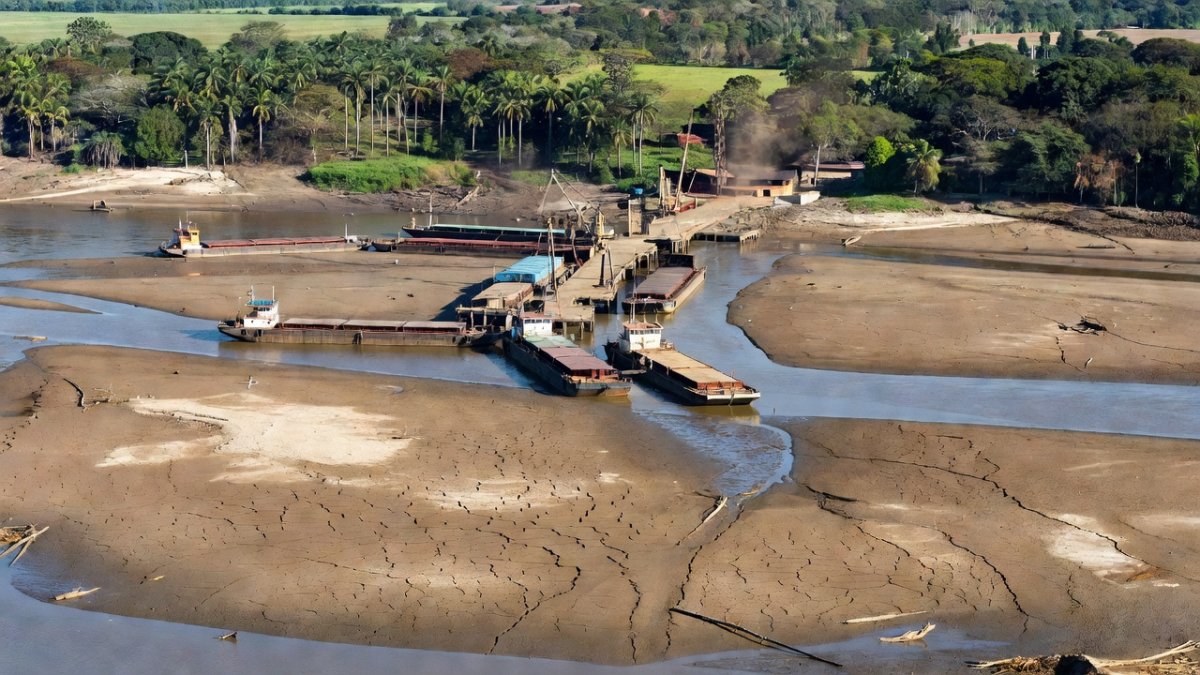
The Panama Canal: A Maritime Mirror
The Rhine and the Parana are not alone. The Panama Canal, one of the most critical pieces of infrastructure in the global shipping network, has also been brought to its knees by drought. During the 2023-2024 El Nino-linked drought, daily transits were cut from 36-38 vessels in July 2023 to just 18 per day by February 2024. The freshwater levels in Gatun Lake, which feeds the canal's locks, fell dramatically. The canal authority was forced to impose strict draft limits on vessels, reducing the amount of cargo each ship could carry. Some operators chose to reroute around the Cape of Good Hope, adding weeks to their journeys and significantly increasing fuel costs and emissions.
The restrictions at the Panama Canal reshaped global shipping and freight rates. The canal is a vital link between the Atlantic and Pacific Oceans, and its disruption sent ripples through supply chains worldwide. For Latin American exporters, the canal is a gateway to Asian markets. When it fails, the cost of doing business rises, and the region's competitiveness suffers. The lesson from Panama is the same as the lesson from the Rhine: our infrastructure was built for a climate that no longer exists. The assumptions that underpinned the design of these waterways — assumptions about rainfall, snowmelt, and river flow — are no longer valid. We are operating in a new reality, and the systems we rely on are not equipped to handle it.
The Price of Parched Waterways
The economic cost of low water is not abstract; it is measured in euros, dollars, and reais. In Germany, the 2018 Rhine low-water event cost the economy an estimated EUR 4.5 billion, according to IW Koeln. BASF alone lost EUR 250 million in earnings and saw EUR 3.1 billion wiped from its market capitalization. In 2026, the water is lower, the heat is more intense, and the disruption is more severe. Economists warn that the current event could wipe out Germany's already weak summer growth. The price per tonne for inland waterway transport nearly doubles at extreme low water, and that cost is passed on to consumers. Fuel prices are already rising at filling stations in western Germany, and the transport minister has said the government is monitoring the situation closely.
In Latin America, the costs are equally severe. When the Parana dropped to its lowest levels in 77 years, Argentina's agricultural exports were hit hard. Exporters were forced to take smaller loads and top up at deep-water ports downriver, raising logistics costs. Paraguay, which relies on its rivers for 96% of its exports, faced a similar crisis. The government of Argentina looked to reroute $300 million from the IDB to ease the pain. In Brazil, the Negro River's record-low levels affected hundreds of thousands of people and disrupted the flow of goods through the Amazon. The economic impact of these droughts is not just a matter of lost revenue; it is a matter of food security, energy security, and the livelihoods of millions of people.
The Bottom Line — What Comes Next
The crisis on the Rhine is not a one-off event; it is a preview of the future. As the climate continues to warm, droughts will become more frequent and more severe. Rivers that have been reliable arteries of commerce for centuries will become unpredictable. The infrastructure that was built to handle the climate of the past will need to be adapted or replaced. This is true in Europe, and it is equally true in Latin America. The Parana, the Negro, and the Amazon are all vulnerable to the same forces that are drying up the Rhine.
What comes next is a choice. We can continue to build our economies on the assumption that rivers will flow as they always have, and we can continue to suffer the consequences when they do not. Or we can invest in adaptation: more efficient water use, alternative transport routes, and infrastructure that is resilient to drought. The cost of adaptation is high, but the cost of inaction is higher. The Rhine is a warning, and we would be wise to heed it. For Latin America, where rivers carry the region's exports and livelihoods, the stakes are even higher. The time to act is now, before our rivers reach their own breaking points.
By Elena Vasquez, Staff Writer
This article was produced with AI-assisted research and editorial support. Reporting is based on sources cited in the article.
What's Your Reaction?
 Like
0
Like
0
 Dislike
0
Dislike
0
 Love
0
Love
0
 Funny
0
Funny
0
 Wow
0
Wow
0
 Sad
0
Sad
0
 Angry
0
Angry
0

Latin America Correspondent at Global1.News. Based in Mexico City, covering politics, economics, energy, and culture across the region. Brings an on-the-ground perspective to stories spanning from the Rio Grande to Patagonia.















Comments (0)