
Singapore and Australia Strengthen Critical Supply Chains and Green Energy Ties
The announcements, made during Mr Wong’s three‑day visit for the 11th Singapore‑Australia annual leaders’ meeting, were framed as a reaffirmation of a “trusted partnership” that can endure both prosperity and uncertainty.
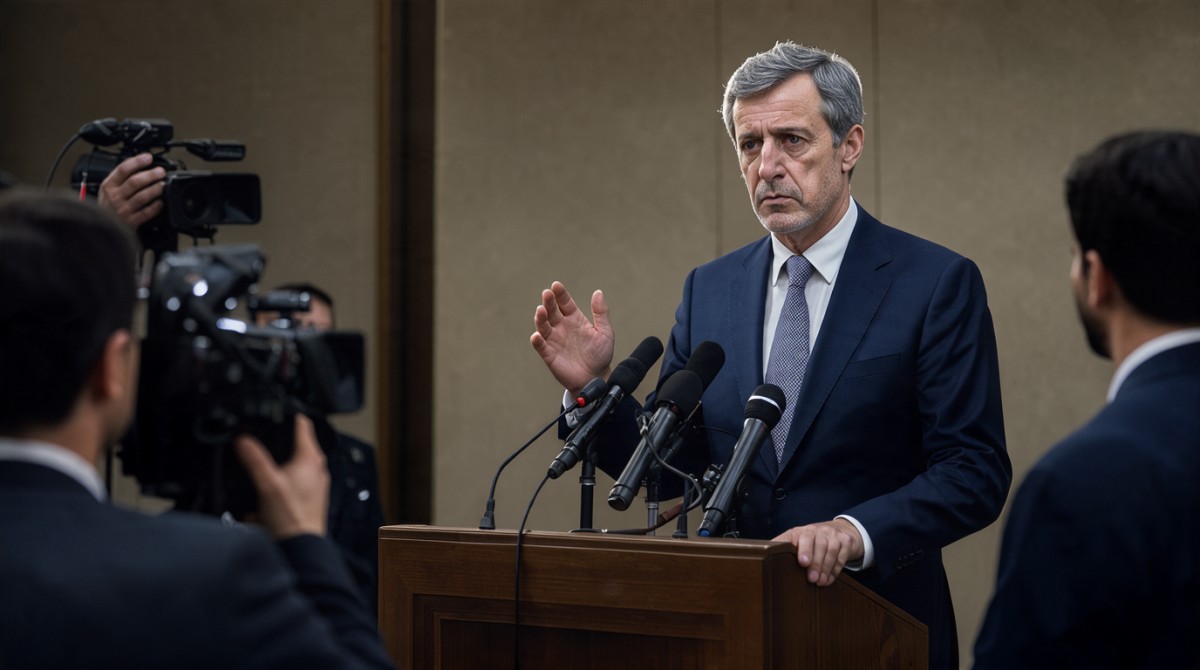
In a joint press conference in Canberra on 24 November 2026, Singapore Prime Minister Lawrence Wong and Australian Prime Minister Anthony Albanese announced the signing of two bilateral agreements aimed at safeguarding the flow of essential goods and accelerating the transition to green energy. The announcements, made during Mr Wong’s three‑day visit for the 11th Singapore‑Australia annual leaders’ meeting, were framed as a reaffirmation of a “trusted partnership” that can endure both prosperity and uncertainty. While the agreements are bilateral, their implications reverberate across the wider Asia‑Pacific region, particularly for Japan, which shares similar strategic concerns over supply‑chain resilience, energy security and the need to diversify sources of critical inputs.
Scope of the Memorandum of Understanding on Essential Supplies
The first of the two pacts is a memorandum of understanding (MOU) that focuses on the uninterrupted flow of essential supplies. According to the briefing, the MOU covers categories such as food, pharmaceuticals, medical products and agricultural materials. By formalising a framework for cooperation in these sectors, Singapore and Australia aim to mitigate the risk of disruptions that have become more pronounced in recent years, especially in the wake of global health crises and geopolitical tensions that have exposed vulnerabilities in international supply chains.
For Japan, the relevance of this MOU is immediate. Japan’s own reliance on imported food and medical supplies has prompted the Ministry of Economy, Trade and Industry (METI) to pursue diversified sourcing strategies. The Singapore‑Australia agreement signals a broader regional trend toward establishing trusted channels for critical commodities, a trend that Japanese policymakers are likely to monitor closely. Coordination mechanisms such as joint stockpiles, mutual certification of product standards and rapid‑response logistics could become models for future trilateral or multilateral arrangements that include Japan.
In addition, the MOU underscores the importance of agricultural materials, a sector where both Singapore and Australia have complementary strengths. Singapore, with its limited arable land, depends heavily on imports for food security, while Australia possesses abundant agricultural output. Japan, similarly constrained by domestic production capacity, has been investing in overseas agricultural assets. The Singapore‑Australia framework may therefore provide a template for Japan to negotiate comparable assurances with other partners, ensuring that supply lines for staple foods and essential medical inputs remain robust even under adverse conditions.
Accelerating the Green Energy Transition Through Bilateral Cooperation
The second pact, while not named in the brief, is described as a commitment to accelerate the green energy transition. Both leaders highlighted the partnership’s role in facilitating the flow of critical goods that underpin renewable energy technologies. This focus aligns with the broader strategic imperative for nations across the Indo‑Pacific to decarbonise their economies while securing the raw materials needed for batteries, solar panels, wind turbines and related infrastructure.
Japan’s energy policy, overseen by the Ministry of Economy, Trade and Industry and the Ministry of the Environment, has placed a premium on expanding renewable capacity and reducing dependence on imported fossil fuels. The Singapore‑Australia agreement may therefore be of particular interest to Japanese officials seeking reliable sources of critical minerals and components. Australia’s extensive reserves of lithium, rare earths and other battery‑grade materials complement Singapore’s logistical expertise and its role as a regional hub for high‑tech trade. Japan could potentially benefit from a similar partnership model that leverages logistical strengths and resource endowments to secure a stable supply chain for green technologies.
Moreover, the emphasis on a “trusted partnership” suggests that the two nations intend to develop mechanisms for rapid information sharing, joint risk assessments and coordinated policy responses. For Japan, which is also navigating the transition to a low‑carbon economy, such mechanisms could be instrumental in aligning standards, harmonising certification processes and facilitating cross‑border investment in renewable projects. The Japanese government’s recent initiatives to promote green hydrogen and offshore wind may find complementary pathways through cooperation with both Singapore and Australia.
Strategic Context: Regional Uncertainty and Supply‑Chain Resilience
The leaders framed the agreements against a backdrop of “growing global uncertainty.” While the video report does not elaborate on specific sources of uncertainty, the phrasing reflects a common narrative in the region concerning geopolitical volatility, pandemic‑related disruptions and climate‑driven challenges. Both Singapore and Australia have articulated the need to fortify supply chains that are essential for national security and public health, a priority that resonates strongly with Japan’s own strategic assessments.
Japan’s Ministry of Defense and the Ministry of Foreign Affairs have repeatedly underscored the importance of resilient logistics networks, particularly in the face of potential maritime choke points and regional flashpoints. The Singapore‑Australia pacts, by establishing formal channels for essential goods, contribute to a broader architecture of resilience that Japan may seek to integrate into its own strategic planning. Collaborative exercises, joint stockpiling agreements and shared early‑warning systems could be envisaged as extensions of the bilateral framework, especially if Japan pursues parallel agreements with either partner.
In addition, the emphasis on mutual reliance “in good times and bad” signals a shift toward deeper interdependence among like‑minded democracies in the Indo‑Pacific. This narrative aligns with Japan’s own diplomatic outreach, which has increasingly highlighted the value of “free and open Indo‑Pacific” partnerships. The Singapore‑Australia pacts may therefore be viewed as a concrete manifestation of that diplomatic language, offering a template for Japan to articulate similar commitments with its own network of partners.
Implications for Japanese Industry and Technology Sectors
From an industrial perspective, the agreements could have tangible effects on Japanese companies that operate within the supply chains for food, pharmaceuticals and green energy components. Japanese firms that source raw materials or intermediate products from Australia may benefit from streamlined customs procedures and enhanced regulatory alignment that the MOU is likely to promote. Conversely, Singapore‑based logistics providers could see increased demand for handling and distribution services linked to Australian exports, creating opportunities for Japanese logistics firms to partner or compete in that space.
In the realm of green technology, Japanese manufacturers of batteries, solar cells and wind turbine components stand to gain from a more predictable flow of critical inputs. The partnership’s focus on accelerating the green energy transition suggests that both Singapore and Australia may pursue joint research initiatives, pilot projects or financing mechanisms that could involve Japanese technology partners. Given Japan’s leadership in battery chemistry and solar efficiency, Japanese firms could be well positioned to act as technology providers or collaborators in any bilateral projects that emerge from this framework.
Furthermore, the mention of “trusted partnership” implies a level of confidence that could translate into joint investment funds or co‑development platforms. Japanese venture capital and corporate venture arms, which have been active in supporting clean‑tech startups across the region, might find new avenues for co‑investment with Singaporean and Australian entities. Such financial collaboration would reinforce the broader ecosystem of innovation that underpins the green transition.
Political Dimensions: Leadership Messaging and Domestic Audiences
The joint announcement was made at a press conference that also fielded questions about unrelated topics, such as investigations into a Singapore‑based company and the return of a prominent technology executive. This context indicates that the leaders sought to balance domestic political concerns with the projection of a forward‑looking partnership agenda. For Prime Minister Wong, highlighting the “trusted partnership” serves to reassure both Singaporean and Australian audiences that the bilateral relationship remains strong amid external pressures.
In Japan, political leaders often use similar diplomatic milestones to signal competence in managing external risks and securing national interests. The Japanese government’s own communication strategies may reference the Singapore‑Australia agreements as part of a broader narrative that emphasizes the importance of multilateral cooperation in safeguarding critical supply chains. Such references could be employed by the ruling Liberal Democratic Party to demonstrate proactive engagement with regional partners, thereby bolstering public confidence ahead of upcoming electoral cycles.
Moreover, the involvement of both prime ministers in the signing ceremony underscores the high‑level political commitment behind the agreements. In Japan’s policy‑making culture, where cabinet‑level endorsement is essential for the implementation of major trade or security initiatives, the visibility of the Singapore‑Australia pacts may encourage Japanese officials to pursue similarly elevated negotiations with their own partners. The diplomatic weight attached to the agreements could thus catalyse a cascade of high‑profile discussions across the region.
Future Outlook: Potential Extensions and Regional Cooperation
Looking ahead, the Singapore‑Australia pacts could serve as a springboard for broader regional initiatives. Both countries have expressed interest in deepening cooperation on supply‑chain security and green energy, areas that are also priorities for Japan. One plausible trajectory is the formation of a multilateral working group that brings together Japan, Singapore, Australia and possibly other like‑minded economies such as South Korea and New Zealand. Such a forum could coordinate standards, share best practices and develop joint response protocols for emergencies that threaten essential supplies.
In addition, the agreements may stimulate further bilateral talks between Japan and either Singapore or Australia. Given the complementary strengths—Japan’s advanced manufacturing and technology base, Singapore’s logistics hub status, and Australia’s resource endowments—future negotiations could focus on specific sectoral collaborations, such as joint development of renewable energy projects in the Asia‑Pacific, or coordinated stockpiling of medical countermeasures. The existing MOU provides a structural basis for these deeper engagements, as it already establishes mechanisms for information exchange and mutual assistance.
Finally, the emphasis on a “trusted partnership” reflects a strategic narrative that could shape the region’s collective response to emerging challenges, ranging from climate‑related disruptions to geopolitical tensions that affect trade routes. For Japan, aligning with this narrative reinforces its own strategic objectives of securing supply chains, promoting clean energy and maintaining a stable, rules‑based order in the Indo‑Pacific. As the Singapore‑Australia agreements take effect, Japanese policymakers, industry leaders and think‑tanks will likely monitor their implementation closely, assessing lessons learned and opportunities for replication in Japan’s own bilateral and multilateral engagements.
By Kenji Tanaka, Staff Writer
This article was produced with AI-assisted research and editorial support. Reporting is based on the source material cited below. Sources: CNA video report (24 November 2026); CNA; Global1.News
Photo: Noel Reynolds, CC BY 2.0 / Wikimedia Commons
What's Your Reaction?
 Like
0
 Dislike
0
 Love
0
 Funny
0
 Wow
0
 Sad
0
 Angry
0
Japan Correspondent at Global1.News. Tokyo-based voice covering Japanese politics, technology, economy, and culture. Tracks the intersection of tradition and innovation in one of the world's most dynamic societies.












Comments (0)