
Probation Union Warns UK Early Release Prison Scheme Puts Public at Risk
The UK government’s plan to ease prison overcrowding by releasing thousands of offenders early has collided with a blunt warning from probation officers that the system cannot protect the public. The National Association of Probation Officers has told ministers the service is already stretched beyond capacity. Victims’ families say the human cost is already clear. Probation Service Cannot Cope With Early Releases, NAPO Warns, as Victims Demand Safety Guarantees London, UK...
The UK government’s plan to ease prison overcrowding by releasing thousands of offenders early has collided with a blunt warning from probation officers that the system cannot protect the public. The National Association of Probation Officers has told ministers the service is already stretched beyond capacity. Victims’ families say the human cost is already clear.
Probation Service Cannot Cope With Early Releases, NAPO Warns, as Victims Demand Safety Guarantees
London, UK – 6 August 2026 — The Sentencing Act 2026 early release scheme, due to begin in September, has been thrown into doubt after the probation officers’ union warned that staff cannot safely supervise the numbers involved. Prime Minister Andy Burnham paused the programme in late July following protests from victims’ families. The Ministry of Justice now faces urgent questions over whether the probation service in England and Wales can deliver the promised public protection.
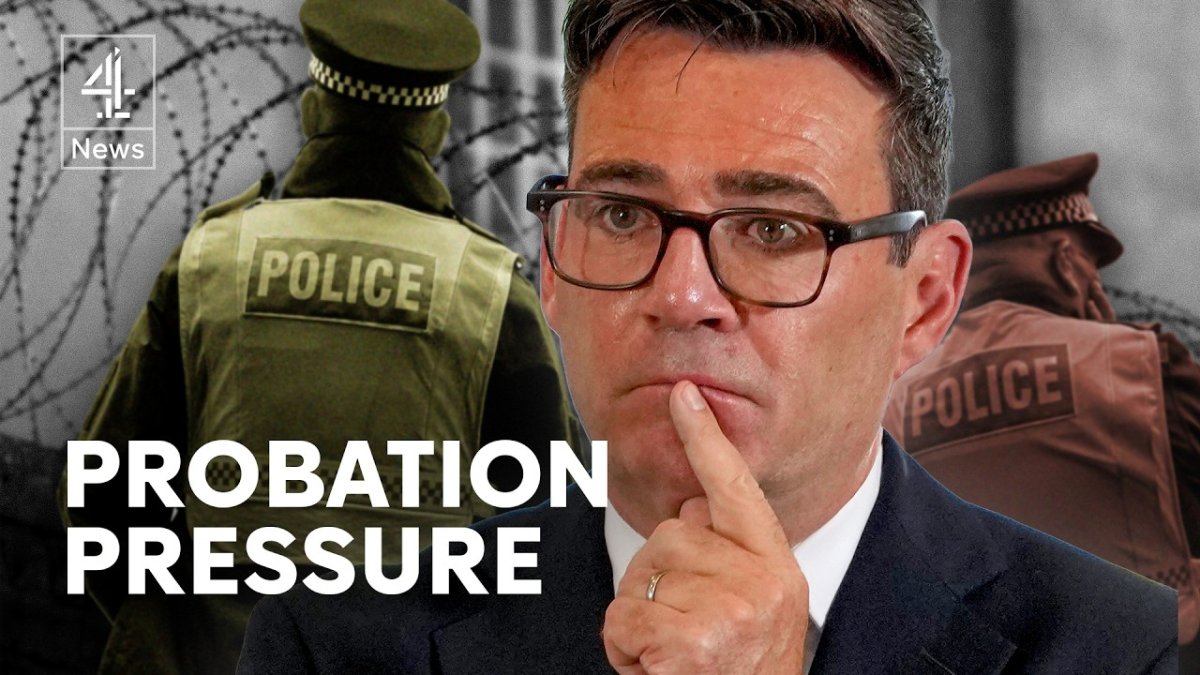
NAPO Issues Direct Warning on Workload and Risk
The National Association of Probation Officers has stated that officers are already struggling with existing caseloads and that the additional volume from early releases will increase the chance of serious failures. Union representatives told Channel 4 News that supervision arrangements for high-risk offenders require intensive monitoring that current staffing levels cannot provide. The warning comes days after the Justice Secretary confirmed the scheme would still proceed in revised form.
The probation service’s capacity constraints carry immediate implications for public protection across England and Wales. With officers already managing heavy workloads, the influx of supervised offenders risks stretching monitoring arrangements to breaking point, particularly in high-density urban areas such as London and Greater Manchester where caseloads have historically run highest. This pressure echoes longstanding concerns about the service’s ability to deliver robust oversight amid rising demand.
Historical patterns of early release schemes add further context. The SDS40 programme, operational since 2024, has already released around 50,000 prisoners ahead of schedule, contributing to a cumulative strain on probation resources that continues to affect frontline staff in the North and Midlands. Practitioners note that without additional recruitment or workload adjustments, similar outcomes could recur under the revised Sentencing Act 2026 arrangements.
How the Sentencing Act 2026 Early Release Scheme Operates
The Sentencing Act 2026, passed earlier this year, introduced a new phase of early release on licence to free prison places. It builds on the earlier SDS40 scheme, which has already released around 50,000 prisoners early since 2024. The new phase was scheduled to start in September 2026 and would have allowed thousands more offenders to serve the remainder of their sentences in the community under supervision.
The mechanics of the scheme highlight the government’s attempt to balance prison population pressures with community safety requirements. By shifting more offenders onto licence earlier, ministers aim to alleviate overcrowding that has affected facilities throughout England and Wales, yet the approach depends entirely on effective probation supervision that union warnings suggest may not materialise.
Regional variations in prison and probation infrastructure complicate implementation further. Areas such as Greater Manchester and parts of the North have experienced sustained population growth in custody, making the transition to community supervision especially sensitive. Wales, too, faces distinct logistical challenges in coordinating releases with local probation teams already operating near capacity limits.
Burnham Pauses Scheme and Tightens Exclusions
Prime Minister Andy Burnham announced the pause in late July after victims raised concerns. On 3-4 August he confirmed that offenders convicted of rape, serious child sexual offences and grooming would be excluded from early release. Justice Secretary Alex Norris said the change means approximately 1,000 prisoners will now remain in custody. He warned that altering the Sentencing Act at such a late stage places significant pressure on the prison and probation systems.
The decision to tighten exclusions reflects the political sensitivity surrounding early release policy. By retaining roughly 1,000 additional prisoners, the government seeks to address immediate public anxieties, yet the adjustment itself intensifies operational demands on an already overburdened prison estate and probation workforce across multiple regions.
Previous early release controversies have shown how quickly public confidence can erode when supervision arrangements falter. The current pause therefore represents not only a tactical response to victims’ protests but also an attempt to recalibrate a policy inherited amid ongoing debates about prison capacity and community protection in places such as Rochdale and London.

The Human Cost: Lexi’s Story and the Rochdale Grooming Case
Channel 4 News reported the case of “Lexi”, abused by a grooming gang in Rochdale from the age of 13. Her perpetrator, a man in his 50s, was sentenced to six years and released after serving half. Roughly a year later Lexi encountered him in a shop near her home. She had already been forced to move more than 80 miles from Rochdale for her safety. Her mental health deteriorated sharply; she suffered psychotic episodes, self-harmed and attempted suicide before taking her own life at 33. Her mother “Laura” said the government “have got no idea what goes on in the real world” and described Lexi as “one of a kind… she had the strength of a lion”.
Lexi’s experience underscores the profound personal consequences when early release intersects with inadequate community safeguards. Families in Rochdale and surrounding areas of Greater Manchester continue to live with the aftermath of grooming gang failures, where insufficient post-release monitoring can retraumatise survivors and destabilise entire communities already scarred by institutional shortcomings.
The case also illustrates wider regional disparities in victim support. Probation services in the North have faced particular criticism for gaps in coordination, leaving individuals like Lexi without the sustained protection required after high-profile exploitation cases. Such outcomes feed directly into national debates about whether the probation service can absorb further early releases without repeating past harms.
Electronic Tagging Failures and Inspectorate Concerns
The Guardian reported on 4 August that the electronic tagging system is failing to alert authorities when offenders breach conditions. Solicitor Amy Clowrey, who represents survivors of sexual exploitation, told Channel 4 News that perpetrators “aren’t concerned about things like being tagged or monitored”. On 1 August the HM Inspectorate of Probation warned that the delay itself could “go badly wrong”, with release plans and supervision arrangements already collapsing.
These technical and oversight shortcomings compound the broader crisis of prison overcrowding. As the Ministry of Justice grapples with population pressures that have persisted for years, reliance on electronic monitoring as a safety net appears increasingly fragile, particularly when inspectors have already flagged systemic weaknesses in supervision planning.
Practitioners across London and the Midlands report similar patterns of tagging unreliability, which undermines attempts to manage risk in the community. The HM Inspectorate of Probation’s caution about collapsing arrangements therefore points to a structural problem that extends well beyond any single scheme and touches the daily realities of officers managing complex caseloads.
Victims’ Families and Political Reaction
The mother of PC Andrew Harper has said her family is “paying the price” after learning her son’s killers could benefit from the measures. Greater Manchester Police issued a statement accepting and apologising for past failings in tackling grooming gang abuse in Rochdale. The political stakes remain high for the Burnham government, which inherited the scheme from the previous administration under Keir Starmer.
Victim reactions reveal deep scepticism about the government’s ability to prioritise public safety alongside prison population management. In Greater Manchester and Rochdale, where grooming cases have left lasting scars, families question whether revised exclusions will prove sufficient to prevent further encounters between perpetrators and those they harmed.
The political inheritance of the Sentencing Act 2026 places the current administration under particular scrutiny. With prison overcrowding continuing to dominate headlines, any perception that early releases proceed without robust probation safeguards risks eroding trust in institutions already strained by successive policy adjustments and regional service pressures.
The Bottom Line — What Comes Next
Ministers must complete the urgent review before any releases resume in September. The Ministry of Justice has yet to publish revised risk assessments or confirm how the probation service will manage the reduced but still substantial caseload. With prison overcrowding continuing and the HM Inspectorate of Probation already flagging systemic weaknesses, the coming weeks will determine whether the revised scheme can command public confidence.
The review’s outcome will shape probation practice across England and Wales for years to come. Officers in London, the North and Wales await clarity on workload adjustments, while victims’ groups in Greater Manchester and Rochdale demand concrete guarantees that supervision will not repeat the failures already documented in high-profile cases.
Ultimately, the episode exposes the tension between managing prison numbers and maintaining credible community protection. Without demonstrable improvements in staffing and monitoring, the revised Sentencing Act 2026 arrangements may struggle to secure the confidence of practitioners, victims and the wider public alike.
By Erica Thornton, Staff WriterThis article was produced with AI-assisted research and editorial support. Reporting is based on sources cited in the article.
What's Your Reaction?
 Like
0
Like
0
 Dislike
0
Dislike
0
 Love
0
Love
0
 Funny
0
Funny
0
 Wow
0
Wow
0
 Sad
0
Sad
0
 Angry
0
Angry
0

US Politics and Policy Correspondent at Global1.News. Based in Washington DC, covering American politics, policy, elections, and the courts. Knows how the system works and tells you what it actually means.














Comments (0)