
Three Pro-Independence Leaders to Sign Cardiff Referendum Pact
The pro-independence leaders of Scotland, Wales and Northern Ireland are set to sign a Cardiff memorandum urging Westminster to prepare for constitutional change, while PM Andy Burnham insists referendums are off limits.
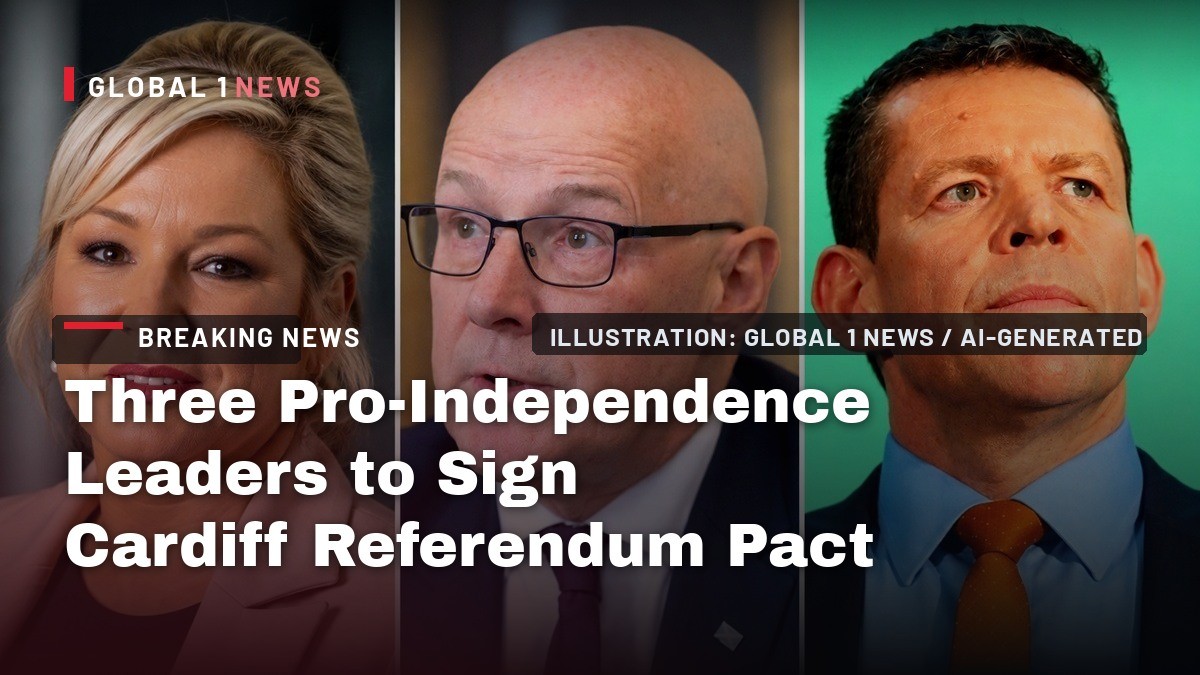
Folks, the leaders of Scotland, Wales and Northern Ireland are in Cardiff today to sign a memorandum telling Westminster to get ready for a break-up of the United Kingdom — and the Prime Minister wrote to Scotland's First Minister days ago to say it is not happening on his watch. Three pro-independence first ministers, one unpublished document, and a union being asked to plan its own funeral.
Three Pro-Independence Leaders to Sign Cardiff Referendum Pact
Cardiff, Wales — John Swinney of the SNP, Rhun ap Iorwerth of Plaid Cymru and Michelle O'Neill of Sinn Fein meet in Cardiff Bay on Monday to sign a memorandum of understanding calling on Westminster to prepare, plan and facilitate constitutional change in Wales, Scotland and Northern Ireland, according to The Telegraph and the Press Association. The three attend as party leaders, not as government ministers, the Press Association reports. The full text had not been published by the devolved governments or the participating parties as of Sunday, according to the Guardian and Telegraph reporting.
What the Three Leaders Actually Signed
The document is a memorandum of understanding — not a treaty, not legislation. The Guardian describes it as calling on Westminster "to prepare, plan and facilitate constitutional change in Wales, Scotland and Northern Ireland". The Telegraph, as carried by the Jerusalem Post and the Sunday Guardian, reports four areas of cooperation: the economy, energy, relations with Europe and international cooperation, and self-determination. The same reporting says the memorandum is expected to record a shared desire to be part of the European Union — Scotland and Wales as new member states, Northern Ireland as part of a united Ireland. Sinn Fein president Mary Lou McDonald, who also leads the opposition in Ireland's Dail, is expected to attend, per the Press Association. And I want to be straight with you: nobody has published this document. Until the text lands, we are all working off briefings.
The Letter That Walked It Back
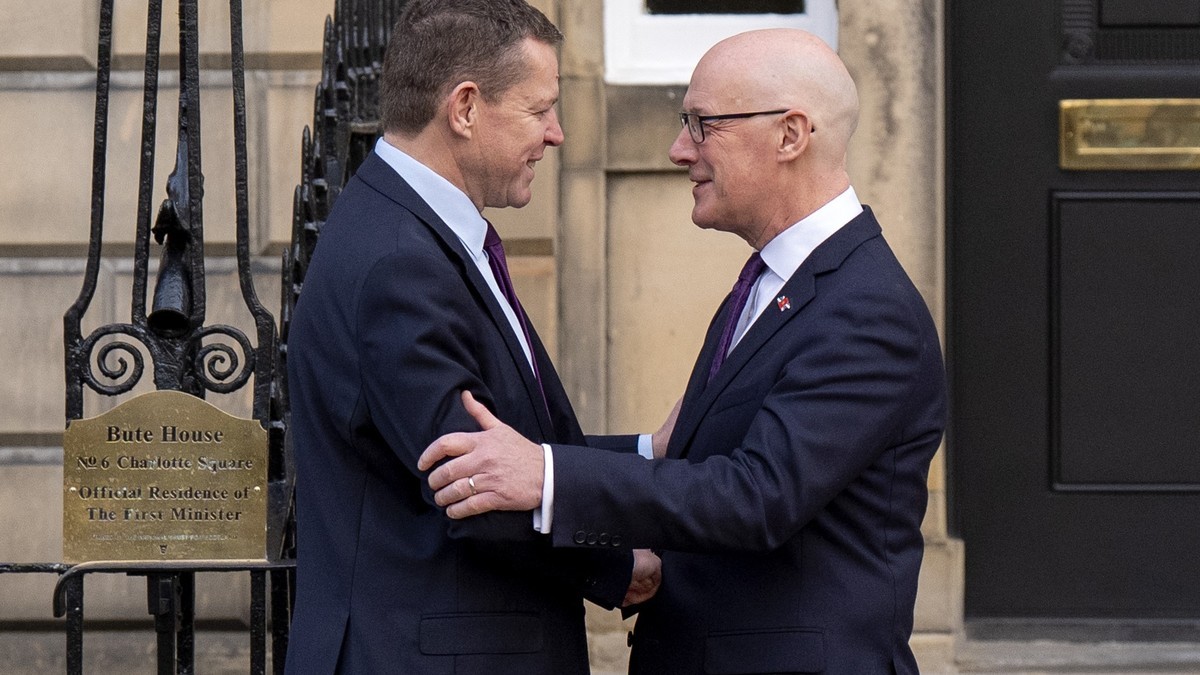
Last week Prime Minister Andy Burnham told the House of Commons that another Scottish independence referendum could be held if there was a "clear consensus" for one north of the border, the Press Association reports. Downing Street then insisted there had been no change in policy. Burnham then wrote to Swinney. Per correspondence reported by the Express and Star, the Prime Minister told him he had been "highlighting that there is no consensus for an independence referendum in Scotland", adding: "as I made clear to you personally when we met recently in Glasgow, independence and a referendum are off limits as it would take our focus away from growing the economy and helping families with the cost of living." The letter also said there was "no consensus for an independence referendum in Scotland and nor is there a clear basis to suggest that a majority of people in Northern Ireland presently wish to separate from the United Kingdom", according to the Scottish Daily Express and the Jerusalem Post. The Telegraph framed that letter as a walk-back delivered immediately before the Cardiff summit. Burnham took office in July 2026.
Three Nations, Three Different Destinations
This is not one movement. The Telegraph reports the three parties back three different constitutional outcomes: independence for Scotland, independence for Wales, and reunification with the Republic of Ireland for Northern Ireland. Swinney said on Sunday: "For the first time ever, Scotland, Wales and Northern Ireland are led by pro-independence first ministers. There could be no clearer sign that the status quo is not sustainable - and that Westminster must prepare for a post-UK future." He added: "The momentum behind serious constitutional change is undeniable. Andy Burnham must now be facing up to the idea that he will go down in history as the final prime minister of the United Kingdom." A Sinn Fein source told the Press Association that the summit would consider "where the parties can work together to make a difference to people's lives; and how each of our nations has the right to shape its own future through democratic means, guided by the will of its people". The same source added: "In Ireland, the constitutional future belongs to the people of this island... Irish unity is not a distant aspiration. The work of building the new Ireland must begin now."
Wales Wants the Money Before the Vote
Listen to what ap Iorwerth actually said, because it is not the same speech Swinney is giving. On the BBC's Sunday With Laura Kuenssberg he said: "We're talking about how we can work together, let's talk about what we have in common and what we don't." He went on: "There's also something that ties us together, isn't there? That pursuit of a different attitude from UK Government. It could be around the constitutional question, it could, more acutely, be around fair funding... that feels fair, that we have the powers to build the future for the people that we represent." To The Guardian before the summit he rejected the claim the gathering is designed to dismantle the UK — he said he does not approach cooperation with other nationalist parties as an effort "to break up the UK". His words: "I want to build up my nation." On the substance, Plaid wants Crown Estate offshore wind seabed revenues going to the Welsh budget rather than the Treasury, more fiscal powers, policing and rail funding transferred to Cardiff, and the Barnett formula replaced with a more favourable model. He has also said Burnham must understand Wales is "not a region in England".
Northern Ireland and the Good Friday Route
Northern Ireland's route is the one that already exists in law, and it is the one nobody in Cardiff or Edinburgh can copy. Under the Belfast Agreement, a referendum there must be held if the British government concludes that a majority of the population is likely to support leaving the United Kingdom and joining a united Ireland. The statutory trigger depends on the judgment of the UK's Northern Ireland Secretary alone. The Telegraph reports the main agenda item for the Northern Ireland side is holding that so-called border referendum. Deputy First Minister Emma Little-Pengelly of the DUP said O'Neill has "not sought any agreement or permission from me to travel, attend or sign anything as First Minister". That is the deputy First Minister saying the First Minister did not clear this with her. Make of that what you will.
Scotland's Reserved Question
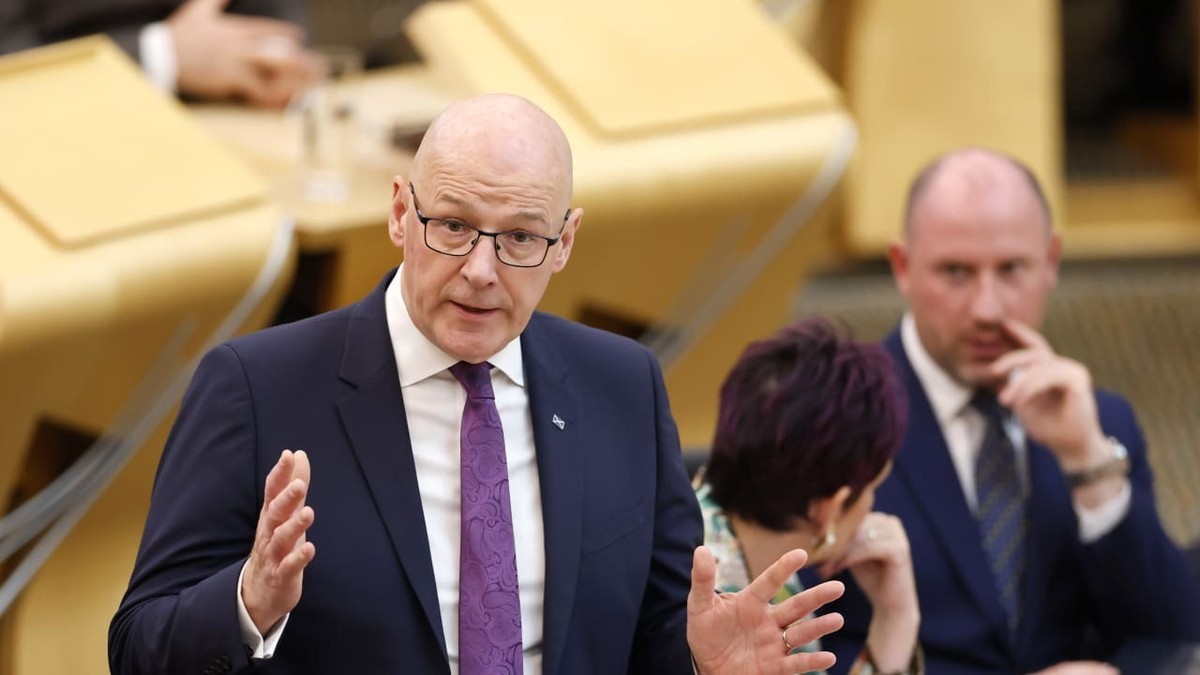
Scotland cannot hold an independence referendum unilaterally, because constitutional matters remain reserved to Westminster. The last one, on 18 September 2014, saw Scotland vote against independence, and successive UK governments have opposed further referendums on leaving the UK since then, the Press Association reports. Scotland's Education Secretary Mairi McAllan told the BBC's Sunday Show: "An independence referendum is not off the table. We devote time to it because it is the transformational change that allows Scotland to stand on its own two feet in the world." She called the current structure of the UK no longer viable — "The status quo in the UK is unsustainable" — and pointed to the First Ministers of both Northern Ireland and Wales backing exit. On Burnham's Commons statement she said the Prime Minister "was clear that Scotland must have a route to choose our own future, so we just want that agreed now in a legal format so that we can take forward our mandate in Scotland".
What the Numbers Actually Say
Here is where the rhetoric meets the polling, and the polling is not kind to the headline. A Survation poll for YesCymru, fieldwork 13 to 24 August 2026, sample 1,023, put support for Welsh independence at 32 per cent against 68 per cent who would vote No, after undecided and refused respondents were removed, per Nation.Cymru. The raw published tables: 26 per cent yes, 51 per cent no, 23 per cent undecided. In the same polling, Yes was ahead in each of the three age groups below 45. Support among likely referendum voters was highest in South Wales West at 42 per cent and South Wales Central at 39 per cent, and stood at 25 per cent in South Wales East. The same Survation study showed Reform leading Welsh Westminster voting intention with Plaid Cymru second. So the party signing a declaration in Cardiff today is not the party leading Welsh Westminster voting intention. That is the gap between a summit and a mandate.
What Westminster Says Now
Burnham has made much of his support for regional devolution of power and resources in England since becoming prime minister in July, but The Guardian reports his approach to the devolved administrations in Belfast, Cardiff and Edinburgh is less clear. On Scotland he has now put it in writing: independence and a referendum are off limits. On Northern Ireland he has put it in writing too: no clear basis to suggest a majority presently wishes to separate. And on the Commons remark that started all of this, Downing Street's position is that nothing changed. Scottish Secretary Douglas Alexander, after a July meeting in Glasgow, said: "Up front, the Prime Minister made clear that independence was off limits," and "I genuinely believe that we agreed to disagree". Swinney's read on that same meeting: "The democratic question has got to be answered... The Prime Minister takes a different view."
The Unionist Pushback
Scottish Conservative leader Russell Findlay criticised Burnham's handling of the issue, warning that a handful of opinion polls should not automatically trigger another divisive referendum, per The Gateway Pundit's report on the Telegraph story. Conservatives have also pointed out that Northern Ireland's referendum mechanism was established through the Good Friday Agreement and cannot simply be transplanted onto Scotland. The Scottish Daily Express on 13 September billed the gathering a "separatist summit" and noted the trip was taxpayer-funded, quoting criticism that Swinney should be "focusing on what really matters to Scots" instead of a "performative photo call to push for a divisive referendum that Scots don't want". Remember the arithmetic, too: Plaid Cymru became the largest party in the May 2026 Senedd election, and in Scotland the SNP retained power in the 2026 Holyrood election despite losing six seats. Retained power. Lost six seats. Both things are true.
What Happens Next
Today: the signing, the press conference, the photographs. Then the hard part. The memorandum asks Westminster to prepare, plan and facilitate — and Westminster has already answered in a letter. Scotland needs Westminster to hand over the authority to hold a vote, and on current form it will not. Northern Ireland needs a Secretary of State's judgment that the numbers are there, and nobody has published Northern Ireland polling. Wales needs a funding settlement before it needs a ballot, if you take ap Iorwerth at his word. One more thing worth logging: US President Donald Trump said on Saturday that he would "love" to see a unified Ireland — a reminder that this stops being a domestic story the moment it leaves these islands. Swinney is in Cardiff for Burnham's National Economic Council as well as the summit; the two gatherings are separate, per the Scottish Daily Express. He will be in the same city as the Prime Minister today. Whether they speak is another matter.
Folks, here is what matters. Three first ministers are putting their names to a piece of paper asking Westminster to plan for a country that does not exist yet, and the Prime Minister of the United Kingdom has already written back to say no. The document itself has not been published — so read the coverage, not the spin. And the number to carry out of this is 32 per cent yes, 68 per cent no in Wales, per Survation. A summit is not a verdict. Watch for the text of that memorandum, watch whether Burnham and Swinney meet face to face in Cardiff, and watch what the Northern Ireland Secretary says — because that is the only door in this whole argument that opens without Westminster's permission.
By Jessica Ali, Staff Writer
This article was produced with AI-assisted research and editorial support. Sources: The Telegraph, Press Association, The Guardian, BBC, Nation.Cymru, Belfast Live, The Jerusalem Post, Survation, the Express and Star and the Scottish Daily Express.
What's Your Reaction?
 Like
0
Like
0
 Dislike
0
Dislike
0
 Love
0
Love
0
 Funny
0
Funny
0
 Wow
0
Wow
0
 Sad
0
Sad
0
 Angry
0
Angry
0

Editor-in-Chief at Global1.News. Atlanta-based journalist who cuts through the BS and tells it like it is. Lead anchor, host, and the voice you hear when the spin stops and the truth starts.












Comments (0)