
Sinking of the Bianca C: 22 October 1961
On a bright Sunday morning in October 2026, I found myself strolling along the Carenage in St George’s, the salty breeze reminding me of a story that still echoes through Grenadian memory.
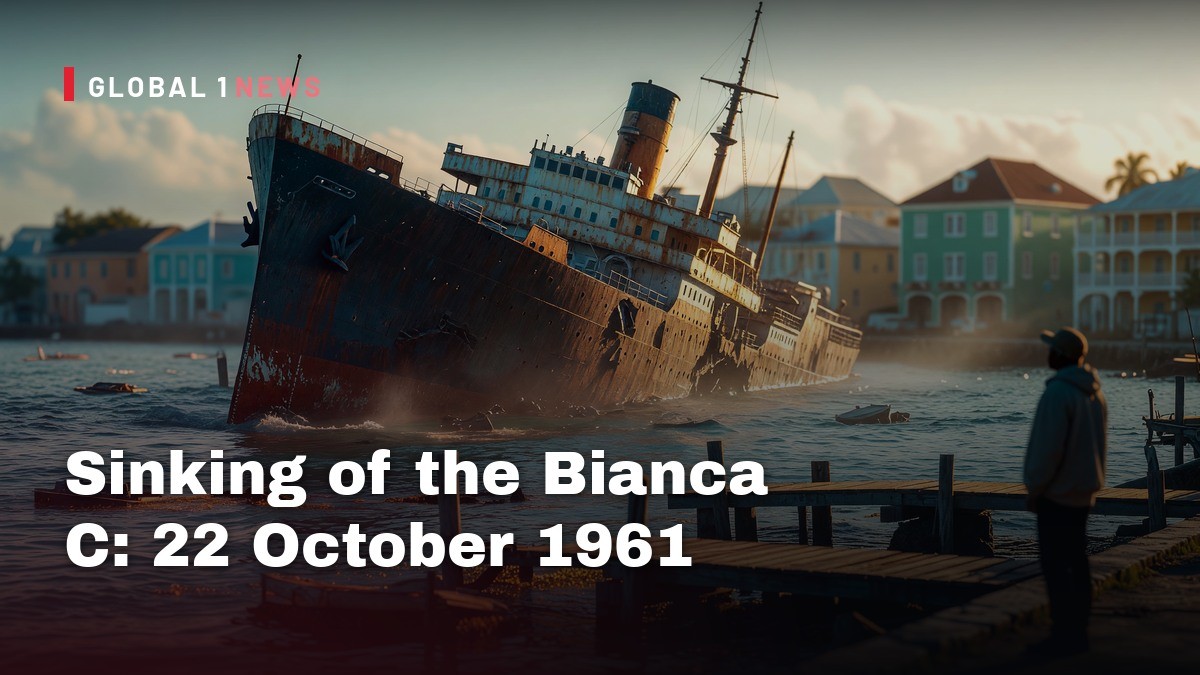
On a bright Sunday morning in October 2026, I found myself strolling along the Carenage in St George’s, the salty breeze reminding me of a story that still echoes through Grenadian memory. More than six decades ago, on 22 October 1961, the Italian liner Bianca C, a favourite of Caribbean tourists, met a fiery fate just off the island’s coast. The rescue effort that followed, and the community spirit that blossomed in its wake, still resonates today, especially as we confront our own challenges of cost‑of‑living pressures and the ever‑present threat of natural disasters across the region.
Setting the scene: Grenada’s bustling harbour in 1961
The Bianca C was a large tourist liner belonging to the Italian Costa Line, regularly plying the Caribbean circuit and anchoring in the outer harbour at St George’s. On that October morning, the ship had taken on board a mixture of emigrants bound for Britain and tourists who had spent the day exploring Grenada’s lush landscapes. Its size meant it could not berth directly in the inner harbour, a logistical quirk that would later shape the rescue operation.
As the vessel prepared to pull up anchor, a sudden, terrible explosion erupted in its engine room. Flames leapt from the damaged quarters, and the ship’s horn began a continuous, mournful blast. A distress flag—recognisable to any sailor—was hoisted, signalling that the liner was on fire. The Grenada Yacht Club, watching from nearby, spotted the flag and the thick black smoke curling into the sky, alerting authorities without delay.
The community’s swift response
Within minutes, harbour officials and local volunteers were on the scene. The Grenadian public, accustomed to the rhythms of island life, opened their homes to the stranded passengers and crew. A special camp was hastily assembled by the government, using hotels and guesthouses to accommodate nearly 400 passengers and 300 crew members. Neighbours, friends and strangers alike offered shelter, food and comfort without charge, embodying the island’s famed hospitality.
This collective effort reflected a broader Caribbean tradition of communal support during crises. Whether facing a hurricane or a sudden economic shock, communities across the region often rally together, a pattern that was vividly displayed in Grenada that October day.
The rescue operation and its tragic cost
Thanks to the rapid mobilisation, all but two crew members were rescued from the burning liner. The two lost lives underscored the peril of maritime travel in the mid‑twentieth century, especially in waters where rescue resources were limited. The Bianca C’s fire quickly spread, but the combined actions of the yacht club, harbour authorities and the willing Grenadian populace ensured that the majority of those on board survived.
After the fire was contained, the vessel was towed out of the harbour the following day. However, the towing chain snapped, and the Bianca C slipped beneath the waves, sinking in about 160 feet of water roughly one and a quarter miles off Point Salines. The wreck would later earn the nickname “Titanic of the Caribbean,” becoming one of the world’s premier shipwreck diving sites.
Legacy of gratitude: Christ of the Abyss
In recognition of the Grenadian people’s assistance, the Costa Line presented the island with a large bronze statue known as “Christ of the Abyss” or “Christ of the Deep.” Placed on the Carenage, the statue stands as a silent reminder of the day when strangers became neighbours in the face of disaster. Its presence also highlights the cultural exchange between Europe and the Caribbean, a relationship that has shaped much of our region’s maritime history.
The statue’s symbolism resonates beyond its religious connotations; it represents resilience, faith and the deep ties that bind islands to the wider world. For many Grenadians, it serves as a point of pride, a tangible link to a dramatic episode that tested and affirmed the island’s communal spirit.
From shipwreck to dive site: Tourism’s evolving narrative
In the decades following the sinking, the Bianca C wreck transformed from tragedy to attraction. Divers from around the globe now flock to the site, drawn by the wreck’s size, the surrounding marine life and its reputation as a top diving destination. This shift mirrors a broader Caribbean trend where historical sites are repurposed for eco‑tourism, providing economic opportunities while preserving cultural memory.
Today’s tourism operators in Grenada and neighbouring islands often incorporate such heritage dives into their itineraries, promoting sustainable practices that protect both the underwater environment and the stories it holds. The Bianca C thus continues to contribute to the island’s economy, albeit in a very different form from its original purpose as a passenger liner.
Reflections on regional solidarity and modern challenges
The 1961 rescue exemplifies the kind of regional solidarity that Caribbean nations continue to rely upon. In recent years, CARICOM has coordinated responses to hurricanes, economic shocks and health crises, echoing the grassroots cooperation seen in Grenada that October. Yet, contemporary challenges—rising living costs, energy sector uncertainties at Petrotrin and Atlantic LNG, and the ever‑present threat of climate‑induced disasters—test the limits of that solidarity.
As we navigate 2026, the memory of the Bianca C reminds us that community action can mitigate even the most sudden calamities. It also underscores the importance of preparedness, robust maritime safety standards and investment in emergency infrastructure, lessons that regional policymakers continue to wrestle with.
Preserving memory: Education and commemoration
Local schools in Grenada now include the Bianca C story in their history curricula, ensuring that younger generations understand the island’s capacity for compassion. Community groups organise annual talks at the Carenage, using the bronze statue as a focal point to discuss maritime safety, tourism development and the broader narrative of Caribbean resilience.
Such educational efforts are vital. They not only honour those who lost their lives but also reinforce the values that helped save hundreds. In a time when many Caribbean societies grapple with identity and development, recalling episodes like the Bianca C sinking provides a shared reference point—a reminder that, together, we can weather fire, flood and the inevitable tides of change.
This article was produced with AI-assisted research and editorial support. Reporting is based on the source material cited below. Sources: Now Grenada; nowgrenada.com; Global1.News (24 October 2026).
By Sharon Sahatoo, Staff Writer
What's Your Reaction?
 Like
0
 Dislike
0
 Love
0
 Funny
0
 Wow
0
 Sad
0
 Angry
0

Caribbean Correspondent at Global1.News. Based in Port of Spain, Trinidad, covering Caribbean politics, economy, energy, climate, and culture. Amplifying the voices and stories of the Caribbean region.













Comments (0)