
NASA updates lander plans for Moon landings, finally solves long-festering Orion issue
NASA just laid out its latest Artemis game plan, and the ripple effects reach far beyond the moon‑lit plains. Re‑routing the Orion‑Starship handshake The biggest shift for SpaceX is the removal of the near‑rectilinear halo orbit (NRHO) requirement.
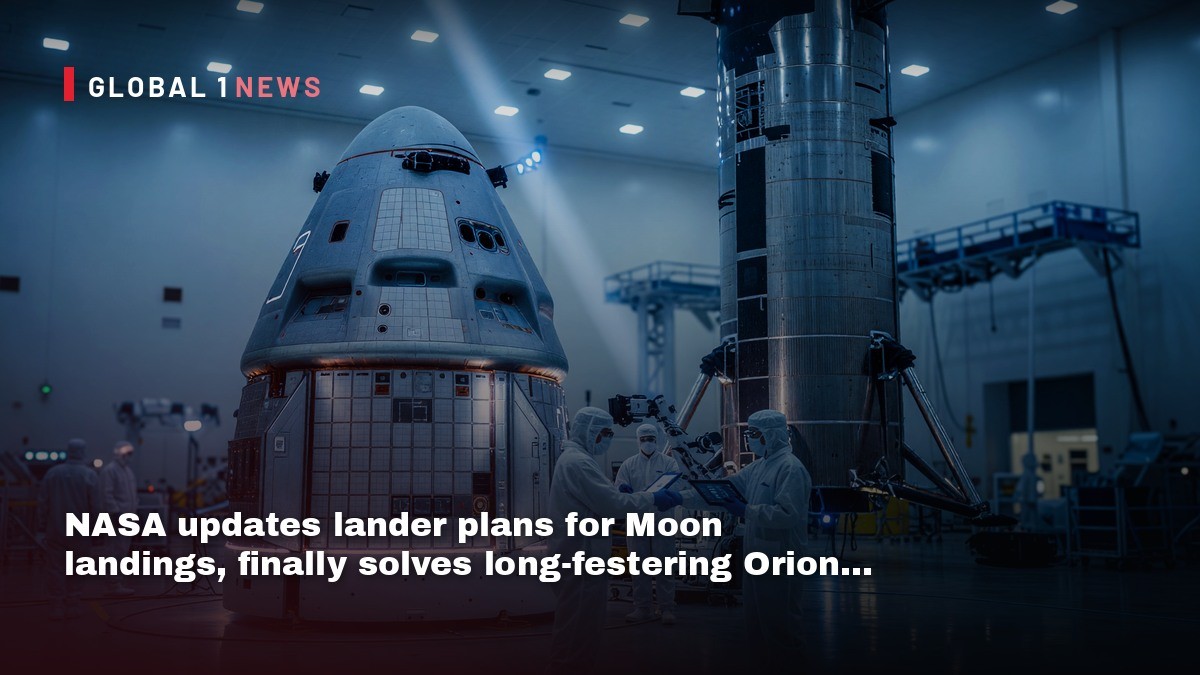
NASA just laid out its latest Artemis game plan, and the ripple effects reach far beyond the moon‑lit plains. As a founder who runs real hosting infrastructure, I watch every NASA‑partner move like I watch bandwidth spikes—looking for where the hype meets the hard‑nosed reality of cost, risk, and deliverability. The new architecture, unveiled in a marathon news conference on 23 October 2026, reshuffles the deck for SpaceX’s Starship and Blue Origin’s New Glenn/Blue Moon combo, and it forces us independent providers to ask: are we betting on the same shaky assumptions, or can we learn to sidestep the same pitfalls?
Re‑routing the Orion‑Starship handshake
The biggest shift for SpaceX is the removal of the near‑rectilinear halo orbit (NRHO) requirement. NASA cancelled the Lunar Gateway earlier this year, which had forced Starship to dock with Orion far out at the NRHO—a costly energy‑tax. Now Orion will dock with the Starship lunar lander in high‑Earth orbit (HEO), then the crew will transit to the Moon. This is a practical win: fewer delta‑V burns, less propellant burn, and a simpler flight profile.
But the devil is still in the refuel count. A NASA safety panel tossed out a figure of “about 22” tanker launches for a Starship lunar mission, while Elon Musk insists the real number sits between six and eight. NASA declined to pin it down, leaving a wide uncertainty band. For us, that’s a red flag—when a partner can’t nail down launch cadence, the downstream supply chain feels the tremor. The takeaway: any service that leans on a variable‑heavy refuel chain inherits that volatility.
Blue Origin’s four‑launch choreography
Blue Origin’s revised plan leans on four New Glenn launches, but drops the idea of spacecraft‑to‑spacecraft refueling. Instead, New Glenn will loft three “transfer stages” modeled after the Blue Moon Mark 1 lander, then a separate Blue Moon Mark 2 that will rendezvous with those stages in low‑Earth orbit (LEO). The architecture is not brand‑new; it was first reported in March, but the NASA chart showed a new twist: Orion docking with Blue Moon in an elliptical lunar orbit about 8,500 km up, with an option for low‑lunar orbit (a few hundred kilometres).
That low‑lunar orbit option is a game‑changer. Jeremy Parsons, Artemis program manager, noted it would shave propellant off the descent‑ascent cycle, freeing mass for other payloads. For a launch provider, that translates into a lighter, cheaper launch envelope. For an independent host, it signals that the “one‑size‑fits‑all” approach of high‑orbit rendezvous is being questioned, and that more efficient, lower‑orbit solutions are gaining traction.
Orion’s long‑standing propulsion shortfall
Orion’s Service Module has been a chronic under‑performer. It can’t lift off from Earth, swing into low‑lunar orbit, and splash down without help. NASA’s historic workaround was the Lunar Gateway, a staging point in NRHO that let Orion off‑load the heavy lifting to the lander. Now, with the Centaur V “extended” upper stage in the works—paired with the SLS core stage—Orion can reach low‑lunar orbit on its own. That’s a big win for NASA, but also a cautionary tale: the agency has been forced to patch its own hardware gaps by pushing the burden onto commercial partners.
From a business‑risk perspective, this shift means the lander providers now have to meet tighter performance windows. If Orion can get closer to the Moon, the lander’s delta‑V budget shrinks, but the timeline for integration tightens. Independent providers must be ready to adapt quickly, or risk being left out of the launch manifest.
Refuel uncertainty and its cost impact
The refuel debate is the most glaring source of cost volatility. SpaceX’s claim of six to eight tanker launches versus the safety panel’s “about 22” is not just a numbers game; it reflects a deeper uncertainty about Starship’s in‑orbit boil‑off rates, transfer efficiency, and lift capacity. Those variables directly affect launch cadence, ground‑support infrastructure, and the overall price tag for a lunar mission.
For hosting providers, the lesson is clear: any service that depends on a high‑frequency launch cadence must build in buffers—both in capacity and in contractual flexibility. When a partner can swing from a dozen tankers to a handful, your cost model can swing wildly. Expect to negotiate terms that allow for scaling up or down without punitive penalties.
Blue Origin’s no‑refuel promise—still risky
Blue Origin’s decision to drop refueling between vehicles for initial missions simplifies the logistics chain, but it does not eliminate risk. The plan still requires three transfer stages and a separate lander launch, meaning four New Glenn flights to get a single lunar landing capability. That’s a heavy lift schedule, and any delay in one launch cascades through the whole architecture.
Moreover, the exact configuration of the transfer stages—whether an expendable 7×2 variant or a reusable 9×4 rocket—remains ambiguous. Hosting providers need to watch for that decision, as it will dictate the payload envelope, turnaround time, and ultimately the cost per kilogram to LEO. The less reusable the stack, the higher the per‑launch price, and the tighter the margin for any downstream service.
Strategic takeaways for independent operators
What does all this mean for us running real hosting infrastructure? First, the shift to low‑lunar orbit docking reduces the propellant budget for landers, which could translate into lighter payloads and cheaper launch slots. That opens a window for smaller, more agile providers to offer niche services—like on‑orbit storage, data relay, or rapid‑turnaround payload integration—without competing directly with the megacontractors.
Second, the lingering refuel uncertainty forces any partner to demand clear, enforceable milestones. If you’re bundling launch services with hosting, embed clauses that trigger price adjustments or alternative provisioning if the tanker count exceeds a defined threshold. Flexibility is the currency of survival in a landscape where even NASA’s own architecture is still fluid.
Actionable steps for founders
1. **Audit your supply chain for launch‑frequency risk.** Map out every dependency on a partner’s launch cadence and assign a risk score. If a partner’s refuel plan is vague, flag it for renegotiation.
2. **Invest in low‑orbit capability.** The push toward low‑lunar orbit docking means that services operating in LEO will be more valuable. Consider expanding your ground‑station footprint or offering on‑orbit processing that can be inserted into the transfer‑stage stack.
3. **Negotiate flexible contracts.** Insist on clauses that allow you to shift payloads between launch providers if one falls behind schedule or cost targets. The ability to pivot between SpaceX and Blue Origin—or even emerging small‑launch firms—will be a competitive edge.
4. **Monitor the Centaur V development.** If NASA succeeds in giving Orion low‑lunar capability, the demand for high‑energy transfer stages will dip. Position your services to support the new, lighter lander configurations that will follow.
5. **Stay vocal in the community.** NASA’s “listening to the data” stance means they’ll respond to clear, data‑driven feedback. Share performance metrics from your own infrastructure that demonstrate how tighter integration can shave days off a mission timeline. The more concrete data you bring, the more likely you are to shape the next iteration of the Artemis architecture.
In short, NASA’s latest Artemis tweaks are a reminder that even the most well‑funded space programs are still wrestling with the same old physics and economics that we wrestle with in data centers: power, mass, and timing. The winners will be those who can translate hard numbers into hard‑earned margins, not those who chase hype. Keep your servers humming, your contracts tight, and your eyes on the low‑lunar horizon.
— Allan Ali, Founder
This article was produced with AI-assisted research and editorial support. Reporting is based on the source material cited below. Sources: Ars Technica; arstechnica.com; Global1.News (24 October 2026).
By Allan Ali, Global1.News
What's Your Reaction?
 Like
0
 Dislike
0
 Love
0
 Funny
0
 Wow
0
 Sad
0
 Angry
0

Publisher of Global1.News. Automation architect, systems builder, and the guy making sure the truth gets published.














Comments (0)