
The China-Taiwan Diplomatic War Is More About Politics Than Economics
Since the end of the Chinese Civil War in 1949, the diplomatic contest between the People’s Republic of China (PRC) and the Republic of China (ROC) – now commonly referred to as Taiwan – has been a persistent feature of international politics.
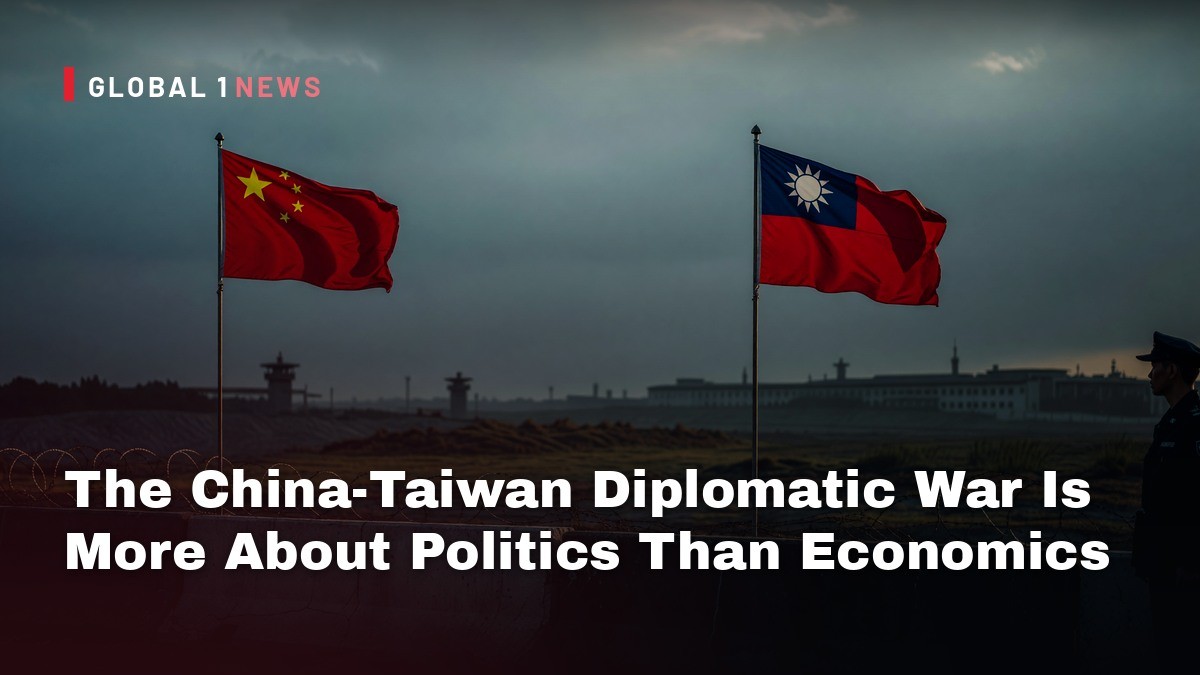
Since the end of the Chinese Civil War in 1949, the diplomatic contest between the People’s Republic of China (PRC) and the Republic of China (ROC) – now commonly referred to as Taiwan – has been a persistent feature of international politics. The PRC’s “One China” doctrine forces states to choose either Beijing, Taipei, or to remain neutral, and this binary choice has shaped the diplomatic landscape for more than seven decades. While the competition has often been portrayed as a battle of “dollar diplomacy,” recent analysis shows that political leverage, rather than pure economic incentives, remains the decisive factor in the few remaining formal recognitions of Taiwan.
Historical Shifts in African Recognition
In the early post‑war era, Taiwan benefitted from U.S. anti‑communist messaging and generous aid programmes, which helped it secure widespread recognition across Africa. Between 1960 and 1963, many newly independent African states, wary of Beijing’s communist ideology, opted to recognise the ROC as the legitimate representative of China. By the time United Nations General Assembly Resolution 2758 was adopted in 1971 – admitting the PRC to the UN and expelling the ROC – the balance of African support was almost even, with Taiwan recognised by 20 African countries compared with 22 for the PRC.
The passage of Resolution 2758 proved a turning point. Within eight years, the number of African states recognising Taipei fell to just five, underscoring how a single diplomatic decision at the United Nations can dramatically reshape a nation’s global legitimacy. The loss of African allies was not merely a statistical decline; it signalled the beginning of a long‑term erosion of Taiwan’s diplomatic foothold on the continent.
Economic Tools in the Diplomatic Contest
Both Taipei and Beijing have employed what analysts term “dollar diplomacy” – the use of loans, technical assistance, trade incentives and infrastructure investment to win allies. Taiwan began its development outreach in Africa as early as 1960, establishing trade incentives and development projects to compensate for its smaller economic base. However, the PRC’s rapid economic growth and the launch of the Belt and Road Initiative (BRI) have dwarfed Taiwan’s capacity to compete on pure financial terms.
Burkina Faso illustrates the limits of Taiwan’s economic leverage. After severing ties in 1973, the country re‑established relations with Taipei in 1994 under President Blaise Compaoré, attracted by the promise of a lucrative economic partnership. Yet the 2018 switch back to the PRC, following Compaoré’s loss of power and a series of coups, demonstrates how political instability and the PRC’s expanding investment portfolio can overturn even previously secured agreements. Taiwan’s response focused on blaming Beijing for “serial acts of suppression” rather than addressing the underlying political calculations of the Burkinabe leadership.
Pragmatic Diplomacy: Shifting from Formal Recognition to De Facto Influence
Faced with a shrinking roster of formal allies, Taiwan has embraced a “pragmatic diplomacy” model that prioritises economic presence over diplomatic titles. In Africa, this strategy manifests through trade and political representative offices in Nigeria, South Africa, Côte d’Ivoire and the partially recognised state of Somaliland. Quasi‑governmental bodies such as the Taiwan External Trade Development Council, the International Cooperation and Development Fund, and the Taiwan‑Africa Business Association work to sustain economic ties, even as Beijing’s influence expands.
These organisations have not halted the PRC’s advance, but they illustrate Taiwan’s ability to maintain a functional diplomatic footprint without formal embassies. By focusing on business networks, technical cooperation and people‑to‑people exchanges, Taipei seeks to create a web of interests that can survive the loss of official recognition.
Case Study: Eswatini’s Enduring Alliance
Eswatini remains one of the few African monarchies that continues to recognise Taiwan. This relationship has incurred both diplomatic condemnation and economic exclusion from Beijing. In 2026, the PRC attempted to block Taiwanese President Lai Ching‑te’s visit to Eswatini by pressuring neighbouring island nations – Seychelles, Mauritius and Madagascar – to revoke flight permits for the Taiwanese delegation. Lai’s subsequent clandestine visit, undertaken despite the PRC’s pressure, highlighted the lengths to which Taipei will go to sustain its limited diplomatic network.
The cost of Eswatini’s stance is tangible. Exclusion from the Forum on China‑Africa Cooperation (FOCAC) denies the kingdom access to the PRC’s extensive investment programmes, creating an opportunity cost that hampers its economic competitiveness. Nevertheless, Eswatini’s monarchical system appears to buffer the political fallout, as the country’s internal governance structure reduces the salience of external diplomatic pressures.
Somaliland: A Unique Partnership Beyond Statehood
Somaliland, a breakaway region of northern Somalia, occupies a singular niche in Taiwan’s diplomatic outreach. While most of the international community refuses to recognise Somaliland as a sovereign state, the region has cultivated a relationship with Taipei that mirrors the political utility of formal recognition. Since declaring independence in 1991, Somaliland has lobbied for international acceptance, with Israel being the sole UN member to grant formal recognition.
For Taiwan, the partnership offers a strategic foothold in a geopolitically sensitive part of the Horn of Africa. By engaging with Somaliland, Taipei can demonstrate solidarity with entities that challenge Beijing’s territorial narratives, while also gaining a partner that can serve as a conduit for limited economic projects and political dialogue.
Political Leverage Over Pure Economics
The comparative analysis of Taiwan’s ties with Africa and Latin America underscores a core conclusion: political considerations outweigh economic incentives in the decision‑making of small states. While “dollar diplomacy” remains a tool for both Beijing and Taipei, the ultimate choice to recognise Taiwan often reflects a calculation of political autonomy, strategic alignment, and the perceived benefits of standing apart from the PRC’s sphere.
Countries such as Eswatini and the Pacific island nations of the Marshall Islands, Palau and Tuvalu maintain formal relations with Taipei not solely because of financial aid, but because the political symbolism of recognising a separate Chinese entity offers them a distinct diplomatic identity. This symbolic capital can translate into leverage in multilateral forums, as well as a degree of protection against the PRC’s expansive economic coercion.
Future Trajectories: Diplomatic Survival in a PRC‑Dominated World
Looking ahead, Taiwan’s diplomatic survival will likely depend on deepening its pragmatic outreach while exploiting the political niches that larger powers cannot easily fill. The continued operation of representative offices, the cultivation of quasi‑governmental partnerships, and the maintenance of symbolic alliances with small states will be crucial. At the same time, the PRC’s ability to deploy economic coercion – as seen in the 2026 flight‑permit incident – suggests that Taiwan must remain vigilant against pressure tactics that target its remaining allies.
In the broader context of Asia‑Pacific geopolitics, the Taiwan‑China diplomatic contest reflects a microcosm of the larger struggle between a rising authoritarian power and a democratic, market‑oriented system seeking to preserve its international space. As long as a handful of nations continue to view Taiwan as a valuable political partner rather than merely a source of aid, the island will retain a foothold in the global diplomatic arena, however modest. The contest, therefore, remains less about the size of the financial packages offered and more about the political narratives each side can sustain in the eyes of the world’s smaller, often vulnerable, states.
This article was produced with AI-assisted research and editorial support. Reporting is based on the source material cited below. Sources: The Diplomat; thediplomat.com; Global1.News (24 October 2026).
By Kenji Tanaka, Staff Writer
What's Your Reaction?
 Like
0
 Dislike
0
 Love
0
 Funny
0
 Wow
0
 Sad
0
 Angry
0

Japan Correspondent at Global1.News. Tokyo-based voice covering Japanese politics, technology, economy, and culture. Tracks the intersection of tradition and innovation in one of the world's most dynamic societies.









Comments (0)