
Saudi Arabia Said Houthi Missiles Were Aimed at Mecca and Medina. Its Own Coalition Named Two Other Cities.
Saudi Arabia's civil defence directorate said two ballistic missiles were launched toward the Mecca and Medina regions and were intercepted, with debris falling across western Saudi Arabia. The Saudi-led coalition named Taif and Yanbu as the targets, and the Houthis called the holy-cities account a lie.
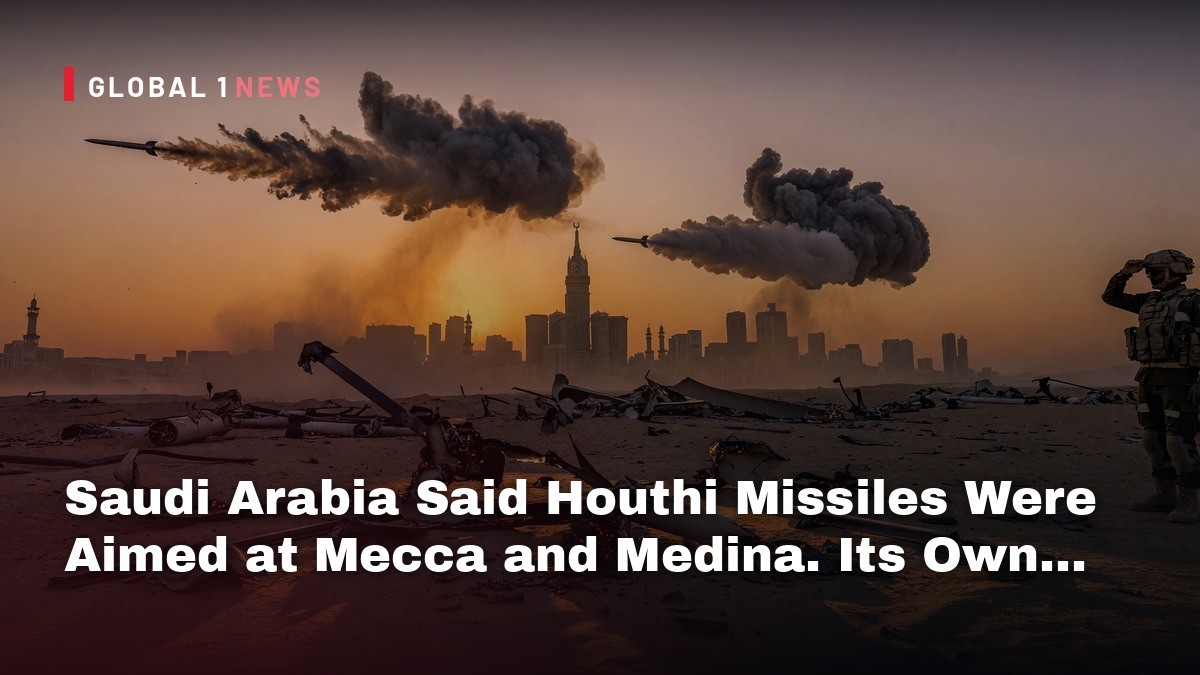
Saudi Arabia's civil defence directorate said two ballistic missiles were launched towards the Mecca and Medina regions on Saturday and were intercepted, with debris falling across western Saudi Arabia. The Saudi-led coalition fighting the Houthis named Taif and Yanbu as the targets. The Houthis called the holy-cities account a lie.
Saudi Arabia Said Houthi Missiles Were Aimed at Mecca and Medina. Its Own Coalition Named Two Other Cities.
RIYADH, Saudi Arabia — The discrepancy emerged within hours of the first alerts. Saudi Civil Defence issued danger warnings for Jeddah, Yanbu, Taif and Makkah governorates, then lifted them shortly afterwards. Brig. Gen. Turki Al-Maliki, the coalition spokesman, said two missiles fired towards Taif and Yanbu were intercepted and destroyed around noon. The Houthi military spokesman, Yahya Saree, denied any attack on the two holy cities and listed seven operations elsewhere. No Saudi statement gave a casualty figure or a damage assessment for Saturday's interceptions, and none said a missile had landed anywhere.
What Saudi Arabia Said Fell Over the Holy Cities
The General Directorate of Civil Defense stated that its teams in the Makkah and Madinah regions responded on Saturday to falling debris from the interception of two ballistic missiles launched by the Houthi militia "toward the two regions." The statement, carried by the Saudi Press Agency at 20:15 local time, 17:15 GMT, specified where the fragments came down. Parts of the intercepted missiles fell in Wadi Al-Mughammas in Makkah, while interception debris fell in Al-Nuzha neighborhood in Jeddah Governorate, Wadi Jalil in Taif Governorate, and Masturah Center in Rabigh Governorate. The directorate gave no casualty or damage figures. Gulf News reported that the statement did not provide details of casualties or damage. The agency renders the cities as Makkah and Madinah. The statement also did not say which missile produced which debris, or which interception the fragments in Wadi Al-Mughammas belonged to.
The Coalition Named Taif and Yanbu
Brig. Gen. Turki Al-Maliki said two ballistic missiles launched by the Houthis towards the cities of Taif and Yanbu were intercepted and destroyed around noon on Saturday. Earlier, at 4 a.m., the Saudi Civil Defence sounded alarms through its Early Warning Platform warning of potential incoming aerial threats across Riyadh, Najran and the southern governorate of Wadi Al-Dawasir. Arab News reported that two loud blasts reverberated across the capital minutes after the alert was issued. The coalition spokesperson said in an earlier statement on X that air defences had intercepted and destroyed a ballistic missile launched towards Riyadh, and that "a drone was intercepted and destroyed in the Eastern Province." The Saudi Press Agency later reported a further drone intercepted and destroyed in the Riyadh region. The coalition's target list and the civil defence's target list do not match: the directorate named the Mecca and Medina regions, the spokesman named Taif and Yanbu. Reuters reported that the danger alerts in Taif, Yanbu, Mecca and Jeddah were lifted about ten minutes after they were issued.
The Houthis Called It a Lie
Yahya Saree, the Houthi military spokesman, denied that the group attacked Mecca and Medina, saying its operations "target Saudi oil facilities and military bases." Al Jazeera reported that the Houthis described the claim that they targeted the two cities, the holiest in Islam, as a "huge lie." The Houthis said the targets were three Saudi airports, oil infrastructure and an airbase. Reuters reported earlier this month that the Houthis warned airlines against using Saudi airspace, exempting only the airspace over Mecca and Medina, as they intensified attacks on the kingdom. The denial and the target list came in the same statement posted on X and Telegram in which Saree set out seven operations over the previous 24 hours. Saudi Arabia has not confirmed that any missile struck a target; it has confirmed interceptions and debris.
Seven Targets in Twenty-Four Hours
Saree listed seven "distinct" military operations in the past 24 hours using ballistic missiles and drones. He said King Khalid International Airport in Riyadh was targeted "in two stages" and that the strikes were "precise"; that the strike on the Aramco facility in Yanbu was "precise"; that the operation against the Rabigh oil refinery "successfully achieved its objective"; and that the attack on crude oil pumping stations and the crude oil transport pipeline from east to west also "successfully achieved its objective." He said King Fahd International Airport in Dammam was hit in a "precise" strike "leading to the disruption of air traffic at the airport," that Najran Airport was struck "precise and direct," and that Khamis Mushait Air Base was hit "direct." Saree said: "Our operations will continue deep inside Saudi territory, enforcing the equation of blockade for blockade and escalation for escalation, and targeting the Saudi enemy's troop concentrations until the aggression ceases and the blockade against our beloved country is lifted." He said the attacks answered "the treacherous Saudi aggression against our country, which launched 100 airstrikes over the past 24 hours targeting civilian infrastructure," and put the total number of Saudi air and missile strikes since the latest escalation began at 3,123.
Aden, Hit From the Other Direction
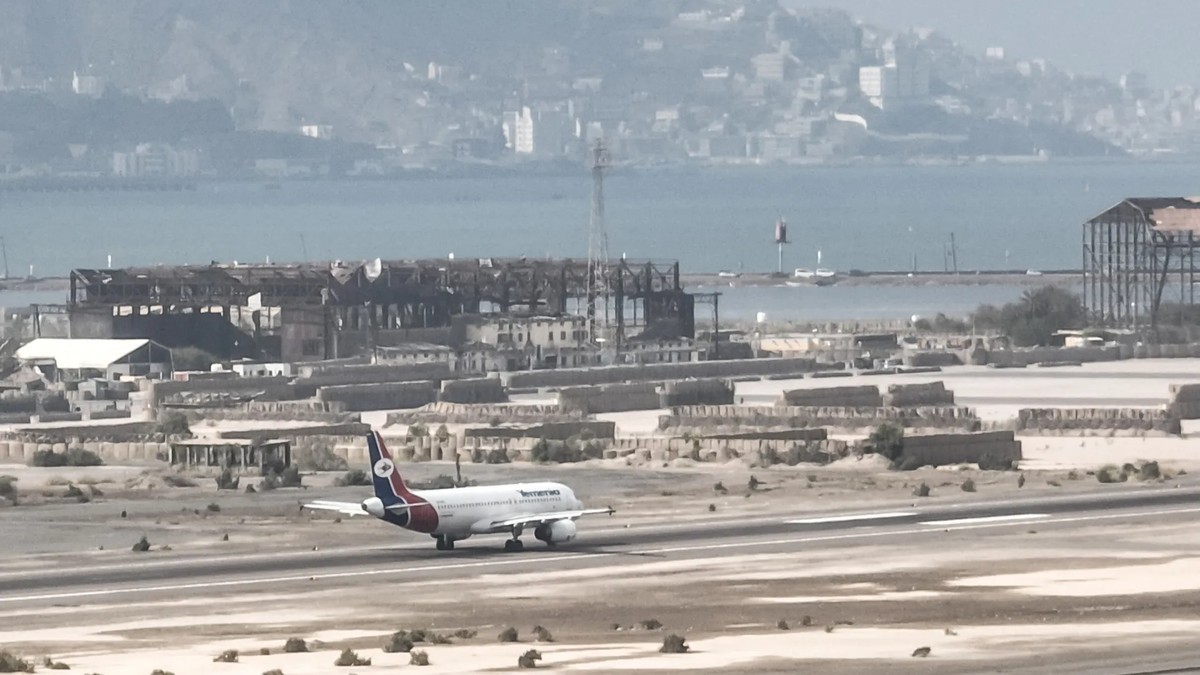
Yemen's transport ministry said in a Facebook post on Saturday that the Houthis targeted Aden International Airport with two ballistic missiles, the "fourth such attack this month." The ministry said the airport attacks pose "a threat to the safety of civil aviation" and have "humanitarian and economic repercussions for citizens" who rely on it. The interior ministry said two of the Houthis' missiles struck a coast guard headquarters, while a third hit a coast guard building in the Tawahi district. Saree said the group targeted Saudi-backed military gatherings at al-Nasr camp and a naval military base in Aden, saying Saudi officers were overseeing the mobilisation there. There was no immediate comment from the Saudi-led coalition on that assertion. The accounts of what was hit in Aden differ between the internationally recognised government and the Houthi spokesman. On 21 October the government accused the Houthis of striking Aden and al-Rayyan airports, and Rashad Al-Alimi, head of the Presidential Leadership Council, condemned the strikes and called on the international community to proscribe the group as a terrorist organisation.
What Fell in Sanaa, and Who Is Counting
Houthi-affiliated Al-Masirah TV reported that Saudi airstrikes killed at least 17 people across Yemen on Saturday, including eight in Sanaa's Hamdan district, four in the capital's Asr neighbourhood and five members of one family in Al-Hudaydah's Al-Tuhayta district. Earlier Al-Masirah reports said at least four were killed in a strike on a house in the Asr area, and that a strike on a residential building housing cement factory workers killed six women and one child and injured three others; the channel later reported eight killed and 10 injured in that attack. AFP, citing Houthi media, reported that Saudi airstrikes killed 16 people in Sanaa. The figures do not reconcile, and Riyadh has not commented. Every Yemeni civilian toll from Saturday's Saudi strikes comes from Houthi-affiliated media and is unverified. Yemen's army said a Houthi missile killed three people when it malfunctioned and fell on a family home in Houthi-held Sanaa on Friday, one of what it described as a number of recent malfunctions. Yemeni army spokesman Colonel Majed Abdullah al-Nazili said government forces carried out more than 700 "targeting operations" in 24 hours, "neutralising" 300 Houthi fighters in Taiz; in a separate statement the same spokesman claimed 835 targeting operations and 285 killed or injured. Al Jazeera said it could not independently verify those figures.
The Truce That Ended in July
A 2022 UN-brokered truce largely halted cross-border attacks. It collapsed in July 2026, when the Houthis announced a blockade on Saudi ports in the Bab al-Mandeb strait. On 13 July 2026, Reuters reported, the Houthis fired missiles at Saudi Arabia after accusing the kingdom of bombing Sanaa airport, breaking a four-year truce; they targeted Abha International Airport and warned airlines against flying in Saudi airspace until restrictions on Sanaa Airport were lifted. October brought an airport campaign. On 8 October, three were killed in Houthi attacks on Saudi airports, officials said. On 10 October, King Khalid International Airport in Riyadh was struck; Saudi Arabia said 12 were killed and more than 300 wounded, among them four Saudis, two Bangladeshis and one citizen each from the United States, Egypt, Jordan, Syria, Palestine and Sudan. On 11 October, a second strike on Riyadh airport in two days killed one person, a Pakistani resident, and injured 11. A strike on King Fahd International Airport in Dammam on 21 October killed one and injured eight, and the toll rose to two the following day. The UN Secretary-General, Antonio Guterres, said after the Riyadh strike that "these attacks must cease immediately."
The Allies Moving In
Britain's Defence Secretary Wes Streeting announced on Tuesday 20 October that Royal Air Force Typhoon jets will "conduct defensive counter-air operations over Saudi Arabia, helping to protect Saudi cities, civilian populations and critical national infrastructure" from missiles and drones. The British planes will not strike Houthi targets on the ground. The UK will also send a military transport plane and an unspecified number of military advisers, and in-air refuelling of Saudi planes is extended by another 90 days. Streeting said "the government remains clear that there is no long-term military solution to the conflict in Yemen." The Associated Press reported that Saudi Arabia had asked its allies, including France, Britain, Pakistan and Egypt, to deploy air-defence support. Egypt's President Abdel-Fattah el-Sissi said his government would take "any measure" to defend Saudi Arabia and called for parliament to convene; a vote is scheduled for next week. The State Department ordered nonemergency government employees and their families out of its mission in Saudi Arabia on Wednesday 21 October, warning in a travel alert that "the hostilities have the potential to escalate rapidly beyond that immediate area." The US, which bombed the Houthis under the Biden and Trump administrations, has declined to do the same this time.
Why the Holy Cities Claim Matters
GCC Secretary-General Jasem Mohamed Albudaiwi strongly condemned "the Houthi terrorist attack that targeted several areas of Saudi Arabia, during which two ballistic missiles were intercepted and debris fell in Wadi Al-Mughammas in Makkah and in locations across Jeddah, Taif, and Rabigh governorates." He said exposing Makkah to the risks of such attacks was "a grave violation of the sanctity of the Holy Sites and a provocation to the sentiments of Muslims worldwide," adding that such attacks "could not be justified or tolerated under any pretext." On 10 October, the Secretariat of the Council of Senior Scholars said the Houthi militia is a terrorist group that violated sanctities. The two cities hold Islam's holiest sites and are visited by millions of Muslim pilgrims every year, which is why an account of missiles aimed at them carries further than an account of missiles aimed at an airport. In Yemen, OCHA reported on 22 October that almost 260,000 people have been displaced since August, about half of them into Taiz, and that OHCHR has verified 251 civilian casualties, including 57 killed and 194 injured, half of the dead being children. Yemen's education ministry says more than 2.5 million children are out of school.
What Is Not Established
Three accounts now sit side by side. Saudi Civil Defence says two missiles were launched towards the Mecca and Medina regions and intercepted, with debris in Wadi Al-Mughammas, Al-Nuzha, Wadi Jalil and Masturah Center. The coalition spokesman says two missiles towards Taif and Yanbu were intercepted and destroyed. The Houthi spokesman says the holy-cities account is a "huge lie" and lists seven other targets, all of them airports, oil infrastructure or military sites. None of the three establishes a casualty figure for 24 October, a damage assessment, or confirmation that anything struck a target. There is no agreed target list. There is no confirmed Yemeni toll; the figures from Houthi-affiliated media do not reconcile. What remains unanswered is what the debris in Wadi Al-Mughammas came from, and which launch it belonged to. That question will be settled, if at all, by what the kingdom publishes next, and by whether the two cities stay out of the next statement.
By Jessica Ali, Staff Writer
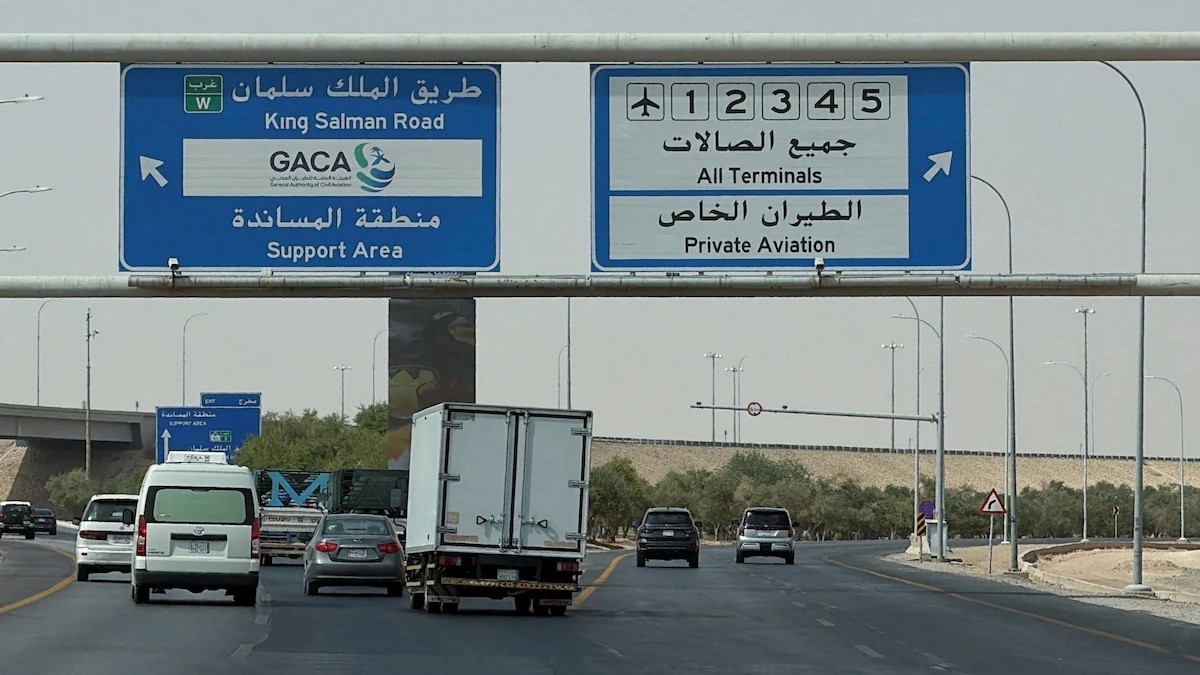
This article was produced with AI-assisted research and editorial support. Sources: Saudi Press Agency, Reuters, Al Jazeera, Arab News, Gulf News, Al Arabiya English, The Jerusalem Post, Dawn, TASS, BBC, NPR, UN News, OCHA, The Globe and Mail. Photographs: Gulf News (cover), The Globe and Mail (Riyadh airport approach), AFP via Al Jazeera (Aden airport).
What's Your Reaction?
 Like
0
 Dislike
0
 Love
0
 Funny
0
 Wow
0
 Sad
0
 Angry
0

Editor-in-Chief at Global1.News. Atlanta-based journalist who cuts through the BS and tells it like it is. Lead anchor, host, and the voice you hear when the spin stops and the truth starts.














Comments (0)