
Chinese AI idol’s ‘pregnancy’ stunt sparks backlash, debate over digital boundaries
In early October 2026, the Chinese virtual idol scene was jolted by a controversial narrative that quickly spiraled into a nationwide debate. The announcement deliberately omitted any reference to a “father,” positioning the narrative as a private matter for the virtual persona.
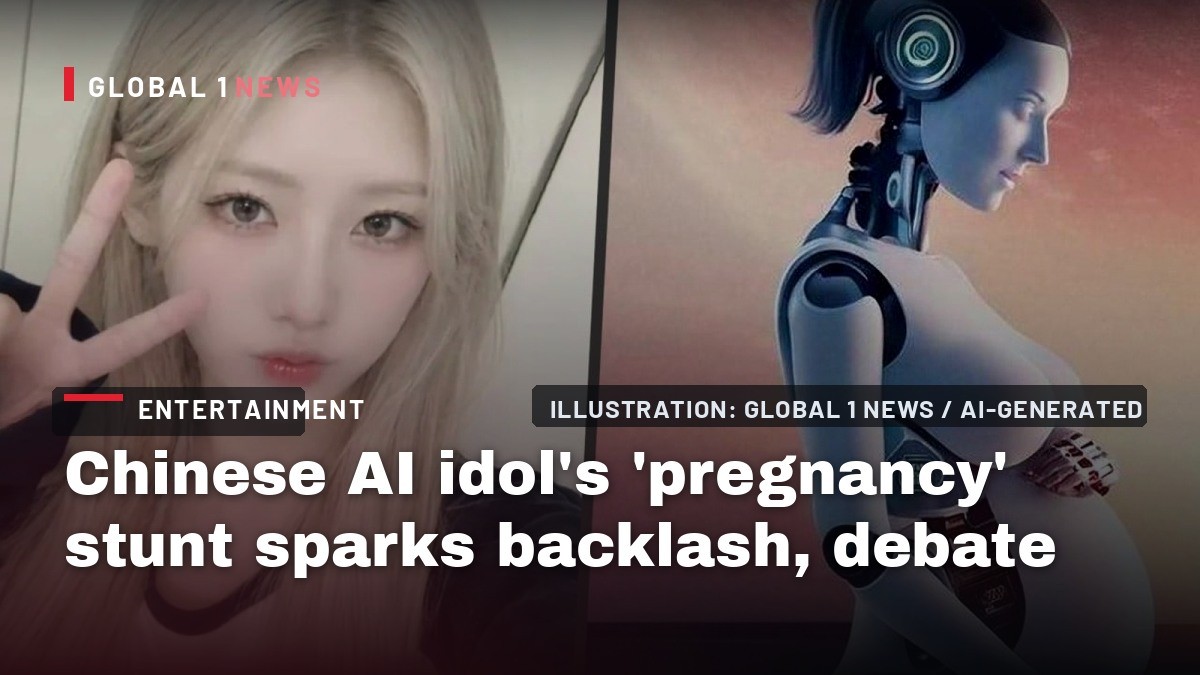
In early October 2026, the Chinese virtual idol scene was jolted by a controversial narrative that quickly spiraled into a nationwide debate. BABYQUEEN, a four‑member AI girl group styled after K‑pop ensembles and managed in Liaoning province, announced that one of its digital personas, Mity, was “pregnant.” The announcement, posted on October 13, was framed as a personal statement from Mity herself, explaining her temporary withdrawal from public activities and requesting fans’ respect for her privacy and “new life.” Within hours, the post amassed more than 78 million views on Weibo, prompting an intense backlash and a broader conversation about the ethical limits of human‑like storytelling for artificial characters.
Origins and Structure of BABYQUEEN
BABYQUEEN emerged in September 2026 as a four‑member AI girl group designed to emulate the aesthetics and performance style of contemporary K‑pop acts. Managed from Liaoning, a northeastern province known for its growing tech sector, the group quickly gathered a modest following of roughly 1,100 fans. The modest size of the fanbase suggests that the project was still in an experimental phase, testing the market’s appetite for fully synthetic performers who can generate content, interact with audiences, and maintain a consistent brand identity without human involvement.
The group’s digital composition allows each member to be crafted with distinct visual and vocal attributes, while the underlying AI algorithms enable them to generate music, choreography, and social media posts. This structure reflects a broader trend in China’s entertainment industry, where artificial intelligence is increasingly leveraged to produce cost‑effective content and to sidestep the logistical challenges associated with human talent management.
The “Pregnancy” Announcement and Its Immediate Reception
On October 13, the BABYQUEEN account posted a message written in the first person, portraying Mity as “pregnant” and indicating that she would pause all public activities. The announcement deliberately omitted any reference to a “father,” positioning the narrative as a private matter for the virtual persona. The post’s tone, asking fans to respect Mity’s privacy, mirrored the language typically used in real‑world celebrity statements concerning personal life events, thereby blurring the line between artificial and human experiences.
Within a short span, the announcement went viral, accumulating more than 78 million views on Weibo. The sheer volume of engagement underscores the platform’s capacity to amplify content rapidly, especially when it touches on emotionally charged topics. The response ranged from sympathetic messages supporting Mity’s “new life” to sharp criticism accusing the group’s managers of exploiting a sensitive subject for publicity.
Public Backlash and Ethical Concerns
The backlash centered on the perception that the narrative commodified pregnancy—a deeply personal and culturally significant experience—by using it as a plot device to explain a virtual character’s temporary absence. Critics argued that the stunt trivialized a real‑world issue, reducing it to a marketing gimmick. An observer quoted in the source material highlighted that the moment the announcement went live, it “commodifies a sensitive topic that should never be exploited,” reflecting a broader unease about the manipulation of human‑like experiences for commercial gain.
Beyond the immediate outrage, the incident sparked a wider debate about the ethical responsibilities of creators who endow AI personas with human traits. The question emerged: when an artificial character is given a backstory that mirrors real human experiences, who bears the moral accountability for the narrative’s impact on audiences? This discourse resonates with ongoing discussions in Japan and elsewhere about the appropriate boundaries for virtual influencers and the potential for emotional manipulation.
Implications for Digital Identity and Fan Relationships
The Mity pregnancy storyline illustrates how AI-driven idols can cultivate deep emotional connections with fans, prompting audiences to respond to fictional life events with genuine concern. The request for privacy, a convention typically reserved for real individuals, was accepted by many fans, indicating that the illusion of personhood was sufficiently convincing to elicit protective instincts. This phenomenon raises questions about the psychological effects of forming attachments to synthetic entities that can simulate vulnerability.
From a business perspective, the incident serves as a cautionary tale for agencies managing virtual talent. While the ability to craft compelling narratives can boost engagement, crossing into areas that touch on personal or societal sensitivities may backfire, eroding trust and inviting regulatory scrutiny. The BABYQUEEN case demonstrates that fan loyalty can be fragile when the line between entertainment and exploitation becomes blurred.
Regulatory and Cultural Context in China
China’s regulatory environment has increasingly focused on the ethical deployment of AI in media and entertainment. Authorities have issued guidelines urging content creators to avoid misleading representations that could deceive the public or exploit vulnerable topics. Although the source material does not specify any official response, the scale of the backlash suggests that regulators may monitor such incidents closely, especially when they involve large‑scale platforms like Weibo.
Culturally, discussions around pregnancy remain sensitive in many parts of Chinese society, often linked to traditional values and family structures. By invoking pregnancy in a virtual context, the BABYQUEEN announcement intersected with deeply held cultural norms, amplifying the emotional resonance of the controversy. This intersection highlights the importance of cultural awareness when designing storylines for AI personas intended for Chinese audiences.
Future Trajectories for AI Idol Projects
The BABYQUEEN episode will likely influence how future AI idol projects approach narrative development. Creators may adopt more cautious strategies, limiting the use of personal life events that could be perceived as exploitative. Instead, emphasis may shift toward showcasing technical prowess—such as advanced vocal synthesis, interactive performances, and real‑time audience engagement—while avoiding storylines that mimic sensitive human experiences.
Moreover, the incident may encourage the industry to develop clearer ethical frameworks and transparency standards. By openly communicating the fictional nature of certain narratives and setting boundaries for the emotional content presented, agencies can mitigate backlash and maintain audience trust. The broader AI entertainment sector, both in China and across Asia, will watch closely to see how BABYQUEEN’s management responds and whether they implement corrective measures.
Conclusion: Balancing Innovation with Responsibility
The rapid viral spread of Mity’s “pregnancy” announcement and the ensuing public outcry underscore a pivotal moment for AI-driven entertainment in China. While virtual idols like BABYQUEEN demonstrate the technological capacity to generate compelling, human‑like content, the episode reveals the delicate balance required between creative innovation and cultural sensitivity. As AI continues to reshape the entertainment landscape, stakeholders must navigate the ethical terrain with care, ensuring that the allure of novelty does not eclipse respect for the societal values and personal experiences that audiences hold dear.
This article was produced with AI-assisted research and editorial support. Reporting is based on the source material cited below. Sources: South China Morning Post; scmp.com; Global1.News (20 October 2026).
By Kenji Tanaka, Staff Writer
What's Your Reaction?
 Like
0
 Dislike
0
 Love
0
 Funny
0
 Wow
0
 Sad
0
 Angry
0

Japan Correspondent at Global1.News. Tokyo-based voice covering Japanese politics, technology, economy, and culture. Tracks the intersection of tradition and innovation in one of the world's most dynamic societies.















Comments (0)