
Russia Parked a Satellite 500 Metres From a US Spacecraft, Then Washington Argued Over Who Controls Ukraine's Sky
A Russian military satellite held station within roughly 500 metres of a US-owned radar satellite for days, while Washington disputed who ordered a slowdown of Ukraine's Starshield access.

Two satellites passed within a few hundred metres of each other in low Earth orbit this month, and the manoeuvring was deliberate. One was Russian. One was American-owned. The same week, Washington argued over who decided to slow Ukraine's battlefield internet.
Russia Parked a Satellite 500 Metres From a US Spacecraft, Then Washington Argued Over Who Controls Ukraine's Sky
WASHINGTON — A Russian military satellite designated Cosmos 2612 closed on a US-owned commercial radar satellite between 15 and 19 October, manoeuvring within roughly 500 metres and possibly far closer. The approach came as the Wall Street Journal reported a slowdown of Starshield in Ukraine, a decision the White House, Elon Musk and the administration's own officials describe in conflicting terms.
What Cosmos 2612 Did Between 15 and 19 October
Start with the timeline, because the timeline is the story. On 12 October at 0217Z, Cosmos 2612 fired a 27.9 metre-per-second descent burn, dropping to 555 kilometres and sliding into the orbital plane of ICEYE-X36, trailing by about 475 kilometres. Three days later the close work began.
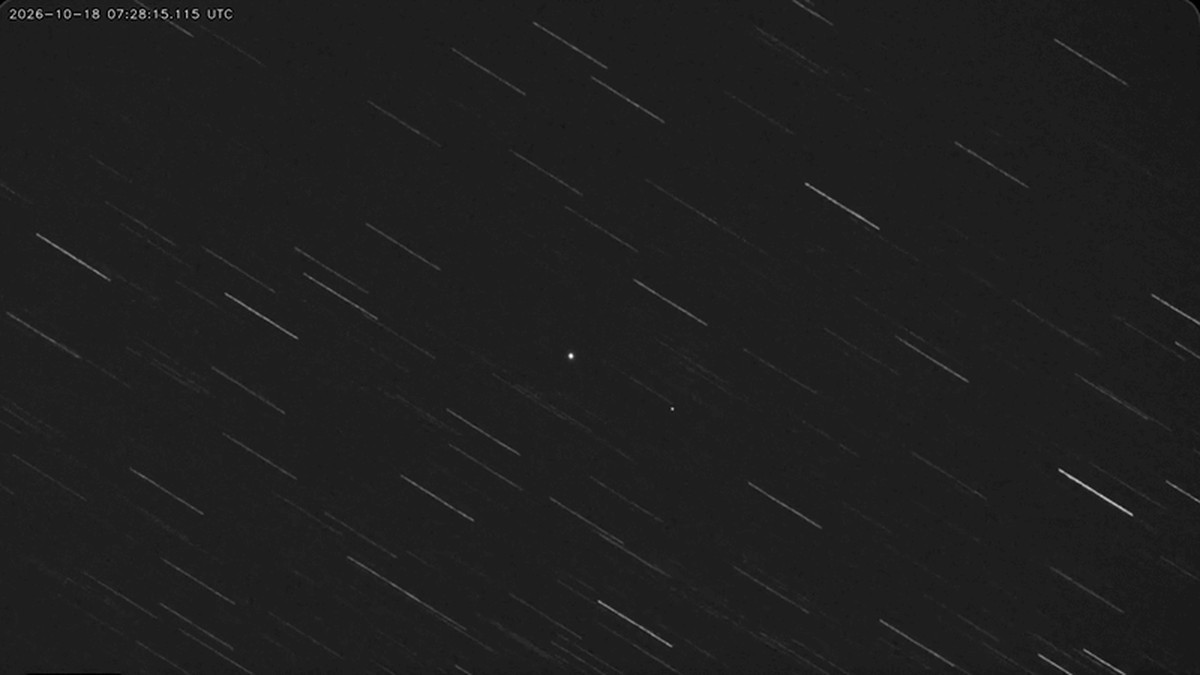
LeoLabs reports that between 15 and 19 October the Russian satellite "conducted a deliberate series of maneuvers toward ICEYE-X36," closing from about 400 kilometres to 210, manoeuvring within 2 to 3 kilometres by 16 October, then shifting positions ahead of and behind the commercial satellite. Over the weekend the two were within 500 metres and "likely quite a bit closer than that," according to Adam Marsh, LeoLabs vice president of technical solutions. Public tracking estimates have run as low as roughly 26 to 30 metres. The exact minimum is unsettled.
Late on Sunday 18 October, Cosmos 2612 raised into a slightly higher orbit, slowing it relative to its target. By Monday afternoon the separation was more than 250 miles and growing by roughly 10 miles per hour. LeoLabs confirmed the activity had ended. Both craft were moving at about 7.6 kilometres per second. Holding station that tight takes continuous, deliberate control.
The Signal Russia Sent in May, Not October
If you think October was the provocation, look at May. Between roughly 13 and 21 May 2026, Russia raised the inclination of five satellites from the April launch — Cosmos 2610 through Cosmos 2614 — by about 0.8 degrees, bringing them to 97.8 degrees and nearly co-planar with ICEYE-X36. Each inclination change cost on the order of 106 metres per second of delta-v.
Plane changes in low Earth orbit are rare precisely because they are expensive. A satellite built for routine Earth observation does not typically carry the propulsion budget for that kind of move, let alone five times across a cluster. The expenditure itself was evidence these satellites were built to manoeuvre aggressively. In the same window the cross-track range between Cosmos 2612 and ICEYE-X36 fell from roughly 100 kilometres to under 5.
By 29 May, Cosmos 2614 was the closest of the group, passing ICEYE-X36 four times inside 20 kilometres over two and a half hours. CSIS records Cosmos 2609 getting closest on 26 May at 2.5 kilometres. The fuel was spent and the geometry was set months before October.
The Target Was a Ninety-Kilogram Private Satellite
ICEYE-X36 is a commercial Synthetic Aperture Radar satellite, registered under ICEYE's US entity and owned by subsidiary ICEYE US. ICEYE was founded in Finland. The spacecraft is a roughly 90-kilogram smallsat with unknown propellant and limited agility. It did not manoeuvre to open the distance.
It launched in 2024 from Vandenberg Space Force Base and is one node in a constellation of more than forty satellites. ICEYE has launched 80 satellites to date, with four more due this week on a SpaceX rideshare. Radar sees through cloud and darkness, which makes a SAR constellation a persistent, weather-proof eye over a battlefield.
ICEYE imagery reaches numerous military users, including Ukraine, which has used the company's "near-real-time space-based intelligence" since the 2022 invasion. Whether ICEYE-X36 specifically was collecting data used by Ukraine has not been publicly confirmed, though it is widely believed.
ICEYE's statement to multiple outlets: "We are aware of the situation and tracking it closely. Our constellation architecture is designed for continuity and resilience." A spokesperson declined to give a detailed response.
Red on Blue: What LeoLabs Actually Recorded
LeoLabs characterises the event as a "red" on "blue" engagement in orbit: a planned, highly coordinated rendezvous and proximity operation requiring precise navigation and onboard sensing. Its own words: "This was not a routine conjunction or 'fly by.' The sequence included a controlled approach, changes in relative position, close-proximity loitering, additional small maneuvers, and a controlled departure."
Its list of observed tactics runs to seven items: departing on a controlled trajectory; matching another satellite's orbital plane; closing from long range in a controlled manner; adjusting speed and altitude to manage relative motion; repositioning ahead of and behind the target; remaining close rather than making a simple flyby; repeated small manoeuvres while in proximity. The proximity "occasionally made it difficult to distinguish the two spacecraft independently."
Here is the line that matters for anyone reaching for a war footing: LeoLabs also said the observations do not establish hostile intent. The firm noted the actions demonstrate capabilities that could support intelligence collection, on-orbit inspection, coercive signalling, interference, or preparation for future counterspace operations. Capability is not intent. LeoLabs drew that line itself.
Nobody in This Story Will Tell You What the Payload Was
Ask the obvious question — what was Cosmos 2612 carrying — and the honest answer is that nobody has established it. The range was observed. The payload was not. Integrity ISR is explicit: "We observed the range. We did not observe a payload, and we are not going to assign one."
What is documented is behaviour: a controlled approach, loitering, repositioning, a controlled departure. Nobody will say what the endgame was either. "I still scratch my head about what the Russian endgame is with this," Greg Gillinger, senior vice president for strategy at Integrity ISR, told the CSIS event on 21 October.
Jonathan McDowell, an astrophysicist, put it in context: "To my knowledge, this is the first LEO rendezvous of two active satellites where the owner of one of the sats did not give approval." Marsh went further: "This is the first time we've ever seen this without consent." No reports of physical damage to ICEYE-X36 emerged before Cosmos 2612 began its retreat.
The Same Week, Washington Fought Over Starshield
Now the Washington argument, and note carefully that nobody has resolved it. The Wall Street Journal reported on Tuesday 20 October that Musk had ordered a slowdown of Starshield, a military-grade version of Starlink that Ukraine relies on for defence against Russian missile attacks.
Reuters, by contrast, quoted two US officials and a Western official briefed on the matter as saying the decision came from the White House. Zelenskyy confirmed that version. The administration denies it. Defense Secretary Pete Hegseth framed it as a commercial dispute governed by "terms of service."
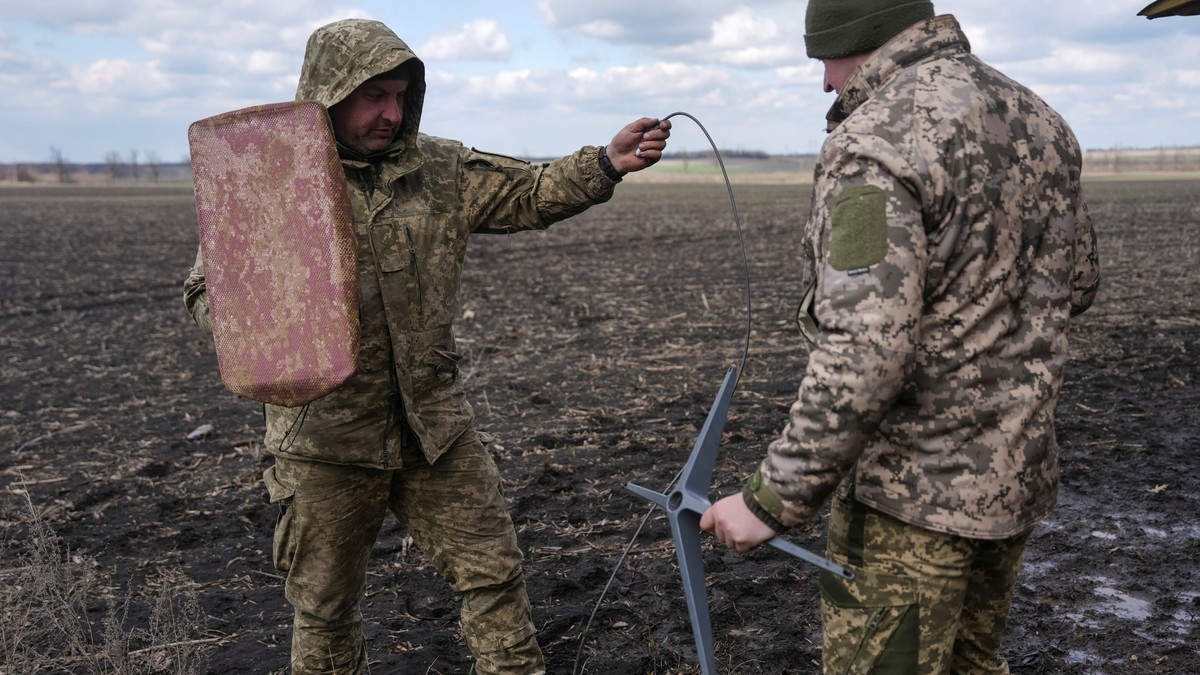
Zelenskyy adviser Serhii Beskrestnov wrote on Telegram on 14 October that SpaceX had imposed a 160 kilometre-per-hour limit on Starshield, affecting guidance for drones Ukraine uses to intercept Russian drones flying far faster. "Our defence forces received no prior warning regarding this restriction, and it has led to the disruption of a number of missions," he said. Ukraine's Ministry of Defence confirmed services resumed on 15 October.
Secretary of State Marco Rubio, speaking to reporters during a trip to India on Wednesday 21 October, said he did not know whether the administration knew beforehand, and called the point "irrelevant." Trump, asked the same day, said he did not know who did it but "I was not involved."
The Space Force Said It Has On-Orbit Weapons a Month Earlier
Timing is doing a lot of work here, so handle it carefully. Air Force Secretary Troy E. Meink, in the opening keynote at the Air & Space Forces Association's conference on 14 September 2026: "This is why the Space Force now has on-orbit space control weapons capable of defending the joint force against hostile adversary action."
The Cosmos/ICEYE incident comes about a month after that announcement. In 2025 the Space Force's Rapid Capabilities Office began fielding threat-awareness sensors that communicate close hazards to satellite operators. An April report from the Secure World Foundation noted more nations are funding "bodyguard" capabilities; Germany, India, France and Japan are all building or planning to acquire them.
Gen. Stephen Whiting, head of US Space Command, said in April it was "evident" Russia is operationalizing anti-satellite weapons. US government leaks have suggested Russia is eyeing a nuclear weapon in orbit. The US military disclosed last month that it too has placed weapons in space, without elaborating.
Every Option on the Table Is a Ground Problem
Retired Air Force Col. Jennifer Reeves, senior resident fellow for Space Studies at the Mitchell Institute, told the CSIS event that the timing, following Meink's comments, could be a Russian signal, threat or influence campaign meant to deter commercial support for Ukraine — or even a bluff. "There's a big difference between knowing where something is and understanding what it's doing," she said.
Her point on response cuts against the space-first instinct. Deterrence need not be space-based: she pointed to the US ability to strike ground facilities to sever links to satellites. Clayton Swope, deputy director of the CSIS Aerospace Security Project, suggested pressure on Russia's oil "shadow fleet" could nudge Moscow away from "space tomfoolery."
Reeves was blunt about who should decide: "I don't think it's necessarily the Space Force itself that should be determining that. I think it should be our national leadership. … Because at this point in time, we don't have that coming from the national-level leadership."
The Next Crossings Land in November
This does not end with one satellite drifting away. Cosmos 2612 has spent roughly 175 metres per second since launch, about 60 more than each of the other four from April. Two of its siblings, Cosmos 2611 and Cosmos 2613, have geometry that brings them near ICEYE-X37, with crossings falling in early and mid November.
Integrity ISR's guidance is to watch for a reduction in Cosmos 2612's semi-major axis to close the in-track gap. Whether ICEYE-X36 performs an avoidance manoeuvre, and whether ICEYE or the governments it supports say anything publicly, will also be telling. Cosmos 2612 can close again: raising its orbit opened the range, but the manoeuvrability that produced the approach can reverse it.
Marsh, to the New York Times: "usually these events don't just end on one." Swope, at the CSIS event: "I just feel like it's not a question of if; it is a question of when we see these satellites do something that we're going to say is hostile again."
The Question That Outlives Cosmos 2612
Two stories ran in parallel this week: a Russian military satellite parking itself beside a 90-kilogram commercial radar spacecraft, and a Washington argument over who slowed Ukraine's Starshield access. If you are tempted to connect them, stop. No public evidence links the two. The timing is coincidence until someone proves otherwise.
What survives the news cycle is accountability. A bipartisan group of senators called on 21 October for a Department of Defense inspector general investigation into Starlink disruptions in Ukraine, with Shaheen and Tillis leading. That is a call for an investigation, not an investigation. Rubio called the underlying question "irrelevant," pointing to contract terms: "The bottom line is that that is governed by a private commercial contract as to how their stuff can be used and what speeds they'll allow it to be used at."
Retired Lt. Gen. John Shaw, former deputy commander of US Space Command: "If the Russians were willing to do this to an unmanned US military platform, it would seem their threshold for attacking an 'unmanned' commercial space platform cannot be too different." Reeves, again: "We don't want to be doing this thought work when we're living it in real time."
This article was produced with AI-assisted research and editorial support. Sources: Air & Space Forces Magazine, Ars Technica, Integrity ISR, CSIS, LeoLabs (via Breaking Defense and Via Satellite), Al Jazeera citing the Associated Press and Reuters, The War Zone, Scientific American, Aviation Week, and the Senate Foreign Relations Committee. Photographs: the first image is a time-lapse frame from 18 October 2026 showing the Russian satellite Cosmos 2612 as the fainter dot closing on the brighter ICEYE-X36 over South America, via S2A Systems; the second shows Ukrainian service members setting up a Starlink terminal, by Inna Varenytsia for Reuters via Al Jazeera. The cover image was generated by Global 1 News.
By Jessica Ali, Staff Writer
What's Your Reaction?
 Like
0
 Dislike
0
 Love
0
 Funny
0
 Wow
0
 Sad
0
 Angry
0

Editor-in-Chief at Global1.News. Atlanta-based journalist who cuts through the BS and tells it like it is. Lead anchor, host, and the voice you hear when the spin stops and the truth starts.















Comments (0)