
Pope does not need further treatment after lung cancer surgery
In the quiet corridors of Rome’s Gemelli Hospital, a 90‑minute operation on 13 October removed the lower lobe of Pope Leo XIV’s right lung. After four days of recovery, the 71‑year‑old pontiff left the hospital, pausing to greet well‑wishers before exiting the grounds.
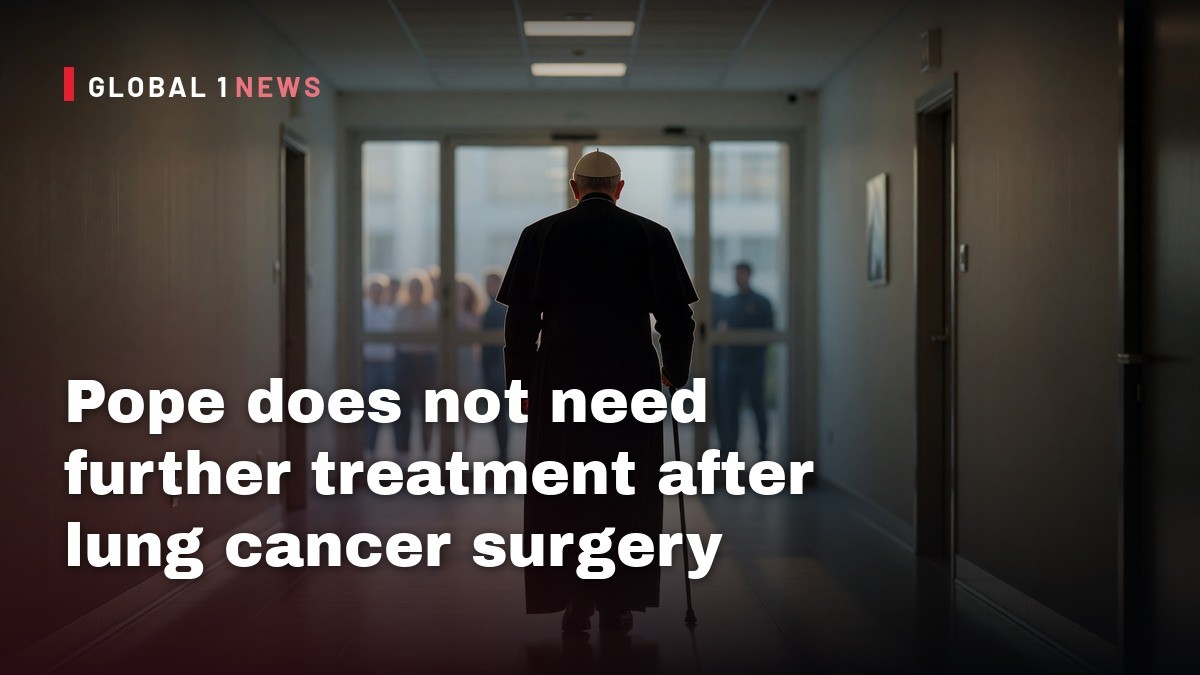
In the quiet corridors of Rome’s Gemelli Hospital, a 90‑minute operation on 13 October removed the lower lobe of Pope Leo XIV’s right lung. The procedure, aimed at excising a localized lung adenocarcinoma, has now been declared a success: the pontiff does not require any further treatment, Vatican officials announced after the pathology confirmed the cancer was indeed confined to the tissue removed. While the news may seem a personal health update, its reverberations are felt far beyond the walls of the Vatican, especially across Latin America where the Pope’s upcoming pilgrimage looms large.
The medical facts behind the papal surgery
The Vatican’s statement clarified that the tissue removed during the operation confirmed a diagnosis of lung adenocarcinoma, a form of cancer that had been identified early enough to be localized. The subsequent oncological assessment concluded that the disease had not spread beyond the removed lobe, eliminating the need for additional therapies such as chemotherapy or radiotherapy. This assessment aligns with the Pope’s own remarks during his weekly Sunday prayers, where he disclosed that doctors had found a “nodule” on his lung and that it had been caught at an early stage.
After four days of recovery, the 71‑year‑old pontiff left the hospital, pausing to greet well‑wishers before exiting the grounds. Images from the day after his surgery showed him celebrating Mass in a hospital setting, wearing green vestments and standing behind a makeshift altar—a visual reminder of the continuity of his pastoral duties even in the face of personal health challenges.
From the operating theatre to St Peter’s Square
Just days after his discharge, Pope Leo XIV returned to the public eye, holding his first weekly general audience since the operation at St Peter’s Square on Wednesday. The audience, a staple of his papal routine, provided a platform for the pontiff to reaffirm his health status and to signal his readiness to resume the full schedule of his papacy. The swift transition from surgery to public appearance underscores the Vatican’s desire to project stability and continuity, especially as the Pope prepares for a high‑profile trip to Latin America in early November.
The timing of his return also dovetails with diplomatic outreach. On the same day as the hospital images were released, the Vatican announced that the Pope had spoken by phone with Russian President Vladimir Putin, urging a ceasefire in the blockaded Ukrainian city of Oleshky to facilitate food aid. A similar call with Ukrainian President Volodymyr Zelensky was reported on Monday. These diplomatic gestures, occurring alongside his health update, illustrate the Pope’s commitment to global peace initiatives even as he confronts personal health concerns.
Why the Latin American pilgrimage matters
Latin America has long been a focal point of Pope Leo XIV’s pastoral outreach, a region where Catholicism intertwines deeply with social and political life. Sources close to the pontiff have noted his keenness not to delay the planned trip, emphasizing its importance in the broader agenda of the Vatican. The pilgrimage, slated for early November, is expected to address pressing issues such as migration, poverty, and the rise of secularism, all of which resonate strongly across the continent.
For many Latin American faithful, the Pope’s visit represents more than a religious ceremony; it is a moment of affirmation that the Vatican remains attentive to the region’s struggles. The Pope’s recent health episode, therefore, carries symbolic weight. A swift recovery and the decision to proceed with travel signal resilience and a refusal to let personal setbacks impede the Church’s mission in the Global South.
The diplomatic undertones of the papal health update
The Vatican’s communication strategy surrounding the Pope’s surgery is noteworthy. By emphasizing that the cancer was localized and that no further treatment was required, the Holy See aimed to quell any speculation that could undermine the pontiff’s ability to fulfill his duties. The prompt release of images showing the Pope in liturgical vestments within the hospital further reinforced a narrative of continuity.
Simultaneously, the Vatican highlighted the Pope’s diplomatic engagements with both Russian and Ukrainian leaders. By positioning the Pope as an active peacemaker even during his convalescence, the Vatican sought to maintain its moral authority on the world stage. This dual emphasis on health and diplomacy reflects a broader pattern in papal communications: the intertwining of personal wellbeing with the Church’s global advocacy.
Implications for Latin American Catholic leadership
The Pope’s health news arrives at a moment when many Latin American bishops are navigating complex social landscapes. Issues such as the surge in migration, the persistence of organized crime, and the challenge of secular ideologies demand a strong papal presence. The Pope’s decision to proceed with his Latin American itinerary, despite recent surgery, will likely be interpreted by regional clergy as a sign of solidarity.
Moreover, the Pope’s recent calls for ceasefire and dialogue in Eastern Europe may echo in Latin America’s own conflicts, from land disputes to political polarization. By maintaining a visible role on the global diplomatic front, the pontiff reinforces a model of leadership that Latin American bishops may emulate: blending pastoral care with active engagement in peacebuilding.
Public perception and the media narrative
The Vatican’s transparent handling of the Pope’s health—publicly acknowledging the diagnosis, describing the surgical procedure, and sharing recovery milestones—has shaped a narrative of openness. In an era where misinformation can spread rapidly, especially through social media, such clarity helps to anchor public perception in verified facts.
Latin American media outlets, known for their keen interest in papal affairs, have echoed the Vatican’s statements, often framing the Pope’s swift recovery as a testament to modern medical care and his own resilience. This coverage, while largely supportive, also invites scrutiny of the Vatican’s broader health protocols for its leaders, a topic that may surface in future discussions about the governance of the Holy See.
Looking ahead: the Pope’s next steps
With the surgery behind him and the Vatican’s medical assessment confirming no further treatment is needed, Pope Leo XIV appears poised to embark on his Latin American journey as scheduled. The upcoming pilgrimage will likely serve as both a pastoral outreach and a platform to reinforce the Vatican’s stance on global peace, given his recent diplomatic calls with world leaders.
For the faithful across the continent, the Pope’s presence will be a reminder that the Church stands with them amid ongoing challenges. For observers of international politics, his health update and subsequent actions will continue to be a barometer of how the Vatican balances spiritual leadership with its role as a diplomatic actor on the world stage. As the Pope prepares to step onto Latin American soil, the convergence of personal health, diplomatic initiative, and regional pastoral care will define the next chapter of his papacy.
This article was produced with AI-assisted research and editorial support. Reporting is based on the source material cited below. Sources: BBC News Latin America; bbc.co.uk; Global1.News (24 October 2026).
By Elena Vasquez, Staff Writer
What's Your Reaction?
 Like
0
 Dislike
0
 Love
0
 Funny
0
 Wow
0
 Sad
0
 Angry
0

Latin America Correspondent at Global1.News. Based in Mexico City, covering politics, economics, energy, and culture across the region. Brings an on-the-ground perspective to stories spanning from the Rio Grande to Patagonia.












Comments (0)