
Trump's Justice Department Sues Alaska to Block a Senate Result That Does Not Exist Yet
The Justice Department has asked a federal judge to block Alaska from certifying its Senate election if Republican incumbent Dan Sullivan loses, citing possible voter confusion over a second candidate named Daniel J. Sullivan.
Trump's Justice Department Sues Alaska to Block a Senate Result That Does Not Exist Yet
ANCHORAGE, Alaska — The Department of Justice asked a federal judge on Thursday to stop Alaska from certifying its United States Senate election if the Republican incumbent loses, arguing that a second candidate with almost the same name could confuse voters. President Donald Trump said the next day that he ordered it filed.
What the Complaint Actually Asks For
The suit, United States v. State of Alaska, is case 3:26-cv-00376-SLG, filed in the United States District Court for the District of Alaska in Anchorage. It names the state, Division of Elections Director Carol Beecher in her official capacity, the precinct election boards and the State Ballot Counting Review Board. Associate Attorney General Stanley E. Woodward Jr. signed, with Assistant U.S. Attorney E. Bryan Wilson.
It carries one count and one demand: that the court bar the defendants from certifying any result "that may be impacted by voter confusion" until an investigation establishes whether votes cast for Daniel J. Sullivan were meant for Senator Dan S. Sullivan. Paragraph 42 defines that phrase narrowly. A result qualifies only if the senator does not win, and only if he would have won had every vote for the other Sullivan gone to him instead. It is a conditional request, not a demand to void the election outright. It was filed twelve days before Election Day.
Two Men, One Ballot, and a Filing Date
Senator Dan S. Sullivan has held the seat since 2015 and filed for reelection on or about May 16. Daniel J. Sullivan, a retired teacher from Petersburg, a town of about three thousand people in southeast Alaska, filed on or about May 29. He had never run for political office. The state's official canvass lists him as "Sullivan, Daniel J. Jr." with no party designation. The senator is listed with the Republican marker, and the ballot carries the words "Registered Republican" and "Incumbent" beside his name.
Alaska runs a top-four primary and then a ranked-choice general election, a system adopted by ballot measure in 2020. After the 18 August primary, Mary Peltola, the Democrat and former congresswoman, led with 82,244 votes, 49.54 percent. The senator took 68,726, or 41.40 percent. Daniel J. Sullivan took 4,107, or 2.47 percent. Turnout was 27.74 percent, on 401 of 403 precincts reporting.

The Letter the Government Is Using as Its Own Evidence
The complaint's spine is a letter Beecher wrote on 15 June, Exhibit A. In it, she concluded that Daniel J. Sullivan's declaration of candidacy "was not filed in order to declare an actual good-faith candidacy" but "with a purpose to confuse or mislead," and she de-certified him. She cited four findings: that he sought ballot access as "Dan Sullivan" though he was registered as "Daniel J. Sullivan, Jr." and initially asked to appear as "Dan S. Sullivan," which is the senator's middle initial; that he switched his affiliation to Republican two days before filing, never having been registered as one in Alaska; that his campaign website mimicked the senator's; and that a consultant for him backed Democratic candidates.
She called the circumstances "unique, and to my knowledge utterly unprecedented," and declared the determination final. That is the finding the Justice Department now leans on: the government is quoting the determination of a state official it has simultaneously named as a defendant.
A State Court Already Answered This Question
The de-certification did not stand. Daniel J. Sullivan sought judicial review, and on 26 June a superior court held that the Division of Elections had erred in excluding him. The Alaska Supreme Court summarily affirmed three days later, and indicated a full opinion would follow. That opinion has still not been issued.
Local reporting on the June ruling adds a detail the federal complaint omits: the justices suggested the state could simply list the two men differently to relieve the confusion, which Alaska then did. The complaint acknowledges the state court outcome in a single paragraph, then asks a federal judge to reach the opposite conclusion on a question the state's highest court has already decided.
One Count, Built on a Statute's Preamble
Count One accuses the state of violating the National Voter Registration Act, citing 52 U.S.C. sections 20501(b)(3) and 20510(a). The first is a findings-and-purposes clause. Its operative words are "the purposes of this chapter are," followed by a list that includes protecting "the integrity of the electoral process." The complaint also leans on Bullock v. Carter, a 1972 ballot-access case, and Jenness v. Fortson from 1971, for the proposition that states may keep frivolous candidacies off the ballot.
What the filing does not do is point to any provision of the registration statute imposing a duty on a state about certifying a Senate result. The Department of Justice also did not say how anyone could establish what a voter intended, which is the practical problem at the centre of the whole thing.
The Experts Say It Does Not Survive Contact
Derek Muller, a law professor at the University of Notre Dame, wrote on the Election Law Blog that the claim is "so absurdly thin, there's essentially no likelihood of success." He noted that the department lifted the preamble language while dropping the words "the purposes of this chapter are," and concluded that the filing "is designed to win the press release rather than the litigation." The Guardian renders his surname as Mueller.
David Becker, a former Justice Department attorney who now runs the Center for Election Innovation and Research, called it "an unprecedented intervention by the federal government" and said he could not recall an administration ever attempting to stop the certification of an election, "and certainly not 11 days before polls close." Justin Levitt, another former department attorney, was blunter: "There is no path for DOJ to block certification of an election result based on any notion that a candidate shouldn't have been running. That's not a thing, and courts won't give it the time of day."
Murkowski Breaks Ranks
The sharpest Republican criticism came from inside Alaska's own delegation. Senator Lisa Murkowski, who is not on the ballot this year, wrote on social media that "Alaskans don't need any help voting for their preferred candidates, and the State of Alaska has already handled this by clearly distinguishing the candidates on this year's ballot." She added: "The Department of Justice should never have filed this lawsuit."
State Senator Bill Wielechowski, an Anchorage Democrat who has led election-reform efforts, called it "a political stunt" with "zero merit to it," and said the administration was "throwing the kitchen sink out" to tip the scales. State Representative Andrew Gray, who chairs the House Judiciary Committee, said many primary votes for the Petersburg teacher were "protest votes against Mary Peltola" and that "no one is making a mistake." Former Republican state Representative Jesse Sumner of Wasilla said he doubted voters would confuse the two.
The President Takes Credit. The Campaigns Take Positions.
Trump did not distance himself from the filing. "I'm the one that said do it," he told reporters as he landed in Florida for a campaign rally on Friday, calling the challenger's candidacy "a disgrace." A day earlier he had written on Truth Social that Daniel J. Sullivan was a "SCAM." The same day the suit landed, Attorney General Todd Blanche publicly played down the prospect of the department suing states over certification, suggesting it would only happen in a "doomsday scenario."
The complaint states its own purpose plainly. It is brought, it says, "to protect the integrity of the 2026 Senate election in Alaska." Nate Adams, a spokesperson for the senator's campaign, said the campaign would "let the DOJ complaint run its course," that Alaskans are "smart enough to figure out the difference," and that the senator had no prior knowledge of the lawsuit.
What the Calendar Does to This Case
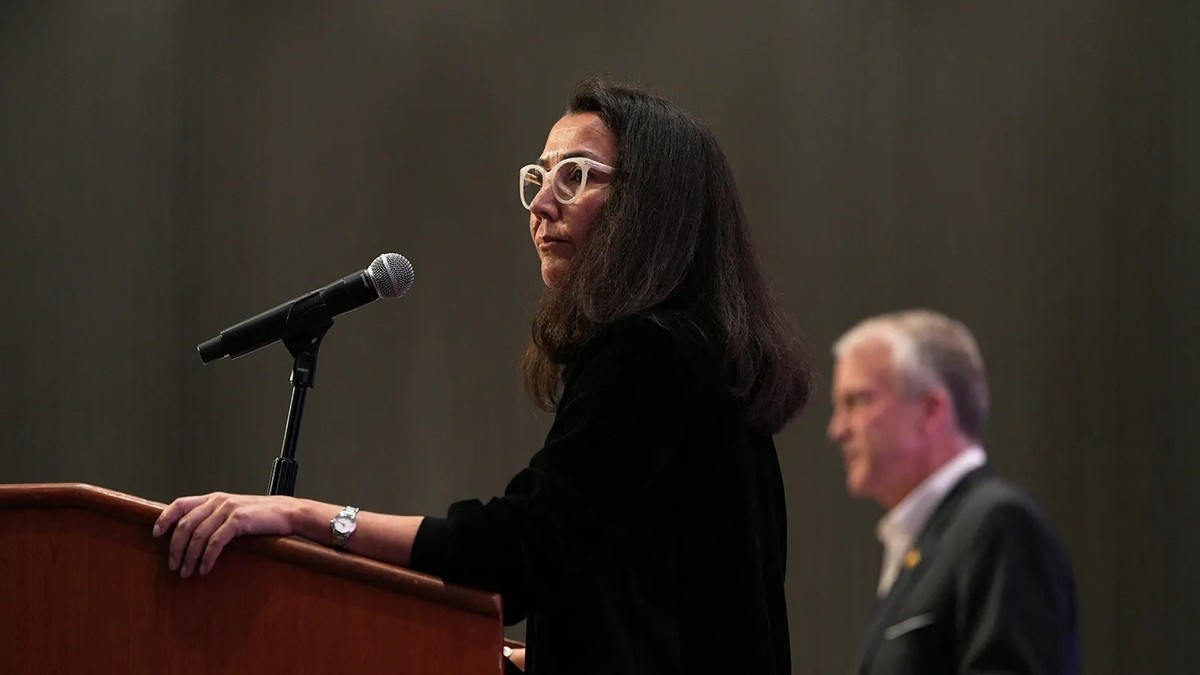
Peltola's campaign did not treat it as a technical filing. "This is a despicable political threat to overturn an election, designed by Senator Dan Sullivan's allies to suppress the voices of Alaskans because Sullivan is terrified he'll lose the seat," said spokesman Harry Child. Peltola told MS NOW it was "exactly the kind of corruption that Alaskans are sick and tired of," and said it sent a message that the senator does not believe Alaskans "are sophisticated enough to know exactly who they're voting for." She said she was worried about the cost of a legal battle, having set a sixty-million-dollar fundraising goal before any of this was on the horizon.
The timing is the part that unsettles election lawyers. More than thirty thousand Alaskans had already voted early or absentee by Friday morning, according to the Division of Elections. The deadline to challenge the primary results passed on 10 September. Alaska expects to begin its ranked-choice tabulation on 18 November, fifteen days after polls close.
The Question the Suit Cannot Answer
Everything in the complaint turns on a factual inquiry that may not be possible. The relief asks for an investigation into whether votes cast for one Sullivan "were meant to be cast" for the other. American ballots are secret. No record ties a marked bubble to a stated intention, and Alaska law has no mechanism for reopening ballots to ask.
Polls put Peltola ahead by two points, 49.7 to 47.7 on the FiftyPlusOne average cited by MS NOW, though that outlet's own Alaska page showed the senator at 47.6 the same day. Two recent surveys put Daniel J. Sullivan at four percent, not the 2.5 he drew in August. If the race lands inside that margin, the answer will not come from a filing. It will come from whether a judge in Anchorage decides the federal government has any business telling a state when to certify its own Senate election.
By Jessica Ali, Staff Writer
This article was produced with AI-assisted research and editorial support. Sources: United States District Court for the District of Alaska (complaint, United States v. State of Alaska, No. 3:26-cv-00376-SLG, and Exhibit A); Alaska Division of Elections official primary canvass, 18 August 2026; Alaska Public Media; The Guardian; Courthouse News Service; NBC News; CNBC; CNN; MS NOW; Mother Jones; Democracy Docket; Election Law Blog; FiftyPlusOne; Ballotpedia. Photographs: Daniel J. Sullivan in Petersburg, Alaska, 26 June 2026, Katie Holmlund/AP via Courthouse News Service; Senator Dan S. Sullivan and President Donald Trump in Wasilla, Alaska, 13 October 2026, Evan Vucci/Reuters via The Guardian; Mary Peltola in Anchorage, Alaska, 27 August 2026, via MS NOW.
What's Your Reaction?
 Like
0
 Dislike
0
 Love
0
 Funny
0
 Wow
0
 Sad
0
 Angry
0

Editor-in-Chief at Global1.News. Atlanta-based journalist who cuts through the BS and tells it like it is. Lead anchor, host, and the voice you hear when the spin stops and the truth starts.















Comments (0)