
Ali G is back. But is the character past its sell-by date?
When the open‑top bus rolled through London’s iconic landmarks last month, a sea of yellow shell suits and skullcaps turned the Underground escalator into a moving tribute to a character who first burst onto the scene in the early 2000s.
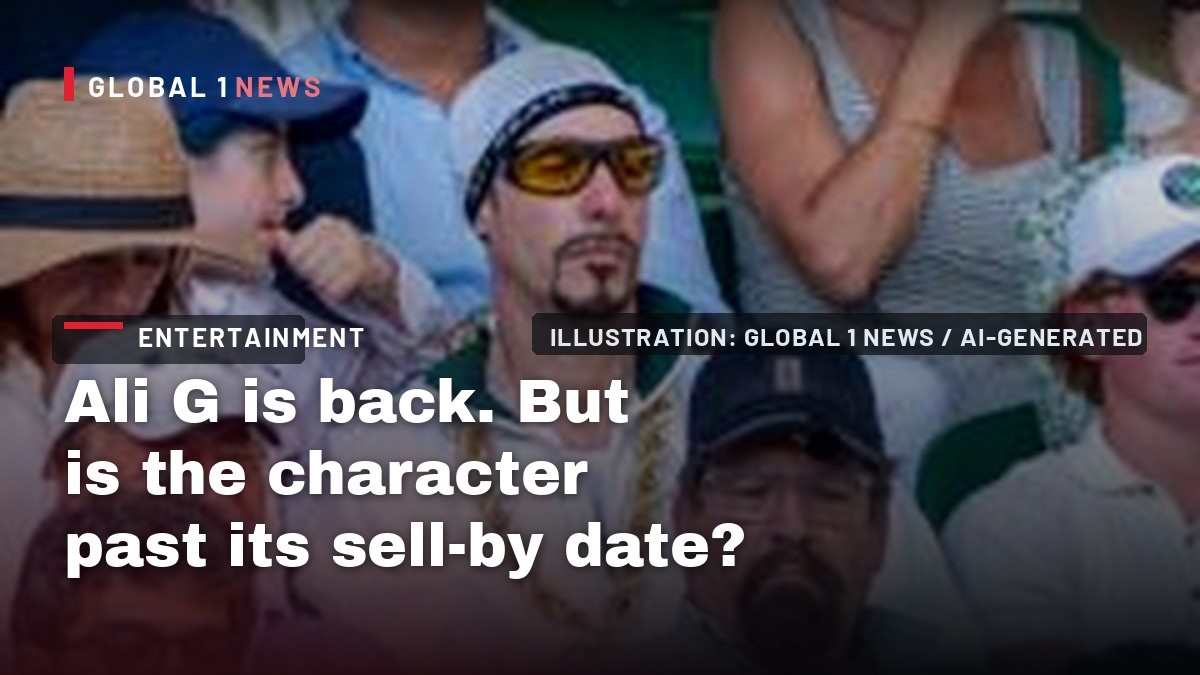
When the open‑top bus rolled through London’s iconic landmarks last month, a sea of yellow shell suits and skullcaps turned the Underground escalator into a moving tribute to a character who first burst onto the scene in the early 2000s. Sacha Baron Cohen, the creator of both Borat and Bruno, has revived Ali G for a sequel – Ali G: Who iz I? – which opens in cinemas this Friday. The spectacle, complete with a megaphone‑wielding Cohen shouting catchphrases to a crowd of more than three hundred fans, is part of a carefully choreographed promotion that has reignited a debate that has lingered since the original film’s release.
From underground hype to cinema release
The promotional stunt was staged as an official look‑alike competition, ferrying participants around London on a bus that stopped at Big Ben, Leicester Square and Covent Garden. Fans, many of them dressed in the character’s trademark yellow outfit, crowded an Underground escalator as Cohen, in full Ali G regalia, shouted his catchphrases through a megaphone, prompting the crowd to finish each line. The event was clearly designed to generate buzz ahead of the sequel’s Friday launch.
Baron Cohen’s own social media posts have hinted at the precarious climate in which the revival is taking place. In a recent X update, he acknowledged that “in an age where a comedian's career can be ended by a single un‑PC joke, I thought I'd play it safe and bring this guy back.” The actor’s awareness of the heightened scrutiny surrounding comedic portrayals of race and class frames the sequel as both a nostalgic return and a calculated risk.
Critics sharpen their pencils
The announcement has provoked a fresh wave of criticism, echoing concerns first raised when the original Ali G: Indahouse hit screens in 2002. Labour MP Paulette Hamilton, speaking on the Jeremy Vine show, labelled the character racist, arguing that Baron Cohen “would not get away with portraying any other racial group in the way he has done with the black community.” Online, comedians, content creators and film fans have taken to platforms such as TikTok to voice similar objections, with singer‑presenter Jordan Stephens posting multiple videos that have attracted thousands of likes and comments.
Even an academic, appearing in a newly created Instagram video that seemed to be Baron Cohen in prosthetic make‑up, urged a boycott of the film. The visual rhetoric of an “academic” figure condemning the sequel underscores how the controversy has seeped beyond entertainment circles into broader cultural discourse.
Racial caricature or satire?
At the heart of the debate lies a question that has persisted since Ali G first emerged: does the character expose prejudice, or does he perpetuate it? Social psychologist Amy Kean, who has written on accentism, suggests that characters like Ali G, Little Britain and Catherine Tate “made the voice the joke,” reflecting a bygone era when such caricatures were more culturally accepted. Kean recalls school days in the 1990s when accents that deviated from the norm were mocked, hinting that the humour of the period was rooted in linguistic exclusion.
Baron Cohen himself has defended the satirical intent, arguing in a recent Time essay that his characters are “vehicles to expose prejudice, bias, and stupidity.” He contends that the very fact Ali G is seen as “outdated and problematic” is why he resurrected him – to confront a world where the prejudices his persona targets have “metastasised” and are amplified by social media and AI. Yet critics such as black comedian Dane Baptiste, the first black British comic nominated for an Edinburgh Comedy Award, argue that the catchphrases have been co‑opted to mock black people and diminish genuine grievances about systemic racism.
Historical backlash and the spectre of blackface
The controversy is not new. When Ali G: Indahouse premiered in 2002, protesters gathered at its Leicester Square opening, and organiser Peter Akinti likened the character to “the new Al Jolson,” invoking the 1920s entertainer notorious for performing in blackface. That early protest set a precedent for the recurring accusations that Ali G is a “black caricature” that reinforces harmful stereotypes.
These historical protests have resurfaced in contemporary commentary. Baptiste notes that during the character’s heyday, phrases like “Is it because I is black?” were heard everywhere, often reduced to a punchline that trivialised authentic black experiences. He warns that reviving such language at a time when black creatives feel “starved of opportunities” risks reinforcing the very marginalisation the satire claims to critique.
Baron Cohen’s comedic methodology
Baron Cohen’s career has long been built on infiltrating real‑world settings under the guise of absurd characters. On The Late Show with Stephen Colbert in 2020, he recalled a 2014 interview with Donald Trump, noting how the former president’s fury was sparked when he realised he was speaking to a “lower‑class borough” figure rather than an “astute Etonian producer.” The discomfort generated by such role‑playing is central to Cohen’s approach: he deliberately subverts expectations to expose biases.
In a CBS interview about the upcoming sequel, he described his primary objective as “to get people to laugh really hard,” while conceding that “smuggled in there is a bit of satire.” This dual aim mirrors his earlier stunts, such as disguising himself as a right‑wing singer at a gun rally while wearing a bulletproof vest, only to be chased by an angry crowd. The pattern suggests that the sequel may blend slapstick comedy with moments designed to provoke uncomfortable reflection.
What the sequel promises – and why it matters
Details about the plot remain scarce, but the trailer hints at a narrative in which Ali G discovers his girlfriend Julie is pregnant and journeys to America to interview unsuspecting participants, including physicist Alan Lightman and retired Army General C Stewart Rodeheaver. The premise of a street‑wise MC confronting real‑world figures suggests a continuation of the original format that mixed absurdity with genuine interview moments.
Whether the film succeeds in balancing humour with incisive social commentary will likely determine its legacy. If the satire lands, it could reaffirm Baron Cohen’s claim that “the world he’s returned to is, in many ways, worse than the one he left 20 years ago,” and that his characters remain necessary tools for exposing entrenched prejudice. If the jokes fall flat or are perceived as tone‑deaf, the sequel may become a cautionary tale about the limits of nostalgia in a cultural climate that demands greater sensitivity.
This article was produced with AI-assisted research and editorial support. Reporting is based on the source material cited below. Sources: BBC News UK; bbc.co.uk; Global1.News (21 October 2026).
By Erica Thornton, Staff Writer
What's Your Reaction?
 Like
0
 Dislike
0
 Love
0
 Funny
0
 Wow
0
 Sad
0
 Angry
0

US Politics and Policy Correspondent at Global1.News. Based in Washington DC, covering American politics, policy, elections, and the courts. Knows how the system works and tells you what it actually means.













Comments (0)