
President's Challenge Night Returns to Unite Singapore for Charity
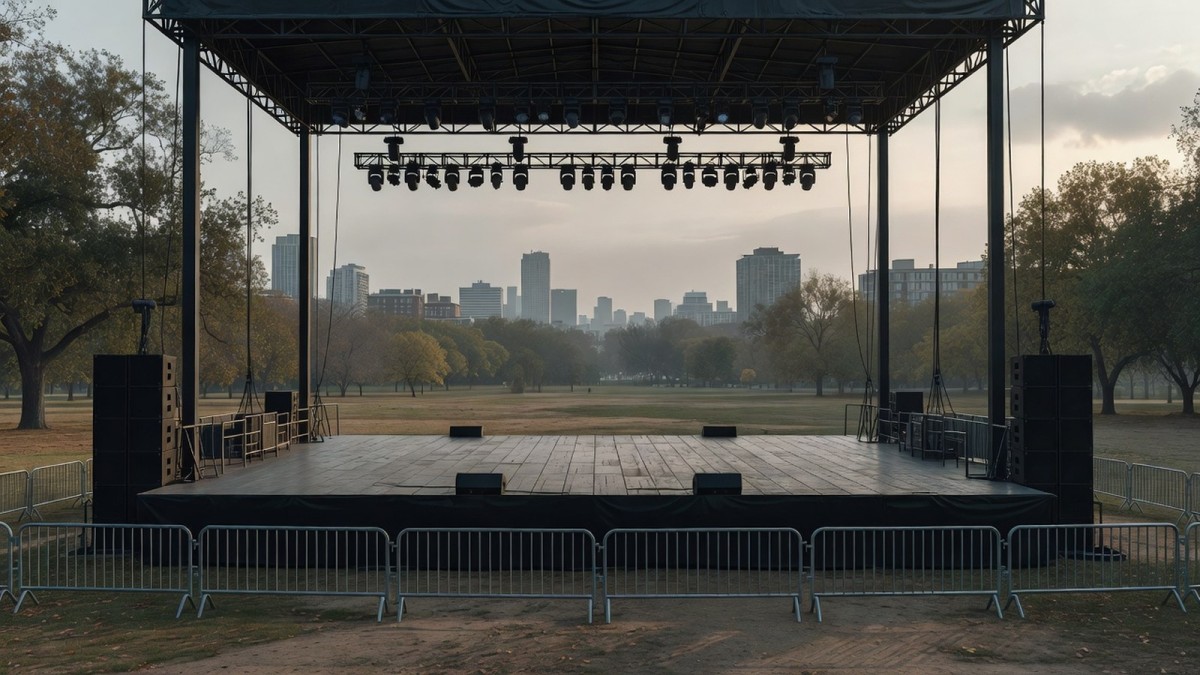
On 25 October 2026, Mediacorp will host its annual President's Challenge Night, a high‑profile fundraising gala that brings together entertainment stars, corporate sponsors and community groups across Singapore.
On 25 October 2026, Mediacorp will host its annual President's Challenge Night, a high‑profile fundraising gala that brings together entertainment stars, corporate sponsors and community groups across Singapore. The event, broadcast by CNA, is positioned as a unifying platform aimed at supporting vulnerable populations through a broad portfolio of charitable programmes. In a recent video report, CNA interviewed Cheryl Lim, Executive Producer of English Production at Mediacorp, and Rebecca Lim, the event’s host, to outline the scope of the night’s objectives and the anticipated impact on beneficiaries. While the event is firmly rooted in Singaporean civil society, its scale and structure offer useful points of comparison for Japanese policymakers and corporate philanthropists seeking to align large‑scale entertainment‑driven fundraising with national social‑welfare goals.
Event Overview and Strategic Objectives
The President’s Challenge Night is scheduled for 25 October, a date that aligns with the broader calendar of Singapore’s charitable season. According to the CNA interview, the night’s central purpose is to "make a difference in the lives of those who need it most," a phrasing that underscores the event’s focus on direct assistance rather than merely symbolic generosity. The programme is organized by Mediacorp, Singapore’s leading media conglomerate, which leverages its production capabilities and network of on‑air talent to generate both awareness and revenue.
Cheryl Lim explained that the event’s design deliberately blends entertainment with community outreach, creating a "star‑powered" platform that can attract high‑visibility donors while also highlighting grassroots stories. This dual approach mirrors Japan’s own use of media‑driven charity events, such as the annual NHK Kohaku and corporate-sponsored concerts, which have been employed by ministries like the Ministry of Health, Labour and Welfare (MHLW) to promote public health campaigns. The Singapore model, however, places a stronger emphasis on the immediate allocation of proceeds to a defined set of programmes.
Rebecca Lim, the host, added that the night will serve as a rallying point for "stars and communities" across the island, indicating a broad outreach strategy that includes both the entertainment sector and civil society organisations. The emphasis on community participation reflects a growing trend in Asia‑Pacific philanthropy where public‑private partnerships are used to amplify the reach of social interventions. For Japanese corporations, the President’s Challenge offers a case study in how to align brand positioning with socially responsible objectives without diluting either.
Scale of Beneficiary Reach
The CNA report notes that proceeds from the President’s Challenge will support 120 programmes, a figure that signals a wide distribution of funds across multiple sectors. While the report does not break down the categories of these programmes, the sheer number suggests a diversified portfolio that likely includes health, education, elder care and disaster relief—areas that are also focal points of Japan’s own charitable landscape, overseen by agencies such as the Ministry of Education, Culture, Sports, Science and Technology (MEXT) and the Ministry of Economy, Trade and Industry (METI) for corporate social responsibility guidance.
In terms of direct impact, the event aims to benefit more than 100,000 people and their families. This quantitative target provides a clear metric for assessing the effectiveness of the fundraising effort. Japanese NGOs and charitable foundations often employ similar beneficiary‑count metrics to gauge the reach of their programmes, though they typically accompany such figures with qualitative assessments of outcomes. The President’s Challenge’s emphasis on a high beneficiary count aligns with a results‑oriented approach that could be instructive for Japanese policymakers seeking to justify public spending on social programmes.
Both Cheryl and Rebecca highlighted that the night’s proceeds will be channelled to programmes that address immediate needs, suggesting a short‑term impact focus. This aligns with Japan’s recent policy shift toward rapid response mechanisms in disaster relief, where the Cabinet Office’s Disaster Management division has advocated for pre‑positioned funds that can be quickly deployed. The Singapore model, with its clearly defined beneficiary target, may serve as a template for Japanese agencies looking to streamline fund allocation after large‑scale fundraising events.
Media Production and Audience Engagement
Cheryl Lim, as Executive Producer of English Production at Mediacorp, described the technical and creative processes that underpin the President’s Challenge Night. She emphasized the integration of live performances, pre‑recorded stories of beneficiaries, and interactive segments that encourage viewer participation. The production team employs a multi‑platform strategy, broadcasting the event on television while simultaneously streaming it online, thereby reaching both traditional audiences and younger, digitally native viewers.
This multi‑channel approach mirrors Japan’s own media landscape, where broadcasters such as NHK and commercial networks increasingly adopt hybrid distribution models to maximise reach. The Ministry of Internal Affairs and Communications (MIC) has recently encouraged broadcasters to incorporate interactive features, such as real‑time donation prompts and QR‑code scanning, to facilitate seamless contributions. The President’s Challenge’s use of such technologies could inform future Japanese charity broadcasts, especially as the country seeks to modernise its fundraising infrastructure in line with digital transformation initiatives led by the Digital Agency.
Rebecca Lim, the event’s host, noted that the night will feature a roster of local celebrities who will share personal anecdotes and encourage audience donations. This star‑driven narrative strategy is designed to humanise the cause and create an emotional connection with viewers. In Japan, similar tactics have been employed in high‑profile charity concerts, where popular artists lend their platforms to promote disaster relief funds. The effectiveness of celebrity endorsement in driving donation behaviour, as observed in Singapore, provides a data point for Japanese NGOs that regularly collaborate with talent agencies to amplify fundraising campaigns.
Corporate Partnerships and Sponsorship Dynamics
The President’s Challenge Night relies heavily on corporate sponsorship to underwrite production costs and augment the donation pool. While the CNA video does not list specific corporate partners, Cheryl Lim indicated that Mediacorp has cultivated relationships with a range of businesses that see participation as both a branding opportunity and a corporate social responsibility (CSR) exercise. This aligns with the broader trend in Asia‑Pacific where corporations integrate philanthropy into their brand narratives, a practice encouraged by ministries such as METI, which issues guidelines on CSR reporting.
In Japan, the Ministry of Economy, Trade and Industry has promoted the concept of “shared value” whereby companies align profit motives with societal benefits. The President’s Challenge’s model—where corporate sponsors gain exposure through televised segments while simultaneously contributing to a charitable pool—exemplifies a win‑win arrangement. Japanese firms could adopt a similar framework, particularly in sectors like technology and finance where brand reputation is closely tied to social impact.
Moreover, the event’s emphasis on supporting over 100,000 beneficiaries provides a compelling narrative for corporate partners seeking measurable outcomes. Japanese corporations, especially those listed on the Tokyo Stock Exchange, are increasingly required to disclose ESG (environmental, social, governance) metrics. The President’s Challenge’s clear beneficiary target offers a straightforward KPI that can be reported in annual CSR disclosures, thereby enhancing transparency and stakeholder confidence.
Policy Implications for Japan’s Charitable Landscape
The structure and objectives of Singapore’s President’s Challenge Night present several policy considerations for Japan. First, the event’s clear linkage between fundraising and programme allocation demonstrates a model of accountability that could be reinforced through legislative measures. Japan’s Charitable Activities Promotion Law already mandates reporting standards for NGOs, but a more granular framework—requiring donors to be informed of specific beneficiary counts—could improve public trust.
Second, the integration of media production expertise into charitable events suggests a role for public agencies in facilitating partnerships between broadcasters and NGOs. The Digital Agency, tasked with promoting digital innovation, could sponsor pilot projects that embed interactive donation mechanisms into televised content, thereby streamlining the donor experience. Such initiatives would echo the collaborative approach highlighted by Cheryl Lim, where production resources are leveraged for social outcomes.
Finally, the President’s Challenge’s reliance on corporate sponsorship underscores the importance of a supportive regulatory environment for CSR activities. Japan’s recent revisions to the Corporate Governance Code encourage companies to adopt long‑term societal goals. Aligning these corporate objectives with large‑scale charitable events could amplify the impact of private philanthropy, especially in addressing demographic challenges such as an aging population—a priority for the Ministry of Health, Labour and Welfare.
Future Outlook and Comparative Assessment
As the President’s Challenge Night approaches on 25 October, the event will serve as a real‑time barometer of Singapore’s capacity to mobilise resources through media‑driven philanthropy. The CNA interview provides a snapshot of the event’s planned scale, but the actual outcomes—both in terms of funds raised and programmes delivered—will be closely watched by regional observers. For Japan, the event offers a comparative case study in how a media conglomerate can orchestrate a nationwide charitable mobilisation while maintaining transparency and measurable impact.
Looking ahead, Japanese ministries may consider convening a joint task force with industry bodies, such as the Japan Broadcasting Corporation (NHK) and the Japan Business Federation (Keidanren), to explore the feasibility of a national “Challenge Night” model. Such a platform could harness the star power of Japanese entertainers, the production capabilities of major broadcasters, and the financial backing of corporate sponsors to address pressing social issues, from disaster recovery to child poverty.
In sum, the President’s Challenge Night illustrates a sophisticated blend of entertainment, corporate partnership and targeted philanthropy. Its emphasis on supporting 120 programmes and reaching more than 100,000 beneficiaries provides a concrete benchmark for impact measurement. As Japan continues to refine its charitable ecosystem, the lessons drawn from Singapore’s approach—particularly the integration of media production, corporate sponsorship and clear beneficiary metrics—could inform the design of future large‑scale fundraising initiatives that align with national policy objectives and societal expectations.
By Kenji Tanaka, Staff Writer
This article was produced with AI-assisted research and editorial support. Reporting is based on the source material cited below. Sources: CNA video report (23 October 2026); CNA; Global1.News
What's Your Reaction?
 Like
0
 Dislike
0
 Love
0
 Funny
0
 Wow
0
 Sad
0
 Angry
0

Japan Correspondent at Global1.News. Tokyo-based voice covering Japanese politics, technology, economy, and culture. Tracks the intersection of tradition and innovation in one of the world's most dynamic societies.











Comments (0)