
Three Days Out, Israel's Election Is Trapped Below 61 — And the Squeeze Is On
Final polls before Israel's 27 October election show neither bloc reaching 61 seats, leaving the outcome to small parties hovering at the 3.25 percent threshold and to a right-wing faction its own allies are trying to force out of the race.
Israelis vote on Tuesday for the 26th Knesset, the sixth election since 2019, and the last surveys published before the poll blackout all point to the same dead end. Neither bloc reaches 61 seats. The final week is being fought over the small parties that may not survive the threshold — and over one reserve general who will not move.
Three Days Out, Israel's Election Is Trapped Below 61 — And the Squeeze Is On
JERUSALEM — 24 October 2026
The Numbers That Do Not Add Up
Three final surveys were published Friday evening, hours before the blackout on polling took effect on Saturday. Channel 13 put the change bloc at 54 seats, parties loyal to Benjamin Netanyahu at 50 and the Arab parties at 16. Channel 12 put the change bloc at 56, the coalition at 50, and the Joint List and Ra'am together at 14. Kan's poll put the change bloc at 52, the coalition at 50 and the Arab parties at 14.
Haaretz's summary of the three found Gadi Eisenkot's bloc leading Netanyahu's governing coalition by two to six seats. None of the polls projected either bloc winning 61. The Arab-majority parties, whose disqualifications last month were overturned by the Supreme Court, received 14 to 16 seats.
That is the shape of this election: a bloc that can plausibly finish first, a bloc that can plausibly hold the balance, and an arithmetic that closes for neither. These are surveys, not results, and no seat count in them is final.
What the Three Final Polls Say
The party-level detail is where the deadlock lives. Channel 13 (1,875 respondents, margin of error 2.3 percent) had Yashar at 22, Likud at 19, B'Yachad at 14, The Democrats at 10, the Joint List at 9, Yisrael Beytenu at 8, Otzma Yehudit at 8, United Torah Judaism at 8, Religious Zionism at 8, Shas at 7 and Ra'am at 7.
Channel 12 (1,018 respondents, margin of error 4.4 percent) had Yashar at 23, Likud at 21, B'Yachad at 15, The Democrats at 10, the Joint List at 9, Yisrael Beytenu at 8, Shas at 8, Otzma Yehudit at 8, United Torah Judaism at 7, Religious Zionism at 6 and Ra'am at 5.
Kan (1,106 respondents, margin of error 3 percent) had Yashar at 22, Likud at 20, B'Yachad at 14, the Joint List at 9, The Democrats at 8, Otzma Yehudit at 8, Yisrael Beytenu at 8, United Torah Judaism at 8, Shas at 7, Religious Zionism at 7 and Ra'am at 5.
In all three, Ofer Winter's People of Israel fell below the threshold. So did Moti Leitner's Charedi Public. Yoaz Hendel's Reservists crossed in only one of the three, with four seats in the Kan poll.
The Threshold Is the Whole Story
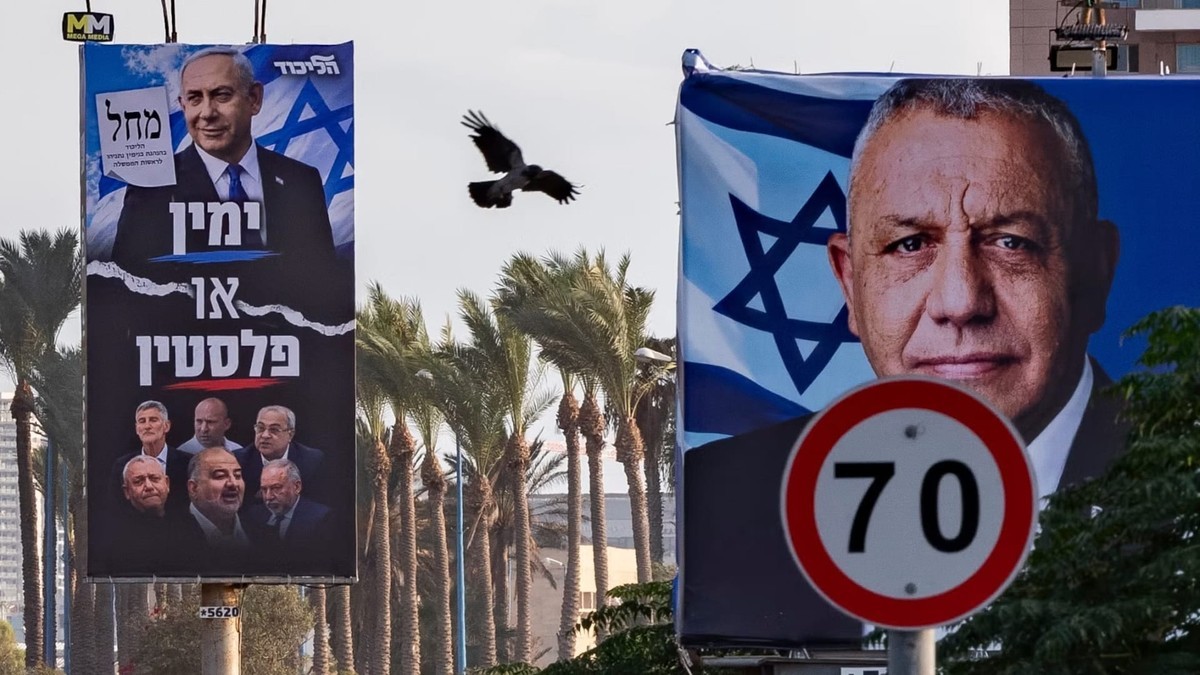
The threshold is 3.25 percent, equivalent to four seats. Votes cast for parties that fall short are discarded. Thirty-eight parties are registered. Based on multiple recent polls, only about 11 are expected to cross, with another four hovering close to it.
The Taub Center estimates a party will need roughly 166,000 votes to cross if turnout matches 2022. The Fly&Vote initiative estimates roughly 40,000 votes per seat in this election.
Those discarded ballots do not vanish from the arithmetic. They shrink the pool from which every other party draws, and they can move a bloc below a line it thought it had cleared. In a race where the gap between the blocs is two to six seats, a party dying at three percent is not a footnote. It is the result.
No party has ever won 61 outright. The threshold is how a system that has never produced a single-party majority produces its surprises instead.
The Squeeze on Ofer Winter
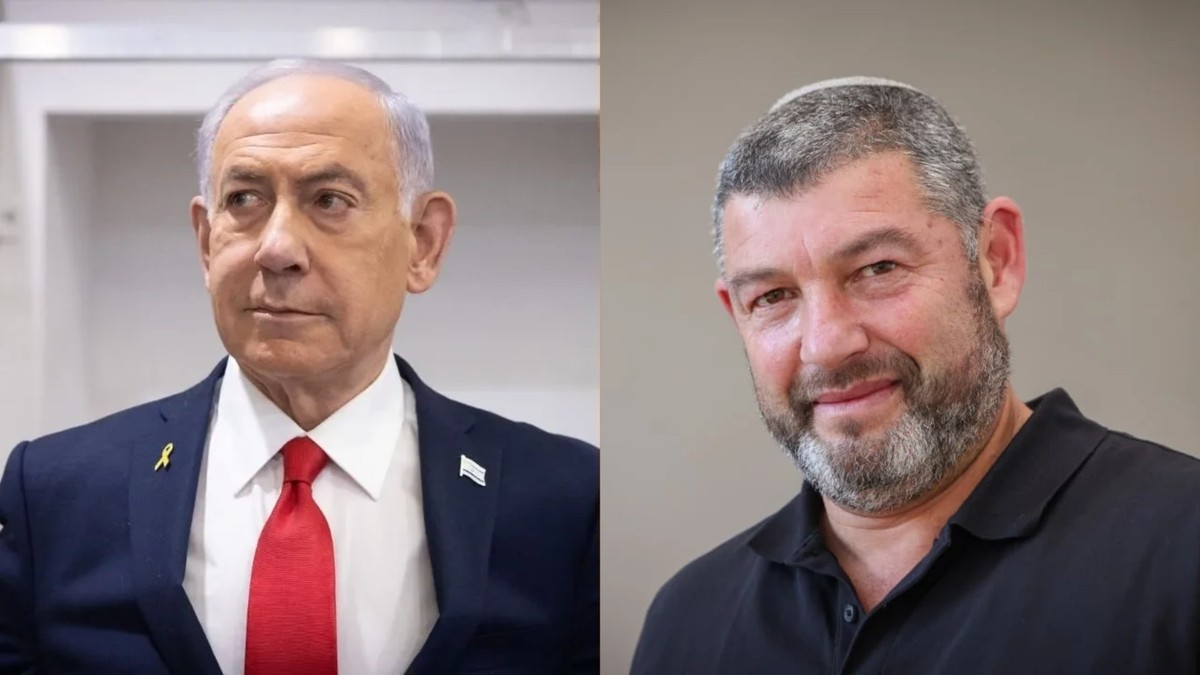
Ofer Winter is a reserve general and chairman of the People of Israel party, rendered Amkha Yisrael by i24NEWS. His party has endorsed Netanyahu for prime minister and says it would only sit in a Netanyahu-led government. It has sought to bring together people who were never in the Knesset or part of the political or security failures around the October 7 Hamas massacre in 2023.
On Wednesday 21 October, Finance Minister Bezalel Smotrich, leader of the far-right Religious Zionism party, offered Winter a ministerial position in the Defense Ministry in exchange for withdrawing from the 27 October election. The post would come from Religious Zionism's share of ministries in potential coalition talks. Smotrich also said he would offer Winter "full authority to establish a voluntary emigration directorate for Gaza" and a directorate for haredi enlistment and integration into the workforce — both conditional on withdrawing. Winter had said he was seeking to be defense minister in the next government.
Winter rejected it that evening. "You've got it wrong. We didn't come for a job, as you're accustomed to. We came to bring change and lead a new path," he said. "We came to serve those who serve, not to enable the continuation of political patronage and the division of positions. We will not surrender."
“There Will Be No Blank Check”
In a video statement reported by the Times of Israel, Winter said: "I did not surrender in the past. I am not surrendering today. And I will not surrender in the future when it comes to the values and principles for which we entered this fight."
He said his party remains firmly within the pro-Netanyahu bloc but that support for a future government would be conditional, including on benefits for military personnel and promoting the "voluntary" migration of Palestinians from Gaza. "There will be no blank check," he said. "If they deliver, they'll get our support. If they don't, they won't."
He also declared he would only support a government that would draft haredim and would not "submit" to the sector's demands. "Those who serve will receive more and those who do not — nothing," he said. People of Israel, he added, "will not let this happen, because it is committed to our servicemen, to our fighters, before the haredi cause."
The Campaign He Says Was Waged Against Him
Winter accused members of his own political camp of waging an "ugly and unimaginable" campaign against him — alleging harassment of candidates and their children, the hiring of private investigators, and pressure on rabbis. Those are his and his party's allegations. They are not established findings.
On Tuesday 20 October, Netanyahu and Smotrich met Rabbi Eli Sadan, who mentored Winter and heads the Bnei David pre-military academy in Eli, in an attempt to pressure Winter to withdraw. Winter studied there in his youth.
His response was blunt: "Netanyahu, I heard that you and Smotrich are going to Rabbi Eli Sadan to put pressure on me to make me step down. Let it be clear: the people of Israel long for different policies. They are fed up with the vile and immoral campaign you have led and the dishonest methods you employ."
Netanyahu’s Closing Argument
Likud issued a statement quoting the prime minister directly at Winter: "Ofer Winter, you are not passing the electoral threshold in any of the polls. You promised to act responsibly and withdraw from the race if you endangered the right." Netanyahu called on him to withdraw to "save the right," saying it would "prevent a dangerous left-wing government."
Netanyahu has repeatedly urged voters not to back smaller right-wing parties, warning that splitting the vote could cost his camp the election.
In an interview with Arutz Sheva, Netanyahu said the election comes down to "me and Trump or Eisenkot and Abbas," referring to Ra'am leader Mansour Abbas. He repeated his claim that an opposition government would include Arab parties, despite Eisenkot and most opposition parties ruling that out. If he loses, he said, the next government would be "the left" and Arab parties — "a copy of what is happening in Europe."
"They will give citizenship to hundreds of thousands of Palestinians for demographic change for the next election," Netanyahu claimed. He attacked Eisenkot's credentials: Eisenkot "is incapable of acting on the world stage. He doesn't have the experience, he doesn't have the talent."
What Israelis Told the Pollsters
The Israel Democracy Institute released its survey on Friday. Thirty-seven percent of Jewish Israelis and 46 percent of Arab Israelis preferred new elections over forming a minority government or a unity government with rotation. Twenty-five percent of Jews and 23 percent of Arabs said a minority government was the best option; 23 percent of Jews and 9 percent of Arabs favored a unity government with rotation.
If a coalition were formed, the largest share of Jewish respondents — 37 percent — wanted a broad coalition of Jewish Zionist parties without Haredi parties. Seventy-one percent of Arab Israelis favored a coalition of center and left parties with the support or participation of Arab parties.
Eisenkot was the most acceptable candidate for prime minister: 56 percent of Jews and 55 percent of Arabs said it would be easy to accept him. Naftali Bennett was second. Netanyahu was third-easiest for Jewish Israelis, with more than half viewing him as hard to accept.
Only 19 percent of total respondents agreed Israel's situation would not change regardless of who they vote for, against 29 to 49 percent in previous years.
The Arab Parties and the Arithmetic of 61
The Zman Yisrael poll for the Times of Israel, conducted 14–15 October among 500 Jewish and Arab respondents with a margin of error of 4.4 percent, found each of the two Jewish-led blocs at 51 seats, Arab-led parties at 14 and the nonaligned Reservists at 4.
In total that poll found Netanyahu's opponents would win 65 seats — but that includes the two Arab-majority parties. Yashar and almost every other Jewish-led opposition party have pledged not to sit in a coalition with either of them, even though Ra'am has expressed interest in joining a future government and recognizes Israel as a Jewish state. The opposition parties have likewise pledged not to join a coalition with Netanyahu.
That is the trap beneath the headline number. Sixty-five exists on paper and cannot be assembled in a room. The same poll found 87 percent of respondents had made a final decision on who to vote for, and only 2.4 percent were still undecided between the pro- and anti-Netanyahu blocs.
What Tuesday Night Looks Like
Polling stations open at 7am and close at 10pm on Tuesday, 27 October, a national holiday. Anyone still queuing at closing is entitled to vote, and exit polls are released when polling closes.
Formal results are due no later than 4 November, and that only starts the coalition process. Parties then have 28 days, with a possible extension of up to 14 days, to assemble 61. If nobody manages it, the country votes again, in early 2027.
In 2022, 70.63 percent of eligible voters — 4,794,593 people — turned out. This year 7,331,981 Israelis are eligible. Most Israelis abroad cannot vote remotely and must travel to Israel in person.
The Shin Bet said social media profiles tied to a "foreign influence campaign" were removed before the vote, working with the Cyber Department in the State Attorney's Office and the Central Elections Committee. It did not say how many accounts were removed or which countries were behind the alleged campaign.
By Jessica Ali, Staff Writer
This article was produced with AI-assisted research and editorial support. Sources: The Times of Israel, The Jerusalem Post, Haaretz, i24NEWS, Al Jazeera, the Israel Democracy Institute and the Central Elections Committee.
What's Your Reaction?
 Like
0
 Dislike
0
 Love
0
 Funny
0
 Wow
0
 Sad
0
 Angry
0

Editor-in-Chief at Global1.News. Atlanta-based journalist who cuts through the BS and tells it like it is. Lead anchor, host, and the voice you hear when the spin stops and the truth starts.















Comments (0)