
Serial sex offender was free to kill two women because of police blunders
Old Bailey Jury Convicts Serial Offender After 13 Hours of Deliberation A jury at the Old Bailey convicted Simon Levy on Friday of murdering two women in sexually motivated attacks carried out five months apart last year. The 40-year-old from Tottenham, north London, was found guilty of suffocating Carmenza Valencia-Trujillo, 53, on the Aylesbury estate in south-east London and Sheryl Wilkins, 39, behind a car park wall near Tottenham High Road.
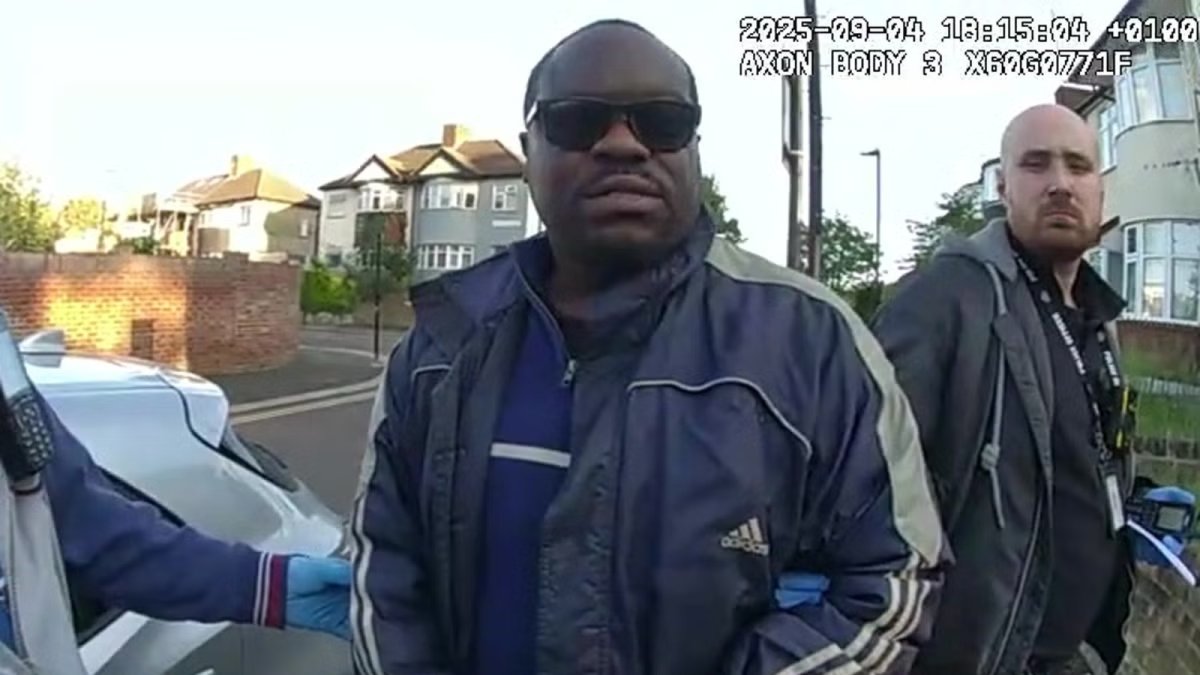
Old Bailey Jury Convicts Serial Offender After 13 Hours of Deliberation
A jury at the Old Bailey convicted Simon Levy on Friday of murdering two women in sexually motivated attacks carried out five months apart last year. The 40-year-old from Tottenham, north London, was found guilty of suffocating Carmenza Valencia-Trujillo, 53, on the Aylesbury estate in south-east London and Sheryl Wilkins, 39, behind a car park wall near Tottenham High Road. Levy also faced convictions for two counts of rape, assault occasioning grievous bodily harm with intent, and non-fatal suffocation linked to a January 2025 attack in which the victim survived. Members of the victims' families wept as the verdicts were delivered after the jury deliberated for 13 hours. Prosecutor Tom Little KC described the offences as the work of a predatory serial sexual attacker operating in a similar pattern across multiple incidents. Levy showed no reaction in court while wearing sunglasses during the proceedings.
The verdicts mark the culmination of a protracted investigation that traced Levy's movements across London boroughs. The jury's extended deliberations reflected the complexity of linking separate attacks through forensic evidence and witness testimony. Families present in court expressed visible relief mixed with grief as each count was read out, underscoring the emotional weight carried through months of legal process.
Previous Convictions and Release on Licence Exposed Systemic Gaps
Levy was already a registered sex offender at the time of the murders. He had sexually assaulted two women in 2018 and received a prison sentence in 2021. Following his release in 2023 he continued to target women. Earlier this year an Inner London Crown Court jury convicted him of 11 counts of sexual assault, ten involving young women on the Tube and London Overground networks and one involving a prison officer assaulted while Levy was in custody in 2022. The timeline shows that Levy remained at liberty despite his status as a registered offender. Police and court decisions allowed him to be released on bail on multiple occasions, enabling further offences including the January 2025 rape committed at the same car park location where Sheryl Wilkins was later found. That attack left the victim unconscious with a broken collarbone, yet Levy was not immediately recalled to prison under the terms of his licence.
Offender management in England and Wales relies on strict licence conditions that require prompt recall when new allegations surface. In Levy's case the sequence of bail grants after his 2023 release created repeated windows for further predation. The Inner London Crown Court convictions for the transport network assaults revealed a pattern that had continued unchecked for years, raising questions about how risk assessments were applied by probation and police teams.
Metropolitan Police and British Transport Police Management Failures
Successive decisions by the Metropolitan Police, British Transport Police and prosecutors left Levy free to offend. The Independent Office for Police Conduct opened an independent investigation in January after a voluntary conduct referral from the force. The IOPC is examining the management of Levy from his first conviction in September 2021 through to his arrest in September 2025. Investigators are assessing whether officers followed policies, procedures and training and whether earlier action could have prevented reoffending. A gross misconduct notice has been served on one police constable and a misconduct notice on one detective sergeant. The IOPC has stated that these notices do not automatically lead to disciplinary proceedings.
The referral covers the period after Levy's February 2023 release on licence, when responsibility for monitoring fell jointly to the Metropolitan Police and British Transport Police. Failures to escalate intelligence or enforce recall powers allowed the January 2025 attack to occur at the identical Tottenham car park later used in the murder of Sheryl Wilkins. Such lapses illustrate how fragmented information sharing between forces can undermine the Multi-Agency Public Protection Arrangements that are meant to safeguard the public.
Commander Outlines Met Public Protection Priorities
Commander Clair Kelland, who leads the Metropolitan Police Public Protection Team, said the investigation into Simon Levy is one of great complexity. She emphasised the force's priority to better protect women and girls and confirmed close working with partners in Haringey and Southwark to encourage reporting and raise awareness of support services. Kelland urged victim-survivors and anyone with information to contact the incident room on 07751 700 330 or Crimestoppers on 0800 555 111. The force continues to examine how registered sex offenders are supervised after release on licence.
Her remarks highlight the operational challenge of supervising hundreds of registered offenders across London while maintaining public confidence. The Metropolitan Police's public protection unit must balance limited resources against the need for rigorous oversight, particularly when offenders have histories of targeting women on public transport. Continued partnership work with borough councils in Haringey and Southwark aims to improve reporting rates, yet the Levy case demonstrates that awareness campaigns alone cannot compensate for earlier investigative shortcomings.
Impact on Victim Families and Questions Over Criminal Justice Safeguards
The convictions have renewed scrutiny of how the Metropolitan Police and partner agencies manage high-risk offenders in the community. Families of Carmenza Valencia-Trujillo and Sheryl Wilkins have endured prolonged proceedings that exposed repeated opportunities for intervention that were not taken. Relatives described the anguish of learning that attacks might have been prevented had licence conditions been enforced more rigorously after the 2023 release. The human cost extends beyond the courtroom, with families left to navigate grief while questioning why known risks were not contained.
Public confidence in offender management rests on consistent application of licence conditions and prompt recall when behaviour escalates. The IOPC investigation will determine whether individual or force-wide changes are required, yet the existence of the inquiry itself signals recognised shortcomings in the handling of Levy's case from 2021 onwards. Crown Prosecution Service decisions on bail and charging also face renewed examination as part of the wider review of how serial offending patterns are identified and disrupted.
Broader Implications for Trust in Policing and Prosecution Decisions
Serial offending by a known sex offender raises direct questions about coordination between the Metropolitan Police, British Transport Police and the Crown Prosecution Service. When bail decisions and licence supervision fail to contain risk, the consequences fall on women using public spaces in London, including the Tube network and residential estates. The Old Bailey verdicts confirm that Levy's pattern of behaviour was identifiable yet not sufficiently disrupted. The IOPC examination of officer conduct from 2021 to 2025 will test whether existing frameworks for monitoring registered sex offenders are adequate or whether procedural lapses allowed preventable harm.
Until those findings are published, the cases of Carmenza Valencia-Trujillo and Sheryl Wilkins stand as evidence that current safeguards require rigorous review by Whitehall and the Metropolitan Police Service. The outcome will influence future policy on recall thresholds and information sharing across forces, determining whether similar tragedies can be averted through tighter institutional oversight.
By Erica Thornton, Staff WriterThis article was produced with AI-assisted research and editorial support. Reporting is based on sources cited in the article.
What's Your Reaction?
 Like
0
Like
0
 Dislike
0
Dislike
0
 Love
0
Love
0
 Funny
0
Funny
0
 Wow
0
Wow
0
 Sad
0
Sad
0
 Angry
0
Angry
0

US Politics and Policy Correspondent at Global1.News. Based in Washington DC, covering American politics, policy, elections, and the courts. Knows how the system works and tells you what it actually means.















Comments (0)