
Meta Fined £421m Over Children's Mental Health Harms as US Court Brands It a 'Public Nuisance'
A New Mexico court has ordered Meta to pay $567m for failing to protect children from harm on its platforms, in the largest child-safety ruling ever handed down against the social media giant.
A New Mexico court has ordered Meta to pay $567m for failing to protect children from harm on its platforms, in the largest child-safety ruling ever handed down against the social media giant. The verdict lands as the UK presses ahead with its own under-16s social media ban, and it raises a pointed question for British regulators: if an American state court can treat a platform's design as a public nuisance, why should Westminster settle for less?
US Verdict Hands UK Regulators Fresh Ammunition Against Tech Giants
London, UK – 7 August 2026 — The decision forces Meta to confront systemic failures in its recommendation systems, while UK officials in the Department for Science, Innovation and Technology prepare to tighten enforcement of the Online Safety Act across England, Scotland, Wales and Northern Ireland.

The Ruling: Meta Branded a 'Public Nuisance'
Judge Bryan Biedscheid ruled that Meta's platforms constitute a public nuisance, ordering the company to pay $567m, equivalent to £421m. This brings the total penalties from two New Mexico cases to $942m, following the earlier $375m verdict delivered in March 2026.
The judge compared the psychological damage and sexual exploitation of children to industrial pollution that communities must abate, writing that the harm “migrate[s] to the internet as a whole and, perhaps most concerning, to the real world”. This marks the first time a court has applied the public nuisance doctrine to a social media company. Meta said it “disagree[s] with the ruling and will appeal”, insisting it works hard to keep people safe and remains confident in its record of protecting teens online.
From Lawsuit to Landmark: The New Mexico Case
New Mexico Attorney General Raúl Torrez brought the case in 2023 under the state's Unfair Practices Act, alleging that Meta's algorithms promoted harmful content to minors. A jury returned the initial $375m verdict in March 2026 after hearing testimony from former content moderators.
A 2023 Guardian investigation had already exposed internal documents showing how recommendation systems prioritised engagement over safety, and former Meta moderators told the newspaper that flagged grooming content was not always escalated. Announcing the verdict, Attorney General Raúl Torrez said: “This case has always been about protecting children, standing up for families, and making sure that one of the world's largest technology companies cannot profit from practices that endanger young people without consequence. Today's decision is a victory for every parent who has worried about what social media is doing to their child and every child who deserves to grow up safer online.”
What the Money Will Do — and What Meta Must Change
Of the $567m, $420m is earmarked for clinical and behavioural health programmes treating harms Meta's platforms have already caused to young people in New Mexico. The remainder funds awareness and prevention training for teachers and health professionals, plus screening services, spread over five years.
For British readers the structure offers a template worth studying. NHS England's child and adolescent mental health services (CAMHS) in Manchester, Birmingham and Leeds, and equivalent services in Glasgow, Belfast and Cardiff, are already stretched by demand, and the New Mexico fund shows how platform penalties can be channelled directly into treatment capacity.
The court ordered Meta to implement immediate changes: blocking adult users from messaging those under 18, banning nudity in feeds, enforcing a one-strike policy on child sexual exploitation material, removing likes from under-18 accounts, and developing a model to predict under-13 users.
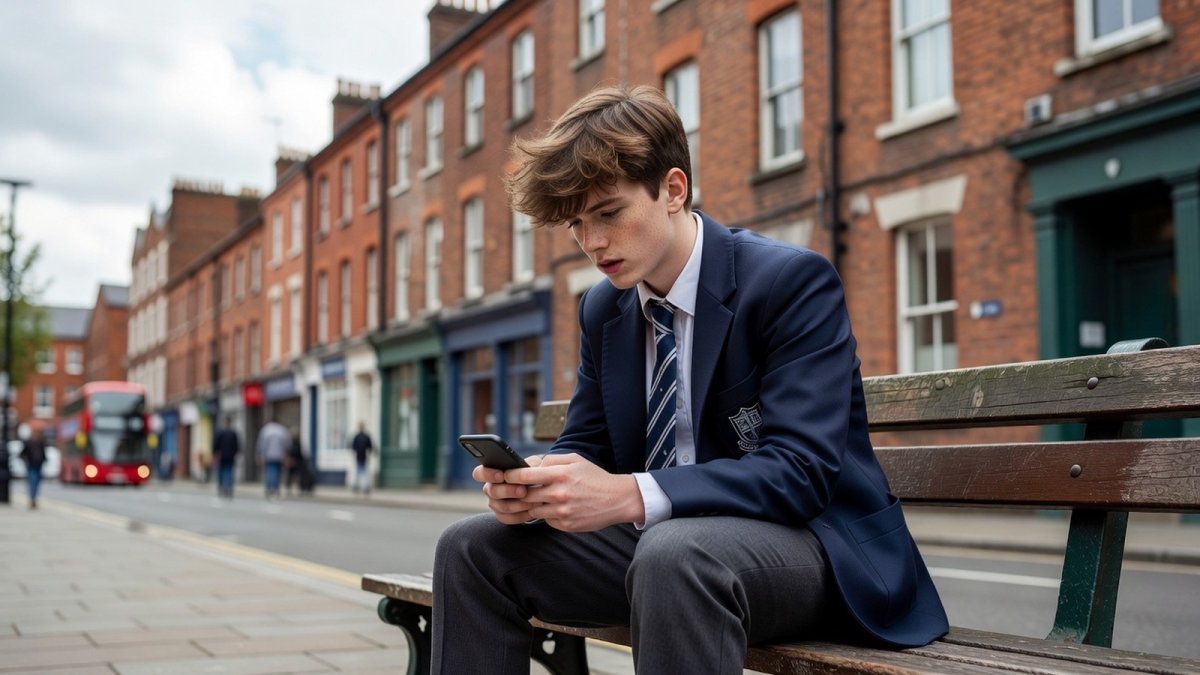
The ordered restrictions would impose a starkly different rhythm on teenage life. Notification blackouts between 10pm and 7am, together with school-day silence from 8am to 3pm, would remove the constant ping that currently structures evenings and lessons for many British families. A 90-hour monthly ceiling, roughly three hours daily, would force adolescents to ration their time in ways that feel both protective and punitive, particularly for those whose social lives have migrated almost entirely online.
Equally significant is the court’s workaround on age verification. Federal privacy rules prevented direct checks for under-13s, so Meta must rely on AI-driven estimation models within two years. For UK parents this raises familiar questions about accuracy and privacy: will the system mislabel older teenagers or, conversely, allow younger children to slip through? The requirement to delete existing under-13 data and to report compliance twice yearly adds a layer of transparency that British regulators have long demanded but rarely received.
What This Means for the UK
Ofcom has already begun Category 1 designations under the Online Safety Act, requiring the largest platforms to assess and mitigate risks to children. The June 2026 announcement of an under-16s ban now gains momentum from the New Mexico precedent, giving the regulator a transatlantic legal template to point at.
Former safeguarding minister Jess Phillips told BBC Radio 4's Today programme that US court victories against big tech could enable the UK to take tougher action without fearing damage to UK-US diplomatic ties. Families in London boroughs, the West Midlands and towns across the North face daily exposure through platforms that Ofcom is currently investigating, including TikTok.
The New Mexico ruling arrives as the UK government prepares to enforce its under-16 social-media ban from spring 2027. Announced in June, the plan mirrors the Australian model and would cover platforms including X, Facebook, YouTube, Snapchat and TikTok, with ministers signalling opt-out night curfews between midnight and 6am for 16- and 17-year-olds and default restrictions on “addictive” features. Ofcom’s research, showing 70 per cent of 11- to 17-year-olds encountered harmful content within a four-week period, supplies the political justification for moving faster than previously planned. The regulator’s separate age-check investigation into TikTok now looks less like an isolated probe and more like the first test of a broader enforcement regime.
Yet the Online Safety Act operates across a fragmented landscape. While the Act itself is UK-wide, child-safeguarding responsibilities remain devolved, leaving Scotland, Wales and Northern Ireland to reconcile their own arrangements with Westminster timelines. NHS England’s CAMHS services, already stretched, would face additional pressure if reduced screen time simply shifts distress elsewhere without corresponding investment in mental-health support. Jess Phillips’s observation that American court victories reduce diplomatic risk for tougher British rules therefore carries practical weight.
For families the difference is felt in ordinary routines. A school in Salford or a youth club in Newport does not need a New Mexico judgment to know that phones dominate the dinner table, the bedroom and the walk to the bus stop. What the ruling offers them is evidence that the platforms themselves bear responsibility — and that governments prepared to legislate, as Westminster now appears to be, can force changes that parental nagging never will.
Meta's Mounting Legal Woes
The Tennessee trial that began in July 2026 is examining internal documents that allegedly warned of Instagram’s role in eating disorders and depression. Next week, a California multi-state case involving nearly three dozen attorneys general will test whether the company violated child-privacy statutes. A federal trial in Oakland is also due later this month, and earlier in the year Meta lost a landmark Los Angeles case that found it could be held liable for building addictive platforms.
Behind the headline cases sit thousands of individual lawsuits across the United States, most brought by families. Each verdict reshapes the legal terrain, and even combined, the New Mexico awards remain a rounding error for a company that posted $61bn in revenue between April and June, up 28 per cent on the year.
Financially the $942 million award registers as modest against quarterly revenues of $61 billion and annual profits approaching $60 billion. Bruce Daisley’s description of the sum as “a drop in the ocean” captures the arithmetic, yet the cumulative effect of these cases lies in precedent and perception. Each verdict supplies regulators elsewhere with evidence that platforms can be compelled to alter core design features rather than merely adjust content policies.
The Bottom Line — What Comes Next
Meta has confirmed it will appeal, and legal analysts expect the fight to run for years. Yet the significance of the ruling extends beyond one company's balance sheet: it is the first time a court has treated a social media platform's design as a public nuisance — a doctrine with long reach.
UK parents and policymakers must monitor how the Department for Science, Innovation and Technology incorporates these ordered safeguards into forthcoming guidance. Schools across the regions will track whether the measures reduce the documented strain on NHS England child mental health services.
While the appeal runs, the precedent will shape proceedings against TikTok, Snap and X, and the UK’s spring 2027 enforcement date draws nearer. Laura Edelson, assistant professor at Northeastern University, notes that individual states are constructing workable constraints without waiting for federal legislation — a pattern that may embolden other jurisdictions, from Westminster to Brussels.
Internationally the ruling sits alongside the EU’s Digital Services Act and Australia’s under-16 ban, suggesting a converging regulatory front. UK parents, schools and regulators will therefore watch three immediate indicators: the detail of Ofcom’s forthcoming guidance, the Department for Science, Innovation and Technology’s implementation timetable, and whether CAMHS capacity expands in tandem with reduced platform access. The case demonstrates that courts can force structural change; whether that change improves adolescent wellbeing remains the open question.
By Erica Thornton, Staff Writer
This article was produced with AI-assisted research and editorial support. Reporting is based on sources cited in the article.
What's Your Reaction?
 Like
0
Like
0
 Dislike
0
Dislike
0
 Love
0
Love
0
 Funny
0
Funny
0
 Wow
0
Wow
0
 Sad
0
Sad
0
 Angry
0
Angry
0

US Politics and Policy Correspondent at Global1.News. Based in Washington DC, covering American politics, policy, elections, and the courts. Knows how the system works and tells you what it actually means.













Comments (0)