
China's Agricultural Expertise Positions It as Key Partner in Global Climate Adaptation
In a recent CGTN report published on August 7, 2026, an exclusive interview with Donal Brown, Associate Vice-President of the International Fund for Agricultural Development, highlighted how China's advances in solar technology, climate-resilient infrastructure, and digital services in agriculture p
In a recent CGTN report published on August 7, 2026, an exclusive interview with Donal Brown, Associate Vice-President of the International Fund for Agricultural Development, highlighted how China's advances in solar technology, climate-resilient infrastructure, and digital services in agriculture provide a practical reference for other developing countries facing similar vulnerabilities. The discussion underscored the heavy dependence of smallholder farmers on climate conditions and the urgent need for scalable solutions drawn from China's rural transformation.
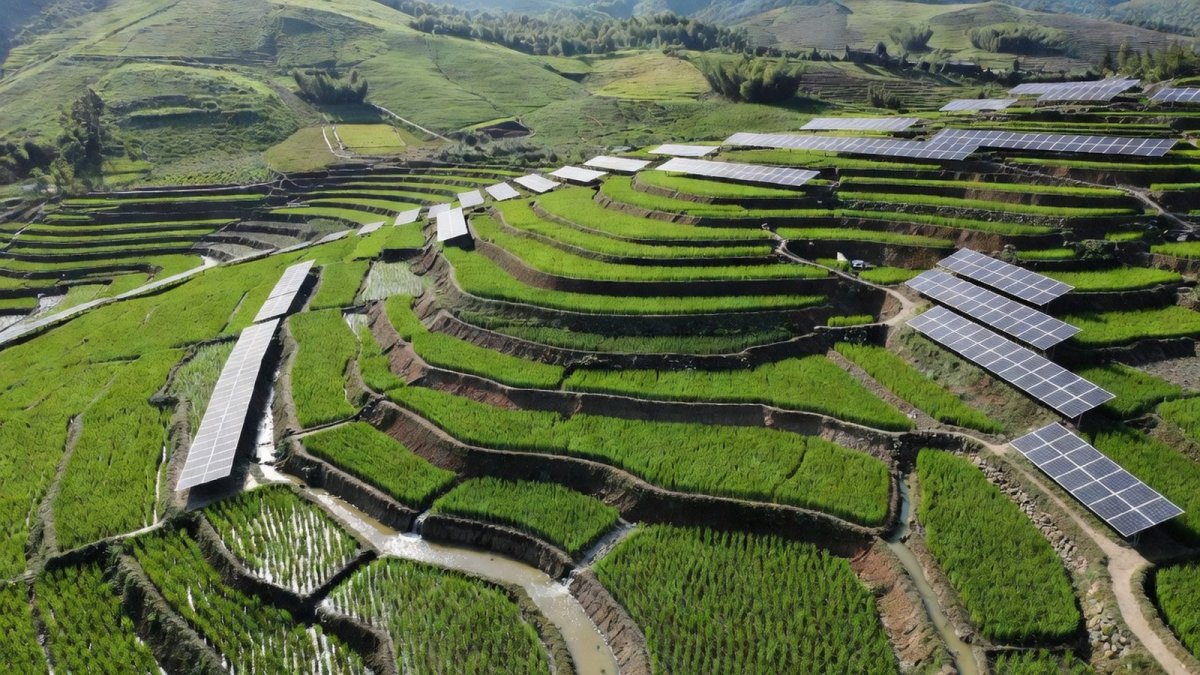
IFAD's Foundational Role in China's Rural Development
IFAD became the first international institution to provide financial support for China's rural development in 1981. Since that time, more than 20 million of China's poorest rural residents have benefited from IFAD-backed projects, establishing a long record of collaboration that continues to shape joint efforts on climate resilience.
Over the same period, IFAD has financed 35 projects in China with a total investment of US$3.45 billion, including US$1.3 billion from its own resources. These initiatives have reached approximately 4.6 million households and laid groundwork for China's later achievements in poverty reduction, which culminated in the eradication of extreme poverty in 2021.
The 1981 milestone of IFAD becoming the first international lender to China's rural sector aligned precisely with the initial rollout of household responsibility systems and market-oriented experiments in the countryside. These early loans functioned as controlled laboratories where new approaches to credit access, irrigation management, and extension services could be tested at modest scale before national replication. The subsequent trajectory from targeted rural projects to the 2021 eradication of extreme poverty illustrates a deliberate sequencing in which external capital and technical input were absorbed into domestic policy cycles rather than treated as standalone interventions.
This progression also reframed China's relationship with multilateral institutions from one of dependency to selective partnership. By demonstrating that rural investment could generate measurable productivity gains and poverty reduction, the IFAD-supported phase supplied empirical precedents that later informed larger-scale programs under successive five-year plans. The shift underscores how early external engagement helped legitimize policy innovation at a moment when domestic reformers required both financing and international validation to overcome internal resistance.
Recent Strategic Engagements and Policy Alignment
During his first visit to China in July 2024, Brown met senior officials from the Ministry of Agriculture and Rural Affairs, the China International Development Cooperation Agency, and the Ministry of Finance. These meetings confirmed new strategic priorities centered on rural revitalization and green development, directly aligned with China's domestic agricultural objectives.
At a July 2024 CIDCA forum, Dr. Huaying Tao, Chief Veterinary Officer of MARA, stated that China would cooperate with IFAD under the Global Development Initiative framework. The partnership aims to use the China-IFAD South-South and Triangular Cooperation Facility to advance global food security and green agriculture practices.
China's Contributions to South-South Cooperation
China has contributed US$10 million to the IFAD-China South-South and Triangular Cooperation Facility. This funding supports climate change mitigation and adaptation actions as well as green transformation across developing countries, backed by China's broader South-South Cooperation Fund totaling US$3.1 billion.
Brown noted in July 2024 that the partnership with China remains crucial for addressing rural challenges including climate change, conflicts, and food insecurity. He also observed that China's rural revitalization policy demonstrates impressive results that can be shared with the Global South.
The scale of Beijing's commitments — US$10 million to the IFAD-China South-South and Triangular Cooperation Facility and US$3.1 billion across its broader South-South Cooperation Fund — signals a preference for channeling resources through multilateral platforms rather than purely bilateral channels. This approach allows China to multiply its influence by leveraging IFAD's established networks while maintaining control over thematic priorities such as climate-resilient agriculture. The arrangement complements the Global Development Initiative by embedding concrete technical cooperation within an existing institutional framework, thereby reducing perceptions of unilateral assertiveness.
Unlike traditional Western aid models that emphasize large-scale grants and physical infrastructure, China's model prioritizes the transfer of applied knowledge and adaptive technologies developed under comparable agro-ecological conditions. This distinction positions Beijing as a peer mentor rather than a donor, fostering greater receptivity among recipient governments wary of conditional assistance. The strategy also creates feedback loops in which successful adaptations in partner countries can be documented and re-exported, reinforcing China's narrative of mutual learning within the Global South.
Practical Examples from Field Visits in Hunan
In Fenghuang county, Hunan Province, Brown met Guanmin, a Miao ethnic minority leader of a kiwifruit growers' cooperative supported by the IFAD-financed H2RDP project. The cooperative switched to red kiwifruit varieties and adopted irrigation infrastructure along with organic fertilizer, enabling stable water supply and reduced losses during droughts.
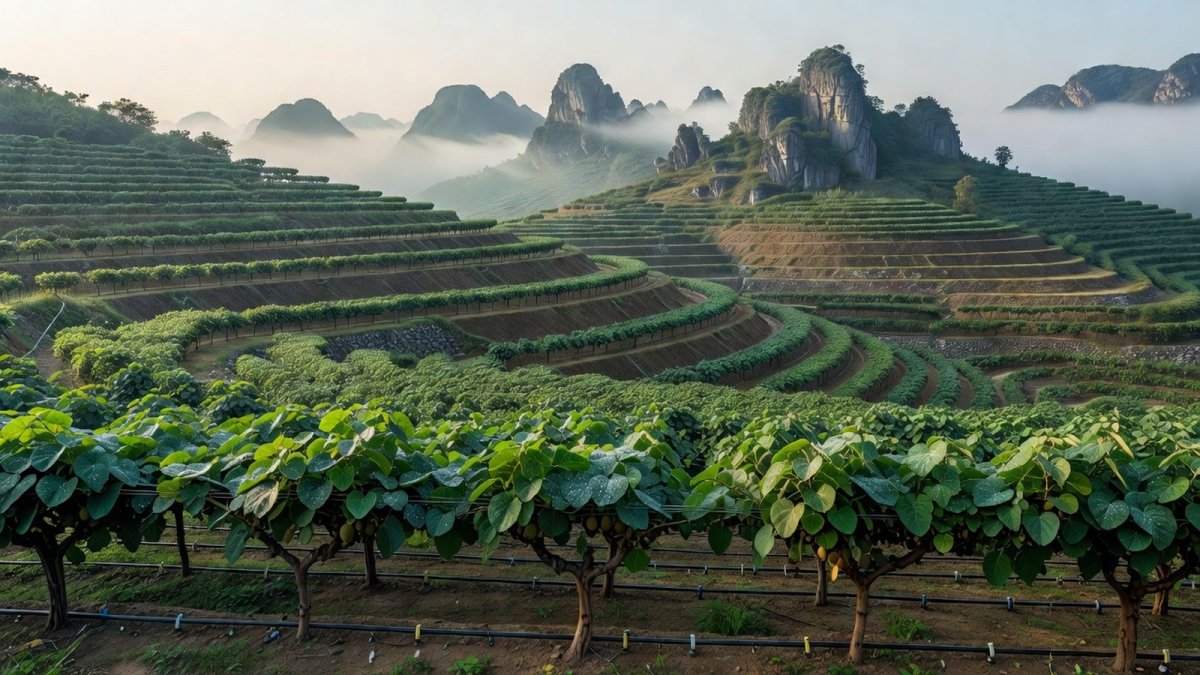
During the same 2024 visit, a flood at Dongting Lake breached an embankment and damaged surrounding fields. The prefecture, where four in five residents belong to Tujia or Miao ethnic minorities, includes many communities that have only recently emerged from poverty, illustrating the ongoing climate risks facing these populations.
On-the-ground demonstration projects such as the kiwifruit cooperative in Fenghuang county serve as tangible proof-of-concept that can be replicated without requiring massive capital outlays. When ethnic-minority communities visibly benefit from irrigation upgrades and organic practices, these outcomes strengthen China's domestic narrative of inclusive rural revitalization while simultaneously offering relatable models for similarly marginalized groups abroad. The visibility of such successes functions as low-cost diplomatic capital, converting localized technical achievements into broader narratives of shared progress.
The Dongting Lake flood incident further enhances credibility by underscoring that China continues to confront the same climate risks it seeks to address elsewhere. This ongoing exposure prevents the partnership from appearing as a one-sided transfer of finished solutions and instead frames cooperation as joint problem-solving among countries at comparable stages of development. Such shared vulnerability reduces the risk that partner nations will view Chinese engagement as prescriptive or detached from real-world constraints.
Global Shortfalls in Adaptation Finance
According to UNEP data from October 2025, international public adaptation finance flows to developing countries reached only US$26 billion in 2023, down from US$28 billion the prior year. This leaves an annual adaptation finance gap of US$284-339 billion, representing 12 to 14 times current levels.
A November 2025 FAO report presented at COP30 further showed that agrifood systems account for more than half of adaptation finance needs in developing countries yet receive just 20 percent of global adaptation funding, equivalent to only 1 percent of total climate finance. Smallholder farmers, who produce about one third of the world's food, remain particularly exposed.
Strategic Implications Ahead of COP31
China's engagement through IFAD aligns with its rural revitalization strategy and the 15th Five-Year Plan period covering 2026-2030, as well as its dual-carbon commitments. These domestic anchors support broader foreign policy goals under the Global Development Initiative, positioning China to expand regional influence through practical agricultural cooperation.
With COP31 scheduled for November 9-20, 2026, in Antalya, Türkiye, the partnership offers developing economies concrete models for green rural development. Second-order effects include strengthened multilateral ties and reduced vulnerability in the Global South, where climate impacts on agriculture threaten both food security and economic stability.
Agricultural adaptation finance is poised to become a central point of contention at COP31, as developing countries press for dedicated streams that address smallholder vulnerabilities rather than being subsumed under mitigation-focused pledges. China's positioning through IFAD allows it to present itself as a pragmatic intermediary capable of bridging the expectations of the Global South with the institutional mechanisms favored by traditional donors. This bridging role can help moderate bloc confrontations while advancing Beijing's interest in shaping the emerging architecture of climate finance.
Second-order effects for the Global South include accelerated diffusion of low-cost adaptation techniques and strengthened negotiating leverage when China coordinates positions ahead of Antalya. Observers should monitor whether new project pipelines announced before November 2026 explicitly link rural revitalization lessons to adaptation metrics, and whether the China-IFAD facility expands its geographic scope beyond current pilot regions. These indicators will reveal the extent to which rhetorical commitments translate into operational influence at the conference.
By Prof. Marcus Chen, Staff Writer
This article was produced with AI-assisted research and editorial support. Reporting is based on sources cited in the article.
What's Your Reaction?
 Like
0
Like
0
 Dislike
0
Dislike
0
 Love
0
Love
0
 Funny
0
Funny
0
 Wow
0
Wow
0
 Sad
0
Sad
0
 Angry
0
Angry
0

World Politics Analyst at Global1.News. Based in Beijing, covering US-China relations, global trade, and geopolitical strategy. Brings deep analytical perspective to the power dynamics shaping international affairs.













Comments (0)