
Peace Train 2026 Rolls Into Vientiane: China's Military Medical Diplomacy and the Mekong Calculus
A Chinese military medical team arrived in Vientiane, Laos, on Sunday, September 6, 2026, marking the opening of the China-Laos "Peace Train 2026" joint humanitarian medical rescue exercise, as reported by CGTN. The deployment, announced on September 4 by Senior Colonel Jiang Bin, spokesperson for China's Ministry of National Defense, represents the sixth iteration of a flagship military health cooperation program that has run since 2017....
A Chinese military medical team arrived in Vientiane, Laos, on Sunday, September 6, 2026, marking the opening of the China-Laos "Peace Train 2026" joint humanitarian medical rescue exercise, as reported by CGTN. The deployment, announced on September 4 by Senior Colonel Jiang Bin, spokesperson for China's Ministry of National Defense, represents the sixth iteration of a flagship military health cooperation program that has run since 2017. The exercise's theme—international humanitarian medical rescue in a super typhoon disaster—is not incidental. It arrives as the northwestern Pacific has produced 24 typhoons this season, more than ten above the historical average, lending operational urgency to what Beijing frames as a routine contribution to regional public security.
A Sixth Run of the Peace Train: What Is Happening in Laos
The 17-day program brings together the Chinese medical support team and its counterpart from the Lao People's Army for a joint exercise and medical service rotation. Training subjects include joint on-site search and rescue, casualty evacuation, health and epidemic prevention, and psychological rescue—capabilities designed for the chaotic aftermath of a catastrophic storm. The scenario is deliberately specific: a super typhoon has devastated a populated area, requiring coordinated military-civilian response across multiple medical disciplines.
Beyond the drill itself, the Chinese side will provide medical services for Lao military personnel and civilians during the event. After the exercise concludes, the medical team will travel to Vientiane, Savannakhet, Champasak, and Attapeu provinces to deliver specialized diagnosis and treatment and academic lectures. The geographic spread is notable: Savannakhet, Champasak, and Attapeu sit near Laos's borders with Thailand, Cambodia, and Vietnam, extending the mission's reach well beyond the capital.
Bouasing Inthavong, deputy director of the General Logistics Department of the Lao People's Army, attended the welcome ceremony, underscoring the exercise's status within formal bilateral military channels. The "Peace Train" series, first held in 2017, has previously covered disaster scenarios including floods, mudslides, and earthquakes. Each iteration has refined a template that combines tactical medical training with visible humanitarian outreach—a dual-purpose design that serves both operational readiness and diplomatic messaging.
Humanitarian Assistance as Strategic Signaling
Jiang Bin's characterization of the exercise deserves close reading. The drill will, in his words, "better provide quality public security goods for regional countries and peoples." The phrase "public security goods" is not casual diplomatic language; it is a deliberate framing that positions China's military medical deployments as contributions to regional stability rather than expressions of hard power. This vocabulary aligns with Beijing's broader narrative of itself as a responsible stakeholder offering cooperative security alternatives to alliance-based systems.
Humanitarian assistance and disaster relief (HA/DR) operations have become a central instrument of China's military diplomacy across the Indo-Pacific. Unlike combat exercises, which can alarm neighboring states, medical drills and disaster-response missions allow the People's Liberation Army to project presence and competence while minimizing political friction. The PLA gains practical experience in joint operations, logistics coordination, and civil-military integration—skills that translate to other mission types—while host nations receive tangible benefits in the form of medical care and training.
For Laos, the arrangement offers access to specialized medical expertise and equipment that its own military health system may lack. For China, each iteration deepens interpersonal networks between military medical personnel, normalizes PLA operations on foreign soil, and creates a repository of goodwill that can be drawn upon in diplomatic contexts. The "Peace Train" series thus functions as a low-cost, high-return instrument of influence-building, one that is difficult for external observers to criticize without appearing opposed to humanitarian cooperation itself.
Laos: Beijing's Most Dependable Partner on the Southeast Asian Mainland
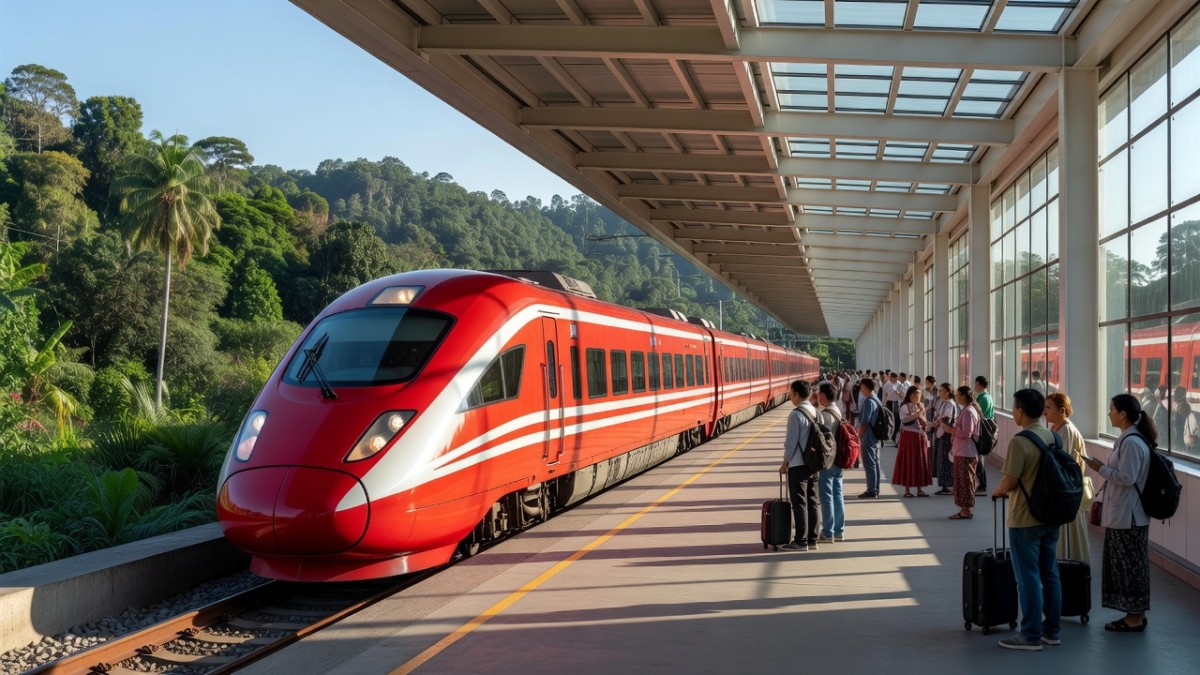
The choice of Laos as the venue for this exercise is overdetermined by bilateral history. 2026 marks the 65th anniversary of China-Laos diplomatic relations and has been designated the "China-Laos Friendship Year." It is also the fifth anniversary of the China-Laos Railway, the approximately 1,035-kilometer Belt and Road flagship line connecting Kunming in Yunnan Province to Vientiane. Since its opening in December 2021, the railway has been the single most transformative infrastructure project in Laos, helping shift the country's status from "landlocked" to "land-linked."
That transformation carries strategic weight. Laos, one of Southeast Asia's poorest and least populous states, has found in China a patron willing to invest in connectivity infrastructure that Western donors and multilateral banks have long deemed commercially unviable. The railway has integrated Laos into Chinese supply chains, facilitated cross-border trade, and positioned Vientiane as a potential logistics hub for the Greater Mekong Subregion. In return, Laos has maintained a consistently favorable posture toward Beijing on regional and international questions, including within ASEAN forums.
The military medical exercise thus operates within a dense web of existing cooperation. China-Laos relations are not merely transactional; they are institutionalized across infrastructure, trade, investment, and now security and health. For Beijing, Laos represents a proof of concept: a state that has embraced Belt and Road connectivity and Chinese security cooperation has experienced tangible development gains. This model is implicitly offered to other Mekong states as an alternative to hedging between great powers.
A Typhoon Season That Makes the Scenario Feel Urgent
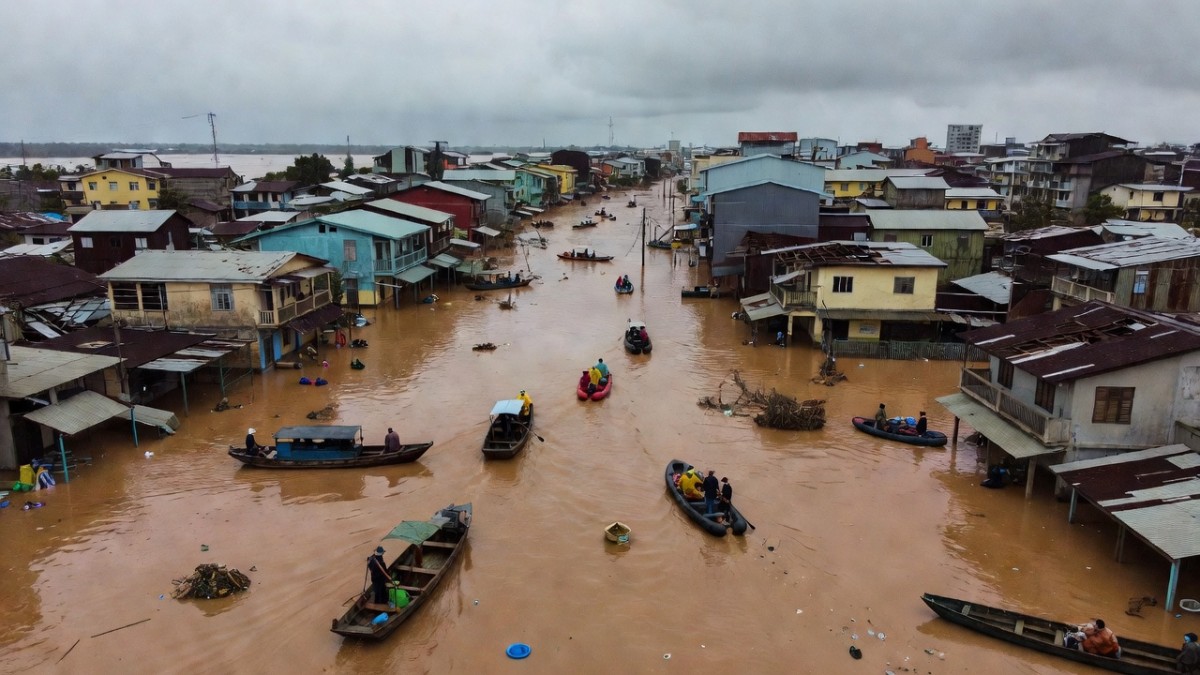
The exercise's super typhoon scenario is not abstract. As of September 1, 2026, 24 typhoons had formed over the northwestern Pacific and the South China Sea—10.4 more than the historical average for the same period. Typhoon Saudel recently struck eastern and southern China, causing significant disruption. The 2026 season has already demonstrated the destructive potential of extreme weather across the region, and the statistical anomaly suggests that climate change is intensifying storm frequency and severity in ways that outpace existing disaster-response capacities.
The regional dimension extends beyond typhoons. In late August, a severe mudslide struck the Gyirong-Rasuwa border crossing between China and Nepal, a critical trade and transit point in the Himalayas. China has provided meteorological monitoring support to Nepal's relief efforts, extending its disaster-response cooperation beyond Southeast Asia into South Asia. This pattern—offering technical and material assistance to neighbors facing natural disasters—has become a consistent feature of Chinese foreign policy, from earthquake response to flood relief.
For the "Peace Train" exercise, the timing is fortuitous. The typhoon season's intensity provides a real-world justification for the drill's scenario, making the training appear responsive to genuine regional needs rather than abstract contingency planning. It also allows China to position itself as a provider of disaster resilience at a moment when climate-related shocks are increasing across the Mekong subregion and beyond. The meteorological support to Nepal, combined with the medical exercise in Laos, paints a picture of a China actively engaged in building regional disaster-response architecture.
The Mekong Calculus: Competing Models of Security Provision
The "Peace Train" exercise sits within a broader competition for influence in the Mekong subregion. China's approach emphasizes bilateral and multilateral cooperation through frameworks such as the Mekong-Lancang Cooperation, which brings together China, Laos, Myanmar, Thailand, Cambodia, and Vietnam. These mechanisms focus on connectivity, economic development, and now increasingly on non-traditional security issues including disaster response and public health. The model is state-led, infrastructure-heavy, and framed around mutual development rather than formal security guarantees.
The United States and its allies offer a contrasting vision. Washington has sought to deepen engagement with Mekong states through initiatives emphasizing governance, environmental protection, and alternative infrastructure financing. US alliances and partnerships in the region—with Thailand, the Philippines, and others—remain security-centric, but American disaster-response cooperation has historically been channeled through military-to-military relationships and multilateral forums. The competing models are not mutually exclusive; Mekong states have shown themselves adept at extracting benefits from both China and the United States without fully committing to either.
ASEAN centrality remains the nominal organizing principle for regional security cooperation, but the Mekong subregion increasingly operates as a distinct arena where Chinese and American influence projects intersect. China's military medical diplomacy offers Mekong states practical benefits without the political conditionality that sometimes accompanies Western engagement. For Laos specifically, the calculus is clear: Chinese investment and cooperation have delivered visible development outcomes, and the "Peace Train" exercise reinforces that partnership in the security domain without requiring Laos to take sides in broader great-power competition.
What to Watch: From Bilateral Drill to Regional Template
The "Peace Train" series has evolved from a novel experiment into an institutionalized feature of China-Laos military relations. Six iterations since 2017 demonstrate sustained commitment, and each exercise has expanded in scope and sophistication. The question now is whether this bilateral template will be extended to other Mekong states or multilateralized under regional frameworks. China has already conducted disaster-response cooperation with other neighbors, and the infrastructure of the Mekong-Lancang Cooperation provides a potential vehicle for broader engagement.
Several indicators merit attention. First, whether future "Peace Train" exercises expand to include additional participating nations or observers from other ASEAN states. Second, whether the medical services component—currently delivered bilaterally to Lao provinces—is extended to border regions of neighboring countries. Third, whether China seeks to institutionalize disaster-response cooperation through formal agreements that create standing mechanisms for joint planning and rapid deployment. Each step would deepen China's role as a security provider in the Mekong subregion.
The implications for regional stability are double-edged. On one hand, enhanced disaster-response capacity benefits all states in a region increasingly exposed to climate-related shocks. On the other, the normalization of PLA humanitarian operations in neighboring countries contributes to a gradual reconfiguration of the regional security order—one in which China's military plays an expanding role. For the United States, Japan, and other external actors, the challenge will be to offer Mekong states meaningful alternatives without forcing them to choose sides. For Laos and its neighbors, the calculus will remain pragmatic: extract maximum benefit from all partners while preserving maximum autonomy. The "Peace Train" rolling into Vientiane is a small but telling signal of how that calculus is trending.
By Prof. Marcus Chen, Staff Writer
This article was produced with AI-assisted research and editorial support. Sources: Xinhua, China's Ministry of National Defense, CGTN.
What's Your Reaction?
 Like
0
Like
0
 Dislike
0
Dislike
0
 Love
0
Love
0
 Funny
0
Funny
0
 Wow
0
Wow
0
 Sad
0
Sad
0
 Angry
0
Angry
0

World Politics Analyst at Global1.News. Based in Beijing, covering US-China relations, global trade, and geopolitical strategy. Brings deep analytical perspective to the power dynamics shaping international affairs.











Comments (0)