
Pax Silica: The P75 Billion AI Hub That Could Reshape the Philippines — Or Leave It Behind
Philippines joins US-led Pax Silica coalition for a P75B AI hub in New Clark City. Critics question lack of details, mineral export risks, and local consultation as Senate investigates.
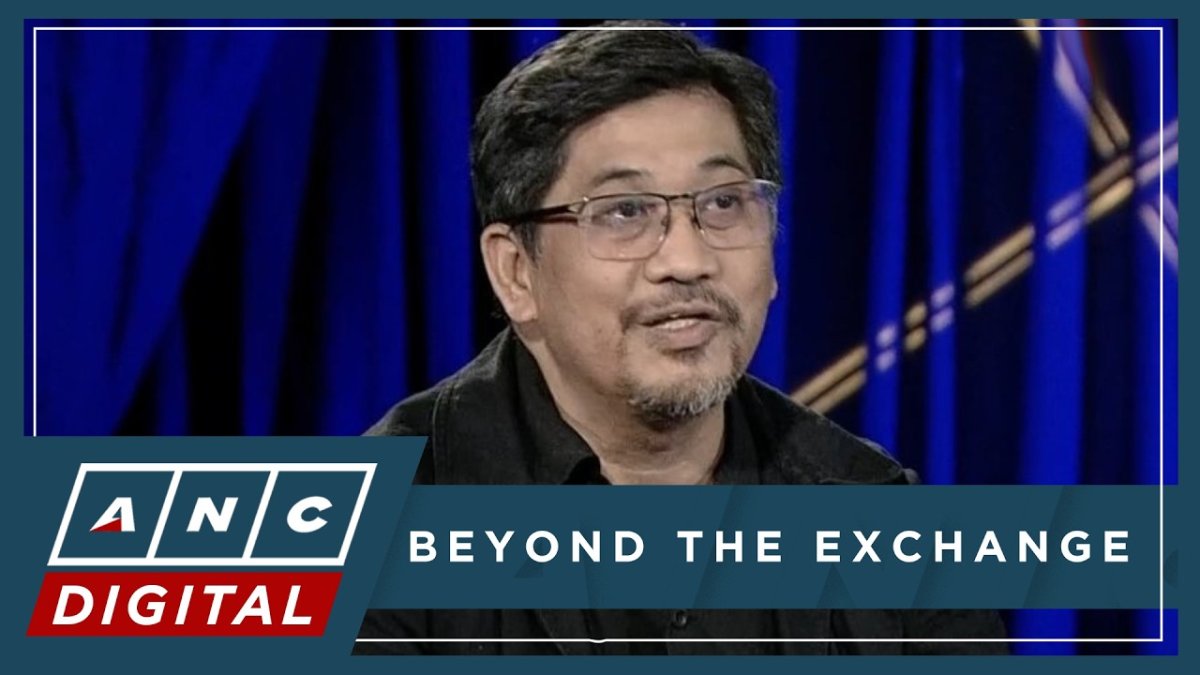
In recent ANC 24/7 reports this weekend, the spotlight turned once again on Pax Silica — the US-led international coalition that the Philippines formally joined in April — and the nagging questions that refuse to go away. A security expert warned that the lack of concrete details is "a major concern," while a University of the Philippines professor posed a sharper challenge: "Do we want to harvest minerals for export, not for PH?"
Pax Silica: The P75 Billion AI Hub That Could Reshape the Philippines — Or Leave It Behind
Manila, Philippines – Sunday — The promise is enormous: a 4,000-acre Economic Security Zone (ESZ) in New Clark City, Capas, Tarlac, that could attract as much as P75 billion in investments from roughly 30 interested companies. The anxiety is just as enormous: a deal that critics say remains dangerously short on specifics, short on local consultation, and potentially short-changing the Filipino people on their own mineral wealth.

The Story — What Pax Silica Actually Is
Pax Silica — Latin for "Silicon for Peace" — is a US-led international coalition launched in December 2025 to secure global supply chains for semiconductors, critical minerals, AI infrastructure, and advanced manufacturing. The Philippines joined on April 16, 2026, becoming roughly the 13th member and one of only two Southeast Asian nations in the group, alongside Singapore. Other members include Japan, Australia, Israel, and Qatar.
The flagship Philippine component is the proposed Economic Security Zone in New Clark City, situated within the Luzon Economic Corridor. The Bases Conversion and Development Authority (BCDA), led by President Joshua Bingcang, manages the area. BCDA has said the Philippines and the United States may sign the framework deal for the Pax Silica AI hub by November.
President Ferdinand Marcos Jr. has described Pax Silica as a "good deal" that will attract more investments and stimulate economic growth. On paper, the numbers support that optimism: about 30 companies have expressed interest, and the project could generate as much as P75 billion in investments.
Philippine Context — A Familiar Pattern of Promise and Doubt
For Filipinos who have watched decades of economic development promises come and go, Pax Silica carries a familiar echo. The Philippines has significant mineral resources — nickel, copper, and silica/silicon-related deposits — and is one of the world's top nickel producers. Yet the country currently sends much of its raw minerals, particularly nickel and copper, largely to China.
The concern raised by the UP professor in the ANC 24/7 report cuts to the heart of the matter: will Pax Silica finally break the pattern of the Philippines exporting cheap raw materials and importing expensive finished products? Or will it simply deepen the country's position at the low end of the global value chain?
This is not an academic question. It is a question about whether Filipino miners will continue to dig for pennies while foreign companies profit from the finished semiconductors, and whether Filipino workers will see high-skilled manufacturing jobs or remain confined to extraction and export.
Impact on Filipinos — Jobs, Water, Land, and Power
The stakes for ordinary Filipinos are concrete and immediate. Labor groups, environmentalists, and indigenous communities have raised concerns about displacement risks and the strain on New Clark City's water, land, and power supplies. Some House lawmakers have filed a resolution seeking an inquiry over the expected water and electricity consumption of the project.
For residents of Capas, Tarlac, and surrounding communities, the ESZ could mean new jobs — or it could mean losing access to resources they depend on. The tension between development and displacement is not hypothetical; it has played out across the Philippines in mining towns, industrial zones, and special economic zones for decades.
The promise of P75 billion in investments is significant for a country still recovering from the economic shocks of recent years. But the question remains: how much of that investment will translate into wages for Filipino workers, contracts for Filipino suppliers, and tax revenue for Filipino public services?
Reactions and Responses — From the Senate to the Business Club
The political response has been swift and divided. Sen. Raffy Tulfo filed a Senate resolution seeking to investigate the proposed Pax Silica hub to determine its economic, environmental, social, technological, and national security implications. At a Senate hearing in mid-August, BCDA officials admitted there has been a lack of local consultation, and that foreign investors have yet to submit a development plan.
Sen. Imee Marcos has previously questioned the Pax Silica draft framework, warning of foreign control over Philippine resources. The Makati Business Club (MBC) in late July questioned the lack of concrete plans presented for the Pax Silica AI industrial hub during President Marcos's State of the Nation Address (SONA).
On the other side, the Semiconductor and Electronics Industries in the Philippines Foundation (SEIPI) has backed Pax Silica amid the Senate inquiry, saying it could boost the local semiconductor industry. For an industry that has long been a bright spot in Philippine manufacturing, the prospect of deeper integration into global supply chains is genuinely attractive.
What to Watch For
The immediate milestone is the potential signing of the framework deal between the Philippines and the United States by November. But the bigger questions will not be resolved by a signing ceremony. No timeline for the groundbreaking and no specific investment figures from participating countries have been disclosed.
The Senate inquiry led by Sen. Tulfo will be a critical forum for airing the concerns of labor groups, environmentalists, indigenous communities, and industry players. The House inquiry into water and electricity consumption will test whether the project can sustain itself without draining local resources.
The security expert's warning in the ANC 24/7 report is worth repeating: without a clear plan, Filipinos "won't know if Pax Silica will help PH." That uncertainty is the central problem. A framework deal is not a development plan. A list of interested companies is not a commitment. A promise of P75 billion is not a check in the bank.
For the Philippines, Pax Silica represents a genuine opportunity to move up the global value chain — to process its own minerals, build its own semiconductors, and create high-skilled jobs for its young, educated workforce. But it also represents a genuine risk: that the country could once again find itself exporting its natural wealth while importing the finished products, with foreign companies capturing the value and Filipino communities bearing the environmental and social costs.
The next few months will determine which path the country takes. The November framework signing, the Senate inquiry, and the House investigation will all shape the final shape of Pax Silica. But the most important voices in this debate are not in Washington or Manila — they are in Capas, Tarlac, and in every mining town, factory floor, and classroom across the Philippines. Their question is simple: will Pax Silica work for us, or will we work for it?
By Bella Reyes, Staff Writer
This article was produced with AI-assisted research and editorial support. Reporting is based on sources cited in the article.
What's Your Reaction?
 Like
0
Like
0
 Dislike
0
Dislike
0
 Love
0
Love
0
 Funny
0
Funny
0
 Wow
0
Wow
0
 Sad
0
Sad
0
 Angry
0
Angry
0

Philippines/Southeast Asia Correspondent at Global1.News. Manila-based journalist covering Philippine politics, environment, maritime security, and social issues. Passionate about marine conservation and the communities protecting the Philippines' natural heritage.














Comments (0)