
Nineteen Dead in Siberia as a Russian An-12 Falls Near Kemerovo
Nineteen people died when a Russian An-12 military transport crashed near the village of Yagunovo in Siberia's Kemerovo region. The Defence Ministry calls it a preliminary technical malfunction, while investigators have opened a criminal case on flight rules.
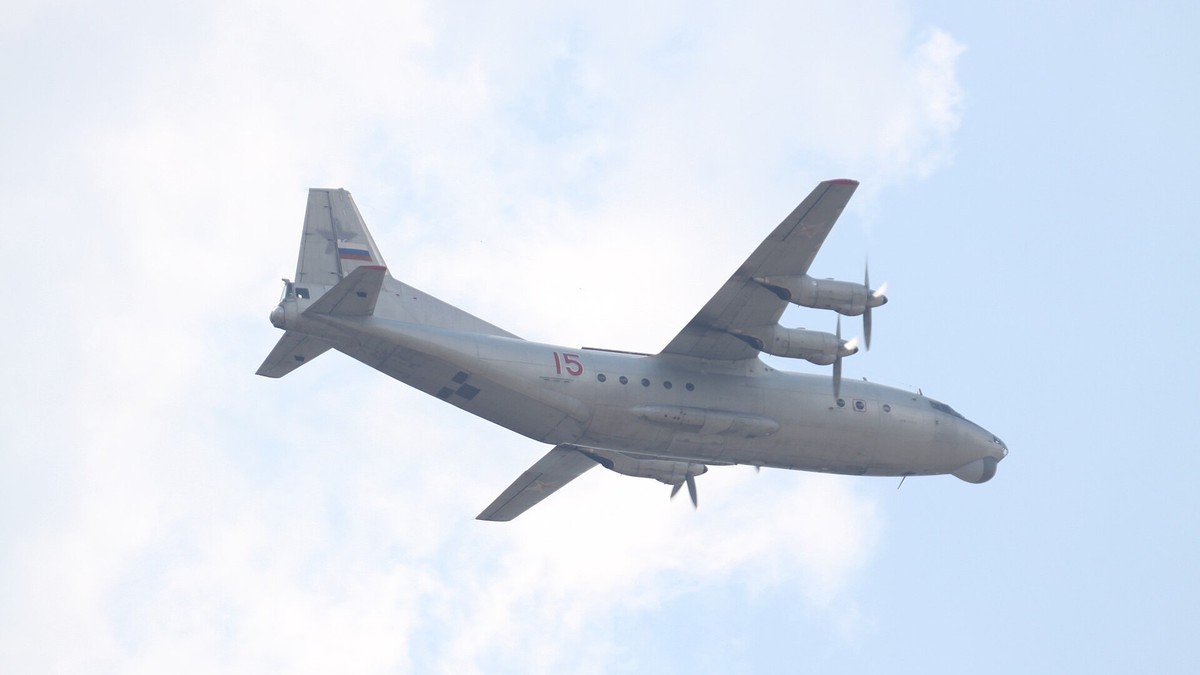
Folks, a Russian military transport plane came down in western Siberia on Tuesday night, and before the smoke had cleared the official count had already moved once. Nineteen people were aboard an Antonov An-12 when it went into the ground near a village outside Kemerovo. All nineteen are dead. The Defence Ministry calls the cause a technical malfunction. The country's Investigative Committee has opened a criminal case about flight rules. Those are two different things, and the distance between them is where this story actually lives.
Nineteen Dead in Siberia as a Russian An-12 Falls Near Kemerovo
Kemerovo, Russia — The aircraft went down during what the Defence Ministry called a scheduled flight, in what it called an uninhabited area, roughly 3,000 kilometers east of Moscow.
Nineteen People, and a Light in the Sky
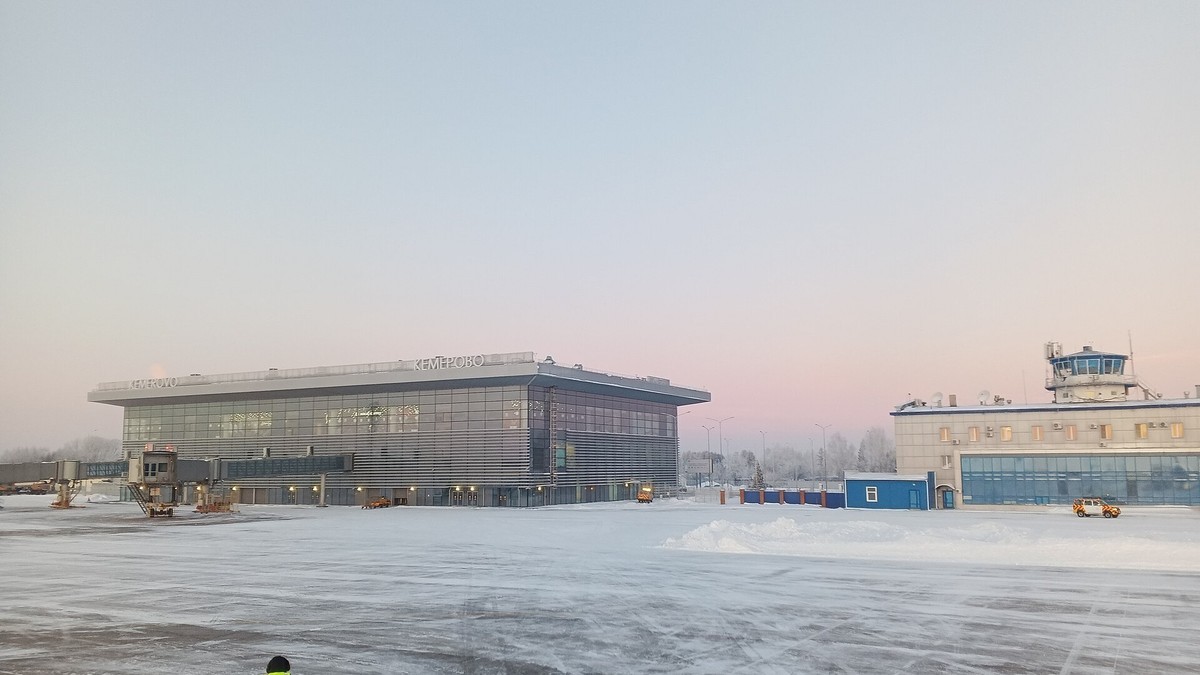
The first thing most people near Yagunovo saw was a light. CCTV footage posted on social media appeared to show a lighted object falling through the sky in the distance, followed by an explosion that lit up the night. The BBC and Reuters both verified the time and date of that footage, and Reuters matched the location against satellite imagery of the area. Witnesses cited by the Telegram channel Baza said the aircraft caught fire in the air. The Defence Ministry described no such fire. It said only that the plane went down during a scheduled flight, in an uninhabited area, and that everyone aboard was killed. Kemerovo region governor Ilya Seredyuk put the crash at about 21:30 local time, which is 14:30 UTC. The site sits roughly 13 kilometers from the city of Kemerovo and about 5 kilometers from its airport, according to the business daily Kommersant.

The Number Moved From Seventeen to Nineteen
For a few hours on Tuesday night, the figure circulating was seventeen. Local authorities and the Russian state-controlled channel REN TV were the sources for that number, and the Kyiv Independent reported it as the toll. Then the Defence Ministry spoke, and the number became nineteen. The Russian outlet Lenta.ru recorded the sequence plainly: media initially reported that seventeen people had not survived, and the ministry later confirmed the deaths of nineteen. The final official figure, the one that now stands, is nineteen, including the crew. The ministry has not broken that total down into crew and passengers, and it has not named anyone who died. The An-12 normally flies with a crew of six, according to the Associated Press, which leaves the composition of the remaining thirteen unresolved on the public record.
Two Official Accounts, Pulling Apart
Here is where the story gets harder, not easier. The Defence Ministry's statement said the preliminary cause of the crash was a technical malfunction, and a commission from the Russian Aerospace Forces is working at the site. In parallel, the Investigative Committee has opened a criminal case under Article 351 of the Russian Criminal Code, which covers violations of flight rules or of preparation for them. That article is not an equipment statute. It points at procedure, at the people and processes that put an aircraft into the air. A preliminary finding of technical malfunction and a criminal inquiry into flight rules can coexist without contradicting each other. They can also point in very different directions once the wreckage is read. Neither body has said which it is, and nobody outside the investigation has the evidence to decide.
Five Kilometers From the Runway
Geography is doing some quiet work in this story. Yagunovo sits about 5 kilometers from Kemerovo airport, and the crash site is inside a region whose capital city is only 13 kilometers away. That proximity invites an obvious assumption about the phase of flight, and the official statements do not support it. The ministry's wording is a scheduled flight, nothing more specific. Seredyuk said he travelled to the site and took charge of an operational headquarters there, working alongside the Emergency Situations Ministry, the National Guard and disaster medicine teams, with the heads of the Kemerovo, Topkinsky and Kemerovsky districts. He said firefighters put out the blaze and police sealed the area, that five brigades from the Disaster Medicine Center and ambulance service were readied, and that "a helicopter and medical facilities have been put on standby."
The Aircraft Is Older Than Most of Its Crew
The An-12 is a Soviet design that refuses to retire. It is a four-engine turboprop transport that entered service in the late 1950s, and more than a thousand were built, with some still flying in Russia and elsewhere, according to the Associated Press. Kommersant gives its dimensions as 33 meters long with a 38-meter wingspan, and describes its role as carrying personnel, cargo and equipment and performing airborne and special tasks. The BBC notes that the Russian military uses the type to move weaponry and troops and for search and rescue. It is a load-bearing animal of Russian military logistics, which is exactly why it keeps flying long past the age at which a Western airline would have parked it. The type has also been taking losses beyond accidents. On 17 September, a different An-12 was destroyed by Ukrainian long-range drones where it stood on the parking apron at Rostov-on-Don Tsentralny airfield, in a strike that also wrecked two An-26 transports and two Mi-8 helicopters. That aircraft was destroyed where it stood on the ground, which is the only reason it is not a headline in its own right.
An Average Age Above Fifty-Six Years
FlightGlobal put a number on that longevity in its reporting this month. The publication's defence desk reported that the Russian air force's An-12 fleet is significantly aged, at an average of more than 56 years. Run the subtraction and it stops being an abstraction: at an average age above 56, the typical airframe in the Russian fleet was built more than half a century ago, before most of the people now flying and maintaining it were born. Age alone does not cause a crash. Corrosion, fatigue, spare-part shortages and stretched maintenance intervals are the mechanisms that turn age into risk, and none of those has been established here. What is established is that the fleet is very old, and that a very old fleet is a standing question rather than a one-off tragedy.
The Third-Worst Month of the War
This crash did not arrive in a quiet year for Russian military aviation. The defence outlet Defence24 counted eleven military aircraft and two helicopters lost between 1 and 31 October, the third-highest monthly total since the war began. The October tally ran to one Su-57, one Su-35, two Su-30s and seven Su-34s, plus two Mi-8 helicopters. Only two months have been worse. March 2022, at the start of the full-scale invasion, produced 20 fixed-wing aircraft and 31 helicopters. June 2025, when Operation Spiderweb destroyed eleven long-range bombers, produced the second-highest figure. The pattern those analysts drew out is worth repeating carefully: a notable share of the recent losses were attributed to technical failure and crew error rather than combat, including two mid-air collisions involving fighters inside two months. To be clear about what that October figure counts, it is combat aircraft, not the transport fleet. GlobalMilitary.net's running log puts the year to mid-November at 324 separate events and 341 airframes lost, a total that folds together aircraft shot down, destroyed on the ground, crashed and merely damaged. That is a measure of attrition, not of airworthiness. The two questions are related but they are not the same question.
September, and the An-26 in March
The precedents inside this calendar year are specific. On 29 September, a Tu-95MS strategic bomber crashed near Krasnoyarovo in the Amur region on a training flight from Ukrainka air base, killing six of its seven crew, with one hospitalised, and a criminal case was opened on much the same template as this week's. On 21 October, an Su-30SM of the Russian Knights aerobatic team went down, officially because of adverse weather, killing two highly experienced pilots, and on the same day two Su-30SM fighters collided over Kaliningrad Oblast. Further back, on 31 March, an An-26 crashed into a cliff in the Bakhchisarai mountains during a scheduled flight over Crimea. All 29 people aboard died, ten more than in this week's crash, and it too was a transport aircraft, not a fighter. The heavy lifters have been doing the dying.
What Is Not Established
It matters, on a story like this, to be exact about the edges. There is no confirmation of hostile action against this aircraft. No Ukrainian claim of responsibility has been made, and Russia has not blamed Ukraine for the crash. Nothing in the official record supports the idea that it was brought down. There is no confirmation of whether the aircraft carried cargo, no registration number released, and no individual airframe history in the public domain. The criminal case does not mean pilot error was found; Article 351 is a procedural charge, and the Associated Press describes the Investigative Committee opening such inquiries after crashes as a standard practice. It can end with ground crew, planners or nobody in the dock. And the ministry's technical malfunction finding is preliminary, which is a word with real weight. Preliminary means it can move.
What the Investigation Has to Answer
The questions are narrow and answerable. Did the aircraft break, or was it broken before it left the ground? Was the fire that witnesses described in the air or on impact, because those two answers point at completely different failure chains? What was the maintenance record on that airframe, and when was its last major inspection? Why did the toll move from seventeen to nineteen, and was that a counting error or the discovery of two more people in the wreckage? And underneath all of it, the fleet question: how many more An-12s are flying on borrowed time, and who is accountable when the answer arrives in a field outside a Siberian city. The Aerospace Forces commission will report. The Investigative Committee will file or close. Until then, nineteen families are waiting.
By Jessica Ali, Staff Writer
This article was produced with AI-assisted research and editorial support. Sources: Russian Defence Ministry statements carried by the BBC, the Associated Press and RIA Novosti; Interfax; Kommersant; Lenta.ru; FlightGlobal; Defence24; Euronews; GlobalMilitary.net. Photographs: an Antonov An-12 of the Russian Air Force, file photo (Aeroprints.com, CC BY-SA 3.0); the apron at Kemerovo International Airport (Yokki, CC0); and Kemerovo, the regional capital of Kuzbass (anatoly_l, CC BY-SA 2.0), all via Wikimedia Commons.
What's Your Reaction?
 Like
0
 Dislike
0
 Love
0
 Funny
0
 Wow
0
 Sad
0
 Angry
0

Editor-in-Chief at Global1.News. Atlanta-based journalist who cuts through the BS and tells it like it is. Lead anchor, host, and the voice you hear when the spin stops and the truth starts.














Comments (0)