
Palestinian support for Hamas drops to 24%, tying Fatah
In a recent i24NEWS English report, a new poll by the Palestinian Center for Policy and Survey Research (PSR) reveals a significant erosion of Hamas’s popular standing among Palestinians, with support dropping from 35% to 24% over the past ten months.
In a recent i24NEWS English report, a new poll by the Palestinian Center for Policy and Survey Research (PSR) reveals a significant erosion of Hamas’s popular standing among Palestinians, with support dropping from 35% to 24% over the past ten months. The survey, conducted face-to-face in the West Bank and Gaza Strip, also shows that for the first time in years, Hamas and Fatah are statistically tied in overall popularity, even as the territory remains deeply fractured and weary after months of war.
Palestinian support for Hamas drops to 24%, tying Fatah
Jerusalem, Israel — The findings, from PSR Poll No. 97, were gathered between August 5 and 8, 2026, across 83 localities in the West Bank and 44 in the Gaza Strip, with a sample of 1,270 adults and a margin of error of 3.5%. The data paints a complex picture of a Palestinian public that is disillusioned with both major factions, increasingly pessimistic about the future, and yet still resistant to disarmament demands tied to the Trump Gaza Plan. For Israeli policymakers in Jerusalem, the numbers offer a rare, data-driven glimpse into the shifting mood of a population that will be central to any future diplomatic or security arrangement.
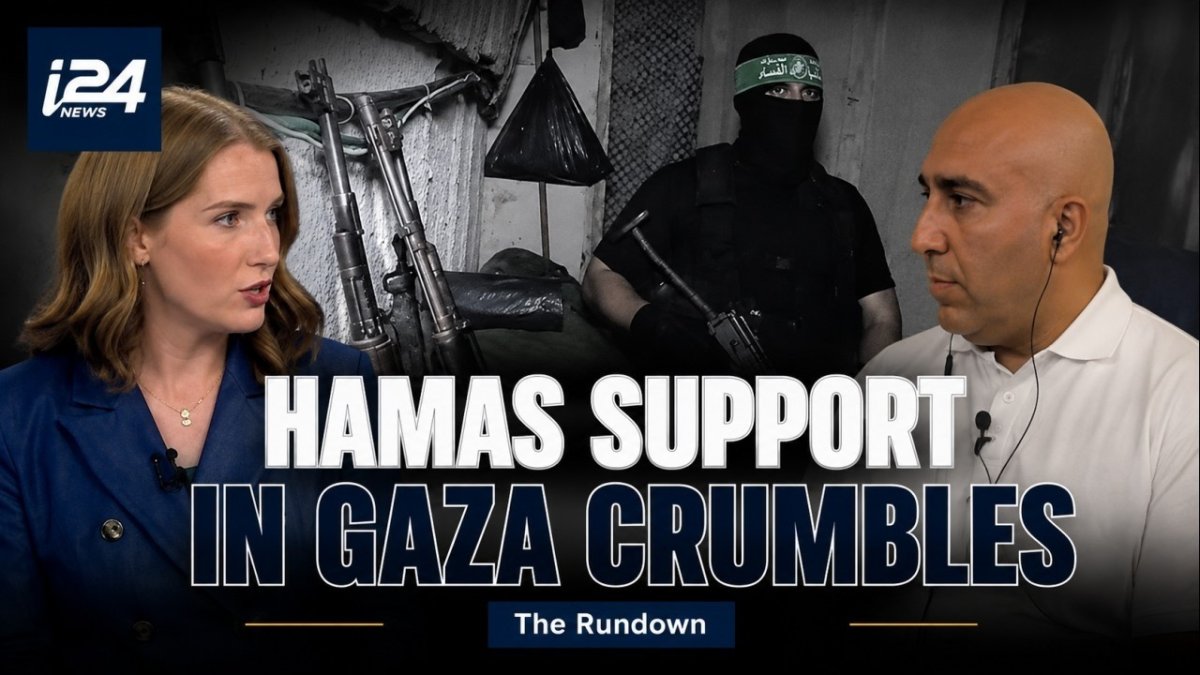
The Numbers Behind Hamas’s Decline
The most striking figure in the PSR survey is the overall decline in Hamas support, which fell from 35% ten months ago to 24% today. Fatah, led by Palestinian Authority (PA) President Mahmoud Abbas, remained unchanged at 24%, creating a dead heat that reflects widespread apathy rather than a resurgence of the secular nationalist movement. Among likely voters in a hypothetical parliamentary election, Fatah would edge out Hamas, receiving 32% versus 29% for Hamas, a margin that falls within the poll’s error margin but signals a potential shift if elections were held tomorrow.
Dr. Khalil Shikaki, PSR director and the survey’s lead author, noted that the decline in Hamas support is steepest in the West Bank, where it fell from about a third to roughly a fifth of respondents. In Gaza, support for Hamas also dropped, though less dramatically, settling at about 18%. This geographic divergence is critical: the West Bank, which has not experienced the same level of direct military confrontation as Gaza, appears to be holding Hamas more accountable for the war’s outcomes, including the humanitarian crisis and the failure to achieve a decisive victory.
Satisfaction with Hamas’s performance during the war has also plummeted, from 60% to 42% overall. In the West Bank, satisfaction fell from 66% to 45%, while in Gaza it dropped from 51% to 38%. These numbers suggest that even in the enclave, where Hamas has been the de facto ruler since 2007, the population is increasingly critical of the group’s wartime strategy and its consequences.
West Bank vs Gaza: A Diverging Mood
The poll reveals a significant psychological gap between Palestinians in the West Bank and those in Gaza. Only 20% of all respondents now believe Hamas won the war, down sharply from 39% ten months ago. In the West Bank, the percentage of those viewing Hamas as the victor collapsed from 48% to 21%. Meanwhile, 15% of Palestinians overall believe Israel won, and a striking 60% say neither side achieved victory — a sentiment that reflects the grinding stalemate that has defined the conflict since the ceasefire negotiations stalled.
This divergence is also visible in attitudes toward armed struggle. Support for armed resistance as the most effective means of achieving statehood fell from 41% to 27%, the lowest level in four years. In contrast, support for negotiations rose from 36% to 44%, the highest in four years, and support for peaceful popular resistance increased from 14% to 19%. For Israeli defense officials in Tel Aviv, these figures may suggest a window of opportunity for diplomatic engagement, though the political reality on the ground — including the fragile coalition in Jerusalem and the ongoing settlement expansion — complicates any immediate moves.
The West Bank is also grappling with a major fuel crisis, with long lines at gas stations in Ramallah, Nablus, and Hebron, a situation that has exacerbated public frustration with both the PA and Hamas. The crisis, which stems from a combination of Israeli restrictions and PA budget shortfalls, has become a daily reminder of the economic stagnation that fuels political disillusionment.
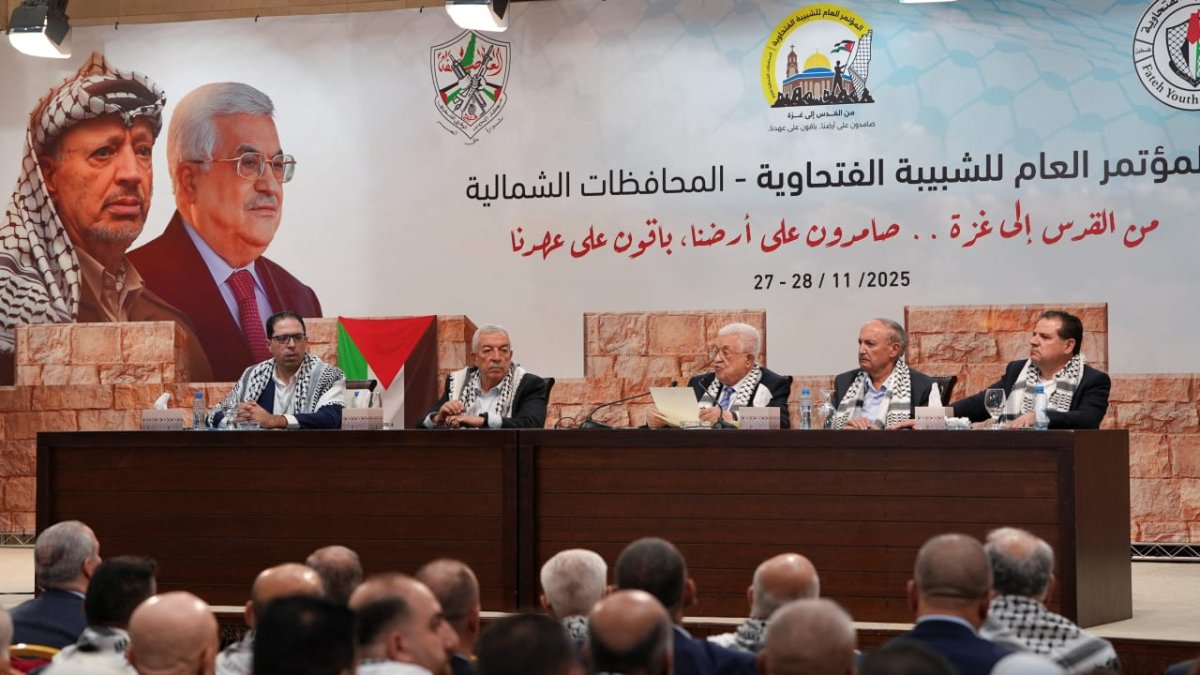
Barghouti’s Moment and the Leadership Vacuum
One of the most consequential findings is the emergence of Marwan Barghouti as the dominant potential presidential candidate. Barghouti, a Fatah leader serving multiple life sentences in Israeli prisons, would receive 54% of the vote among likely voters if a presidential election were held today. He is followed by Hamas leader Khalil al-Hayya at 26% and Abbas at just 14%. When asked who they prefer as Abbas’s successor, 39% chose Barghouti, 16% al-Hayya, and 15% Mohammed Dahlan, the exiled former Fatah security chief based in the UAE.
Barghouti’s appeal cuts across factional lines, making him a rare unifying figure in a political landscape defined by division. His popularity is not new — he has topped PSR polls for years — but the current numbers underscore the depth of the leadership vacuum. A full 79% of Palestinians want Abbas to resign, and satisfaction with his performance stands at a dismal 18%. The PA, which 65% of respondents describe as a burden, is widely seen as corrupt, with 83% believing corruption exists within its institutions.
The timing is significant. Palestinian legislative elections have been announced for November 28, 2026, with presidential elections slated for early 2027 — the first such votes since 2006, which were repeatedly canceled due to Hamas-Fatah disputes. Fatah recently held its Eighth General Conference, and Hamas elected al-Hayya as the head of its Political Bureau, signaling an attempt to refresh leadership ranks. Yet the poll suggests that neither party has successfully addressed the public’s demand for change, and Barghouti remains the wildcard who could reshape the political order if released or allowed to run.
The Disarmament Question and the Trump Plan
The PSR survey also probed Palestinian attitudes toward the Trump Gaza Plan, specifically the requirement for Hamas to disarm. A substantial 72% of respondents oppose Hamas disarming before a complete Israeli withdrawal from Gaza. Moreover, 72% believe that disarmament would lead to renewed war rather than an Israeli withdrawal, reflecting deep skepticism about Israeli intentions and the viability of the plan’s security guarantees.
Trust in the institutions proposed by the Trump Plan is limited. Only 24% of Palestinians trust the Board of Peace, a body designed to oversee reconstruction and governance, while 32% trust the National Committee for the Administration of Gaza (NCAG). These figures suggest that while Palestinians are weary of war, they are not willing to accept a framework they perceive as imposed by Washington and Jerusalem without tangible concessions.
Hamas, for its part, has accepted the Nikolay Mladenov Plan for phase two of the Trump Gaza Plan, which includes relinquishing weapons. This move, announced in recent weeks, represents a significant ideological shift for a group that has long defined itself through armed resistance. However, the poll indicates that the rank-and-file is not fully behind this concession, and Hamas’s leadership may face internal pushback as it navigates the delicate balance between survival and ideological purity.
Regional Context and the Iran Factor
The survey also sheds light on Palestinian perceptions of regional actors in the wake of the US-Iran war, which has reshaped alliances across the Middle East. A striking 45% of Palestinians sided with Iran in that conflict, compared to just 12% who sided with the United States and Israel, and 40% who sided with neither. This pro-Iran sentiment is driven by a perception of Iran as a counterweight to Israeli and American power, even as Tehran’s proxies, including Hezbollah and the Houthis, have faced significant setbacks.
Satisfaction with regional actors is highest for the Houthis at 61%, followed by Qatar at 51%, Hezbollah at 50%, and Iran at 50%. Among international actors, Spain leads with 50% satisfaction, followed by China at 40%. President Donald Trump, by contrast, enjoys only 5% satisfaction among Palestinians, a figure that underscores the deep mistrust of American mediation in the region.
For Israeli analysts, these numbers are a reminder that the Palestinian street remains aligned with the "resistance axis" in symbolic terms, even as practical support for armed struggle wanes. The disconnect between ideological sympathy for Iran and the pragmatic desire for negotiations is a paradox that Israeli policymakers must understand if they are to engage with Palestinian society beyond the official leadership.
What This Means for Israel
The PSR poll offers several takeaways for Israeli decision-makers in Jerusalem and the IDF’s Southern Command. First, the decline in Hamas support and the rise in support for negotiations suggest that a window for diplomatic engagement may exist, but it is narrow and contingent on tangible progress. The fact that 58% of Palestinians believe a two-state solution is no longer practical because of settlement expansion indicates that Israeli actions on the ground are directly undermining the very framework that could stabilize the region.
Second, the leadership vacuum in the PA, with Abbas deeply unpopular and Barghouti in prison, creates a governance gap that neither Israel nor the international community has successfully addressed. The upcoming elections, if they occur, could produce a leadership that is more representative but also more unpredictable. Israel’s security establishment, including Shin Bet, will be watching closely to see whether any new Palestinian leadership can maintain security coordination while addressing popular demands for change.
Finally, the poll’s finding that only 23% of Palestinians feel personally and familiarly safe, with 76% feeling unsafe, highlights the humanitarian dimension of the conflict. For Israeli civilians in Sderot, Ashkelon, and communities near the Gaza border, the security situation remains precarious, and the Israeli elections scheduled for the end of October 2026 will be a referendum on how the government has handled the war and its aftermath. The PSR data, while focused on Palestinian attitudes, is a mirror for Israeli society: both sides are exhausted, both are fearful, and both are looking for a path forward that neither leadership has yet provided.
As the region moves toward a potential electoral season — with Israeli elections in October and Palestinian elections in November — the PSR poll serves as a baseline for measuring change. The numbers are not static, and the dynamics of war, diplomacy, and internal politics could shift them again. But for now, the message from the Palestinian street is clear: the old guard has failed, the resistance narrative has lost its luster, and the demand for a credible alternative is louder than ever. Whether Israel, the PA, or the international community can respond to that demand remains the defining question of the coming months.
By Hannah Berg, Staff Writer
This article was produced with AI-assisted research and editorial support. Reporting is based on sources cited in the article.
What's Your Reaction?
 Like
0
Like
0
 Dislike
0
Dislike
0
 Love
0
Love
0
 Funny
0
Funny
0
 Wow
0
Wow
0
 Sad
0
Sad
0
 Angry
0
Angry
0
Israel Correspondent at Global1.News. Based in Tel Aviv, covering Israeli politics, security, technology, and society. Provides balanced, deeply-sourced reporting on one of the most closely-watched regions in the world.












Comments (0)