
One Crore Youth Pledge Drug-Free Future as Modi Launches 100-Week Anti-Drug Campaign
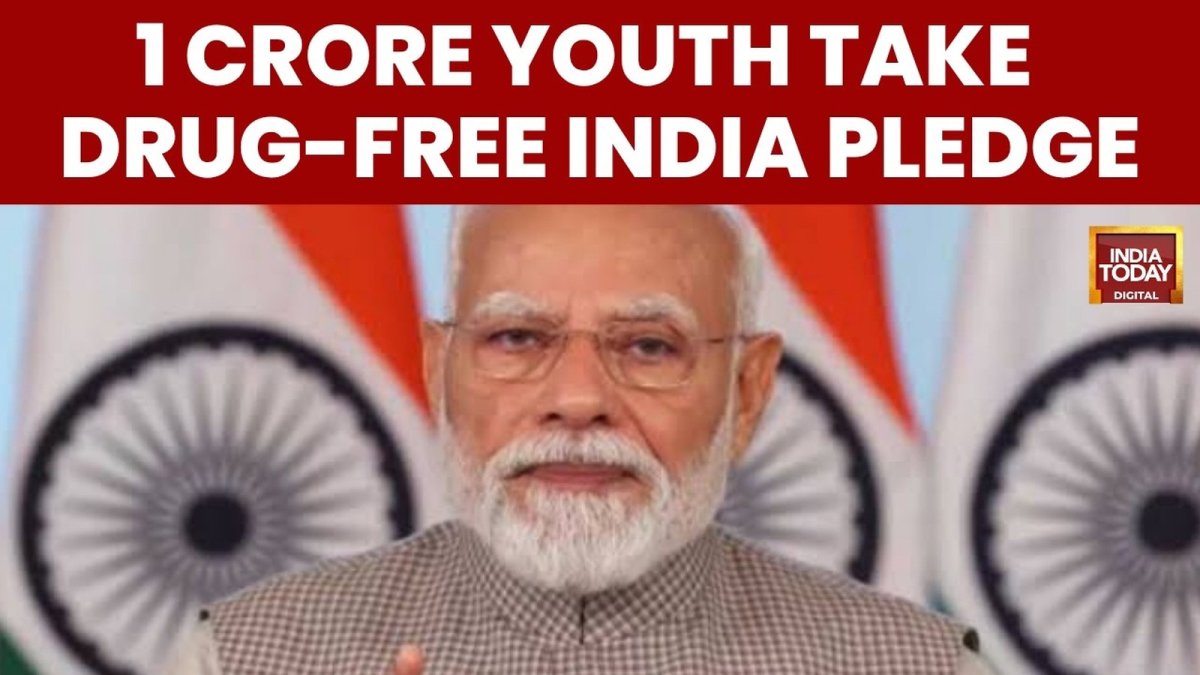
Prime Minister Narendra Modi launched the 100-week ‘Nasha Mukta Yuva for Viksit Bharat Sankalp Abhiyaan’ on August 2, 2026, drawing more than one crore youth to simultaneous pledge ceremonies at over 10,000 locations across India.
Prime Minister Narendra Modi launched the 100-week ‘Nasha Mukta Yuva for Viksit Bharat Sankalp Abhiyaan’ on August 2, 2026, drawing more than one crore youth to simultaneous pledge ceremonies at over 10,000 locations across India. The nationwide jan bhagidari movement against substance abuse, coordinated by the Ministry of Youth Affairs and Sports, places India's young population at the centre of the country's public health response to drugs and addiction.
One Crore Youth Pledge Drug-Free Future as Modi Launches 100-Week Campaign
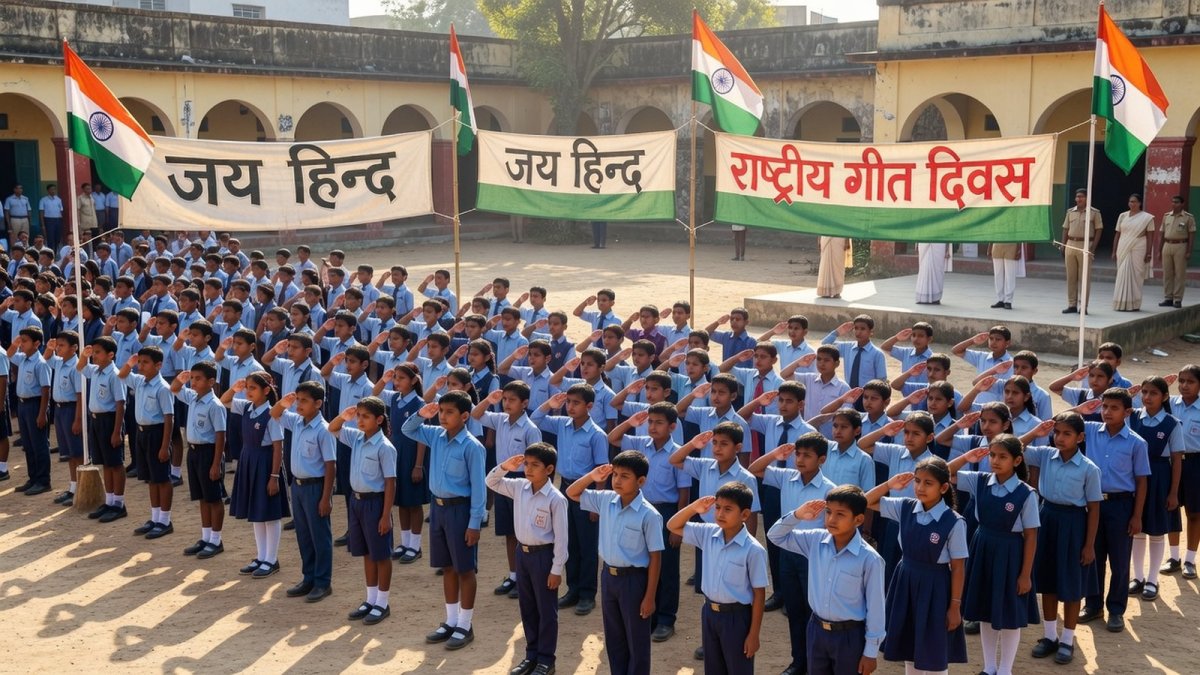
New Delhi – August 2, 2026 — Prime Minister Narendra Modi inaugurated the ‘Nasha Mukta Yuva for Viksit Bharat Sankalp Abhiyaan’ through video conferencing, initiating weekly Sunday activities across India for the next 100 weeks. The campaign engages MY Bharat volunteers, National Service Scheme participants, schools, colleges, universities, NGOs and more than 125 spiritual organisations in sports events, walkathons, meditation sessions, nukkad nataks and awareness programmes, with outstanding contributors to be honoured at the 50th, 75th and 100th week milestones.
India’s Substance Use Landscape
The 2019 NDDTC-AIIMS survey remains India’s most authoritative national dataset on substance use, covering 200,111 households across 186 districts and interviewing 473,569 individuals aged 10-75. Conducted by the National Drug Dependence Treatment Centre at AIIMS New Delhi and sponsored by the Ministry of Social Justice and Empowerment, it marked the first comprehensive national effort since the UNODC survey of 2000-01. The methodology combined household sampling with respondent-driven sampling in 123 districts to reach 70,293 people dependent on illicit drugs, yielding robust prevalence estimates that continue to guide policy.
Alcohol data illustrate the scale: 14.6 percent of the 10-75 population, or roughly 16 crore people, are current users, with 5.2 percent—more than 5.7 crore—experiencing harmful or dependent use. This translates to every third alcohol user in India requiring intervention. State-level variation is pronounced, with Chhattisgarh, Tripura, Punjab, Arunachal Pradesh and Goa showing the highest rates. Cannabis past-year use reached 2.8 percent (3.1 crore people), while current opioid use stood at 2.06 percent, including 60 lakh individuals with opioid use disorders, more than half dependent on heroin. These figures underscore persistent regional hotspots such as Uttar Pradesh, Punjab and Delhi for cannabis, demanding targeted state responses.
NCB Enforcement Data and Supply Pressures
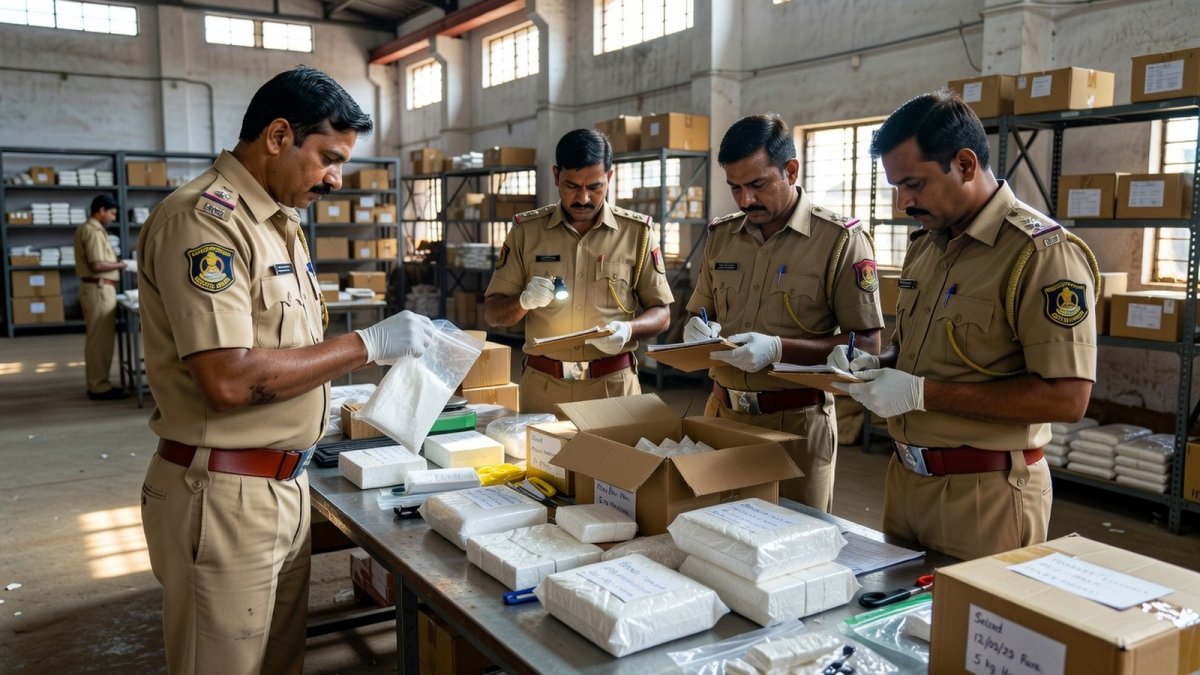
NCB enforcement data reveal both progress and persistent pressure. The destruction of 42,282 acres of illegal opium cultivation in 2025 represents a fourfold increase over the roughly 10,000 acres eradicated in 2020, signalling intensified operations under the Narcotic Drugs and Psychotropic Substances Act, 1985. Seizures reached 1.34 lakh kg of narcotics valued at Rs 1,980 crore, yet supply routes continue to adapt. Myanmar’s illicit opium cultivation expanded 56 percent between 2021 and 2023 to 45,200 hectares after the Taliban’s 2022 ban in Afghanistan, positioning Shan State as a poly-drug hub producing both opium and methamphetamine.
India’s northeastern corridor remains the primary entry point, with consignments moving through Manipur, Mizoram, Silchar and Meghalaya to Guwahati distribution hubs. This geography poses sustained enforcement challenges for border agencies. The NDPS Act framework, administered by the NCB under the Ministry of Home Affairs, provides the legal backbone, yet the shift in global supply sources demands continuous adaptation of interdiction strategies alongside demand-reduction efforts to prevent domestic markets from absorbing increased inflows.
Campaign Design and Jan Bhagidari Approach
The 100-week campaign expands a 2025 pilot launched from Kashi (Varanasi) that first mobilised over 125 spiritual organisations alongside government structures. Weekly Sunday activities will include sports events, walkathons, meditation sessions, nukkad nataks, cultural programmes, awareness campaigns, discussion forums, art competitions and community engagement drives. These structured interventions run through 2028 under the Ministry of Youth Affairs and Sports, leveraging MY Bharat volunteers, National Service Scheme participants, youth clubs, schools, colleges, universities, NGOs and industry association youth wings.
Recognition at the 50th, 75th and 100th week milestones will honour outstanding contributors, creating measurable incentives within the jan bhagidari model. The integration of 125 spiritual organisations broadens reach beyond institutional networks, while MY Bharat and NSS platforms supply trained volunteers already embedded in educational institutions. This design converts the pilot’s localised success into a nationwide cadence of repeated, community-led touchpoints that sustain momentum across diverse regions and demographics.
Link to Viksit Bharat 2047 Vision
Prime Minister Modi framed drug-free youth as the greatest strength of Viksit Bharat, stating that youth must remain physically and mentally healthy, full of self-confidence and away from drug abuse. “We must resolve to ensure that our youth understand the dangers of drugs and addiction, remain vigilant, and stay away from this destructive habit,” he said. He emphasised collective action: “There are some tasks that, when undertaken individually, can sometimes lead to frustration… But when they turn into a collective campaign, and millions of people march shoulder to shoulder, even those who couldn’t manage them on their own find themselves infused with a surge of energy.” The campaign aligns with the National Youth Policy and the MY Bharat platform, positioning prevention as a development imperative rather than a standalone welfare measure.
Building on Nasha Mukt Bharat Abhiyaan
The predecessor Nasha Mukt Bharat Abhiyaan, launched August 15, 2020, reached more than 23 crore people by July 2026, engaging 7.81 crore youth, 5.24 crore women and 17 lakh educational institutions. It operated initially in 272 vulnerable districts before expanding nationwide under the Ministry of Social Justice and Empowerment, which maintains more than 400 government de-addiction centres under the National Action Plan for Drug Demand Reduction (NAPDRR). The new youth-led campaign inherits this infrastructure while shifting the emphasis from institutional participation to community ownership.
Implications for Indian Students, Patients and Taxpayers
The NAPDRR framework under the Ministry of Social Justice and Empowerment provides treatment and rehabilitation pathways through more than 400 government de-addiction centres. With the predecessor campaign having already engaged 17 lakh educational institutions since 2020, the new drive can channel participants directly into these facilities for early intervention. This linkage reduces long-term healthcare costs by addressing dependence before chronic conditions develop, particularly among students in higher education and school networks.
Stigma reduction emerges as a critical outcome when spiritual organisations, NSS volunteers and community groups normalise conversations around substance use. Taxpayers benefit from coordinated use of existing volunteer infrastructure rather than new parallel systems. Sustained Sunday programming in high-prevalence states can lower future public expenditure on treatment, policing and lost productivity by shifting emphasis from reactive enforcement to preventive community ownership.
Policy Perspectives and Bottom Line
Effective implementation requires coordination across three ministries: Youth Affairs and Sports for volunteer mobilisation, Social Justice and Empowerment for treatment infrastructure under NAPDRR, and Home Affairs through the NCB for supply-side enforcement. This tri-ministerial alignment prevents siloed efforts and maximises the jan andolan approach. Within the Viksit Bharat 2047 vision, drug-free youth are positioned as foundational to workforce productivity and reduced public health burdens, with Prime Minister Modi framing collective action as essential to overcoming individual limitations.
Success would be measured by measurable declines in the 2019 baseline figures—particularly the 5.7 crore people needing alcohol-related help and 60 lakh with opioid disorders—alongside continued increases in destroyed cultivation and seizures. Regular milestone recognitions at weeks 50, 75 and 100 provide accountability checkpoints. If sustained, the 100-week structure could embed prevention into India’s educational and community fabric, delivering compounding returns for the 2047 development goals through healthier, more productive cohorts entering the workforce.
— By Dr. Raj Patel, Staff Writer
This article was produced with AI-assisted research and editorial support. Reporting is based on sources cited in the article.
What's Your Reaction?
 Like
0
Like
0
 Dislike
0
Dislike
0
 Love
0
Love
0
 Funny
0
Funny
0
 Wow
0
Wow
0
 Sad
0
Sad
0
 Angry
0
Angry
0

India/South Asia Correspondent at Global1.News. Analytical voice with a background in science and health journalism. Based in New Delhi, covering Indian politics, education, healthcare, technology, and policy. Breaks down complex data into clear, actionable reporting.










Comments (0)