
Snack Toy Choking Deaths Reveal India Regulatory Failures
In the quiet lanes of Gauripura village, a five-year-old boy’s playful discovery inside a Kurkure packet turned fatal within minutes as a tiny plastic ball lodged in his throat, cutting off all air.
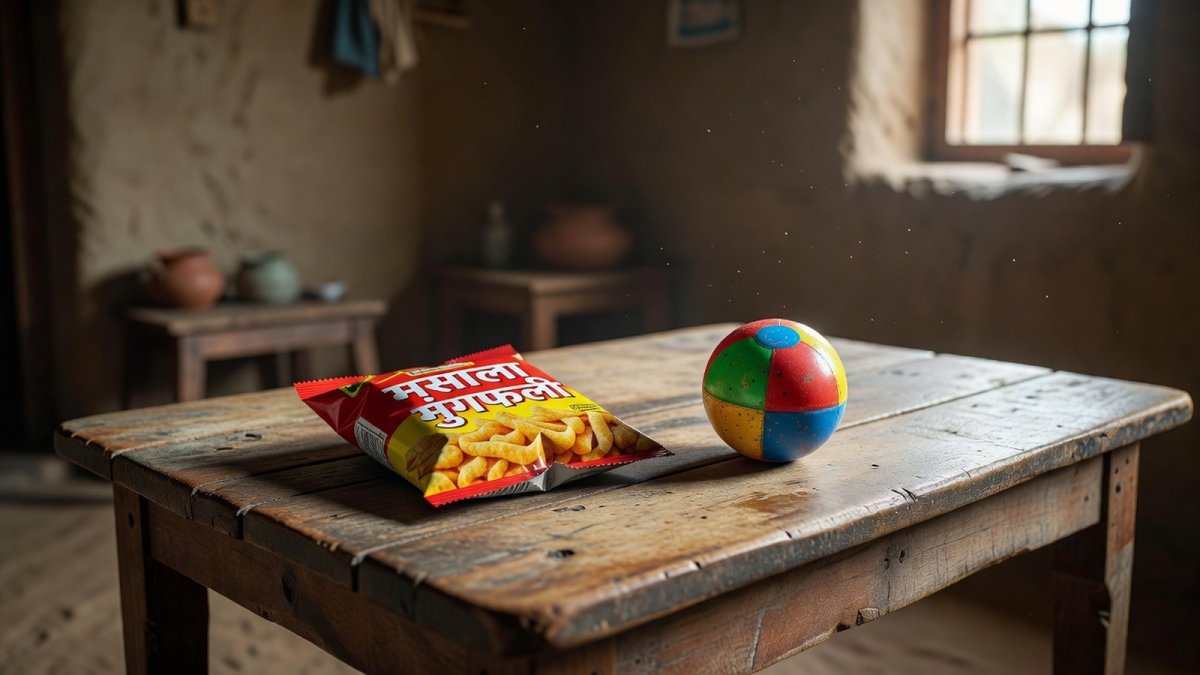
In the quiet lanes of Gauripura village, a five-year-old boy’s playful discovery inside a Kurkure packet turned fatal within minutes as a tiny plastic ball lodged in his throat, cutting off all air. This preventable tragedy, echoing another child’s death in rural Odisha just months earlier, exposes how regulatory warnings on snack-pack toys remain largely ignored across India. Families in remote areas continue to pay the ultimate price while enforcement lags far behind the rules on paper.
Snack Toy Choking Deaths Reveal India Regulatory Failures
Mysuru, Karnataka – August 2, 2026 — A five-year-old boy named Mukund Mayur from Gauripura village in Mysuru district died after choking on a small plastic toy ball that came as a complimentary item inside a packet of Kurkure snacks, highlighting persistent gaps in food safety enforcement across India.
The Tragic Incident in Gauripura Village
The boy, the only child of his parents and grandson of former Gram Panchayat vice-president Gouramma and Shankar Nayak, was playing with the plastic ball found inside the Kurkure packet when it lodged in his throat. Family members rushed him for medical assistance, but he could not be saved. Police sources confirmed the toy was a complimentary item, yet no complaint has been lodged and no Unnatural Death Report has been registered so far. Authorities remain in contact with the family in Gauripura village, with further action dependent on formal filing. Local reports indicate the family belongs to a well-known household in the village, amplifying the shock across Mysuru district. The absence of a criminal case at this stage underscores how such incidents often go unreported, leaving regulatory bodies without critical data to strengthen oversight.
The Mechanics of Choking in Young Children
Choking occurs when a small object blocks the airway or food pipe. In young children, the trachea measures roughly the diameter of a drinking straw, allowing even a small plastic ball to cause complete obstruction within minutes. The five-and-under age group faces the highest risk because children at this developmental stage explore objects primarily by mouth. In the Indian context, airway obstruction can be partial, allowing limited air passage with persistent coughing, or complete, where no air moves and the child rapidly loses consciousness. Children’s tracheas, narrower than those of adults and comparable to a drinking straw in diameter, heighten vulnerability to even small objects, while the developmental habit of mouthing items among those under five amplifies exposure. Brain damage can begin within a critical four-to-six-minute window without oxygen, underscoring why delays in rural areas compound risks.
A Similar Tragedy in Odisha
Just eight months earlier, on November 19, 2025, a four-year-old boy named Bigil Pradhan from Musumahapada village under Brahmanigaon police limits in Kandhamal district, Odisha, died after swallowing a plastic toy gun found inside a packet of snack sticks. While playing at a maize field, the child accidentally ingested the toy, which lodged in his throat and caused severe internal bleeding, according to Dr. Jakesh Samantaray, medical officer in charge at the local CHC. No formal complaint was filed in that case either. Both incidents share striking similarities: complimentary toys in snack packets, young victims from rural villages, and families opting not to pursue legal action. These patterns suggest systemic underreporting that hampers national surveillance efforts.
FSSAI Regulations and Persistent Gaps
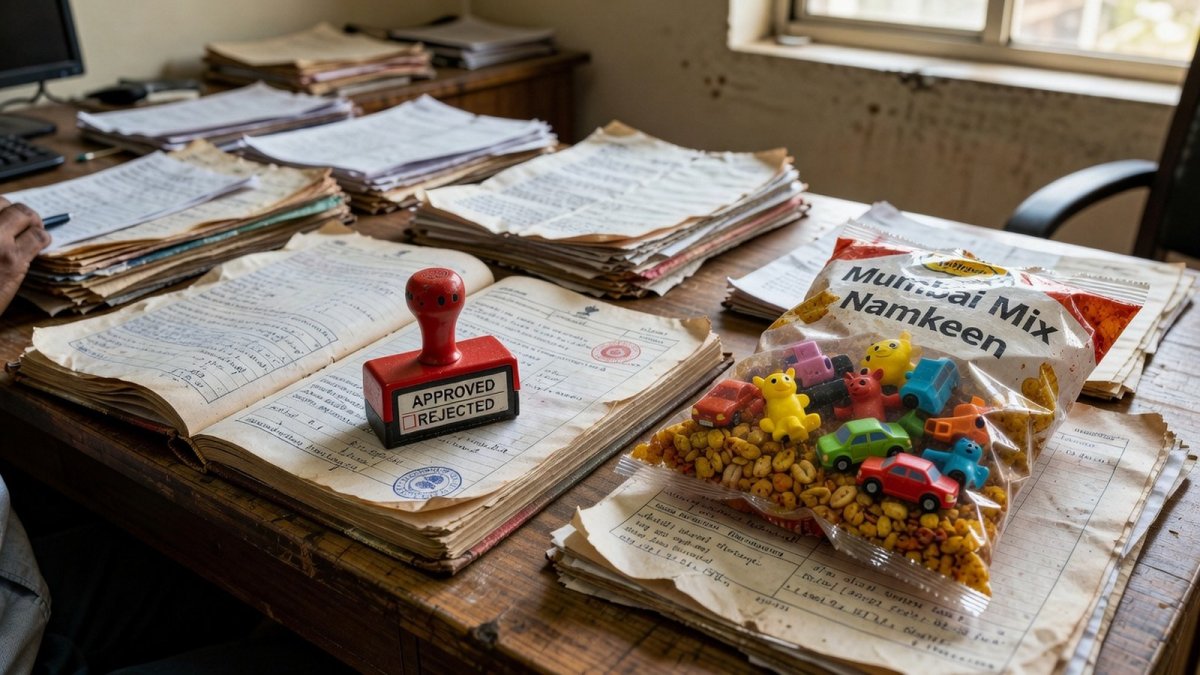
The Food Safety and Standards Authority of India, established under the Food Safety and Standards Act, 2006, issued a directive on August 3, 2019, explicitly directing food businesses to stop incorporating toys in food packs due to choking hazards. The directive remains available on fssai.gov.in, yet complimentary toys inside snack packets continue to appear commonly in the Indian market. Section 29(3) of the FSS Act, 2006 requires the Food Authority to maintain systems of control, including public communication on food safety risks, surveillance, and monitoring across all stages of the food business. Despite this mandate, implementation appears inconsistent, allowing manufacturers to continue the practice without sufficient penalties or recalls. A 2019 FSSAI direction, while significant, is not the same as a binding regulation with statutory penalties. The FSS Act, 2006 provides for penalties for unsafe food under Sections 59-64, but a non-food item like a toy inside a snack packet sits in a grey zone: it is neither a food contaminant nor an adulterant in the classical sense, complicating prosecution.
Enforcement Challenges and Industry Incentives
Industry observers note that while the 2019 FSSAI directive aimed to eliminate non-food items, enforcement relies heavily on state-level food safety officers who may lack resources for widespread market checks. Many snack brands still include small toys as marketing incentives, particularly in rural distribution channels where oversight is thinner. State-level designated officers and food safety officers, who carry out inspections under the Act, often prioritise routine licensing and sample testing over market sweeps for promotional non-food items, leaving the practice largely unchecked. The use of small plastic toys as promotional lures reflects the intense competition in India’s fast-moving consumer goods (FMCG) sector, where freebies are deployed to attract children and drive impulse purchases, especially in the price-sensitive snacks segment. Comparable markets abroad treat such items more strictly: the European Union’s Food Imitations Safety Directive and the United States’ small-parts choking hazard rules under the Consumer Product Safety Commission both restrict non-food items that resemble or accompany food for young children. India’s Bureau of Indian Standards maintains toy safety specifications under IS 9873, but these apply to toys sold as toys, not to promotional items buried inside food packets, leaving a regulatory blind spot.
Broader Implications for India’s Children
With 31.4 percent of India’s population under age 14, the repeated occurrence of toy-related choking deaths demands urgent policy attention. Rural areas like Mysuru district and Kandhamal district face compounded risks due to limited emergency medical infrastructure and lower awareness of choking first-aid protocols. Primary health centres and community health centres form the first line of emergency response in rural India, but their capacity to manage paediatric airway emergencies remains limited. Most PHCs lack paediatric ventilators, trained anaesthetists, and bronchoscopy equipment, forcing families to travel long distances to district hospitals. In Gauripura, the nearest tertiary care facility lies in Mysuru city, a journey that can consume the very minutes that determine survival in choking cases. Training anganwadi workers and ASHA workers in basic airway first aid could bridge this gap, turning village-level caregivers into first responders. Public health analysts argue that FSSAI must strengthen post-market surveillance and collaborate with ICMR for better injury data integration. Consumer education campaigns targeting parents in villages could complement stricter manufacturing rules, reducing exposure to these preventable hazards.
Urgent Need for Stronger Safeguards
The deaths of Mukund Mayur in Gauripura village and Bigil Pradhan in Musumahapada village reveal a troubling disconnect between FSSAI regulations and ground-level reality. Data from ICMR studies indicate that unintentional injuries, including choking, remain under-monitored nationally. Without mandatory reporting of such incidents to FSSAI, the true scale of the problem stays hidden, allowing regulatory gaps to persist. Strengthening oversight requires a package of measures rather than a single circular. Mandatory reporting of choking incidents to FSSAI and state health departments would build the surveillance base the country lacks; extending small-parts standards to food-adjacent promotional items would close the BIS blind spot; and awareness campaigns delivered through anganwadi centres, schools, and panchayat platforms would reach the parents most exposed to these products. Child injury prevention is among the most cost-effective public health investments available, yet it remains underfunded relative to its burden, a gap that costs Indian families their children. Until enforcement tightens and reporting improves, Indian children remain vulnerable to choking hazards hidden in everyday snack packets. Families, regulators, and industry must act collectively to prevent further tragedies.
— By Dr. Raj Patel, Staff Writer
This article was produced with AI-assisted research and editorial support. Reporting is based on sources cited in the article.
What's Your Reaction?
 Like
0
Like
0
 Dislike
0
Dislike
0
 Love
0
Love
0
 Funny
0
Funny
0
 Wow
0
Wow
0
 Sad
0
Sad
0
 Angry
0
Angry
0

India/South Asia Correspondent at Global1.News. Analytical voice with a background in science and health journalism. Based in New Delhi, covering Indian politics, education, healthcare, technology, and policy. Breaks down complex data into clear, actionable reporting.














Comments (0)