
NTT signs MoU with B.Grimm for 400MW data center project in Thailand
NTT’s latest partnership with B.Grimm Power to chase a 400 MW data‑center project in Thailand is a textbook case of hyperscalers leaning on local utilities to stretch their footprint without shouldering the full risk.
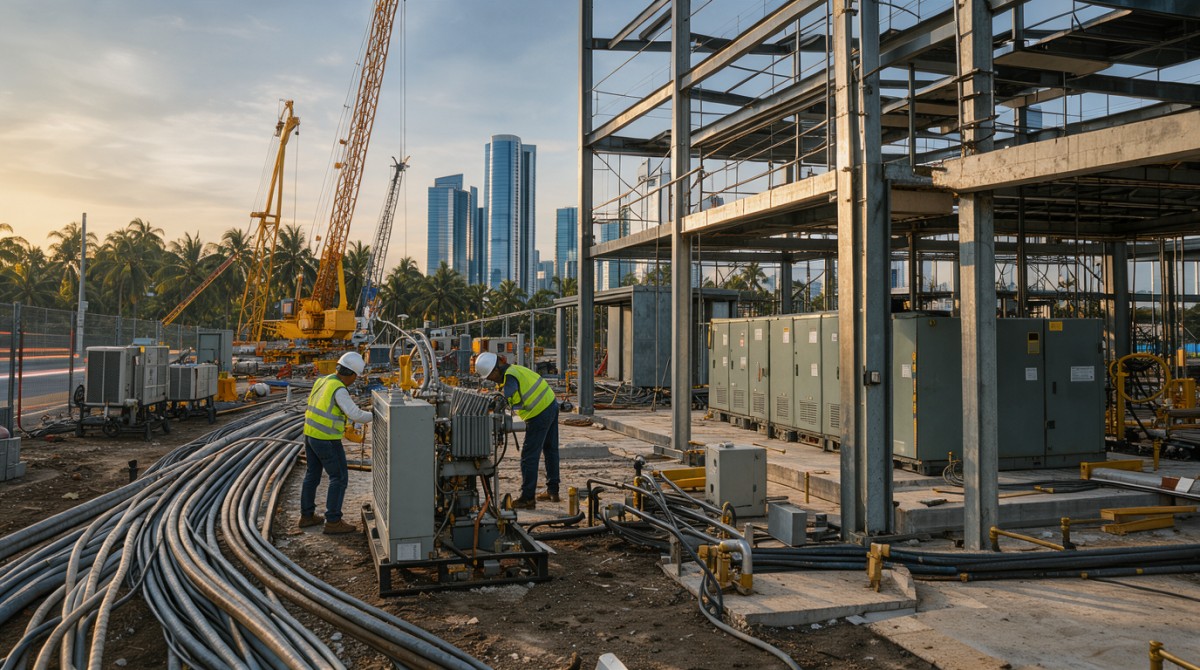
NTT’s latest partnership with B.Grimm Power to chase a 400 MW data‑center project in Thailand is a textbook case of hyperscalers leaning on local utilities to stretch their footprint without shouldering the full risk. From a founder’s perspective, the deal is a reminder that the hype around “AI ecosystems” often masks the gritty reality of power contracts, land acquisition and the slow grind of regulatory approvals. While the headline numbers look impressive—THB 113 billion (about $3.3 bn) of investment and a 400 MW capacity target—the underlying mechanics tell a far more nuanced story about where independent providers can still find a foothold.
Why the B.Grimm‑NTT MoU matters for the Thai market
The memorandum of understanding signed this week binds NTT Global Data Centers with B.Grimm Power, one of Thailand’s largest industrial power producers. B.Grimm, founded in 1993, already runs more than 3.3 GW of installed capacity and is chasing power purchase agreements totalling 10 GW by 2030. That ambition gives NTT a ready‑made pipeline of power, which is the single most critical input for any data‑center build‑out. By tying the data‑center project to B.Grimm’s existing generation assets, NTT sidesteps the costly, time‑consuming process of securing independent power contracts.
For independent operators, the lesson is clear: power remains the bottleneck. If you can partner with a utility that already has a pipeline of capacity, you can accelerate deployment and lock in rates before the market spikes. The downside is that you become dependent on the utility’s pricing and contract terms, which can be less favourable than competitive market rates if you lack bargaining power.
NTT’s existing Thai footprint and the scaling challenge
NTT already runs three data centres in the Bangkok corridor—Bangkok 1, 2 and 3—plus a fourth under construction slated for Q2 2027. Bangkok 1 is a modest 1.6 MW edge facility in Bang Na, while Bangkok 2, launched in 2015, offers 3.6 MW across 3,800 sqm. Bangkok 3 steps up to 12 MW on a 4,000 sqm footprint. The upcoming Bangkok 4 will add more capacity, but even the combined portfolio barely scratches the surface of the 400 MW ambition outlined in the MoU.
From a risk standpoint, scaling from tens of megawatts to hundreds requires a different playbook. You need massive power procurement, robust cooling solutions, and a supply chain that can handle large‑scale hardware roll‑outs. NTT’s strategy of piggy‑backing on B.Grimm’s generation capacity is a pragmatic way to bridge that gap, but it also means the bulk of the capital outlay sits on the utility side, leaving NTT with a lighter balance‑sheet exposure.
The Aether‑Cho joint venture: A different angle on AI infrastructure
While NTT leans on a utility partnership, Nasdaq‑listed Aether Holdings is taking a more grassroots approach. Its Aether Compute subsidiary has inked a tripartite framework agreement with Cho Thavee Public Company Limited and Singapore‑based Advance Capital Partners (ACP). The joint venture will target a 14‑acre factory site in Khon Kaen, a city in Thailand’s northeast, which currently has about 850 kW of power available.
The structure is interesting: Aether and Cho each hold 47.5 % of the venture, with ACP taking the remaining five percent. This split lets Aether tap into Cho’s industrial real‑estate and existing power without a massive upfront cash outlay. For Cho, the deal offers a way to monetize idle factory space and under‑utilised power capacity. The partnership is a classic example of “use what you have” thinking—a mantra that resonates with any founder trying to squeeze ROI from existing assets.
Modular AI pods versus traditional builds
Aether’s approach hinges on its proprietary AetherPod VG100, a modular AI data‑center unit designed for rapid deployment. By leveraging a factory site, Aether can sidestep the lengthy construction timelines that typically accompany green‑field builds. The modular model also aligns with the “pay‑as‑you‑grow” mindset many enterprises now demand, especially when AI workloads can spike unpredictably.
Contrast that with NTT’s traditional brick‑and‑mortar expansion in Bangkok, which involves larger land parcels, deeper civil works and longer commissioning phases. For independent providers, the modular route offers a lower‑cost entry point and the flexibility to relocate or scale as demand shifts. However, the trade‑off is lower power density; the Khon Kaen site’s current 850 kW capacity is a fraction of the megawatt‑scale facilities NTT is targeting.
Risk lenses: Power, regulatory and market dynamics
Both projects sit under the same regulatory umbrella: Thailand’s energy and data‑center approvals are notoriously slow, especially for projects that exceed a few megawatts. NTT’s partnership with B.Grimm mitigates some of that risk by aligning the data‑center with an established power producer, but it still faces the hurdle of securing long‑term power purchase agreements that meet the 400 MW target.
Aether’s venture, on the other hand, is anchored to an existing industrial site with a known power baseline. The risk here is the need to upgrade that capacity if the AI workloads grow beyond the initial 850 kW. That upgrade will likely require additional negotiations with the utility and possibly new infrastructure investments, which could erode the cost advantage of the modular approach.
What independent hosting providers can learn
The takeaway for founders and operators is that the “one‑size‑fits‑all” model is dead. Large hyperscalers like NTT are leveraging utility partnerships to chase megawatt‑scale projects, while nimble players like Aether are exploiting under‑used industrial assets to launch modular AI pods. If you run a boutique hosting business, you need to identify where you can insert yourself in this ecosystem.
First, scout for industrial sites with existing power headroom—factory floors, logistics hubs, or even under‑utilised office parks. Second, negotiate long‑term, below‑market power contracts that lock in rates for at least a decade. Third, consider modular infrastructure that can be scaled in increments of 100 kW to 1 MW, allowing you to match capacity to demand without over‑committing capital.
Actionable steps for founders in 2026 and beyond
1. Map the power landscape: Identify utilities with excess generation capacity (like B.Grimm) and understand their procurement timelines. This will inform how quickly you can bring a new facility online.
2. Leverage existing footprints: Follow Aether’s playbook by targeting factories or industrial parks that already have a power supply and can offer long‑term lease terms below market rates. The “below‑market long‑term site leases” language in the Aether‑Cho agreement is a template for negotiating favorable terms.
3. Adopt modular designs: Invest in containerised or pod‑based solutions that can be deployed on a shoestring budget and scaled as demand materialises. This reduces upfront CAPEX and aligns with the “pay‑as‑you‑grow” expectations of AI‑heavy customers.
4. Diversify risk: Don’t put all your eggs in one utility’s basket. If possible, structure contracts with multiple power sources or include clauses that allow you to switch providers if rates become untenable.
5. Keep an eye on policy: Thailand’s push for AI infrastructure is evident, but regulatory approvals can lag. Build relationships with local authorities early to smooth the permitting process.
In short, the NTT‑B.Grimm MoU and the Aether‑Cho joint venture illustrate two divergent pathways to AI‑ready data centres in Thailand. One leans on massive utility partnerships to chase scale; the other bets on modular agility and existing industrial assets. Independent providers that can blend the best of both worlds—securing reliable power while staying nimble—will be the ones that survive the next wave of AI‑driven demand.
— Allan Ali, Founder
This article was produced with AI-assisted research and editorial support. Reporting is based on the source material cited below. Sources: Data Center Dynamics; datacenterdynamics.com; Global1.News (25 November 2026).
By Allan Ali, Global1.News
What's Your Reaction?
 Like
0
 Dislike
0
 Love
0
 Funny
0
 Wow
0
 Sad
0
 Angry
0
Publisher of Global1.News. Automation architect, systems builder, and the guy making sure the truth gets published.











Comments (0)