
Two Neighbouring NHS Trusts Declare Critical Incidents as Flu Arrives Early
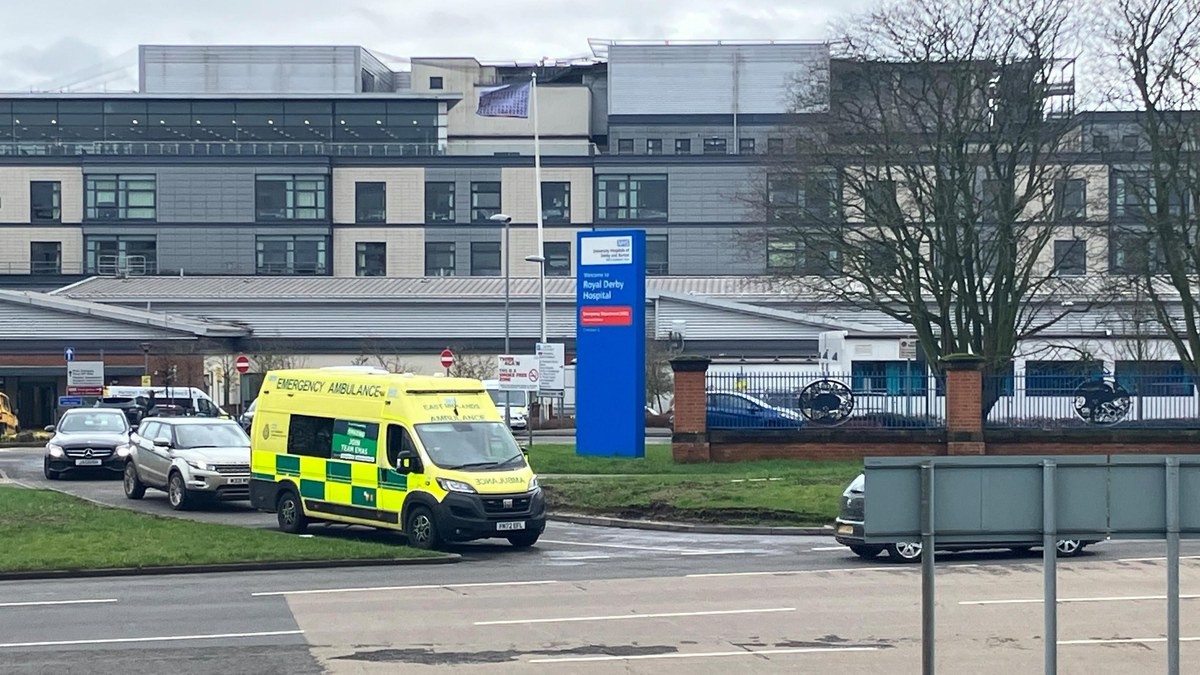
University Hospitals of Derby and Burton has declared a critical incident with nine-hour average waits at Royal Derby, 48 hours after Nottingham's hospitals warned of an increased risk of harm as flu and Covid-19 cases surge.
Folks, here is a number that should stop you cold. Two hospital groups in the same English region ran out of room in the same week. One of them had already been sitting at the highest alert level the system has before its bosses finally put their hands up. And a government minister had already conceded, on the record, what was coming.
Two Neighbouring NHS Trusts Declare Critical Incidents as Flu Arrives Early
Derby, United Kingdom - University Hospitals of Derby and Burton has become the second trust in the East Midlands to declare a critical incident in forty-eight hours, after Nottingham's hospitals warned that patients waiting on its wards face "an increased risk of harm."
Nine Hours in Derby
University Hospitals of Derby and Burton NHS Foundation Trust declared a critical incident this week. The trust runs Royal Derby Hospital, Queen's Hospital in Burton, and community hospitals in Ilkeston and Ripley. It said seasonal respiratory illness, including flu and Covid-19, is adding to the pressures.
Royal Derby is carrying the worst of it. The trust said waits in its accident and emergency unit were averaging about nine hours. Nine hours as an average is not a bad night. That is the middle of the distribution, which means a great many people waited considerably longer than nine hours.
The trust put numbers on the sickest cohort in the building: about 67 flu cases and 24 patients with confirmed Covid-19 at Royal Derby at the time of the alert. Jo Wright, interim executive chief operating officer, said additional clinical support had been moved to where it was needed most, and urged people to keep attending in an emergency or for planned appointments.
The Trust Was Already at the Top of the Scale
Here is the detail that matters more than the declaration itself. According to the Derbyshire Telegraph, the trust was already at the highest level of escalation within the NHS, the tier that denotes very high or extreme pressure where demand exceeds capacity, before it confirmed the critical incident.
The alert, in other words, was not the moment the system discovered a problem. It was the moment the problem became impossible to manage quietly. Declaring a critical incident is an operational step: it lets an organization coordinate extra action internally and with partners to reduce pressure. It is not a red warning to the public and it is not a legal status.
It is, though, a confession. A trust that declares one is stating that its normal plans are no longer sufficient. The two accounts of exactly when Derby did so differ, and both are on the record: the BBC reported the alert was declared on Monday, while the Derbyshire Telegraph reported the trust confirmed it on Tuesday, 24 November.
Two Hundred People in One Emergency Department
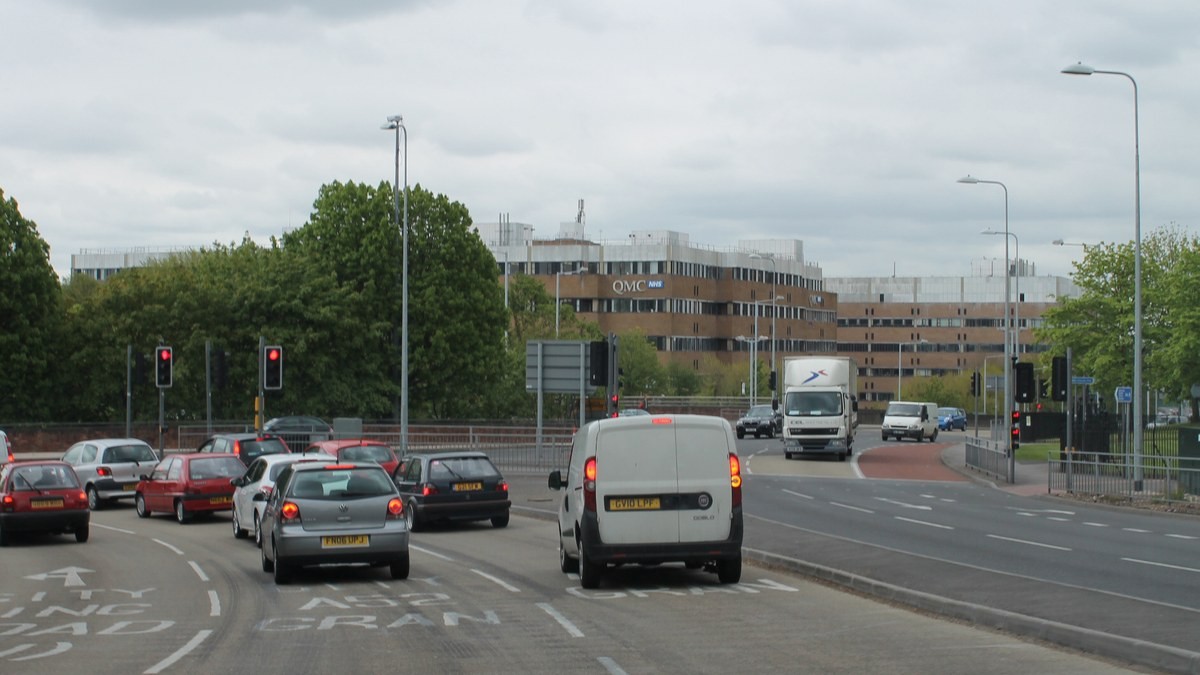
In the next county over, Nottingham University Hospitals got there first. Its own statement, posted on its website, reads: "Nottingham University Hospitals (NUH) has declared a Critical Incident today, Monday 23 November, following a sharp increase in cases of flu and COVID-19."
The conditions came with it. Around 200 patients were in the emergency department at Queen's Medical Centre. Ambulances were waiting outside for up to four hours. Almost 100 people were waiting for beds on wards, and the trust said it had no available capacity in resuscitation or major trauma. By Tuesday the count had fallen only to almost 190.
Andrew Hall, NUH's chief operating officer, did not soften it. "These numbers have surpassed the predicted flu figures for this time of year and are higher than we saw this same time last year," he said. Then this: "We have high numbers of patients waiting to be seen and waiting for beds on our wards, which carries with it an increased risk of harm."
Four Declarations in Nine Days
This is not two hospitals having a bad week. Look at the calendar.
On Monday 16 November, University Hospitals Coventry and Warwickshire declared a critical incident over what it called "severe and sustained pressure on our services." That one was later stood down.
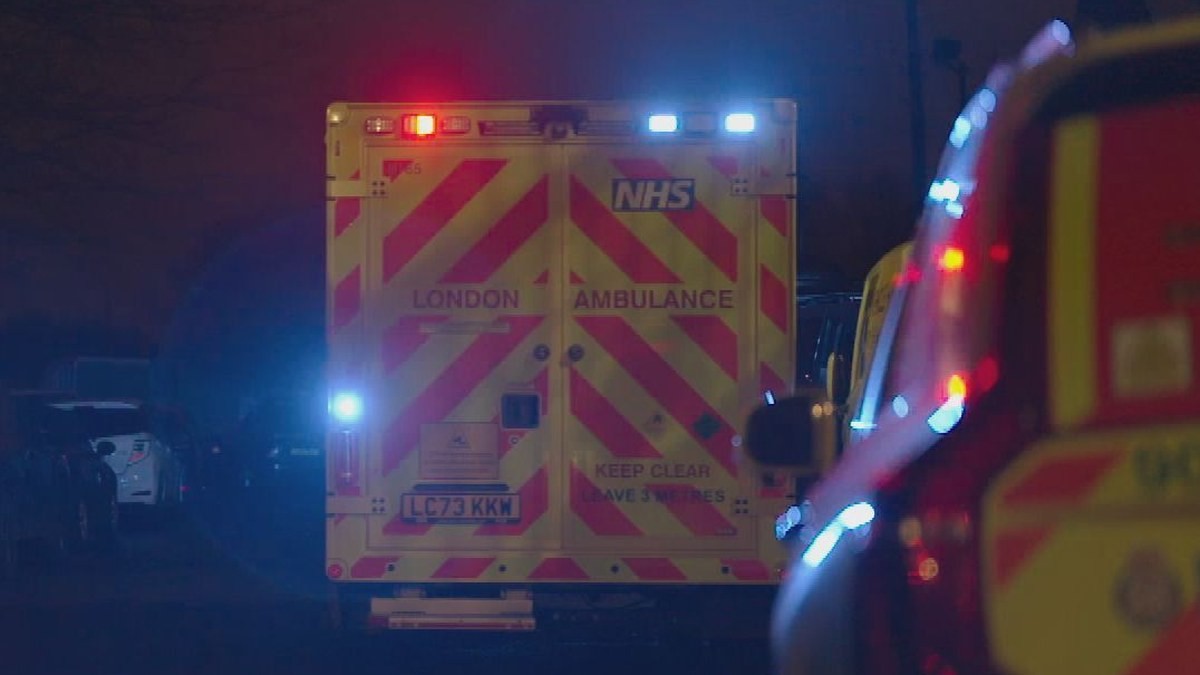
On Thursday 19 November, London Ambulance Service declared a critical incident after more than 7,000 emergency calls a day for three consecutive days. Its own figures: 7,326 calls on the Monday, 7,366 on the Tuesday, 7,369 on the Wednesday. That is roughly 500 more a day than the week before, against a typical busy day of about 5,500. Life-threatening emergencies involving breathing problems were up almost 20 percent so far this November compared with the same period last year.
Then Nottingham on the 23rd. Then Derby and Burton.
Four NHS organizations in nine days, in a season that has not officially started. NUH said the East Midlands Ambulance Service had also been under extremely high demand, compounding the flow of patients through its hospitals.
The Fifth Time in a Year
Nottingham's declaration had a grim familiarity. In October, the BBC reported the trust had declared its fourth critical incident of the year, after earlier alerts in January, February and June. A BBC tally published this week put it at five in the past year, counting one in November 2025 that followed the rollout of a new digital patient system.
The counts do not match, and both are defensible depending on where the window starts. What no count disputes is the pattern: hot weather, winter illness, staff sickness, discharge bottlenecks, record attendance, corridor care. Each produced the same response.
NUH also said it saw 2,000 more emergency department visits in September this year than in September 2025. That is not a bad winter. That is a permanent step up in demand, landing on a system that never recovered its headroom. Hall's appeal to families was the tell: if a relative is medically ready to leave, collect them. The hospital is not short of corridors. It is short of beds, because the people in them cannot leave.
What the Numbers Said Would Happen
None of this surprised anyone reading the surveillance data.
The UK Health Security Agency's surveillance report published on 19 November, covering the week to 15 November, showed influenza positivity at 11.4 percent, up from 8.3 percent the previous Sunday. The weekly hospital admission rate for influenza rose to 4.68 per 100,000 from 3.76. There were 1,208 new flu admissions across the reporting trusts that week, up from 855 seven days earlier.
NHS England had already called October the busiest month ever for accident and emergency, with more than 2.5 million attendances. In September, adult acute bed occupancy averaged 94.9 percent. More than 13,600 patients a day were medically fit to be discharged and still occupying a bed. And there were 50,582 waits of more than 12 hours from the decision to admit to actual admission. That is 1,686 people every single day.
The Doctors Told Parliament This Would Happen
On 11 November, two weeks before Derby raised its hand, the Health and Social Care Committee took evidence on winter pressures. The Royal College of Emergency Medicine had surveyed 163 doctors in charge of emergency departments across the UK.
Ninety-two percent described current pressure as high or very high. Eighty-eight percent said they were under greater strain than a year earlier. Only 3 percent said they were well prepared for winter. Sixty percent described their own department as actively unsafe.
Dr Ian Higginson, the college's president, told the committee: "Overcrowding, corridor care, the impending surge of demand from winter, and lack of meaningful preparations, are creating perfect conditions for a terrible winter."
"Undignified, Inhumane and Undoubtedly Associated With Harm"
Higginson did not spare the detail. "I have had to, as will almost every emergency doctor in the country, examine patients in corridors as best I could because I had no option."
On corridor care itself: "There is nothing about it that is good. It is undignified, inhumane and undoubtedly associated with harm."
The arithmetic behind it is not mysterious. Higginson said something like 10 percent of the hospital bed base, about 13,000 beds, is occupied by patients who do not need to be there. He said his college recommends occupancy of about 85 percent, and that the NHS currently runs at about 93 percent.
NHS England's own data recorded an average of 3,310 patients a day receiving corridor care in September, 2,549 of them in emergency departments. Every one of those is a person who should have been in a bed.
Higginson also said something that should end the pretence this is seasonal: "This is not a 'right now' problem; this is a 'getting worse and worse and worse' problem."
The Minister Accepted It Nine Days Before
What makes this week hard to dismiss as bad luck is that the government had already conceded the central point under questioning on 11 November.
Health minister Karin Smyth was asked whether it was worse this year. "This year, going into winter, is worse; there is no doubt about that," she said.
She was then asked about excess deaths. The chair put it to her that if the problem is not gripped, more people will die than need to, particularly when patients stay in emergency departments beyond 12 hours. Smyth replied that those patients are not getting the care they need. Asked whether she accepted the fact, she said: "Yes."
She added: "Those are not just numbers; they are real people. It is very distressing." She is right. The question now is what follows, given that the numbers have names attached, and that four calendars filled in nine days.
What You Can Actually Do
The practical advice from the trusts is not complicated. Call 999 only for a life-threatening emergency. Use NHS 111, a GP or a pharmacy for everything else. Keep planned appointments unless someone contacts you to cancel. If you have a relative in hospital who is medically fit to go home, go and get them. That is the fastest thing a family can do to open a bed tonight.
If you are eligible for a flu vaccination and have not had one, get it. Dr Catherine Frances told the committee that uptake in the eligible cohorts other than the over-65s is running about 4 percent higher at this point than at the same point last year, against a target of 60 percent. Better, and still a long way short.
Flu Is the Trigger, Not the Cause
Two trusts declaring critical incidents in forty-eight hours, in a region where the ambulance service was already under extremely high demand, is not a story about flu. Flu is the trigger. The loaded gun was a system running at 93 percent occupancy with 13,000 beds filled by people who do not need to be in them.
Higginson was asked what he needed on the shop floor. He said beds: enough staff to see the patients, a hospital that works across the whole week, and fewer people stuck in a bed because the discharge never happens.
The declarations will be stood down. They always are. Nottingham's October alert lasted a day. Coventry's came and went. Then the next virus, or the next heatwave, or the next ordinary Tuesday produces another one.
Folks, the thing to watch is not whether Derby stands its incident down this week. It is whether the fourth declaration in nine days gets treated as a pattern or as an emergency. The data was published in advance, every week, all autumn. Nobody can say they were not told.
By Jessica Ali, Staff Writer
This article was produced with AI-assisted research and editorial support. Sources: BBC News, Derbyshire Telegraph, ITV News Central, Nottingham Post, NUH NHS Trust, UHCW NHS Trust, London Ambulance Service NHS Trust, UK Health Security Agency national flu and COVID-19 surveillance report for week 46 of 2026, NHS England performance statistics, and the House of Commons Health and Social Care Committee oral evidence session on winter pressures of 11 November 2026 (HC 751). Photographs: BBC News (Royal Derby Hospital); J. Hannan-Briggs, CC BY-SA 2.0 via Wikimedia Commons (Queen's Medical Centre, Nottingham); London Ambulance Service NHS Trust (ambulance).
What's Your Reaction?
 Like
0
 Dislike
0
 Love
0
 Funny
0
 Wow
0
 Sad
0
 Angry
0

Editor-in-Chief at Global1.News. Atlanta-based journalist who cuts through the BS and tells it like it is. Lead anchor, host, and the voice you hear when the spin stops and the truth starts.














Comments (0)