
St. Petersburg Offers to Help Build Hanoi Metro as Projects at Home Lag
St. Petersburg Governor Alexander Beglov arrived in Hanoi on Tuesday, signaling a surprising diplomatic overture as his own city continues to grapple with chronic delays in its metro expansion.
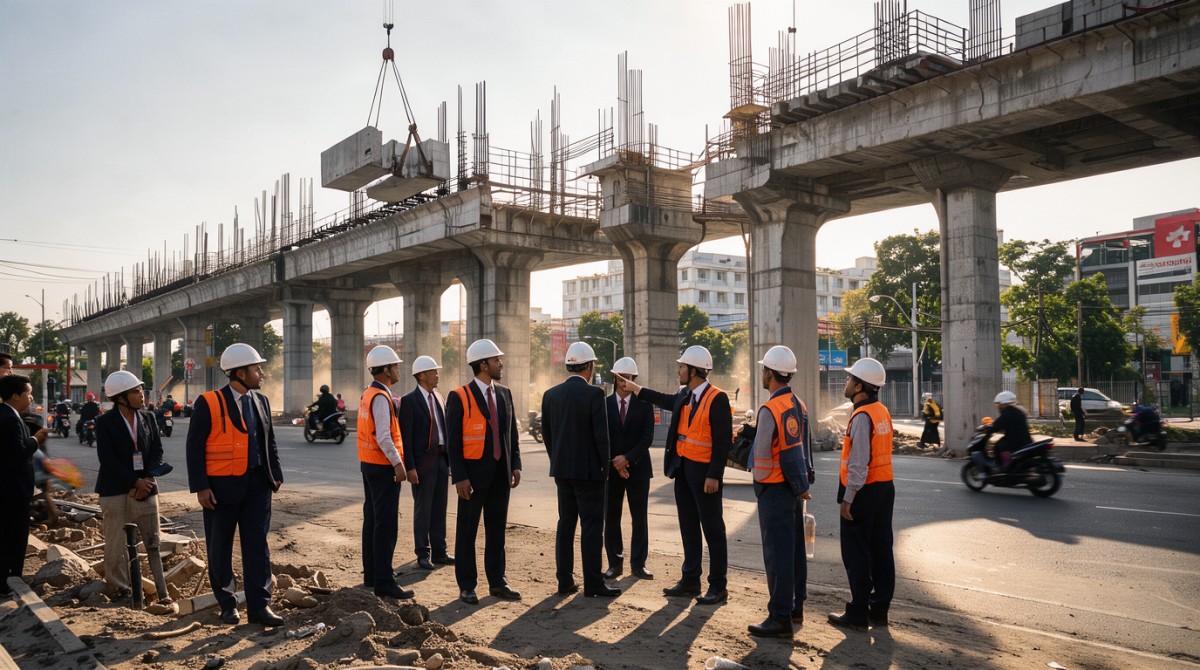
St. Petersburg Governor Alexander Beglov arrived in Hanoi on Tuesday, signaling a surprising diplomatic overture as his own city continues to grapple with chronic delays in its metro expansion. According to the local outlet Fontanka, Beglov’s delegation is slated to sign a memorandum that will launch a pilot project for a segment of the Vietnamese capital’s underground network. The move is framed by the governor’s office as an opportunity to showcase St. Petersburg’s engineering expertise on the international stage, even as the city’s own metro construction lags far behind its original timetable.
Background to the St. Petersburg Metro Shortfall
In 2011, St. Petersburg set an ambitious target: to open 45 new metro stations by 2025. The city managed to commission only 11 stations by that deadline, a shortfall that has become a recurring theme in Russian municipal infrastructure projects. The disparity between the original plan and actual delivery has drawn criticism from residents, who have repeatedly highlighted the delays during public forums and live call‑in sessions. The most visible symptom of the slowdown is the Teatralnaya station, whose entrance construction has been postponed to 2030, underscoring the growing gap between promised and realized services.
The shortfall is not merely a technical issue; it reflects broader fiscal pressures on Russian regional budgets. In late 2025, Beglov announced a allocation of 217 billion rubles—approximately $2.65 billion—to fund new metro stations over the next three years. However, by the following summer, the city began revising those plans, cutting the 2027 metro construction budget from 80 billion rubles ($976 million) to 45 billion rubles ($549 million). Deputy Governor Alexei Korabelnikov justified the reduction by stating that the cuts targeted spending “outside the city’s most pressing priorities,” a phrase that hints at a re‑prioritisation of funds amid tightening fiscal constraints.
Hanoi’s Rapid Metro Expansion
In stark contrast, Hanoi has accelerated its metro development over the same period. From 2021 to 2025, the Vietnamese capital opened 20 new stations, a pace that dwarfs St. Petersburg’s three stations added in the same timeframe. This rapid expansion reflects Vietnam’s broader strategy to modernise urban transport and reduce congestion, aligning with its economic growth objectives. The disparity between the two cities’ outputs highlights divergent trajectories: Hanoi’s aggressive infrastructure push versus St. Petersburg’s stalled progress.
The Hanoi‑St. Petersburg partnership is therefore positioned as a mutually beneficial exchange. For Hanoi, the involvement of Russian engineers offers technical expertise and potential cost efficiencies. For St. Petersburg, participation in an international project serves as a prestige boost, allowing the city to claim a role in a high‑profile development despite domestic setbacks. The memorandum to be signed aims to launch a pilot segment, though details of the scope and financing remain undisclosed.
Fiscal Context: Defense Spending and Civilian Cuts
Russia’s broader budgetary environment provides essential context for St. Petersburg’s metro challenges. The Kremlin has announced plans to raise defense spending to a post‑Soviet high in the coming year, a policy that inevitably squeezes civilian programmes. This reallocation of resources is part of a larger fiscal strategy that includes raising taxes to fund the heightened defence budget. Consequently, regional projects like St. Petersburg’s metro are forced to compete for a shrinking pool of funds.
The reduction of the 2027 metro budget from 80 billion to 45 billion rubles illustrates the tangible impact of these national priorities on local infrastructure. While the city cites “pressing priorities” as justification, the underlying driver is the federal shift toward military expenditure. This fiscal pressure is likely to persist, making future expansions of the St. Petersburg metro contingent on either new revenue sources or a re‑balancing of national spending priorities.
Political Implications of the Hanoi Deal
Beglov’s Hanoi visit carries political weight beyond the technical realm. By securing an international contract, the governor can portray his administration as proactive and globally engaged, a narrative that may mitigate domestic criticism over metro delays. The memorandum, framed as a “pilot project,” allows St. Petersburg to claim involvement in a successful foreign metro system, thereby enhancing its reputation as a centre for transportation engineering.
Moreover, the deal aligns with Russia’s broader foreign‑policy aim of deepening ties with non‑Western partners. Vietnam, a long‑standing strategic partner, offers a platform for Russian expertise to be showcased in Asia, reinforcing bilateral relations. The partnership may also serve as a soft‑power lever, presenting Russian technical capabilities as a counter‑balance to Western sanctions and diplomatic isolation.
Public Reaction in St. Petersburg
Local sentiment in St. Petersburg remains skeptical. Residents have repeatedly voiced frustration over the metro’s slow progress, most recently during a live call‑in session held days before Beglov’s departure. The public’s concerns centre on the tangible impact of delayed stations: longer commutes, overcrowded existing lines, and a perception of mismanaged municipal funds. The postponement of the Teatralnaya station entrance to 2030 has become a symbolic marker of the city’s broader infrastructural woes.
These grievances are amplified by the contrast with Hanoi’s achievements. Citizens see a foreign capital rapidly expanding its network while their own city struggles to meet modest targets. The upcoming memorandum may be perceived as a diversion of attention rather than a solution to the underlying funding and management issues that have hampered St. Petersburg’s metro development.
Strategic Outlook for St. Petersburg’s Metro
Looking ahead, St. Petersburg faces a crossroads. The city must reconcile its ambition to be a transportation hub with the reality of constrained budgets and competing national priorities. The 217 billion ruble allocation announced in late 2025 suggests a willingness to invest, yet the subsequent budget cuts indicate that such commitments are vulnerable to shifts in fiscal policy.
To sustain any meaningful expansion, St. Petersburg may need to explore alternative financing mechanisms, such as public‑private partnerships or foreign investment—potentially leveraging the Hanoi collaboration as a proof of concept. However, any such initiatives will have to navigate the broader economic climate, including heightened taxes and a defense‑heavy national budget, which could limit the appetite of private investors and foreign partners.
Geopolitical Significance of Infrastructure Diplomacy
The St. Petersburg‑Hanoi metro project exemplifies a growing trend of infrastructure diplomacy, where nations use technical expertise to cement strategic relationships. For Russia, showcasing engineering capabilities abroad serves a dual purpose: it projects an image of competence and resilience despite Western sanctions, and it cultivates alliances with countries that are less aligned with the West.
In the context of 2026, this approach is particularly salient. As Russia escalates defense spending and tightens fiscal policy, civilian projects at home suffer, prompting officials to seek external avenues for demonstrating state capacity. The Hanoi memorandum, therefore, is not merely a transport agreement; it is a calculated move within a broader geopolitical playbook aimed at reinforcing Russia’s influence in Asia while compensating for domestic shortfalls.
This article was produced with AI-assisted research and editorial support. Reporting is based on the source material cited below. Sources: The Moscow Times; themoscowtimes.com; Global1.News (25 November 2026).
By Irina Volkov, Staff Writer
What's Your Reaction?
 Like
0
 Dislike
0
 Love
0
 Funny
0
 Wow
0
 Sad
0
 Angry
0
Russia/Eastern Europe Correspondent at Global1.News. Covering Russian politics, energy, security, and the shifting dynamics of the post-Soviet space. Provides clear-eyed analysis on one of the world's most opaque regions.










Comments (0)