
Israel Accuses Iran of Developing Chemical Weapons, Raising Regional Tensions
In a report aired by Al Arabiya English on 24 November 2026, Israeli officials publicly charged Tehran with advancing a chemical weapons programme, a claim that reverberates across the already volatile security architecture of the Middle East.
In a report aired by Al Arabiya English on 24 November 2026, Israeli officials publicly charged Tehran with advancing a chemical weapons programme, a claim that reverberates across the already volatile security architecture of the Middle East. The allegation arrives at a time when regional actors are already grappling with the twin pressures of great‑power rivalry and intra‑regional Sunni‑Shia competition, and it threatens to deepen mistrust at a juncture when diplomatic overtures remain fragile. This article unpacks the seriousness of the accusations, examines the potential pathways for escalation, and assesses how the claim may shape the prospects for a diplomatic resolution to the broader Iran‑Israel confrontation.
Historical Context of Iran‑Israel Chemical Weapons Concerns
Israel’s suspicion of Iran’s chemical weapons capability is not new; it has been a recurring theme in Tehran’s security dossier for years. The current accusation, however, is distinguished by its public articulation through a high‑profile media outlet, signalling a shift from covert intelligence briefings to overt diplomatic signalling. Historically, Israel has linked Iran’s alleged chemical ambitions to its broader ballistic‑missile and nuclear programmes, framing them as part of a “strategic threat matrix” that could undermine Israeli security and regional stability.
Within the broader Sunni‑Shia rivalry, the chemical weapons allegation adds another layer to the sectarian dimension of the rivalry. While Iran positions itself as the champion of Shia interests across the Levant and the Gulf, Israel, a predominantly Jewish state, often aligns with Sunni Arab states that share concerns about Tehran’s expanding influence. The chemical weapons claim therefore resonates with a wider audience of regional actors who view Tehran’s capabilities as a destabilising factor.
Great‑power involvement also colours the narrative. The United States, traditionally Israel’s principal security partner, has repeatedly warned of Iran’s potential to acquire weapons of mass destruction. Although the Al Arabiya report does not cite a specific US source, the timing of the accusation aligns with ongoing US‑Iran negotiations, suggesting that Israel may be seeking to reinforce a hard‑line stance within the broader diplomatic calculus.
Assessing the Credibility of the Accusation
The Al Arabiya English video frames the accusation as a serious charge, yet it does not provide concrete evidence such as satellite imagery, intercepted communications, or laboratory samples. In the absence of such corroboration, the claim rests largely on Israel’s strategic narrative. Nonetheless, Israel’s intelligence community has a reputation for detailed surveillance of Iranian military developments, lending a degree of weight to its statements.
From a technical standpoint, the development of chemical weapons requires a distinct set of facilities, precursor chemicals, and delivery mechanisms. Iran already possesses a substantial chemical industry for civilian purposes, which could be dual‑used. The report’s emphasis on “developing” rather than “possessing” suggests that Tehran may be in a preparatory phase, potentially seeking to bridge the gap between civilian capability and weaponisation.
Regional actors will likely weigh the accusation against their own intelligence assessments. Countries such as Saudi Arabia and the United Arab Emirates, which have previously expressed alarm over Iran’s missile and nuclear programmes, may interpret the chemical weapons claim as an escalation of Tehran’s threat profile, prompting them to reconsider their security postures and diplomatic engagement strategies.
Potential Military Escalation Scenarios
If the allegation gains traction, it could pave the way for pre‑emptive or retaliatory actions by Israel. Historically, Israel has demonstrated a willingness to conduct covert strikes against Iranian assets in Syria and Iraq, targeting weapons depots and nuclear facilities. The chemical weapons claim could justify a new operational focus on facilities suspected of chemical weapon development, potentially extending the theatre of conflict into Iranian territory or its proxies.
Such an escalation would have immediate implications for regional stability. A direct Israeli strike on Iranian soil could trigger a retaliatory response from Tehran, possibly in the form of missile attacks on Israeli targets or asymmetric actions through proxy groups in Lebanon, Gaza, or the Gulf. The risk of a broader confrontation would be heightened, especially if other regional powers perceive the conflict as an opportunity to assert their own strategic interests.
Moreover, the involvement of external powers could amplify the stakes. The United States, as Israel’s principal ally, might be drawn into any escalation, while Russia and China, both maintaining strategic ties with Iran, could respond diplomatically or militarily to protect their interests. The chemical weapons dimension adds a particularly sensitive element, as the use of such weapons would breach international norms and could trigger a unified international condemnation, potentially reshaping the diplomatic landscape.
Implications for Diplomatic Efforts
On the diplomatic front, the accusation complicates ongoing negotiations aimed at curbing Iran’s nuclear ambitions. The Joint Comprehensive Plan of Action (JCPOA) framework, though currently stalled, remains a reference point for dialogue. Introducing chemical weapons into the equation raises the stakes, as it adds a new category of weapons that the international community must address.
Iran is likely to reject the allegation outright, framing it as part of an “unfounded smear campaign” designed to isolate Tehran and justify external aggression. Such a defensive posture could harden Tehran’s negotiating stance, making concessions on nuclear issues less likely. Conversely, if Iran were to engage in a confidence‑building measure—such as allowing international inspectors to verify the status of its chemical facilities—it could open a limited diplomatic channel, albeit one fraught with mutual suspicion.
The United Nations and the Organisation for the Prohibition of Chemical Weapons (OPCW) may be called upon to investigate the claim. However, the Al Arabiya report does not indicate any formal request for an OPCW inquiry, leaving the procedural pathway unclear. The absence of an international investigative mechanism could limit the ability of the global community to verify the accusation, thereby prolonging the diplomatic impasse.
Regional Energy Market Repercussions
Security concerns in the Gulf have a direct bearing on global energy markets, and any escalation involving Iran and Israel could reverberate through oil and gas prices. While the Al Arabiya video does not discuss energy implications, the broader context suggests that heightened tension could trigger risk premiums on crude, especially if shipping routes in the Strait of Hormuz—through which a significant share of world oil transits—are perceived as vulnerable.
Regional oil producers, particularly Saudi Arabia and the United Arab Emirates, may respond to an escalated threat environment by adjusting output to stabilise markets, a tactic they have employed in past crises. Conversely, Iran could leverage its own oil exports as a bargaining chip, threatening to curtail shipments in retaliation for Israeli actions, thereby adding further volatility.
Energy‑dependent economies in the region, such as Jordan and Egypt, could face secondary effects through higher fuel costs, potentially exacerbating domestic economic pressures. These pressures, in turn, could influence internal political dynamics, making governments more sensitive to external security threats and more inclined to align with hard‑line positions against Iran.
Broader Implications for Regional Alliances and Stability
The chemical weapons accusation underscores the fragility of existing regional alliances. Sunni Arab states that have recently pursued tentative normalisation with Israel—such as the United Arab Emirates, Bahrain, and Morocco—may find their diplomatic calculus tested. Aligning more closely with Israel could be seen as a counterbalance to Tehran, yet it also risks entangling them in a deeper security dilemma.
Turkey, which maintains a complex relationship with both Israel and Iran, may seek to position itself as a mediator, leveraging its diplomatic channels to de‑escalate tensions. However, the added chemical weapons dimension could limit Turkey’s leverage, as the issue touches on non‑proliferation norms that have broad international resonance.
Finally, the accusation may influence the internal politics of Iran, where hard‑liners could use the external threat narrative to justify further investment in strategic weapons programmes, while reformist elements might argue for diplomatic engagement to alleviate isolation. The balance of these internal forces will shape Tehran’s future posture, with direct consequences for the stability of the entire region.
By Malik Hassan, Staff Writer
This article was produced with AI-assisted research and editorial support. Reporting is based on the source material cited below. Sources: Al Arabiya English video report (24 November 2026); Al Arabiya English; Global1.News
What's Your Reaction?
 Like
0
 Dislike
0
 Love
0
 Funny
0
 Wow
0
 Sad
0
 Angry
0
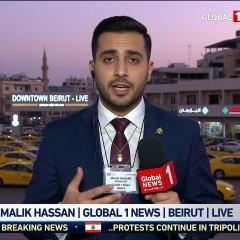
Middle East Correspondent at Global1.News. Based in Beirut, covering politics, conflict, energy, and society across the Middle East. Brings context and depth to a region often reduced to headlines.












Comments (0)