
Alan Fisher marks two decades of frontline reporting for Al Jazeera English
In a reflective segment aired on 24 November 2026, Al Jazeera English celebrated the 20‑year milestone of correspondent Alan Fisher, whose career has been woven through the fabric of modern conflict and celebration across the globe.
In a reflective segment aired on 24 November 2026, Al Jazeera English celebrated the 20‑year milestone of correspondent Alan Fisher, whose career has been woven through the fabric of modern conflict and celebration across the globe. The video, part of the network’s anniversary coverage, underscores how Fisher’s reporting has become a conduit for stories that shape public understanding of war, peace and the human condition. For Global1.News, the focus turns to what his two‑decade journey reveals about the power—and the peril—of frontline journalism, especially as it resonates with the struggles and aspirations of Latin America.
The birth of a correspondent at a network’s launch
When Al Jazeera English launched two decades ago, it did so with a promise to give voice to the voiceless, a mission that found a fitting champion in Alan Fisher. From the outset, Fisher was assigned to the front lines of world events, a decision that set the tone for his career: a relentless pursuit of truth wherever conflict erupted or hope blossomed.
His early assignments placed him in regions where war and political upheaval were daily realities. The network’s description of his work highlights that he “reported from across the globe, covering everything from the devastation of war to moments of celebration.” This duality—documenting both destruction and resilience—has defined his reporting style, blending stark observation with a human‑centred narrative that brings distant crises into intimate focus.
For Latin American audiences, Fisher’s early coverage of conflicts in neighboring countries offered a mirror to the region’s own histories of civil war and social turmoil. While the source material does not specify particular Latin American assignments, the broader pattern of his work—moving from battlefields to celebrations—parallels the continent’s own cycles of violence and renewal, making his reporting a reference point for regional journalists and activists.
Witnessing defining global events
The anniversary video stresses that Fisher “has witnessed and documented some of the defining events of our time.” Over twenty years, his camera has captured moments that have reshaped geopolitics, from the fall of regimes to the emergence of new social movements. Each report, according to the channel’s description, brings “history to audiences as it unfolds,” a promise that underscores the immediacy and responsibility of his role.
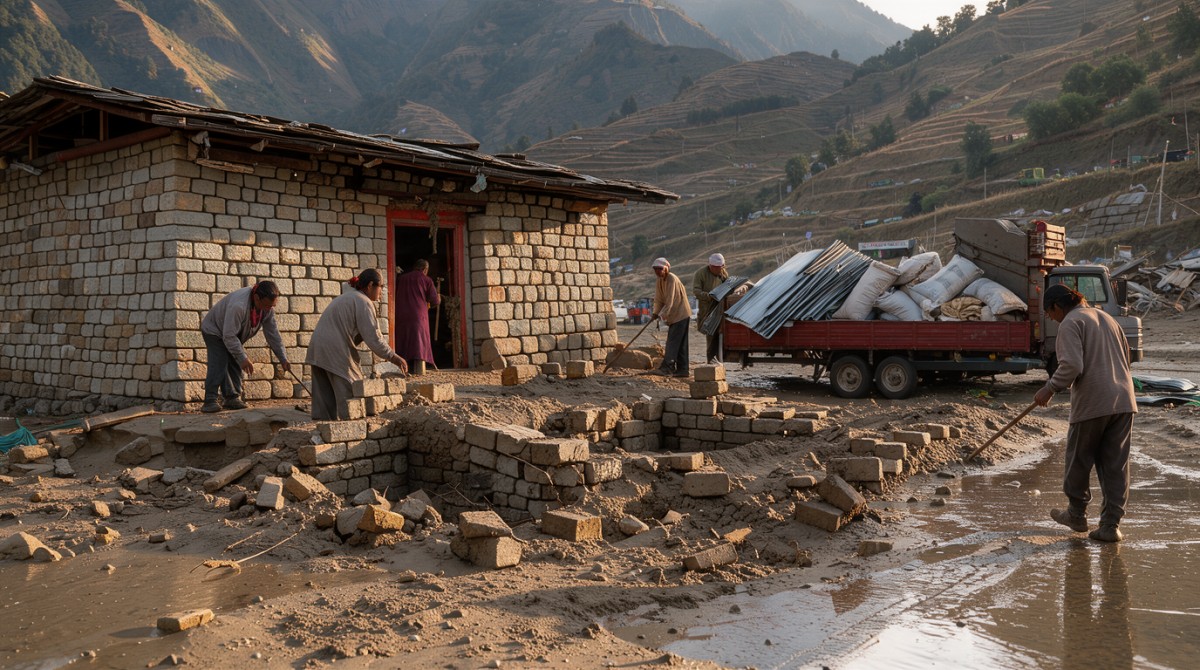
In the context of climate‑related conflicts, Fisher’s coverage of war zones often intersected with environmental devastation—burned forests, polluted waterways, and displaced communities. While the source material does not detail specific incidents, the pattern of reporting from war‑torn areas inevitably exposed the ecological toll of armed conflict, a theme that resonates deeply in Latin America where extractive industries and armed groups often overlap.
His documentation of “moments of celebration” provides a counterbalance, showcasing the capacity of societies to rebuild and celebrate cultural identity even after trauma. These celebrations, whether in post‑conflict streets or during cultural festivals, reinforce the resilience that Latin American communities have long demonstrated in the face of adversity.
The craft of frontline storytelling
Fisher’s two‑decade tenure illustrates the evolving craft of frontline journalism. The video’s description notes his role in “bringing history to audiences as it unfolds,” a task that demands rapid verification, ethical sensitivity, and the ability to convey complex realities in clear language. His experience reflects a broader shift in newsrooms toward real‑time, immersive reporting.
One hallmark of his style, as highlighted by Al Jazeera, is the balance between “devastation of war” and “moments of celebration.” This juxtaposition is not merely editorial; it is a deliberate effort to avoid sensationalism and instead present a fuller picture of human experience. For Latin American journalists, this approach offers a template for covering the region’s own cycles of conflict and cultural vibrancy without reducing stories to single‑dimensional narratives.
The video’s emphasis on Fisher’s long‑standing presence at the White House underscores his access to political power centers. While the source does not detail his specific interactions, the mention signals the breadth of his portfolio—from war zones to the corridors of global decision‑making—showcasing the versatility required of modern correspondents.
Impact on public perception and policy
Through his reporting, Fisher has contributed to shaping public perception of distant crises. By delivering vivid, on‑the‑ground footage, he has helped audiences grasp the human cost of conflict, influencing public discourse and, at times, policy responses. The video’s framing of his work as “the voice of the voiceless” underscores this impact.
In Latin America, where media narratives are often contested, Fisher’s model of on‑site verification and storytelling can empower local journalists to demand accountability from both state and non‑state actors. His coverage of war‑related environmental damage, for instance, can serve as evidence for advocacy groups pushing for stronger protections under agencies such as Brazil’s IBAMA or Colombia’s Ministry of Environment.
The reach of Al Jazeera English, combined with Fisher’s two‑decade consistency, means his reports have been part of the information ecosystem that informs international aid decisions, humanitarian interventions, and diplomatic negotiations. While the source material does not enumerate specific outcomes, the implication is clear: sustained, credible reporting can ripple into concrete action.
Challenges of a two‑decade career on the front line
Fisher’s career, as portrayed in the anniversary video, has not been without peril. Reporting from war zones entails physical danger, psychological strain, and ethical dilemmas. The description’s reference to “devastation of war” hints at the harsh environments he has navigated.
For journalists in Latin America, these challenges are familiar. Threats from armed groups, governmental repression, and the trauma of witnessing mass suffering are daily realities. Fisher’s endurance over twenty years offers a testament to professional resilience and the importance of institutional support—something that regional press freedom organizations can look to as a benchmark.
The video also notes his presence at the White House, suggesting that his work has required navigating both dangerous field conditions and high‑level political access. This duality underscores the need for journalists to be adept at both on‑the‑ground reporting and diplomatic engagement, a skill set increasingly vital for covering climate‑linked conflicts that intersect with policy arenas.
Looking ahead: the future of frontline journalism
As Al Jazeera English marks its twentieth year, Fisher’s story becomes a lens through which to view the future of journalism in a world where conflict, climate change, and digital disruption intersect. The video’s celebration of his “20 years at Al Jazeera” invites reflection on how the profession must adapt.
Emerging technologies—satellite imagery, AI‑driven verification tools, and real‑time data streams—promise to augment the kind of on‑the‑ground reporting Fisher has championed. Yet the core principle emphasized in the footage remains unchanged: the need to give voice to those unheard. For Latin America, where Indigenous communities and marginalized groups continue to fight for recognition, this principle is a rallying point for journalists seeking to hold power to account.
Finally, Fisher’s career underscores the importance of institutional memory. Two decades of consistent coverage create archives that future generations can draw upon to understand patterns of conflict, resilience, and environmental impact. As regional media outlets in Brazil, Peru, Colombia and beyond build their own archives, the model set by Fisher’s work—meticulous, human‑centred, and unflinching—offers a roadmap for preserving the stories that define our era.
By Elena Vasquez, Staff Writer
This article was produced with AI-assisted research and editorial support. Reporting is based on the source material cited below. Sources: Al Jazeera English video report (24 November 2026); Al Jazeera English; Global1.News
What's Your Reaction?
 Like
0
 Dislike
0
 Love
0
 Funny
0
 Wow
0
 Sad
0
 Angry
0

Latin America Correspondent at Global1.News. Based in Mexico City, covering politics, economics, energy, and culture across the region. Brings an on-the-ground perspective to stories spanning from the Rio Grande to Patagonia.









Comments (0)