
US consortium wins huge Kenya mining deal, beating Chinese rivals
Kenya’s Kwale County is poised to become a new focal point in the global race for critical minerals, as a United States‑led consortium called Frontier Minerals secured the tender to develop the Mrima Hill project.
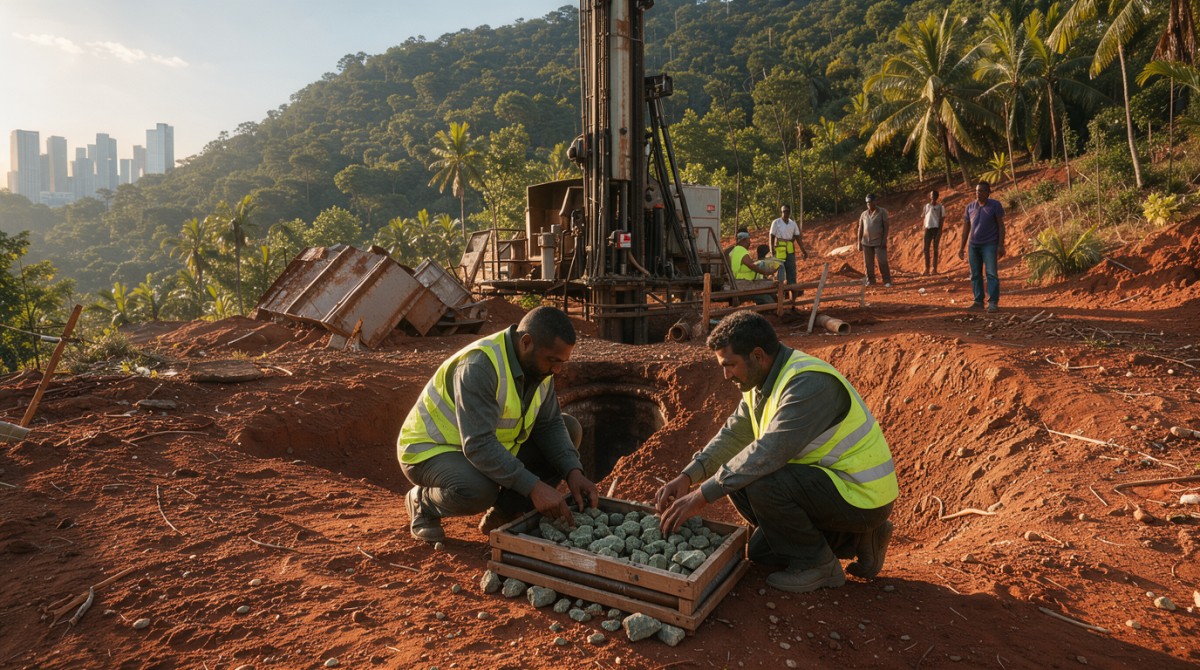
Kenya’s Kwale County is poised to become a new focal point in the global race for critical minerals, as a United States‑led consortium called Frontier Minerals secured the tender to develop the Mrima Hill project. The decision, announced in mid‑November 2026, pits the American group against seven other bidders, including firms from China and Australia, and reflects Washington’s broader strategy to deepen its foothold in Africa’s mineral supply chains while offering Kenya a promise of greater local value‑addition.
Frontier Minerals wins the tender
The Frontier Minerals consortium, comprised of three U.S. companies—Bunker Hill Mining Corp, American Resources Corporation and ReElement Technologies Corporation—was declared the successful bidder for the Mrima Hill mining project. The consortium’s proposal stood out among eight competitors, securing the tender despite challenges from rivals such as Australia’s RareX, which alleges that Frontier missed an earlier submission deadline.
Kenya’s mining ministry, which sees the sector as a pillar for diversifying the economy beyond tourism, agriculture and financial services, affirmed that the selection process was open and transparent. Nonetheless, the decision has already sparked objections from some of the losing bidders, underscoring the high stakes attached to Africa’s burgeoning critical minerals market.
The scale of the Mrima Hill resource
Mrima Hill, situated near Kenya’s Indian Ocean coastline, spans roughly 390 acres of forested land. The site is estimated to contain deposits of critical minerals valued at more than $60 billion (£45 billion). Among the resources highlighted is niobium, a metal essential for electric‑vehicle batteries, aerospace components and defence technology.
The sheer size of the estimated deposit places Mrima Hill among the most significant mineral projects on the continent, promising to transform Kenya’s role in global supply chains for high‑tech industries. While the exact quantities of each mineral remain to be confirmed, the valuation alone signals a potential shift in Kenya’s economic landscape.
U.S. strategic interests in Africa’s minerals
The award to Frontier Minerals aligns with a broader U.S. policy to secure alternative sources of critical minerals and lessen dependence on China, which currently dominates the processing of many of these materials. Washington has been actively courting mineral‑rich African nations, including the Democratic Republic of Congo and Zambia, to build resilient supply chains for sectors ranging from electric vehicles to defence.
By supporting a consortium that promises to keep more of the processing and refining within Kenya, the United States hopes to create a partnership that benefits both parties: Kenya gains industrial capacity and jobs, while the U.S. secures a reliable source of strategic metals.
Local expectations and concerns
Frontier Minerals has emphasized its commitment to “keep more of the economic benefits in Kenya” through in‑country processing and refining. Brad Barnett, a spokesperson for the consortium, pledged to create lasting opportunities for Kenyan workers and businesses, stressing capacity‑building and targeted investment while prioritising environmental management.
However, the prospect of mining on a forested site has raised alarm among nearby communities. Residents fear that the project could damage the forest ecosystem and threaten their ancestral heritage. Questions also linger about whether the promised benefits will reach the local population, especially given the historical challenges of translating large‑scale mining projects into tangible community gains.
Environmental safeguards and regulatory steps
The tender award is not the final step; Frontier Minerals must still secure a prospecting licence and satisfy Kenya’s regulatory requirements before any ground‑breaking can commence. The consortium’s proposal includes a focus on environmental performance, yet the exact measures for forest protection and mitigation of ecological impact have not been fully disclosed.
Kenya’s mining ministry, while supportive of the sector’s growth, will need to balance economic ambitions with the preservation of biodiversity and community rights. The outcome of this regulatory review will be a key indicator of how Kenya navigates the tension between development and conservation.
Potential economic impact for Kenya
If the project proceeds as outlined, the development of processing and refining capacity could generate a new industrial hub in Kwale County. This would likely create jobs not only in extraction but also in downstream activities such as smelting, alloy production and technical services. The promise of “lasting opportunities for Kenyan workers” suggests a shift from a purely extractive model to one that adds value locally.
Beyond direct employment, the project could stimulate ancillary sectors—logistics, construction, and local supply chains—thereby broadening the economic base. The mining ministry’s view of the sector as a diversification tool underscores the strategic importance placed on such projects to reduce reliance on traditional revenue streams.
Regional and geopolitical implications
The Mrima Hill award reflects a growing competition between the United States and China for influence over Africa’s mineral wealth. While Chinese firms were among the bidders, the U.S. consortium’s success signals a shift in the balance of power, at least for this particular project. It also illustrates how African nations like Kenya are becoming arenas where great‑power rivalries play out through investment and partnership choices.
For Kenya, the decision offers an opportunity to leverage these competing interests to secure better terms and technology transfer. By aligning with a partner that pledges in‑country processing, Kenya can aim to retain a larger share of the value chain, a goal that resonates with broader African aspirations for greater agency over natural resources.
This article was produced with AI-assisted research and editorial support. Reporting is based on the source material cited below. Sources: BBC News Africa; bbc.co.uk; Global1.News (21 November 2026).
By Amara Diop, Staff Writer
What's Your Reaction?
 Like
0
 Dislike
0
 Love
0
 Funny
0
 Wow
0
 Sad
0
 Angry
0

West Africa/Sahel Correspondent at Global1.News. Dakar-based journalist covering politics, security, climate, and development across Francophone and Anglophone West Africa. Tells the stories of a region undergoing profound transformation.














Comments (0)