
Cayetano Wants Filipinos to Give P170,598 Each to Retire the Debt. The Palace Said: You First
Sen. Alan Peter Cayetano asked where Filipinos can pay their P170,598.03 share of the national debt. Malacañang told him to go first, a budget watchdog called the idea out of touch, and Sen. Panfilo Lacson said do not drag honest public servants into it.
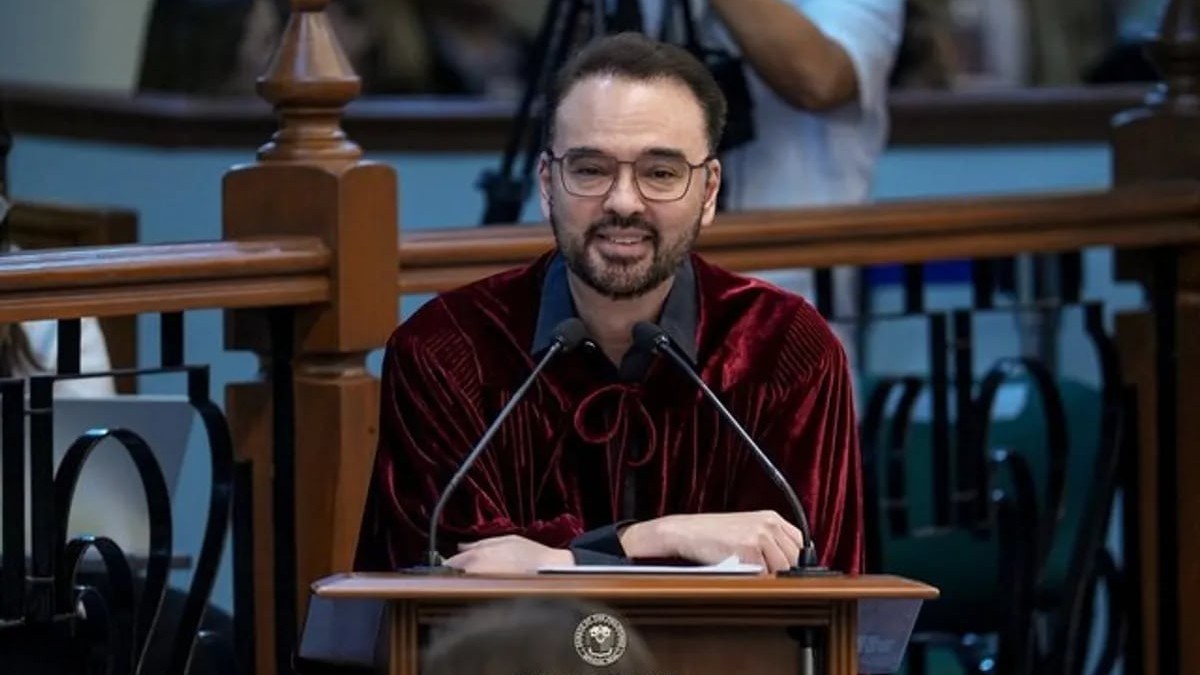
One senator did the arithmetic on the national debt, divided it by every Filipino alive, and came up with a number to the centavo: P170,598.03. Then he asked where a citizen could go to pay it. The answer, from the floor of the Senate and then from Malacañang, was not the one he was after — and by Wednesday it had turned into a fight about who gets called a thief.
Cayetano Wants Filipinos to Give P170,598 Each to Retire the Debt. The Palace Said: You First
MANILA, Philippines — Senate Minority Leader Alan Peter Cayetano floated the idea during the Senate's plenary debates on the proposed P7.2-trillion national budget for 2027 on Monday, 23 November. Within a day Malacañang had an answer, a budget watchdog had a verdict, and a colleague had a rebuke.
The Question He Asked on the Floor
Cayetano put it in the plainest terms available to him. "Kasi I was going to ask, if every Filipino owes 170,000 pesos, where can I go if I wanna pay my share? If I wanna pay my share of the 170,000, how do I go about doing that?" he asked, according to Inquirer.net. Senate finance committee chairperson JV Ejercito, the budget's sponsor, answered that the biggest contribution Filipinos could make was paying the correct taxes. Cayetano rejected the framing outright. "That's not true, because I'm already paying the right taxes. I want to go beyond," he said, adding that he wanted to pay his P170,000 share and asking whether any mechanism existed to accept it. Ejercito told him there is none. That exchange, on the first day of plenary debates, is where the proposal started.
Where the P170,598.03 Comes From
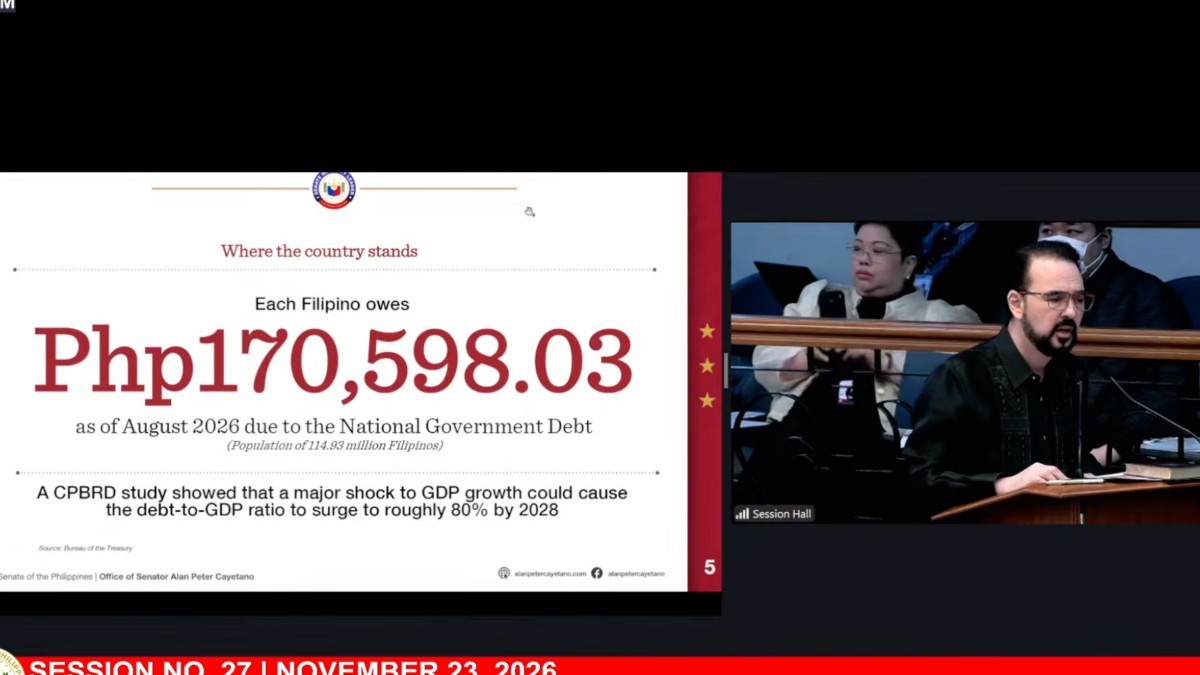
The senator divided P19.66 trillion in national government debt as of the third quarter by an estimated population of 114.93 million, and the result was P170,598.03 per Filipino. His own presentation slide, captured during the session and published by Inquirer.net, states the basis in writing: "as of August 2026 due to the National Government Debt," with the population figure printed underneath. That detail matters, because the arithmetic does not quite land where the headline number sits. Multiply P170,598.03 by 114.93 million and you get P19.6068 trillion — the end-August stock, not the end-September one. At 114.93 million people, P19.66 trillion works out to P171,060.65 a head, a difference of P462.62. Neither figure changes the scale of what is being proposed. But on a proposal whose entire premise is a per-person calculation, the month the calculation belongs to is worth stating.
The Debt Behind the Number
The Bureau of the Treasury's own release, dated 30 October, records the pile he was dividing: P19.66 trillion outstanding as of end-September, a rise of 0.27 percent or P53.47 billion from P19.61 trillion at end-August. Against the P17.71 trillion recorded at the close of 2025, that is an increase of P1.95 trillion, or 11.03 percent, in nine months. BusinessWorld reported that the stock is already equivalent to about 99.47 percent of the government's projected P19.77-trillion outstanding debt by year-end — meaning the borrowing programme is close to fully spent before the year is out. Of the total, 67.4 percent is owed domestically and 32.6 percent to foreign creditors. These are the kind of figures that make a per-capita number feel concrete, and that is exactly why the senator reached for one.
The Korea Story He Reached For
Cayetano did not invent the idea of citizens volunteering beyond their taxes. He cited South Korea. "Once upon a time, Korea was in terrible debt and people didn't just pay taxes. They got out their jewelry and donated it to the government. That happened once in history to our neighbor. Why can't it happen to us?" he said. His suggested sequence started at the top: wealthy businessmen paying P170,000 for themselves and their families. Then he widened it. What if a businessman with a househelper or two chose to cover them as well? What if an overseas Filipino worker in the United States could not produce the full amount at once but pledged a hundred dollars a year for the next two years? The point was not the size of any single cheque. It was that a voluntary mechanism, once it existed, could be joined at any scale.
The Condition He Attached
The proposal came with a condition that undercuts its own sales pitch, and Cayetano said it out loud. Voluntary giving, he argued, has to travel alongside a budget that is properly managed and loans that are carefully chosen — reasonable interest rates, productive purposes, and not every facility that a lender is willing to write. "Why would I give you my P170,000 kung uutang at uutang at nanakawin din?" he asked. Why hand over the money if the government will simply keep borrowing and stealing it anyway? He described the choice as a vicious cycle that could become a virtuous one, with Filipinos paying the right taxes and then going over and above. Then he made an offer that few legislators make on the record: put up the mechanism, and he would bring himself and others to pay.
The Palace's Answer
Malacañang's response came on Tuesday, and it was short. "If there are kindhearted people willing to contribute, and since he was the one who initiated the idea, perhaps it would be better for us to see Senator Alan Peter Cayetano himself starting it," Palace press officer Claire Castro said in Filipino at a regular press conference. She said he should do it "to serve as a model." Castro also noted the structural problem: because the contribution would be voluntary, it would be hard to craft a law making it mandatory. Executive Secretary Ralph Recto told reporters at the Senate there was no need for new taxes or for Filipinos to contribute toward the debt at all, though he said he was open to hearing the senator's ideas. In jest, Recto suggested Cayetano could donate through the Treasury or the Bureau of Internal Revenue — the BIR, he said, "so there's a receipt."
Don't Drag Us Into It
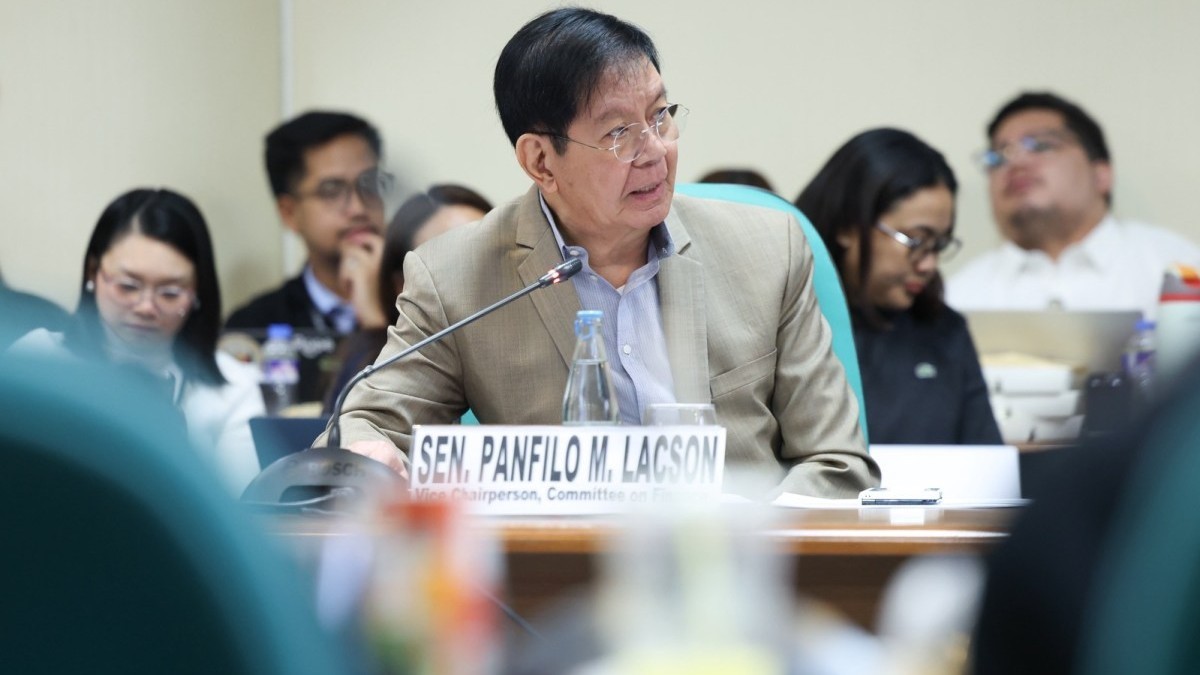
The sharper rebuke came on Wednesday from Senator Panfilo Lacson, who posted on X in response to an art card circulated by Pampanga Today. "I speak for myself and other public servants, elected or appointed, who don't steal public funds or take bribes: HUWAG NAMAN SANA NIYA KAMI IDAMAY," he wrote. Do not drag us into it. The card it answered carried the line "Lahat tayo magnanakaw, lahat kayo, lahat tayo magnanakaw sa gobyerno" — we are all thieves, all of you, all of us in government. Lacson had made the wider argument days earlier, after Vice President Sara Duterte said corruption had embedded itself in the DNA of the government: "I beg to disagree. Such a statement is far too sweeping. Corruption may exist across the bureaucracy, but it does not define everyone."
The Quote Fight Behind the Rebuke
Cayetano's office did not let the art card stand. It said the quotation had been stripped of context and attributed to the wrong event, and that the full sentence — delivered during his 23 November interpellation — opened with "The sentiment is so much distrustful sa government." He was describing public distrust, the office said, not accusing public servants of stealing, and it asked the page to correct the attribution. Inquirer.net, however, reported that the card had tied the quote to the senator's 24 November Facebook livestream, so the two accounts do not agree on which appearance is being quoted. What the plenary record does carry is unambiguous: "The sentiment is one of deep distrust in the government. The sentiment now is that we are all thieves, that everyone in government is a thief, so no one wants to donate."
What the Watchdog Heard
The People's Budget Coalition called the idea "out of touch and insensitive," and its spokesperson AJ Montesa made the technical objection that matters more than the political one: dividing debt by population is a misleading measure, and debt-to-GDP is the number that speaks to a country's capacity to pay. The coalition said headline inflation had climbed to 7.8 percent as of October, and that most Filipinos simply do not have that kind of money. The fiscal data gives the critique weight. The debt-to-GDP ratio reached 66.9 percent at end-September, its highest level since 2004, up from 66 percent at end-June and 63.2 percent at the close of 2025. Economic growth slowed to 2.1 percent in the third quarter from a revised 2.4 percent. National Treasurer Sharon Almanza has said the government is likely to miss its 2026 debt-to-GDP target of 64.3 to 64.9 percent.
What Happens Next
There is no mechanism to receive a voluntary debt payment today, and nothing in the Senate's calendar creates one. Cayetano clarified on Tuesday that he was not imposing the idea on anyone and warned the debt could reach P20 trillion next year: "Maari talagang next year, umabot tayo ng 20 trillion." He framed the absence of an outlet for goodwill as a crisis of confidence in one administration after another. Meanwhile the chamber is working to pass the P7.2-trillion plan, having already cut P97.5 billion in DPWH projects it deemed non-compliant. His slide carries one more projection: a study by the congressional budget research department warning that a major shock to growth could push the ratio toward 80 percent by 2028. The number, at least, is precise. The mechanism is not.
By Jessica Ali, Staff Writer
This article was produced with AI-assisted research and editorial support. Sources: Inquirer.net (Isabelle Pechay), The Philippine Star (Alexis Romero), ABS-CBN News / ANC, Manila Bulletin, BusinessWorld, Philstar Life, the Bureau of the Treasury, the Office of Senator Panfilo Lacson, the People's Budget Coalition via newspapers.ph, and a session slide from the Office of Senator Alan Peter Cayetano. Photographs: ABS-CBN News; Office of Senator Panfilo Lacson; Senate of the Philippines / Office of Senator Alan Peter Cayetano via Inquirer.net.
What's Your Reaction?
 Like
0
 Dislike
0
 Love
0
 Funny
0
 Wow
0
 Sad
0
 Angry
0

Editor-in-Chief at Global1.News. Atlanta-based journalist who cuts through the BS and tells it like it is. Lead anchor, host, and the voice you hear when the spin stops and the truth starts.














Comments (0)