
India pledges $1.6bn to Nepal in reset of ties
Prime Minister Balen Shah’s inaugural visit to New Delhi marked a pivotal moment in the fragile relationship between Nepal and its southern neighbour.

Prime Minister Balen Shah’s inaugural visit to New Delhi marked a pivotal moment in the fragile relationship between Nepal and its southern neighbour. Arriving in a black suit and sunglasses, the 36‑year‑old leader stood beside India’s 76‑year‑old Prime Minister Narendra Modi, a visual contrast that underscored both the generational shift in Nepal’s politics and the continuity of India’s long‑standing leadership. The two leaders exchanged gifts, inspected a military guard of honour and jointly flagged off a new cross‑border train service, signalling a deliberate effort to reset ties that have been strained by years of friction.
Context of the visit: post‑flood reconstruction and political change
Nepal is still reeling from the devastating floods that struck earlier this year, a disaster that claimed more than 1,400 lives and left thousands missing. The calamity exposed the limits of the Shah government’s capacity to support families whose homes and livelihoods were destroyed. In response, the government has projected a reconstruction cost of up to $4.8 billion, a figure that dwarfs the nation’s fiscal resources. At the United Nations General Assembly in September, Shah warned that climate‑driven catastrophes cannot be answered solely with “another mega‑loan,” highlighting the need for concessional assistance and long‑term resilience measures.
The flood disaster therefore set the stage for the Delhi talks. Shah, who rose to power after a wave of Gen Z‑led protests toppled his predecessor, faced intense domestic criticism over the speed and adequacy of relief efforts. Securing a substantial Indian support package was not merely a diplomatic exercise; it was a political imperative to demonstrate that his administration could deliver tangible relief and reconstruction funding to a grieving populace.
India’s $1.6 billion support package
India pledged a total of $1.6 billion, a figure that Shah’s government described as “significant” despite expectations for a larger sum. The package is split between a line of credit for energy projects and approximately $400 million in grants earmarked for reconstruction and infrastructure. The line of credit is intended to finance hydropower and other energy initiatives, aligning with the broader series of agreements on trade, hydropower, transport and education that were announced alongside the financial commitment.
Former senior Nepali diplomat Vijay Kant Karna acknowledged that while the amount falls short of Nepal’s full reconstruction needs, it represents a meaningful contribution that can help stabilise a historically uneasy bilateral relationship. The grants, in particular, are poised to address immediate reconstruction tasks, such as rebuilding homes, roads and public facilities damaged by the floods.
Strategic concessions: ports, rail and air connectivity
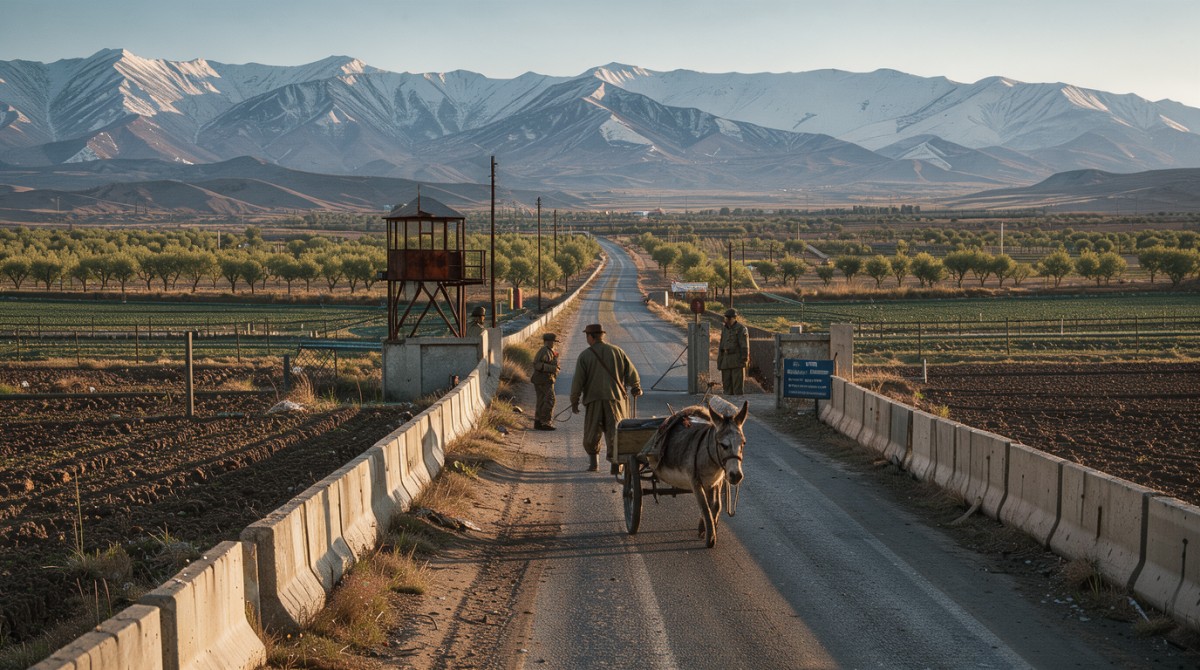
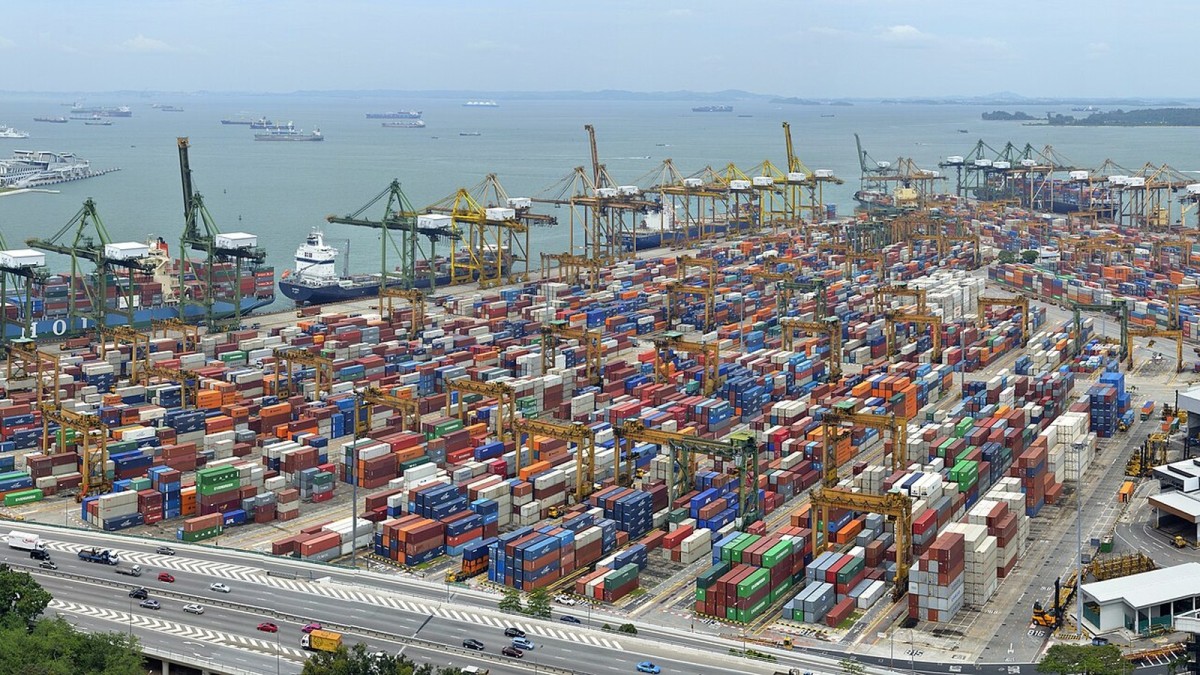
Beyond the financial aid, Nepal secured several strategic concessions that could reshape its trade logistics. The two countries agreed to grant Nepal access to two additional Indian ports—Kandla and Paradip—expanding the nation’s maritime gateway options beyond the traditional route through Kolkata. This development is especially significant for a landlocked country that relies heavily on Indian infrastructure for imports and exports.
Transport connectivity was further enhanced by the inauguration of a new train service linking Ayodhya in India with Janakpur in Nepal. The route, symbolically connecting two sites revered in Hindu tradition, also serves practical purposes by facilitating passenger and freight movement across the border. Additionally, the leaders agreed to improve road links, a move that could reduce transit times and lower logistics costs for Nepali businesses.
Airspace negotiations and security concerns
Nepal’s ambition to expand its air connectivity has long been hampered by limited access to Indian airspace. While the Delhi talks did not produce a comprehensive airspace agreement, India consented to make an existing route—connecting Kathmandu, Bhairahawa and Lucknow—bidirectional. This adjustment is described by former National Planning Commission vice‑chairman Govind Pokharel as a “breakthrough,” offering Nepal’s airports at Bhairahawa and Pokhara a modest boost in international traffic potential.
However, the negotiations also revealed underlying security sensitivities. Indian diplomat Anil Trigunayat noted that the Pokhara airport project poses “certain security challenges” for India, a factor that likely limited the scope of any broader airspace concession. The concern reflects India’s caution about Chinese involvement in Nepal’s airport development, a dynamic that continues to influence bilateral calculations.
Border dispute and diplomatic framing
The longstanding border dispute between Nepal and India was conspicuously absent from the public statements of both leaders. While the joint statement acknowledged that “outstanding issues remain,” the emphasis was placed on development cooperation rather than territorial contention. Former Vice‑Chairman Govind Pokharel suggested that Shah’s government deliberately set contentious issues aside to secure immediate development gains, urging the public to “convince the young Nepalis that it will be handled later.”
Veteran Indian diplomat Anil Trigunayat characterised the approach as leaving the dispute to established mechanisms rather than engaging in “cartographic aggressions.” This diplomatic language indicates a mutual preference to avoid inflaming nationalist sentiments during a period when both governments are keen to showcase cooperation.
Domestic political implications for Shah
Shah’s political trajectory is notable for its rapid ascent from a former rapper to the prime ministerial office within a single year. Leading a party only four years old, he positioned himself as an outsider challenging the entrenched political order. The Delhi visit, therefore, serves as a litmus test for his ability to deliver concrete benefits to a population still coping with flood devastation.
By securing a substantial Indian support package and tangible connectivity improvements, Shah can claim a diplomatic win that may bolster his standing among voters, particularly the younger demographic that propelled him to power. Yet, the decision to defer the border dispute could also expose him to criticism from nationalist factions that demand a firmer stance on sovereignty.
Future balancing act: India, China and regional dynamics
Nepal’s geopolitical position—wedged between India and China—means that any deepening of ties with one neighbour inevitably raises concerns in the other. Shah must now navigate a delicate balancing act, leveraging Indian assistance for reconstruction while managing China’s growing economic footprint, especially in infrastructure projects such as airport construction.
The Delhi agreements, particularly the line of credit for energy projects, could be viewed by Beijing as an indication of Nepal’s tilt toward New Delhi. Conversely, India’s cautious approach to airspace and security issues suggests a desire to limit Chinese influence without overtly antagonising Beijing. As Shah returns to Kathmandu with a “substantial financial commitment” from India, his next moves will likely involve calibrating these competing pressures to sustain Nepal’s development trajectory without compromising its strategic autonomy.
This article was produced with AI-assisted research and editorial support. Reporting is based on the source material cited below. Sources: BBC News Asia; bbc.co.uk; Global1.News (25 November 2026).
By Kenji Tanaka, Staff Writer
What's Your Reaction?
 Like
0
 Dislike
0
 Love
0
 Funny
0
 Wow
0
 Sad
0
 Angry
0

Japan Correspondent at Global1.News. Tokyo-based voice covering Japanese politics, technology, economy, and culture. Tracks the intersection of tradition and innovation in one of the world's most dynamic societies.











Comments (0)