
Bangladesh's ex-PM Sheikh Hasina says she plans to return on 16 December
Bangladesh’s former prime minister Sheikh Hasina announced on 24 November 2026 that she intends to return to Dhaka on 16 December, marking a dramatic escalation in the political turmoil that has gripped the nation since her forced exile in August 2024.
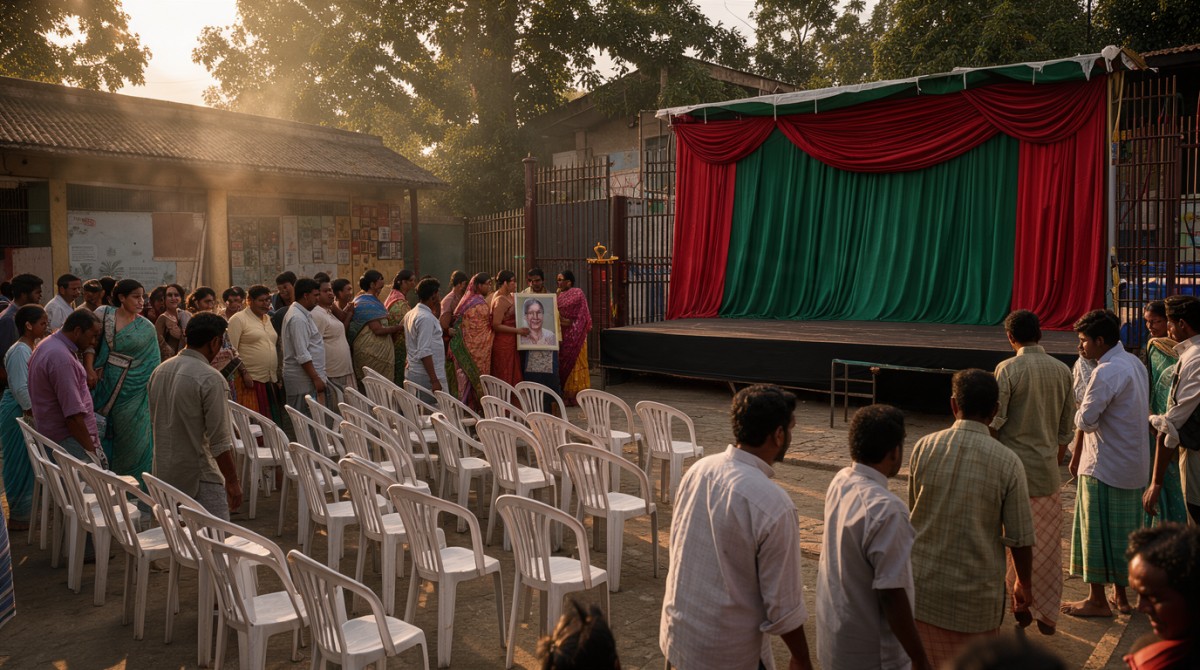
Bangladesh’s former prime minister Sheikh Hasina announced on 24 November 2026 that she intends to return to Dhaka on 16 December, marking a dramatic escalation in the political turmoil that has gripped the nation since her forced exile in August 2024. The date, coinciding with the country’s Victory Day commemorating the end of the 1971 war of independence, carries profound symbolic weight given Hasina’s lineage as the daughter of Sheikh Mujibur Rahman, the architect of Bangladesh’s liberation. Her declaration, delivered through spokesperson Syed Mozammel Ali, comes amid renewed street protests by Awami League supporters, a ban on the party’s activities, and a death sentence handed down in absentia by a Bangladeshi court.
Background to Hasina’s exile and the 2024 uprising
The political crisis began in early August 2024 when massive student demonstrations against job‑quota policies in the civil service escalated into a nationwide uprising. The government’s response was a deadly crackdown that, according to United Nations estimates, resulted in up to 1,400 deaths. The violence precipitated the rapid collapse of Hasina’s fifteen‑year rule and forced her to flee Bangladesh on 5 August 2024, boarding a Bangladesh‑registered aircraft to Delhi.
Since her departure, Hasina has lived in exile in India, maintaining a vocal presence through statements to the press and coordinated appeals to the Bangladeshi government for safe passage back home. Her exile has been a point of contention in Dhaka‑Delhi relations, with India’s foreign ministry stating in April 2026 that it was examining Bangladesh’s request to extradite her while seeking to “engage constructively with the new government and further strengthen bilateral ties.”
The legal and diplomatic impasse
Bangladesh’s interim government, led by Nobel laureate Muhammad Yunus, has taken a hard line against Hasina. In 2025, a court sentenced her to death in absentia on charges of crimes against humanity related to the 2024 crackdown. Hasina has consistently denied the allegations, describing them as politically motivated. State Minister for Foreign Affairs Humayun Kabir dismissed any notion of a voluntary return, insisting that she would be brought back “in handcuffs” if she attempted to travel as a commercial passenger.
Kabir also accused both Hasina and the Indian government of fomenting unrest in Bangladesh, alleging support for “terrorist activities.” India’s foreign ministry has not responded to these accusations, leaving the diplomatic friction unresolved. The legal barrier—an active death sentence—means that any return would require either a pardon, a negotiated surrender, or a change in the political calculus of the ruling Bangladesh Nationalist Party (BNP) government.
The symbolic significance of 16 December
Choosing Victory Day for a potential return is a calculated political gesture. The day commemorates the surrender of Pakistani forces in 1971 and the birth of an independent Bangladesh, a narrative closely tied to the legacy of Hasina’s father, Sheikh Mujibur Rahman. Abu Obaidha Arin, an aide to Hasina, described the date as “deeply symbolic,” emphasizing the expectation that she would “celebrate this historic day among her people.” By aligning her return with a national moment of triumph, Hasina seeks to frame her comeback as a continuation of the liberation story, potentially galvanising her supporters and challenging the legitimacy of the current BNP administration.
The symbolism also serves a strategic purpose: it forces the government to confront a decision that intertwines national pride with a contentious legal case. A refusal to allow her return on Victory Day could be portrayed as a betrayal of the very ideals the day celebrates, while permitting her arrival could be seen as capitulating to a political rival under the pressure of public sentiment.
Awami League activism and public unrest
Despite the formal ban imposed on the Awami League in May 2025, its supporters have continued to organise protests, street rallies, and calls for nationwide shutdowns demanding Hasina’s return. The ban has not quelled the movement; rather, it has driven activism into more informal channels, with supporters leveraging social media and grassroots networks to sustain momentum. The persistence of these protests underscores the deep-rooted loyalty to Hasina among segments of the population, particularly those who view the 2024 crackdown as a betrayal of democratic principles.
The government’s response has been a mixture of repression and rhetoric. While Kabir’s statements aim to delegitimize Hasina’s claim to a safe return, the security apparatus has also been tasked with preventing large‑scale disruptions on Victory Day, a day that traditionally sees heightened nationalistic fervour and public gatherings.
Bangladesh‑India relations in a new context
India’s relationship with Bangladesh has been profoundly shaped by Hasina’s fifteen‑year tenure, during which the two countries cultivated close security and economic ties. Since her ouster, New Delhi has sought to recalibrate its approach, hoping that a new Bangladeshi administration would allow a reset of bilateral relations. However, Hasina’s continued political activity from Indian soil has complicated this diplomatic balancing act.
Prime Minister Tarique Rahman of the BNP, who assumed office after the February 2026 election, has so far refrained from visiting India, despite an invitation. His foreign trips have included stops in China, Japan, and Malaysia, and he skipped the BRICS summit hosted by India in September 2026. These absences suggest a cautious stance toward India, possibly reflecting domestic pressures to distance the new government from Hasina’s legacy and to avoid appearing sympathetic to a figure under a death sentence.
Potential scenarios for Hasina’s return
Several pathways could unfold in the coming weeks. One possibility is a negotiated surrender, wherein Hasina agrees to return under the guarantee of a fair trial, perhaps leveraging international pressure from human‑rights organisations. Another scenario involves a clandestine return, potentially facilitated by sympathetic elements within the security forces, which could trigger a rapid escalation of tensions in Dhaka. A third, less likely, outcome would be a formal extradition request from Bangladesh that India accepts, though the April 2026 statement indicated India’s desire to “engage constructively” rather than comply unconditionally.
Each scenario carries distinct risks. A surrender could embolden opposition forces and lend credibility to the BNP’s claim to rule lawfully, yet it might also open a channel for dialogue and reduce street violence. A covert return could spark immediate clashes between security forces and Hasina’s supporters, potentially destabilising the capital on a day of national celebration. An extradition could set a precedent for cross‑border political prosecutions, affecting regional diplomatic norms.
Implications for Bangladesh’s political future
The outcome of Hasina’s planned return will likely shape Bangladesh’s political trajectory for years to come. If she is allowed to stand trial, the process could become a litmus test for the new government’s commitment to rule of law versus political retribution. A harsh sentence could further polarise society, while an acquittal or reduced charge might pave the way for a power‑sharing arrangement or a resurgence of the Awami League.
International observers, including the United Nations and regional bodies, will watch closely, particularly given the UN’s previous estimate of 1,400 deaths during the 2024 unrest. Any perceived miscarriage of justice could attract condemnation and affect Bangladesh’s standing in multilateral forums. Conversely, a measured approach that balances accountability with political reconciliation could improve the country’s image and stabilize its democratic institutions.
This article was produced with AI-assisted research and editorial support. Reporting is based on the source material cited below. Sources: BBC News Asia; bbc.co.uk; Global1.News (25 November 2026).
By Kenji Tanaka, Staff Writer
What's Your Reaction?
 Like
0
 Dislike
0
 Love
0
 Funny
0
 Wow
0
 Sad
0
 Angry
0

Japan Correspondent at Global1.News. Tokyo-based voice covering Japanese politics, technology, economy, and culture. Tracks the intersection of tradition and innovation in one of the world's most dynamic societies.











Comments (0)