
N.L., Quebec strike new Churchill Falls deal worth nearly $70B
In a recent CBC News report, the long-simmering grievance over the 1969 Churchill Falls contract finally reached a resolution, as Prime Minister Mark Carney joined Newfoundland and Labrador Premier Tony Wakeham and Quebec Premier Christine Frechette in St. John's on Monday to announce a nearly $70-billion clean energy agreement.
In a recent CBC News report, the long-simmering grievance over the 1969 Churchill Falls contract finally reached a resolution, as Prime Minister Mark Carney joined Newfoundland and Labrador Premier Tony Wakeham and Quebec Premier Christine Frechette in St. John's on Monday to announce a nearly $70-billion clean energy agreement. The deal, described as the largest clean energy investment in North American history, replaces the infamous 1969 contract and the December 2024 memorandum of understanding that had left Newfoundland and Labrador feeling short-changed for decades.
Historic Churchill Falls Deal Worth Nearly $70B Replaces Notorious 1969 Contract, Triples Generating Capacity
St. John's, N.L. — Monday — The announcement, made alongside the CEOs of Hydro-Quebec and Newfoundland and Labrador Hydro, marks a generational shift in Canadian energy policy. The combined investment of nearly $70 billion will generate 14,000 megawatts of clean, renewable power — nearly tripling the current generating capacity of Churchill Falls — and is enough electricity to light, heat, and cool every home in Toronto, Montreal, and Vancouver combined. The projects are expected to support 23,000 jobs from skilled trades to engineering and contribute $31 billion to Canada's GDP through the early 2040s.
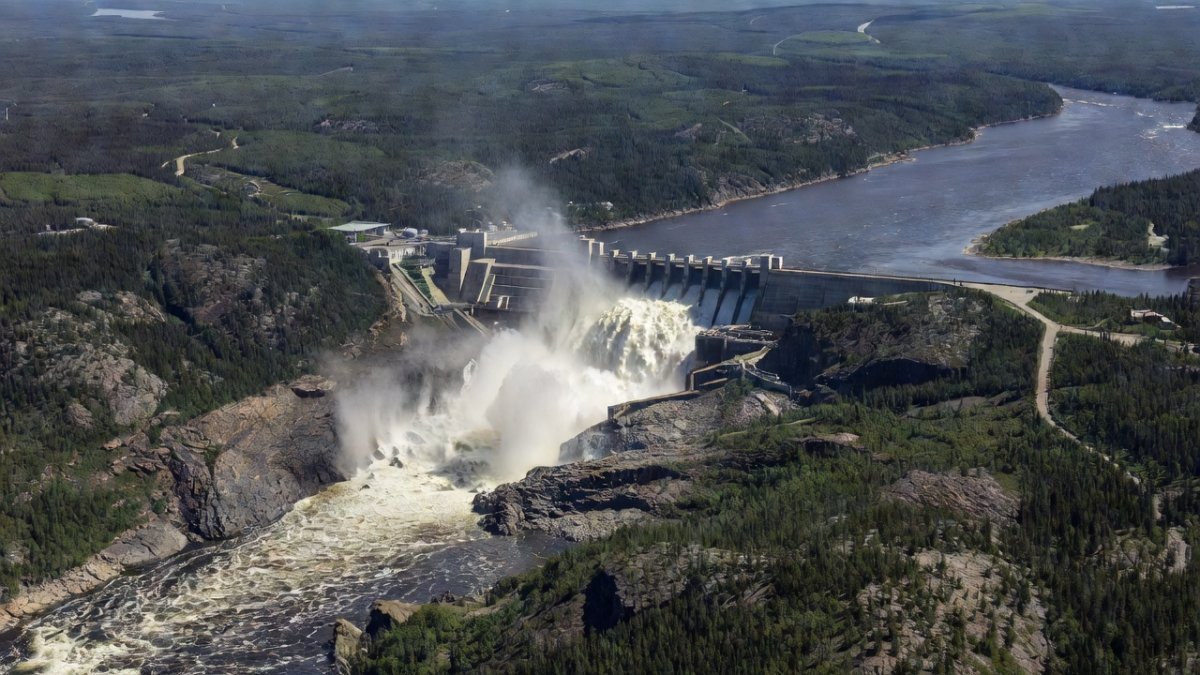
The Story — Replacing a Half-Century of Grievance
The centrepiece of the deal is the replacement of the 1969 Churchill Falls Power Contract, under which Hydro-Quebec bought power from the Churchill Falls plant at 0.2 cents per kilowatt hour and resold it at far higher prices — a long-standing grievance in Newfoundland and Labrador that fuelled political resentment for over five decades. The new arrangement, which also supersedes the December 2024 MOU, gives Newfoundland and Labrador significantly more power, more value, and more transmission capacity than either previous agreement.
Under the new terms, Newfoundland and Labrador will retain up to 2,350 MW of electricity from Churchill Falls and the proposed Gull Island hydroelectric project — 360 MW more than the 1,990 MW promised in the 2024 MOU. A new 2,000 MW Churchill Falls wind project attached to the deal gives the province an additional 400 MW, meaning Newfoundland and Labrador gains 760 MW more overall than under the previous memorandum. The province also keeps complete optionality: it can retain the power for industrial development or sell it, with Hydro-Quebec agreeing to buy at a 150 per cent price premium over base power purchase agreement prices.
The financial benefits are substantial. The total financial benefit to Newfoundland and Labrador is now $49 billion in 2026 net present value, up from $36 billion in 2024 NPV under the old MOU, and $273 billion in nominal dollars compared to $225 billion before. Premier Wakeham called it "a win-win-win for Newfoundland and Labrador, the federal government, and Quebec," adding that the deal "guarantees us more power, more value, and more transmission."
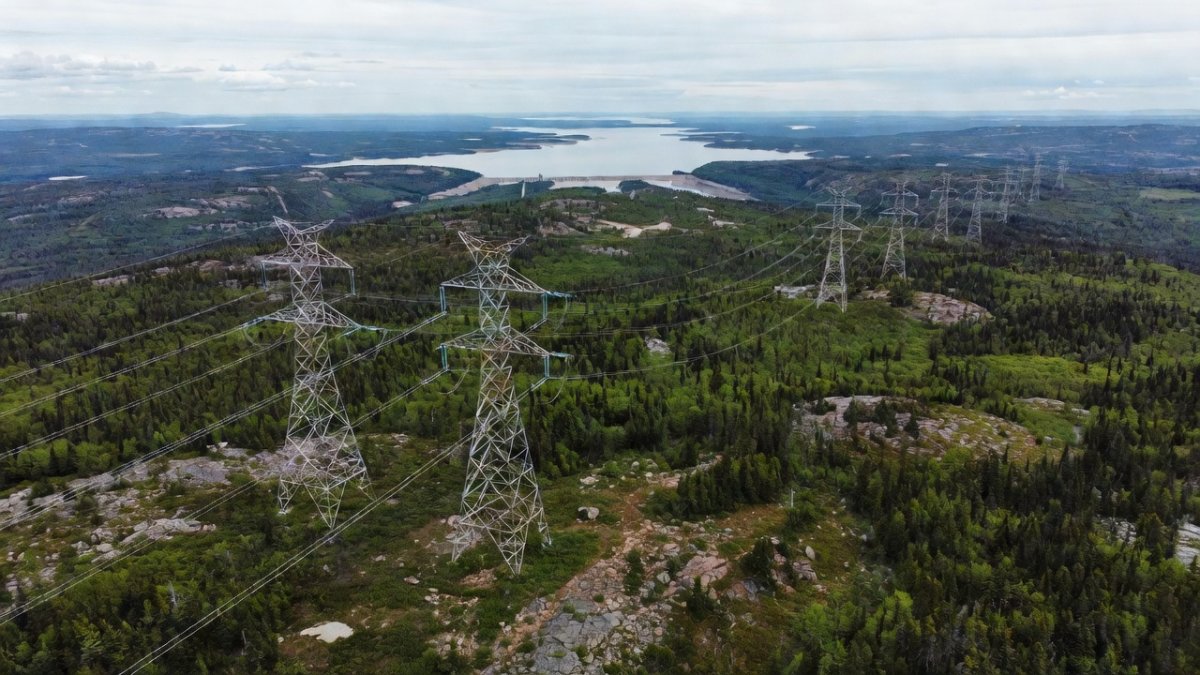
Canadian Context — Federalism, Indigenous Partnership, and the National Grid
The deal is a landmark exercise in cooperative federalism, a theme Prime Minister Carney emphasised in his remarks. "Canada is extending its unique advantage in clean, reliable, and affordable power," Carney said. "Because when we master energy, we master our destiny. Through cooperative federalism, we are unlocking our immense potential." The federal government is providing $10 billion in financing to upgrade and expand the Churchill Falls Generating Station, develop the massive Gull Island hydroelectric project, unlock co-investment opportunities with the Innu of Labrador in a major new Labrador onshore wind project, and build associated transmission lines.
The Innu of Labrador are not merely bystanders in this arrangement. The federal support includes up to a 40 per cent equity stake in an adjoining Labrador Wind Project, valued at approximately $1 billion, marking a significant step toward economic reconciliation consistent with the United Nations Declaration on the Rights of Indigenous Peoples (UNDRIP). The deal also mandates that 85 per cent of all person-hours of Gull Island construction employment must stay in Newfoundland and Labrador, with priority given to qualified Labrador Innu, Labradorians, and Newfoundlanders. Up to 5,000 workers will be on site at Gull Island during peak construction.
For Quebec, the arrangement secures a guaranteed supply of electricity from Churchill Falls until 2077 — a 50-year arrangement — to meet growing demand. Premier Frechette framed the deal in geopolitical terms: "In the current geopolitical context, it is vital for every nation to secure its energy future." The agreement advances Canada's National Electricity Strategy, which aims to double grid capacity by 2050, and the Atlantic Energy Strategy, positioning the region as a clean energy powerhouse.
Impact on Canadians — Jobs, Grid Reliability, and Cost of Living
For everyday Canadians, the implications are tangible. About 80 per cent of Canada's electricity generation is already non-emitting, and Canada has the lowest residential electricity costs in the G7. This deal reinforces that advantage while expanding capacity to meet the demands of electrification, industrial growth, and the transition away from fossil fuels. The 23,000 jobs supported by the projects span skilled trades, engineering, and construction, with significant employment concentrated in Newfoundland and Labrador and Quebec.
The transmission component is equally critical. Newfoundland and Labrador secured a guaranteed portfolio of 985 MW, including up to 240 MW of CHPE access into New York, 200 MW of NECEC access into New England, 280 MW of synthetic exports at market prices, and 265 MW of direct transmission via Muskrat Falls and new wind. This access to export markets diversifies revenue streams and strengthens the Atlantic region's role in North American energy security.
The Labrador Trough mining region, a critical minerals hub, is being referred to the Major Projects Office to accelerate permitting. The First and Last Mile Fund will support pre-development projects including the Labrador West Transmission Expansion, the Kami Iron Mine Partnership near Wabush, Focus Graphite's Lac Knife project, and SFP Pointe-Noire critical minerals handling. These investments connect resource development to the clean energy grid, supporting both jobs and the transition to a lower-carbon economy.
Reactions and Analysis — A New Era for Atlantic Canada
Premier Wakeham's characterisation of the deal as replacing "the notorious 1969 Churchill Falls deal and the 2024 MOU" reflects the depth of feeling in Newfoundland and Labrador. For decades, the province watched as Hydro-Quebec resold Churchill Falls power at enormous margins, a source of bitter political conflict between the two provinces. This agreement fundamentally rewrites that relationship, giving Newfoundland and Labrador control over its own energy destiny while maintaining a cooperative partnership with Quebec.
Analysts will note that the deal's structure — with federal financing, Indigenous equity participation, and interprovincial cooperation — could serve as a template for future major infrastructure projects in Canada. The federal loan guarantee for construction costs and the $3.5 billion in federal support (2026 NPV) demonstrate Ottawa's willingness to back transformative energy projects. The $1 billion for the Labrador West transmission line and the equity stake in the wind project signal a long-term federal commitment to the region.
The timing is also significant. With global energy markets in flux and the United States pursuing protectionist trade policies, securing Canadian energy independence and export capacity has become a strategic imperative. The deal positions Canada to be a reliable supplier of clean power to northeastern US markets while strengthening domestic grid resilience.
What Happens Next
The path forward involves detailed engineering, environmental assessments, and construction timelines that will stretch into the early 2040s. The Gull Island hydroelectric project, the largest single component, will require years of site preparation and civil works. The Churchill Falls wind project and the Labrador West transmission line will proceed through regulatory approvals and permitting, with the Major Projects Office acceleration expected to streamline the process.
For the Innu of Labrador, the equity stake in the wind project represents a concrete economic opportunity that aligns with the principles of UNDRIP and free, prior, and informed consent. The priority hiring provisions for Labrador Innu, Labradorians, and Newfoundlanders ensure that local communities benefit directly from the construction boom.
The federal government's $10 billion in financing will be disbursed over the project lifecycle, with oversight mechanisms to ensure accountability and value for money. The National Electricity Strategy and Atlantic Energy Strategy provide the policy framework within which these projects will operate, and the deal's success will be measured not only in megawatts and dollars but in the strength of the relationships it builds.
This agreement closes a painful chapter in Canadian interprovincial relations and opens a new one defined by partnership, shared prosperity, and a common purpose. For the people of Newfoundland and Labrador, it is a long-overdue correction of a historic injustice. For Quebec, it is energy security. For Canada, it is proof that cooperative federalism can deliver transformative results. As Prime Minister Carney put it, when Canada masters energy, it masters its destiny — and on Monday, in St. John's, that mastery took a decisive step forward.
By Alex Thompson, Staff Writer
This article was produced with AI-assisted research and editorial support. Reporting is based on sources cited in the article.
What's Your Reaction?
 Like
0
Like
0
 Dislike
0
Dislike
0
 Love
0
Love
0
 Funny
0
Funny
0
 Wow
0
Wow
0
 Sad
0
Sad
0
 Angry
0
Angry
0
Canada Correspondent at Global1.News. Based in Toronto, covering Canadian politics, energy, trade, and US-Canada relations. Provides the Canadian perspective on North American and global affairs.













Comments (0)