
Jason Arday Vigil: 2,000 Gather in Trafalgar Square
Thousands gathered in Trafalgar Square for Jason Arday, the Cambridge professor found dead after a plagiarism row. Family, MPs and activists demand a public inquiry into media coverage.
The roar of a crowd is usually reserved for celebrations in Trafalgar Square, but on Monday evening the air was thick with grief and a simmering, barely contained anger. More than 2,000 people packed the iconic central London landmark to honour Jason Arday, the 41-year-old Cambridge University professor found dead last Friday, in a vigil that felt less like a farewell and more like a reckoning.
Organised by Stand Up to Racism, the gathering transformed the square into a sea of black clothing and flowers. The mood was sombre, but the underlying fury was unmistakable — and it was directed squarely at the British media and the relentless campaign of scrutiny that surrounded Arday in his final weeks.
“Hounded to Death”: The Tragic End of a Trailblazing Cambridge Professor and the Reckoning Over British Media Racism
London, UK – 17 August 2026 — The death of Jason Arday has ignited a national conversation about race, class, and the power of the press. The former professor of sociology of education at Cambridge University was found dead at an address in Battersea, south London, on Friday 14 August 2026, after Metropolitan Police were called by the London Ambulance Service shortly after 3pm. He was just 41 years old.

Arday’s death comes barely a week after he resigned from his prestigious post on 5 August amid plagiarism allegations, a move he insisted should not "be mistaken for an acceptance of the narratives that have surrounded me." Now, as the nation mourns, a petition signed by nearly 100,000 people is demanding a full public inquiry into the media coverage that preceded his death, and questions are being asked about whether Britain’s institutions — from the press to the academy — failed one of its brightest stars.
A Vigil of Grief and Defiance in the Heart of London
The scene at Trafalgar Square on Monday evening was one of profound sorrow. Organisers had asked attendees to wear black and bring flowers, and the crowd — estimated by organisers at 2,000 or more — obliged. The atmosphere was heavy, punctuated by moments of silence and the occasional sob, but there was also a palpable sense of defiance. Speakers took to the stage not just to mourn, but to accuse.
The most emotional moment came when Labour MP Bell Ribeiro-Addy read a statement from Arday’s family. "The public cruelty Jason was subjected to was too much for any man to bear," she read, her voice trembling. The family, she said, were "still coming to terms" with their loss, and described Arday as "a selfless and gentle soul." The words hung in the air, a stark indictment of the circumstances surrounding his death.
For many in the crowd, the vigil was not just about remembering a brilliant academic, but about confronting a system they believe destroyed him. The focus of their anger was clear: a media landscape that, in the words of several speakers, hounded a black man who dared to reach the top of his profession.
“A Vicious and Bitter Media Campaign”: The Accusations Against the Press
The political firepower at the vigil was significant, and the rhetoric was unsparing. Labour MP Diane Abbott, a veteran of countless battles over race in British public life, delivered a blistering assessment. Arday, she said, was subjected to a "vicious and bitter media campaign" waged by "people who didn't believe a black man should be a Cambridge professor." Her words were met with loud applause and cheers of agreement from the assembled crowd.
Perhaps the most chilling revelation came from Lord Simon Woolley, the principal of Homerton College, Cambridge, who revealed a private conversation with Arday in his final days. According to Woolley, Arday told him that his critics were "hounding me to death." The phrase, now echoing across news bulletins and social media, encapsulates the tragic arc of a story that began with an academic dispute and ended in a national tragedy.
Filmmaker and activist Misan Harriman, who has documented the intersection of race and culture in Britain, was unequivocal in his condemnation. "The legacy media crossed every line in the treatment of Jason," he told the crowd. "Jason should still be here today." The sentiment was echoed by nearly 100,000 people who have signed a Good Law Project petition calling for an immediate public inquiry into media coverage of Arday, with the petition explicitly claiming his death was the direct result of sustained press harassment and that racism lay at the heart of the story.
The Plagiarism Row: How a “Race Realist” Sparked a Fatal Controversy
To understand the tragedy, one must understand the controversy that preceded it. The plagiarism allegations against Arday were first raised by Nathan Cofnas, a self-described "race realist" who was sacked from Cambridge in 2024. Cofnas claimed he found instances of plagiarism in Arday’s academic work — allegations that Arday vehemently denied.
The timing was devastating. Arday had only recently become Cambridge University’s youngest black professor when he was appointed in 2023, a landmark achievement in a sector where only 1% of professors in UK universities are black. His rise from a working-class background in south London to the pinnacle of global academia was a story of triumph against the odds — a narrative that made him a symbol of progress and, in the eyes of his critics, a target.
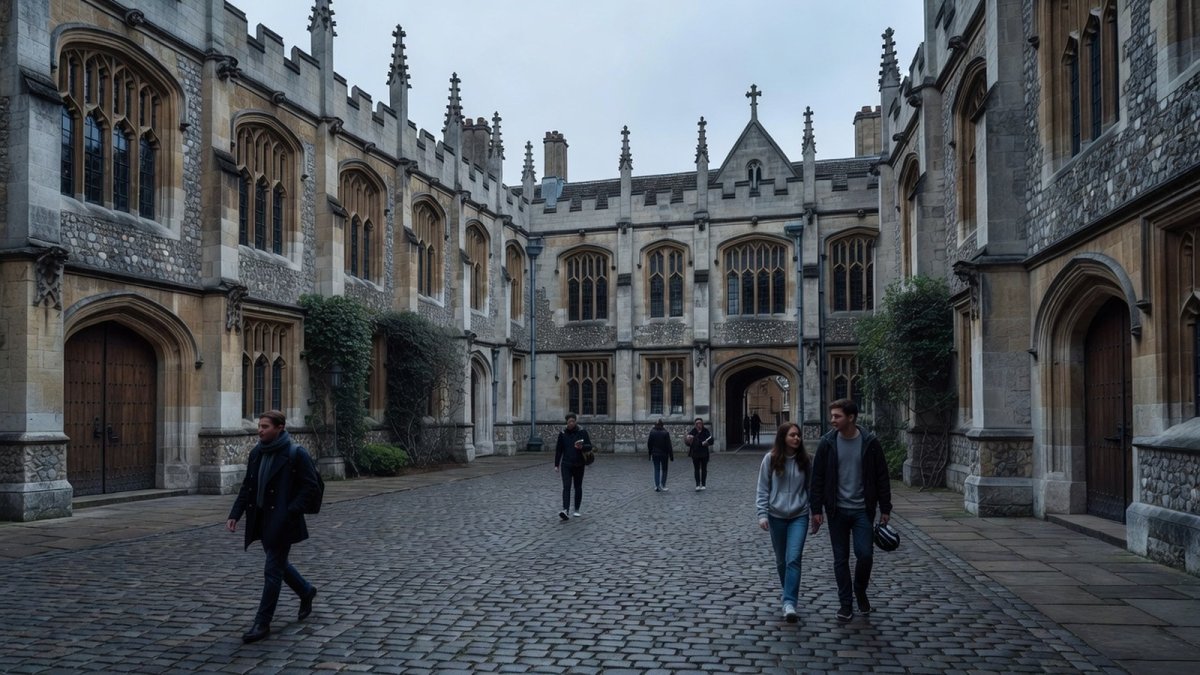
Cambridge University has since announced on 12 August that it would investigate the circumstances around his appointment, a move that critics argue added institutional weight to the allegations while Arday was still alive to defend himself. The university’s chancellor, Lord Chris Smith, has since condemned what he called the "racist feeding frenzy" surrounding Arday, insisting that "academic integrity and refusing to join a 'racist feeding frenzy' are not mutually exclusive." It was a pointed rebuke to those who framed the coverage as mere journalistic rigour.
The Political Response: Downing Street’s Caution and Cleverly’s Candour
As the vigil unfolded, the political establishment was treading carefully. Downing Street declined to say whether Prime Minister Andy Burnham was considering a public inquiry, instead calling the moment "a time for reflection" and noting that "the usual processes" — including a coroner’s inquest — should be allowed to conclude. The cautious tone suggests a government wary of wading into a debate that implicates the fourth estate.
But not all politicians were so reticent. Sir James Cleverly, the shadow housing secretary and Britain’s first black home secretary, offered a strikingly candid assessment. Speaking over the weekend, Cleverly said much of the coverage of Arday was "quite possibly" motivated by racism, and criticised universities for failing to conduct "robust due diligence" before the allegations became public. His comments carry particular weight given his own experience navigating the upper echelons of British politics as a black man.
The political divide is telling. On one side, there is a demand for accountability — for a public inquiry that would examine the role of the press, the conduct of the university, and the systemic racism that many believe underpinned the entire affair. On the other, there is a cautious institutional response, urging patience and deference to existing processes. For the family of Jason Arday, and the thousands who gathered in Trafalgar Square, patience is wearing thin.
What This Means for UK Academia, Media Regulation, and Race in Britain
The death of Jason Arday is not just a personal tragedy; it is a moment of national introspection. For UK academia, it raises uncomfortable questions about the treatment of minority scholars. The statistic is stark: only 1% of professors in UK universities are black. Arday was a trailblazer, and his experience suggests that breaking through such barriers comes with a unique and often brutal scrutiny.
For the media, the case reignites debates that have simmered since the Leveson Inquiry into press standards following the phone-hacking scandal. The Independent Press Standards Organisation (IPSO), the industry’s self-regulatory body, has long been criticised for its perceived toothlessness. The Good Law Project petition, which has garnered nearly 100,000 signatures per Channel 4 News (with the BBC reporting more than 90,000), explicitly calls for a public inquiry — a move that would bypass IPSO and subject the press to statutory oversight. The question now is whether the death of Jason Arday will achieve what Leveson could not.
And for Britain as a whole, the tragedy lays bare the persistent fault lines of race and class. Arday’s story — a working-class boy who rose to the top of the world’s most prestigious university — was supposed to be a testament to meritocracy. His death, and the circumstances surrounding it, suggest that the journey is still fraught with peril for those who do not fit the mould.
The Bottom Line — What Comes Next
The immediate next step lies with the London Inner South Coroner’s Court, which will investigate the cause of death. This process could take several weeks, and a decision on whether to hold a full inquest will follow. The outcome of that investigation will be critical, not just for the family, but for the national conversation.
In the meantime, the pressure on Downing Street to act is mounting. With nearly 100,000 signatures on the petition, and a vigil that drew thousands to the heart of London, the demand for a public inquiry is not going to fade quietly. The family’s statement — that "the public cruelty Jason was subjected to was too much for any man to bear" — will resonate for a long time.
On Sunday, more than 200 people attended a separate vigil at Cambridge, organised by Arday’s postdoctoral students. The grief is raw, the anger is real, and the questions are unanswered. Jason Arday should still be here today. The fight to ensure his death is not in vain — and that the systems that failed him are held to account — has only just begun.
By Erica Thornton, Staff Writer
This article was produced with AI-assisted research and editorial support. Reporting is based on sources cited in the article.
What's Your Reaction?
 Like
0
Like
0
 Dislike
0
Dislike
0
 Love
0
Love
0
 Funny
0
Funny
0
 Wow
0
Wow
0
 Sad
0
Sad
0
 Angry
0
Angry
0

US Politics and Policy Correspondent at Global1.News. Based in Washington DC, covering American politics, policy, elections, and the courts. Knows how the system works and tells you what it actually means.











Comments (0)