
Putin Proposes a Trump-Xi Summit to Settle Ukraine, With Kyiv Left Outside the Room
Vladimir Putin has proposed a three-way summit with Donald Trump and Xi Jinping to settle the war in Ukraine, with Volodymyr Zelenskyy excluded. The Kremlin has confirmed only that discussions are under way, and the White House has not agreed to attend.
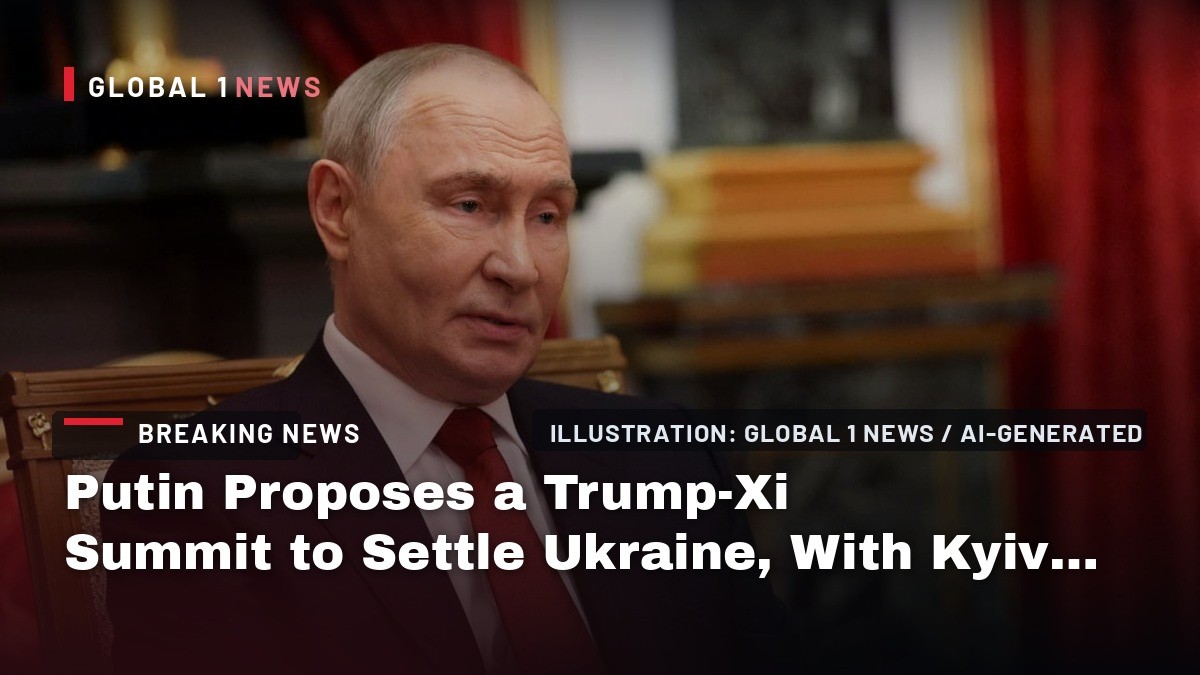
Vladimir Putin wants to settle the war in Ukraine with two men in the room: Donald Trump and Xi Jinping. Not Volodymyr Zelensky. Not the Europeans. The proposal, reported by The Wall Street Journal on Sunday 18 October, has been half-confirmed by the Kremlin, has not been agreed by the White House, and would be the first time the fate of Ukraine has been negotiated by three outside powers with no Ukrainian at the table.
Putin Proposes a Trump-Xi Summit to Settle Ukraine, With Kyiv Left Outside the Room
Moscow, Russia — Putin raised a three-way summit with the US and Chinese presidents during a telephone call with Trump on 9 October, according to a former Russian intelligence officer briefed on the matter. Kremlin spokesman Dmitry Peskov has confirmed that discussions about a possible meeting are under way. He has not confirmed a meeting, a date or an agenda, and a senior US official says Trump has not agreed to attend.
The Proposal on the Table
Russian President Vladimir Putin has proposed a three-way summit with US President Donald Trump and Chinese President Xi Jinping next month to negotiate an end to the four-year war in Ukraine on terms favourable to Moscow. That is the central claim of a Wall Street Journal report published on Sunday 18 October, and it is worth slowing down on exactly what it does and does not say. The report rests on a single former Russian intelligence officer briefed on the matter and on people familiar with the discussions. The sourcing has not been independently confirmed. No date, venue booking, agenda, format or participation list has been confirmed for any trilateral meeting. The Kremlin suggested holding the talks on the sidelines of the Asia-Pacific Economic Cooperation summit, scheduled for 18-19 November in Shenzhen, in southern China. That is a suggestion, not a booking. The plan, as reported, represents an effort by Putin to capitalise on warming ties between Trump and the Russian leader that have alarmed Ukraine and its allies in Washington and Europe. Folks, that is the frame. Everything that follows hangs off how thin the confirmation is.
What the Kremlin Actually Confirmed
Kremlin spokesman Dmitry Peskov gave the Journal a statement that confirms discussions and nothing more. "There is no clear understanding yet regarding the meeting itself or its potential agenda, although all three parties acknowledge the hypothetical possibility of such a meeting taking place." Read that again. No understanding on the meeting. No understanding on the agenda. A hypothetical possibility, acknowledged by three parties. Peskov earlier described a possible Putin-Trump-Xi meeting on the APEC sidelines as useful, and he told RBC-Ukraine that Zelenskyy is not expected to be invited. That is the extent of the Kremlin's on-the-record confirmation. Peskov did not confirm a meeting, a date or an agenda, and any reading that treats this as a locked-in event is wrong. Putin's aide Yuri Ushakov had said in early October that the initiative to hold the talks should come from China if Trump confirms his participation. On 6 October, Ushakov put it this way to Kommersant: "The idea is in the air."
Why Shenzhen, and Why November
The venue is not random. The 33rd APEC Economic Leaders' Meeting will be held in Shenzhen, Guangdong Province, on 18-19 November 2026, with final senior officials' meetings on 14-15 November and the APEC CEO Summit on 17-18 November. China's theme is "Building an Asia-Pacific Community to Prosper Together", emphasising openness, innovation and cooperation, and the agenda is expected to address US-China trade tensions and cooperation on artificial intelligence. Trump has already indicated he intends to attend the Shenzhen summit. If a Trump-Xi meeting happens there, it would be the fourth encounter between the two leaders since Trump began his second term. The two governments agreed a trade-war truce during a summit last year and recently extended the arrangement through January 2027. Ushakov laid out the logic on 6 October: the question would become clearer when the Chinese leadership sets the summit schedule, which would likely provide "special windows for bilateral meetings, and possibly trilateral". A crowded multilateral calendar is a convenient place to float something without owning it.
The Call That Produced It
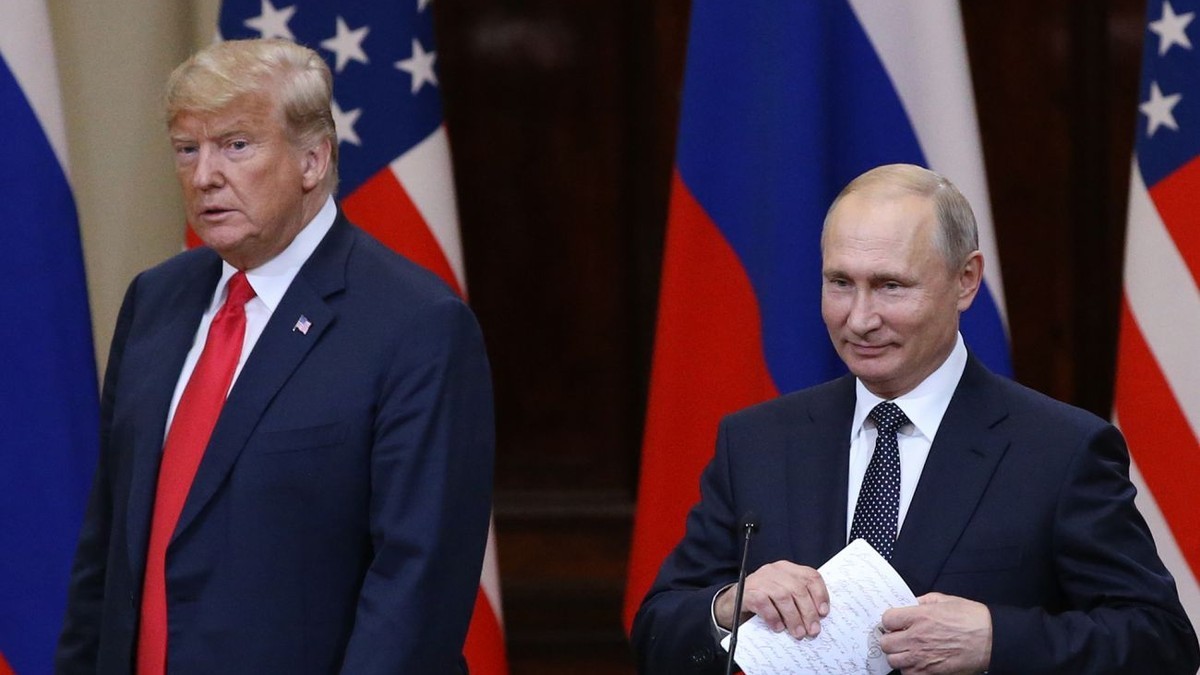
The proposal did not arrive by letter. Putin raised it during a 9 October telephone call with Trump, according to the former Russian intelligence officer briefed on the matter. The call did more than one thing. Ushakov described it as a "very substantive", even friendly conversation that lasted an hour and a half. He said the two leaders discussed economic initiatives, energy supplies and international issues, and expressed satisfaction with communication channels between the countries. Ushakov confirmed the leaders discussed possible Russian petroleum product supplies to the United States and international markets. On a face-to-face meeting, Ushakov said the two presidents had not agreed a specific date, but could meet at APEC in China if both attend. His words: "if both leaders are at the same international venue, I assume they will find an opportunity to meet, shake hands and talk." An assumption from an aide is not a commitment from a president.
Kyiv Learned About It From a Newspaper
Ukraine is not in this format. As reported, the meeting would exclude Zelenskyy entirely, and no public account establishes that Kyiv was briefed before the Journal published. Zelenskyy's own public response that Sunday was aimed at Washington's sanctions decision rather than at the summit proposal. He posted on X: "the decision to undo all of this, to block all of it, seems wrong to me." He told NBC's Meet the Press that waiving sanctions on Russia "will hurt Ukraine" and would strengthen Putin's war effort, and called it a "historic mistake" if Washington formally supported Russia. He said he hoped Trump would "change his decisions". Zelenskyy wrote on Sunday: "The United States should understand that Russia has not taken any reciprocal steps in response to sanctions relief or agreements. On the contrary, Russia sees every signal of a money-making opportunity as proof that its war bet has paid off and that it can continue to fight." He said Russia had violated Trump's "energy ceasefire" 76 times.
The Diesel Deal Underneath the Diplomacy
The diesel arrangement has already happened, and it is what Europe objects to most. EU foreign policy chief Kaja Kallas told Euronews, in an interview published on 15 October, the question it raises: "The question is: what has he given in return? What we see is that he's actually increasing the attacks on civilians and civilian infrastructure. The ceasefire that was also announced is not really working on the Russian side." Her instruction to Washington: "The message is that you need to talk to the Europeans." Trump tied his own messaging to diesel on Sunday 18 October, writing on Truth Social: "Zelenskyy is using Diesel Refineries in Russia as a target, knowing that these attacks are seriously hurting the world diesel markets, including those in the United States. Farmers, ranchers, and businesses of all kinds are suffering greatly from this." The Institute for the Study of War called the waiver self-defeating on 17 October: "Trump's October 16 Executive Order does not support Trump's stated foreign policy objectives of ending the war in Ukraine and will only enable Russia to continue financing and protracting the war in Ukraine without any proper incentives that may force Russia to engage in any meaningful peace negotiations."
What Trump Says He Is Doing
Trump's own account of his position is that he is negotiating peace and protecting the talks. On Truth Social on Sunday 18 October he wrote: "My decision on Russia is a very simple one. I am in the process of negotiating Peace in the war between Russia and Ukraine, and don't want to do anything that will drive, foolishly, Russia away from the bargaining table. Great progress is being made, and that includes current hostage negotiations!" He added: "I want this war end!" He also used the post to attack Zelenskyy directly: "Zelenskyy doesn't care, and frankly, with all of the money that Europe is famously giving him, and that Crooked Joe Biden gave him in the past, he doesn't want to end this war, and probably never did." On the summit itself, a senior US official said Trump had not agreed to the proposed summit but could be open to the idea, given his desire to fulfil his campaign pledge to end the war. The White House declined to comment. Trump has not ruled it in, and he has not ruled it out.
What Xi Gets, and What It Costs Him
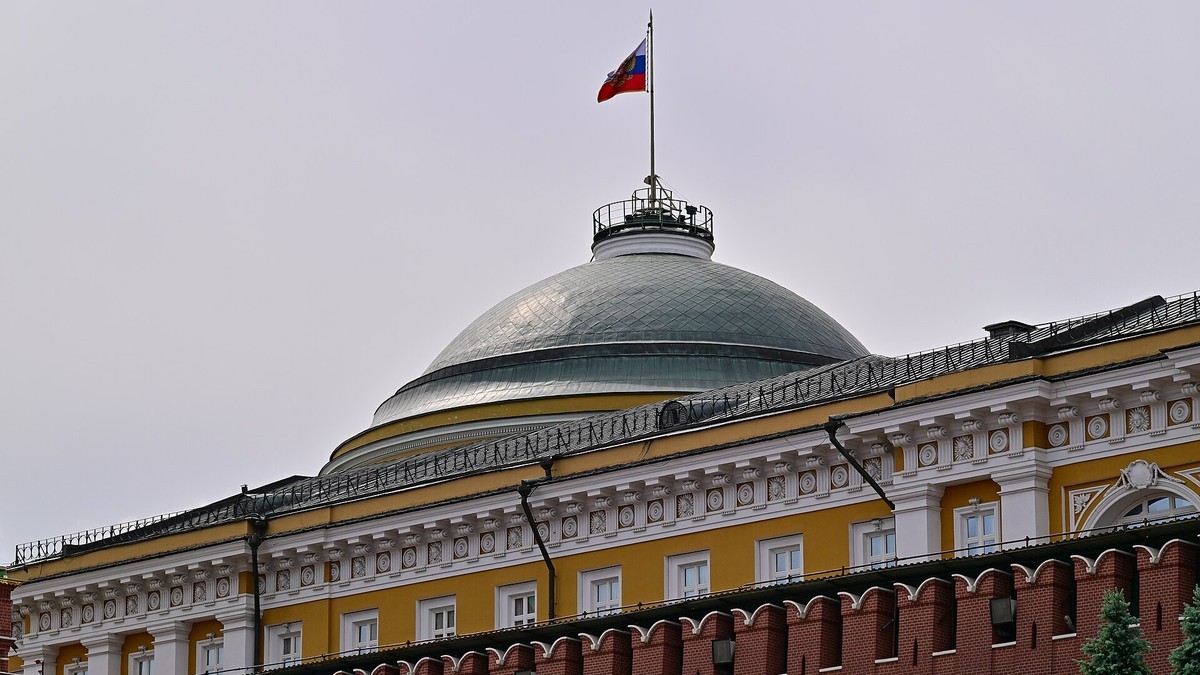
For Beijing, the reported calculation is upside with visible risk. Russian officials raised the proposal with Beijing through diplomatic channels, and the Chinese side indicated it would not object if Trump agreed, according to people familiar with recent Moscow-Beijing discussions. That is the whole of China's reported position. China has not announced a plan for a trilateral meeting. The Journal noted that a potential three-way dialogue on Chinese soil would mark a big step for Xi in his efforts to elevate China's role as a diplomatic power broker. Yun Sun of the Stimson Center told the Journal: "China wants to be seen as the pivot of the great powers, and potentially as a mediator between the U.S. and Russia." The cost side is real. Chinese officials worry that a sideshow could overshadow APEC and strain economic ties with Europe, already wary of Beijing's closeness to Moscow, and analysts noted that the image of three leaders negotiating over Ukraine's future without Ukraine present could deepen concern in Taiwan, according to an analysis published by Investing.com. The Chinese Embassy in Washington did not respond to a request for comment.
The Yalta Analogy
This is where the account needs care. The former Russian intelligence officer said Putin had proposed trilateral summits with Trump and Xi on several previous occasions, and said Putin held ambitious though potentially unrealistic goals for the format, envisioning it as a second Yalta summit that would divide the world into spheres of influence. That is the Journal's account of how one unnamed former intelligence officer characterised Putin's thinking. It is not established fact, and it should not be reported as Putin's stated aim. There is history behind it. After a bilateral meeting with Trump on the sidelines of the UN General Assembly in New York on 22 September, Zelenskyy said he was open to negotiations and suggested Trump could mediate a trilateral meeting. On 23 September, Peskov responded that Putin was theoretically prepared to meet both Trump and Zelenskyy, but only if undisclosed Russian preconditions were met. The Journal's own framing is that a summit without Zelenskyy would be unprecedented and send alarm bells ringing in European capitals and beyond. Every version of the three-way idea has carried a condition. Treat the analogy as a characterisation, not a blueprint.
What Would Have to Happen Next
Nothing about this is scheduled, and the gap between a floated idea and a functioning summit is where most of these proposals die. The two markers worth watching are whether the White House formally responds and whether a meeting appears on the APEC schedule. A firm US commitment would represent a major shift in Western diplomacy on Ukraine, while a refusal would leave the existing US-led peace effort, which has largely stalled, as the only active track. Peskov's statement leaves the agenda undefined. Ushakov's early-October position leaves the initiative with Beijing. China's reported indication leaves the decision with Trump. Three parties, three conditionalities, no date. The plainest summary available comes from the same market analysis: "Putin is trying to turn a warming relationship with Trump into a great-power deal on Ukraine without Kyiv at the table, but with no US commitment and Beijing wary of the fallout, it remains a proposal rather than a plan." Watch the APEC schedule. That is where this becomes real or evaporates.
By Jessica Ali, Staff Writer
This article was produced with AI-assisted research and editorial support. Sources: The Wall Street Journal, Reuters, CNBC, RBC-Ukraine, Ukrainska Pravda, The Japan Times, Anadolu Agency, National Herald India, Al Jazeera, Euronews, the Institute for the Study of War, Kommersant and UPI. Photographs: Getty Images via RBC-Ukraine; Yuri D.K. (CC BY 4.0) via Wikimedia Commons.
What's Your Reaction?
 Like
0
 Dislike
0
 Love
0
 Funny
0
 Wow
0
 Sad
0
 Angry
0

Editor-in-Chief at Global1.News. Atlanta-based journalist who cuts through the BS and tells it like it is. Lead anchor, host, and the voice you hear when the spin stops and the truth starts.











Comments (0)