
Nepal's Deadliest Flood in Years: 538 Dead, Nearly 1,000 Missing After Himalayan Glacier Collapse
The Bhote Koshi River, a lifeline carved through the high Himalayas, became a wall of death and debris on Wednesday morning, unleashing a torrent that has killed at least 538 people in Nepal and left nearly 1,000 more unaccounted for. The catastrophic flash flood, triggered by a high-altitude gla...
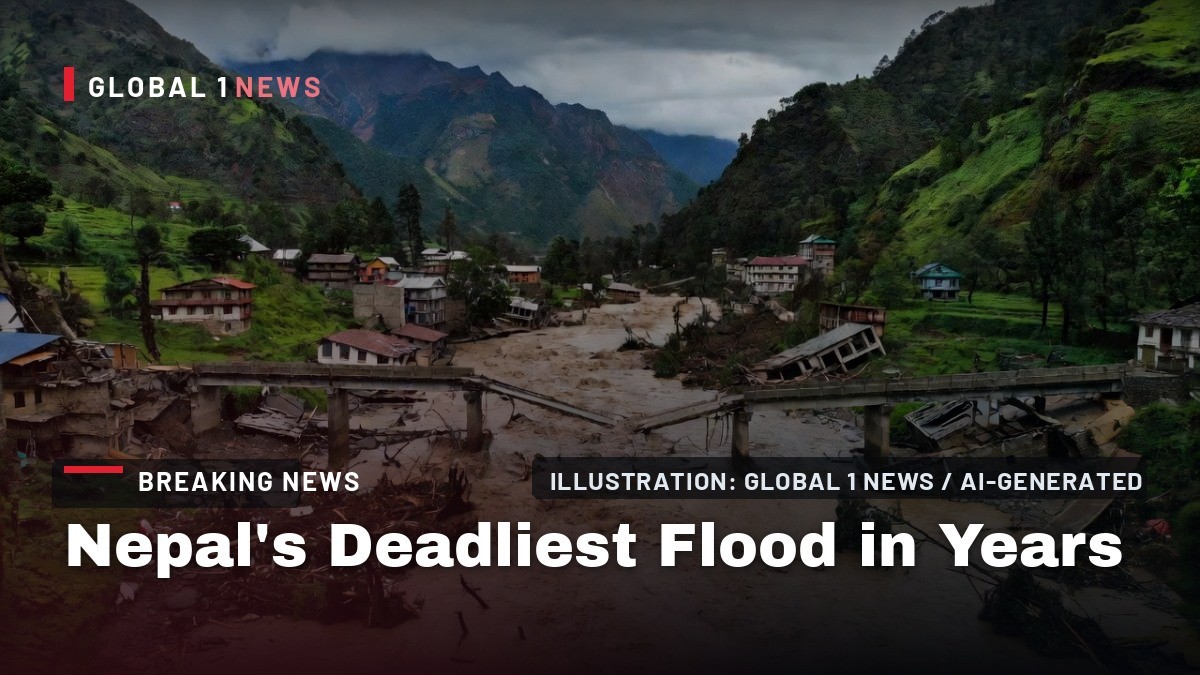
The Bhote Koshi River, a lifeline carved through the high Himalayas, became a wall of death and debris on Wednesday morning, unleashing a torrent that has killed at least 538 people in Nepal and left nearly 1,000 more unaccounted for. The catastrophic flash flood, triggered by a high-altitude glacier collapse near the Nepal-Tibet border, did not just break records; it obliterated entire villages, infrastructure, and the assumption that the region’s worst glacial flood was a one-off anomaly. As rescue helicopters claw through narrow gorges and families dig through mud with bare hands, this is no longer a natural disaster—it is a national emergency that exposes the terrifying fragility of life downstream from a warming cryosphere.
The Cascade of Catastrophe: A Timeline of the Bhote Koshi Surge
The sequence of events that led to this tragedy began at approximately 08:37 local time on Wednesday, 26 August 2026, when a massive flash flood surged down the Bhote Koshi River from the Tibet Autonomous Region of China into Nepal’s Rasuwa district. According to the National Disaster Risk Reduction and Management Authority (NDRRMA), the flood wave did not stop at the border. It cascaded with unrelenting force downstream through the districts of Nuwakot, Dhading, Gorkha, and Chitwan, transforming the Trishuli River corridor into a kill zone.
Scientists are describing this as a cascading Himalayan hazard—a compound event where one trigger leads to a chain reaction. The initial cause was a collapse of ice, rock, and debris near the Nepal-Tibet border. This collapse created a temporary debris blockage in the river channel, effectively damming the flow. When that natural dam failed, it released a sudden, violent surge of water and sediment that powered downstream. Both DW and the Associated Press report that a glacier collapse was the primary trigger, setting off this deadly sequence. The flood traveled roughly 168 kilometers downstream over a period of about 7.5 hours, a speed that gave residents in lower districts precious little time to react.
The Bhote Koshi originates in Tibet, flows into Nepal’s Trishuli River, and eventually enters India as the Gandak. This transboundary nature of the river system means that the disaster is not solely a Nepali issue, but a regional hydrological crisis that underscores the interconnectedness of Himalayan waterways. The sheer volume of water and debris that moved through the system overwhelmed everything in its path, leaving a trail of destruction that is still being assessed.
Death Toll Climbs: 538 Confirmed Dead, Nearly 1,000 Missing
As of Friday afternoon, 28 August 2026, Nepal’s NDRRMA has confirmed a death toll of 538 people on the Nepali side of the border. Officials are quick to caution that this number is not necessarily final. The Kathmandu Post’s day-three report placed the toll near 500, with figures still climbing as search teams reach more remote areas. The discrepancy between the official count and the reported numbers highlights the chaos and difficulty of accounting for victims in terrain where roads have been washed away and villages have been buried under meters of silt.
The scale of the missing is perhaps the most harrowing statistic. The New York Times reported on August 28 that more than 3,700 people have been rescued, but nearly 1,000 are still missing. Other reports, including from ANI, cite a specific figure of 977 missing. On the Tibetan side of the border, Chinese authorities have reported at least 3 dead and 558 missing, according to The Weather Company. This brings the total regional impact to a staggering number of unaccounted individuals, many of whom are likely buried under debris or swept downstream into the Gandak river system.
The human cost is not just a number. In Devighat village in Nuwakot district, a BBC reporter on the ground captured the desperation of survivors. One resident, standing where a home used to be, simply said: "Everything is under mud." That single quote encapsulates the reality for hundreds of families who have lost not just loved ones, but their entire livelihoods, their homes, and their history. The flood did not discriminate—it destroyed entire villages along the Trishuli River, including homes, bridges, and critical infrastructure, as reported by DW and Euronews.
Rescue Under Fire: Helicopters and the Race Against Time
With ground routes severed by destroyed bridges and washed-out roads, the rescue operation has become an aerial campaign. The NDRRMA has confirmed that 15 helicopters are involved in the response—6 from the Nepal Army and 9 private aircraft. These helicopters have been the only lifeline for thousands of people stranded on rooftops, hillsides, and isolated patches of high ground. According to NDRRMA data, 1,976 people have been rescued through helicopter operations alone, a testament to the bravery of the pilots navigating treacherous mountain passes and narrow river gorges.
However, the operation is a race against time. Hundreds are still missing, and the injured are in desperate need of evacuation. Euronews reported on August 28 that new flood warnings remain in effect, complicating rescue efforts and putting responders at risk. The helicopters are not just ferrying people to safety; they are also delivering food, water, and medical supplies to areas that are completely cut off. The destruction of the Friendship Bridge, which links Nepal and China, has further complicated cross-border logistics, though the flood itself originated from the Chinese side.
The physical toll on the landscape is immense. The flood surge moved an enormous amount of sediment, effectively raising riverbeds and changing the topography of the Trishuli Valley. This means that even after the water recedes, the risk of further flooding and landslides remains high. The ground is unstable, and the monsoon season is not yet over. Rescue teams are having to contend with the very real possibility of secondary disasters as they work to extract the living and recover the dead.
Context of Crisis: The 2025 Warning That Went Unheeded
This is not the first time the Bhote Koshi has wreaked havoc. In 2025, a flood on the same river killed nine people, left 24 missing, and destroyed the Friendship Bridge linking Nepal and China. That event was a stark warning of the region's vulnerability to glacial lake outburst floods (GLOFs) and ice-debris collapses. Yet, the scale of this year’s disaster is orders of magnitude worse. The 2025 event was a tremor; the 2026 event is the earthquake.
The comparison is chilling. In 2025, the damage was largely contained to infrastructure and a relatively small loss of life. In 2026, the flood wave was larger, faster, and more destructive, overwhelming communities that had perhaps grown complacent or were simply unprepared for a surge of this magnitude. The fact that the 2025 flood destroyed the Friendship Bridge—a critical trade and transit link—should have triggered a comprehensive review of infrastructure resilience in the region. Instead, it appears that the pace of climate change is outstripping the pace of adaptation.
Scientists have long warned that the Himalayas are a "third pole" of ice, and that warming temperatures are destabilizing high-altitude glaciers. The collapse of ice, rock, and debris that triggered this flood is a textbook example of a cryospheric hazard. The temporary debris blockage that formed and then failed is a phenomenon that hydrologists are only beginning to model. The fact that this happened in August, during the monsoon season when the ground is already saturated, amplified the disaster. The 2025 event should have been a catalyst for early warning systems and land-use planning; instead, it appears to have been a prelude to a far greater tragedy.
International Response: EU Pledges Aid, But Long-Term Needs Loom
The international community has begun to respond, but the scale of the need is immense. The European Union pledged €2 million in emergency aid on August 26, according to The Guardian. This funding is critical for immediate relief efforts—providing shelter, clean water, and medical care to the displaced. However, €2 million is a drop in the bucket compared to the reconstruction costs that Nepal will face. Entire villages need to be rebuilt, not just relocated. The destruction of bridges and roads means that supply chains for basic goods have been severed, and the economic impact on tourism and trade will be felt for years.
Nepal’s government and the NDRRMA are leading the response, but they are stretched thin. The disaster has drawn international attention to the broader issue of glacial flood risk in the Himalayas, a topic that will be central to climate negotiations in the coming years. The fact that this flood originated in Tibet and cascaded into Nepal highlights the need for transboundary cooperation on disaster risk reduction. China and Nepal must share data on glacier stability and river flows in real-time to prevent future tragedies.
The aid pledged so far is for immediate survival, but the long-term recovery will require a massive mobilization of resources. The EU’s contribution is a start, but it is clear that bilateral aid from major powers, development banks, and climate resilience funds will be necessary. The international community cannot simply write a check and move on; it must invest in making the region more resilient to the inevitable next event. The question is not if another glacial flood will occur, but when, and whether we will be better prepared.
Analysis: A Harbinger of the New Normal in the Himalayas
This disaster is not an anomaly; it is a harbinger. The cascading hazard that triggered this flood—ice collapse, debris dam, and sudden release—is a mechanism that is becoming more frequent as global temperatures rise. The Himalayas are warming faster than the global average, and the stability of high-altitude ice is becoming increasingly precarious. This flood should be viewed as a stress test for the entire region, and it has failed spectacularly.
The fact that the flood moved 168 kilometers in 7.5 hours means that early warning systems are not just a luxury; they are a necessity. Current systems are inadequate. In many villages along the Trishuli, there was no warning at all. The water simply arrived. This points to a failure of both technology and governance. While the Nepal government has been praised for its rapid helicopter response, the lack of ground-level preparedness is a glaring gap. Sirens, evacuation drills, and flood-safe zones need to be established in every vulnerable community.
Furthermore, the transboundary nature of the river demands a diplomatic solution. The Bhote Koshi originates in China, and the collapse occurred on the Tibetan side. Yet, the devastation is overwhelmingly in Nepal. This asymmetry requires China to take a proactive role in monitoring and sharing data on glacier conditions. The 2025 flood and the 2026 flood both originated from the same region, yet there appears to have been no substantive change in monitoring or communication protocols. This is a diplomatic failure as much as a hydrological one.
Finally, the reconstruction effort must be "build back better" in the truest sense. Rebuilding homes on the same floodplains would be a criminal act of negligence. The government must use this opportunity to relocate vulnerable populations to higher ground, redesign infrastructure to withstand extreme flows, and invest in nature-based solutions like restoring wetlands and forests that can absorb floodwaters. The cost will be high, but the cost of inaction is measured in the 538 dead and nearly 1,000 missing.
The Road Ahead: Recovery, Grief, and the Search for the Missing
As the sun sets on the third day of this disaster, the immediate focus remains on the search and rescue operations. Helicopters are still flying, and the NDRRMA is coordinating efforts to reach the most isolated areas. The hope of finding more survivors is fading, but the search for the missing continues. For the families of the nearly 1,000 unaccounted, the agony of not knowing is a torture that rivals the grief of confirmed loss. The Nepali government has promised to continue the search until every possible lead is exhausted, but the reality of the terrain and the volume of debris suggest that many will never be found.
The recovery phase will be long and painful. The psychological trauma inflicted on survivors who watched their neighbors and relatives swept away will require mental health support that is currently lacking. The economic devastation will push thousands into poverty. The political fallout will be significant, with questions being asked about why more was not done to prevent this tragedy. The EU’s €2 million pledge is a start, but it is a fraction of what is needed. The international community must step up with long-term funding for reconstruction and climate adaptation.
This flood has exposed the raw nerve of the climate crisis. It is no longer a distant threat of melting ice caps and rising sea levels; it is a violent, immediate, and deadly reality for the people of the Himalayas. The Bhote Koshi will flow again, and the glaciers will continue to melt. The only question is whether we will heed the warning of this catastrophe and act with the urgency it demands, or whether we will wait for the next collapse, the next surge, and the next list of the dead and missing.
By Jessica Ali, Staff Writer
This article was produced with AI-assisted research and editorial support. Sources: DW, Associated Press, Kathmandu Post, New York Times, ANI, The Weather Company, BBC, Euronews, The Guardian
What's Your Reaction?
 Like
0
Like
0
 Dislike
0
Dislike
0
 Love
0
Love
0
 Funny
0
Funny
0
 Wow
0
Wow
0
 Sad
0
Sad
0
 Angry
0
Angry
0

Editor-in-Chief at Global1.News. Atlanta-based journalist who cuts through the BS and tells it like it is. Lead anchor, host, and the voice you hear when the spin stops and the truth starts.














Comments (0)