
Settler Violence in West Bank Reaches Record Levels
In a recent BBC News report, correspondent Lucy Williamson documented a single week of Israeli settler violence in the occupied West Bank, finding that attacks are occurring at a pace that human rights groups warn is set to reach record levels this year. The BBC's tracking revealed that Jewish settlers are increasingly spreading into new areas of the territory, moving beyond their traditional strongholds in a manner that analysts describe as a deliberate expansion of pressure.
In a recent BBC News report, correspondent Lucy Williamson documented a single week of Israeli settler violence in the occupied West Bank, finding that attacks are occurring at a pace that human rights groups warn is set to reach record levels this year. The BBC's tracking revealed that Jewish settlers are increasingly spreading into new areas of the territory, moving beyond their traditional strongholds in a manner that analysts describe as a deliberate expansion of pressure. These attacks, which have risen sharply under Israel's current government alongside a rapid increase in settlements deemed illegal under international law, frequently go unreported by mainstream media, leaving affected Palestinian communities isolated and largely invisible to the outside world.
The findings underscore a troubling trajectory: what was once characterized as localized friction between settlers and Palestinian villagers has evolved into a systematic campaign of displacement and intimidation. With the Israeli government providing material support to outposts and a military that rarely intervenes on behalf of Palestinian civilians, the conditions on the ground have deteriorated to a point where international observers are using language of "erasure" and "ethnic cleansing" with increasing frequency. The BBC report serves as a critical snapshot of a crisis that is unfolding largely outside the headlines, demanding urgent attention from the international community.
Settler Violence in West Bank Reaches Record Levels
Jerusalem – 28 August 2026 — A new investigation by BBC News correspondent Lucy Williamson, tracking attacks over the past week, has confirmed that Israeli settler violence in the occupied West Bank is on pace to reach unprecedented levels this year. The reporting, which documents incidents across the territory, reveals a pattern of escalating aggression that human rights organizations say is actively reshaping the demographic map of the region. With the Israeli government's tacit approval and financial backing, settlers are operating with impunity, pushing Palestinian communities to the brink of collapse.

One Week of Violence: What BBC Tracking Found
Lucy Williamson's week-long tracking for the BBC documented a relentless series of attacks by Jewish settlers against Palestinian civilians and their property, incidents that are rarely captured by international media. The correspondent found that violence is set to reach record levels this year, with human rights groups warning that settlers are increasingly spreading into new areas of the territory, far beyond the established settlement blocs. Many of these attacks, which include physical assaults, arson, and the destruction of olive groves, are not widely reported, leaving the international community with a fragmented picture of the crisis. The BBC's reporting provides a rare, granular look at the daily reality for Palestinians living in the shadow of expanding settlements.
This surge in violence has occurred under Israel's current government, which took office in December 2022 and includes far-right ministers who openly advocate for the annexation of the West Bank. The rise in attacks has coincided with a rapid increase in settlement construction, which is illegal under international law. According to the UN Office for the Coordination of Humanitarian Affairs (OCHA), the average number of settler attacks resulting in casualties or property damage has reached 6.6 per day, a figure higher than any year on record. This represents a staggering escalation from previous years, transforming what was once a sporadic problem into a daily, systematic threat for Palestinian communities across the territory.
Displacement on a Historic Scale
Human Rights Watch (HRW) reported on August 20 that settler attacks have fully or partially displaced 107 communities, comprising 5,900 Palestinians, since January 2023. The organization's research indicates that more Palestinians were forcibly displaced in the first four months of this year than in all of 2025, a statistic that highlights the accelerating pace of the crisis. HRW investigators examined seven communities in detail, including Al-Mughayyir, Taybeh, and Jalud in the Ramallah governorate, as well as Qaryut and Khirbet Humsa in the Nablus governorate and the Jordan Valley. The report documents a spike in violence in March and April of this year, characterized by killings, including of children, as well as assaults, arson, and the widespread destruction of property.
The human cost of this campaign is immeasurable. Sarah Sanbar, acting Israel and Palestine researcher at Human Rights Watch, stated, "The Israeli government and the settlers share the same goal of maximum land and minimum Palestinians, with the authorities not only failing to stop settler violence, but actively enabling it." This assessment is supported by OCHA data, which records that at least 15 Palestinians, including two children, have been killed by settlers as of July 24, putting 2026 on track to surpass the record of 16 killings set in 2023. For those living through it, the experience is one of profound terror. Um Muhammad Muammar, a 72-year-old resident of Qaryut whose two sons were killed by settlers, told researchers, "I have known war in this region for all my life, but never like this."
The Shift Into Area B: A New Frontier
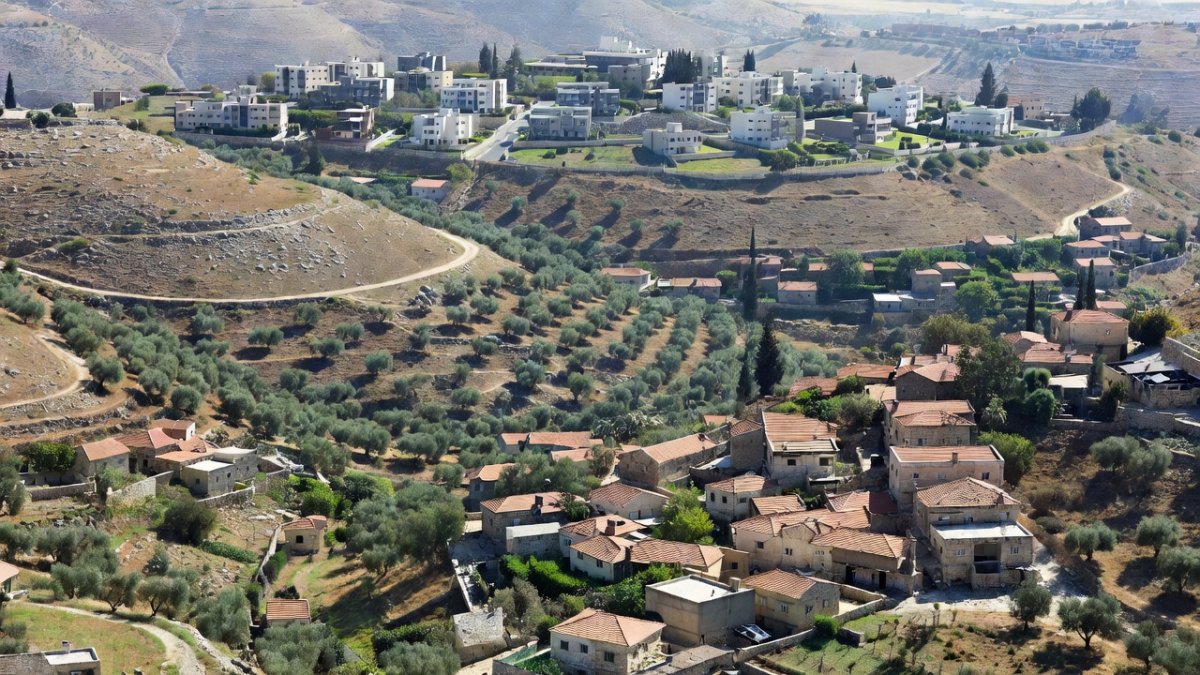
A new report by the Israeli human rights group Yesh Din, titled "The Next Frontier" and shared with the Guardian on August 21, reveals a significant and alarming shift in the geography of settler violence. The report finds that violent settler attacks in Areas A and B, which are under direct Palestinian rule, have almost doubled since 2025. Critically, almost two-thirds of all settler violence incidents in 2026 have taken place in these areas, a dramatic reversal of previous patterns. Attacks in Area B now account for 55% of all incidents, up from just 25% last year, while attacks in Area C, which is under full Israeli control, have fallen from 67% to 37% of the total. This "rapid shift" of violence and pressure from Area C into Areas B and even A suggests a deliberate strategy to penetrate the heart of the territory earmarked for a Palestinian state.
This new frontier is being pursued under the banner of a self-proclaimed "great settlement revolution," with settlers seeking to establish a permanent presence in areas that were meant to be the foundation of a future Palestinian state. A map circulated on a WhatsApp group called "Hilltop Foundation" showed 16 outposts between Ramallah and Nablus, indicating a coordinated effort to create facts on the ground. To understand the significance of this, one must recall the Oslo Accords of the 1990s, which divided the West Bank into three zones: Area A (approximately 18% of the territory) includes major Palestinian cities and is under full Palestinian civil and security control; Area B (approximately 22%) is under Palestinian civil control but joint Israeli-Palestinian security; and Area C (approximately 60%) is under full Israeli control, where all government-approved settlements are located. The incursion into Areas A and B represents a direct challenge to the Oslo framework and a clear signal of intent to dismantle any possibility of a viable Palestinian state.
State Backing and Impunity
The violence is not occurring in a vacuum; it is enabled by a system of state backing and near-total impunity. Israeli authorities consistently fail to prosecute settlers for their crimes. Yesh Din reports that only 3% of hundreds of documented cases since 2005 have resulted in convictions, and since 2019, only one Israeli has been charged for killing a Palestinian in the West Bank. This legal vacuum emboldens perpetrators, who know they are unlikely to face any consequences for their actions. The Israeli government has gone further than mere inaction, actively funding the infrastructure of violence. In March, it was reported that the government approved approximately 50 million shekels (about US$16 million) for illegal settlement outposts, which has been used to purchase all-terrain vehicles, night-vision goggles, and drones for settler use.
This financial and material support is part of a broader trend. According to Amnesty International, the budget of the Ministry of Settlement and National Missions has increased by 122% under the current government, demonstrating a clear policy priority. Settlers operate with the financial, material, and legal backing of the state, functioning less as rogue actors and more as an unofficial arm of the occupation. The integration of settlers into the military apparatus further blurs the lines between civilian and soldier. Following the October 7, 2023 attacks, the Israeli military called up 5,500 West Bank settlers who are army reservists, effectively formalizing their role in the security apparatus. This symbiotic relationship between the state, the military, and the settler movement ensures that violence against Palestinians is not only tolerated but is a predictable outcome of government policy.
International Response and Sanctions
The international community has begun to respond, albeit slowly, to the escalating crisis. The United States and several European nations have placed sanctions on individual settlers and pro-settler figures, including National Security Minister Itamar Ben-Gvir. This week, France announced its own sanctions against Ben-Gvir, with Foreign Minister Jean-Noël Barrot stating that what is happening on the West Bank is "utterly disgraceful and should fill us all with revulsion." These measures, while symbolic, represent a growing international consensus that the situation is untenable. Human Rights Watch is calling for more comprehensive action, including targeted sanctions on officials, suspending arms transfers to Israel, and banning trade with illegal settlements. The organization argues that piecemeal measures have failed to deter the Israeli government and that only significant economic and diplomatic pressure will force a change in policy.
Meanwhile, the expansion continues unabated. On August 18, a new construction tender was opened for the E1 settlement project east of Jerusalem, a development that would displace more than 18 Bedouin communities and effectively sever the geographic contiguity of the West Bank, making a two-state solution physically impossible. UN officials have repeatedly warned of the erasure of Palestinian communities, noting that the combination of settlement expansion, settler violence, and forced displacement is creating an irreversible reality on the ground. The international response, while growing, remains inadequate to the scale of the challenge, and the window for meaningful intervention is closing rapidly.
Analysis and Implications
The shift of settler violence into Areas A and B suggests a deliberate, strategic move to reshape the territory earmarked for a Palestinian state, rather than a random escalation of local conflicts. This analysis is supported by the rhetoric of key government ministers, including Itamar Ben-Gvir and Bezalel Smotrich, who have both called for cancelling the Oslo Accords and speak openly of gaining control of Area B. The trajectory is clear: with OCHA recording an average of 190 attacks per month in the first four months of 2026, the territory is on pace for more than 2,000 attacks by year-end. This is not a series of isolated incidents but a coordinated campaign of slow-motion erasure that rarely makes headlines, a process of displacement that is methodically dismantling the possibility of a two-state solution and pushing the region toward a future of perpetual conflict.
For the international community, the implications are profound. The continued tolerance of this behavior undermines the credibility of international law and the institutions that uphold it. The two-state solution, long the cornerstone of diplomatic efforts, is being rendered obsolete by the relentless expansion of settlements and the violent displacement of Palestinian communities. Regional stability is threatened as the conflict deepens and the prospects for a peaceful resolution fade. The international community faces a stark choice: to take meaningful, decisive action to halt this process, or to become complicit in the erasure of a people and the destruction of any hope for a just peace. The evidence presented by the BBC, Human Rights Watch, and Yesh Din leaves no room for ambiguity about what is happening on the ground.
The coming months will be critical in determining the future of the West Bank. As the Israeli government continues to fund and enable settler violence, and as the international community debates the appropriate response, the lives of thousands of Palestinians hang in the balance. The slow-motion erasure of Palestinian communities is a tragedy unfolding in real-time, one that demands urgent and decisive action from the global community before it is too late. The question is no longer whether the situation is a crisis, but whether the world has the will to stop it.
By Irina Volkov, Staff Writer
This article was produced with AI-assisted research and editorial support. Reporting is based on sources cited in the article.
What's Your Reaction?
 Like
0
Like
0
 Dislike
0
Dislike
0
 Love
0
Love
0
 Funny
0
Funny
0
 Wow
0
Wow
0
 Sad
0
Sad
0
 Angry
0
Angry
0

Russia/Eastern Europe Correspondent at Global1.News. Covering Russian politics, energy, security, and the shifting dynamics of the post-Soviet space. Provides clear-eyed analysis on one of the world's most opaque regions.










Comments (0)