
'Inflation Is Still Too High': Fed Chair Warsh Signals Possible Rate Hikes at Jackson Hole
Federal Reserve Chair Kevin Warsh used his first Jackson Hole address to declare that the inflation fight is far from over, signaling that the central bank is prepared to raise interest rates again in the coming months. Warsh recommitted to the Fed's 2 percent inflation target and refused forward...
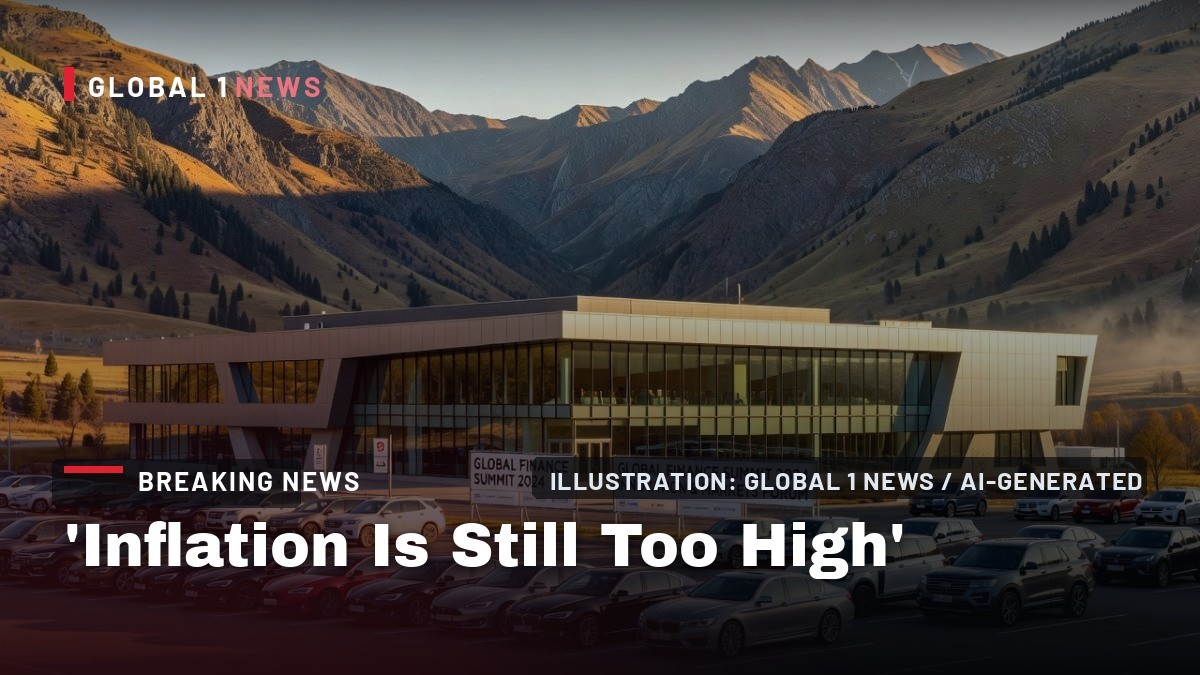
JACKSON HOLE, Wyo. — Federal Reserve Chair Kevin Warsh used his first major policy address to declare that the inflation fight is far from over, signaling that the central bank is prepared to raise interest rates again in the coming months despite months of market speculation that the tightening cycle had concluded. Speaking to an audience of the world’s most powerful central bankers and economists, Warsh delivered a starkly hawkish message that immediately reset expectations for the Fed’s September meeting, with a majority of investors now pricing in a hike.
Warsh’s Hawkish Turn: ‘Inflation Is Still Too High’
In his keynote address at the Kansas City Fed’s annual economic symposium on Friday, August 28, 2026, Warsh made his position unmistakably clear: price stability is not yet secured. According to reports from the Associated Press, NPR, CNBC, and the Washington Post, Warsh told the assembled policymakers that inflation remains “still too high” and that the central bank may need to raise rates further to complete the job.
The speech marks a significant rhetorical escalation from his post-meeting comments in July, when the Federal Open Market Committee (FOMC) voted to hold rates steady. CNBC noted that Warsh’s Jackson Hole remarks represented a “more hawkish reading” of inflation data than anything he had offered since taking the helm. He recommitted the Fed to its 2% personal consumption expenditures (PCE) inflation target, but the tone suggested that patience is wearing thin.
This is not the speech of a chair who believes the worst is over. This is the speech of a chair who believes the market has gotten ahead of the central bank, and he is using the biggest microphone in global monetary policy to correct that assumption.
Market Reaction: Rate Hike Bets Surge for September
The immediate response from financial markets was unambiguous. According to the Washington Post and the New York Post, Warsh’s remarks “sparked bets on a rate hike next month.” A majority of investors now expect the FOMC to deliver a hike at its September meeting, a dramatic reversal from just weeks ago when futures markets were pricing in a prolonged pause or even cuts by early 2027.
The New York Post characterized the shift bluntly, noting that Warsh’s speech had reignited speculation that the Fed is prepared to tighten again. This is a critical development for households and businesses alike: borrowing costs for mortgages, auto loans, and corporate credit are likely to rise if the Fed follows through, and the psychological impact of a renewed tightening cycle could dampen consumer confidence just as the economy shows mixed signals.
For a chair who has repeatedly refused to provide forward guidance, the market’s reaction is both a vindication and a risk. By refusing to spell out a clear path, Warsh has created an environment of heightened uncertainty—and uncertainty is exactly what markets dislike most.
The ‘No Forward Guidance’ Doctrine: A Controversial Stance
One of the most striking elements of Warsh’s Jackson Hole address was what he did not say. As NPR and the Washington Post reported, Warsh again declined to offer any form of forward guidance regarding the Fed’s next moves. He did not clearly spell out a path forward, leaving analysts to parse every syllable for clues about the September decision.
This is a deliberate departure from the playbook of his predecessors. Both Janet Yellen and Jerome Powell used Jackson Hole speeches to telegraph policy intentions, often using the symposium as a staging ground for major announcements. Warsh, by contrast, appears to view forward guidance as a constraint on the Fed’s flexibility—a tool that ties the central bank’s hands when conditions change rapidly.
But the approach carries significant risks. Without clear communication, markets are left to guess, and guessing often leads to volatility. The immediate spike in rate-hike bets following his speech is evidence that Warsh’s ambiguity is being interpreted through a hawkish lens. Whether that is his intention or an unintended consequence, the effect is the same: the market now believes a hike is more likely than not.
Context: Warsh’s Rocky Road to the Chairmanship
To understand the weight of this moment, it is essential to recall how Warsh got here. Confirmed by the U.S. Senate on May 13, 2026, in a razor-thin 54-45 party-line vote, Warsh’s appointment was one of the most contentious in the Fed’s modern history. The Guardian reported that his confirmation was a purely partisan affair, with no Democratic support—a rarity for a position traditionally viewed as above the political fray.
Warsh, a former Fed governor and ex-Morgan Stanley financier, was a controversial pick from the start. Critics warned that his close ties to political figures and his history of hawkish commentary raised serious questions about the central bank’s independence. Supporters, however, saw an inflation hawk who would not shy away from tough decisions—exactly the kind of leader they believed was needed after years of above-target price growth.
The New York Times, in a piece published on August 26, 2026, declared that the “honeymoon’s over” for Warsh. The article detailed the mounting pressure he faces as the Fed weighs raising rates amid stubborn inflation. That pressure was on full display in Jackson Hole, where Warsh appeared determined to project strength even as critics question whether his political baggage undermines the Fed’s credibility.
The Inflation Data: Why the 2% Target Remains Elusive
The core problem facing Warsh and the FOMC is straightforward: inflation readings have remained persistently above the Fed’s 2% target. The July FOMC meeting held rates steady, but that pause was widely interpreted as a breather, not a pivot. With price pressures still elevated, the case for additional tightening has only grown stronger in the weeks since.
Warsh’s recommitment to the 2% PCE target is significant because it signals that the Fed is not willing to tolerate a higher equilibrium inflation rate, even if that means sacrificing some economic growth. This is a classic hawkish position, and it aligns with Warsh’s reputation as a inflation fighter above all else.
However, the data is not uniformly alarming. While headline inflation remains above target, some components—such as goods prices and energy costs—have shown signs of moderation. The question is whether the Fed will look through these transitory factors or focus on the stickier elements, such as services and shelter costs, which have proven more resistant to tightening.
Warsh’s speech suggests he is focused on the latter. By emphasizing that inflation is “still too high,” he is signaling that the Fed will not declare victory prematurely. For markets, this means the risk of a September hike is real, and the possibility of additional hikes beyond that cannot be dismissed.
Analysis: What a September Hike Would Mean for the Economy
If the Fed follows through on the market’s expectations and raises rates in September, the implications would ripple across the U.S. economy. Consumer borrowing costs would rise, potentially cooling demand in interest-sensitive sectors like housing and autos. Businesses facing higher financing costs might delay expansion plans, and the labor market—while still resilient—could show signs of softening.
There is also a political dimension to consider. Warsh’s confirmation was deeply partisan, and a rate hike in the current environment would almost certainly draw sharp criticism from lawmakers who argue that the Fed is overcorrecting and risking a recession. The New York Times’ “honeymoon’s over” framing suggests that Warsh is already facing significant political headwinds, and a contentious rate hike would only intensify those pressures.
From a purely analytical standpoint, the case for a hike rests on the assumption that the Fed’s credibility depends on hitting its 2% target without exception. If Warsh allows inflation to run above target for an extended period, he risks entrenching higher inflation expectations, which are notoriously difficult to reverse. On the other hand, overtightening carries the risk of a policy error that could tip the economy into a downturn.
Warsh’s refusal to provide forward guidance complicates the analysis. By keeping the market guessing, he retains maximum flexibility, but he also amplifies uncertainty. The market’s immediate reaction—pricing in a September hike—suggests that investors are bracing for the more aggressive path. Whether that is the right call will depend on the inflation data released in the coming weeks.
The Jackson Hole Stage: Why This Speech Matters
The Jackson Hole symposium is the Fed’s marquee annual event, watched by markets worldwide for signals on the direction of monetary policy. For a new chair, the platform is an opportunity to establish authority and set the tone for their tenure. Warsh used that platform to deliver a message that was unmistakably hawkish, even if he stopped short of committing to a specific course of action.
The choice of venue is not incidental. Jackson Hole has historically been the site of major policy pivots, from Ben Bernanke’s 2010 speech that laid the groundwork for QE2 to Powell’s 2022 warning about the pain of disinflation. Warsh’s speech now joins that lineage, and its impact will be measured not just in market moves but in the broader narrative of his chairmanship.
For the American public, the stakes are concrete. Mortgage rates, credit card interest, and the cost of borrowing for small businesses are all directly tied to the Fed’s policy path. A September hike would be a clear signal that the era of cheap money is definitively over, and that the central bank is willing to accept economic pain to achieve price stability.
Warsh’s message is clear: the fight against inflation is not finished, and the Fed will do what it takes to win. Whether that means a September hike, a November hike, or a prolonged pause remains to be seen. But one thing is certain—the era of ambiguity is over, and the market is listening.
By Jessica Ali, Staff Writer
This article was produced with AI-assisted research and editorial support. Sources: AP, NPR, CNBC, Washington Post, New York Post, The Guardian, New York Times
What's Your Reaction?
 Like
0
Like
0
 Dislike
0
Dislike
0
 Love
0
Love
0
 Funny
0
Funny
0
 Wow
0
Wow
0
 Sad
0
Sad
0
 Angry
0
Angry
0

Editor-in-Chief at Global1.News. Atlanta-based journalist who cuts through the BS and tells it like it is. Lead anchor, host, and the voice you hear when the spin stops and the truth starts.










Comments (0)