
Natural Light as a Life Clock: Designing Thai Homes for an Aging Society
The soft glow of morning light filtering through a wooden window frame has always been a quiet presence in Thai homes, but for our elders, it is becoming something far more profound — a life clock that anchors their days, steadies their steps, and reminds them that life continues to move forward.
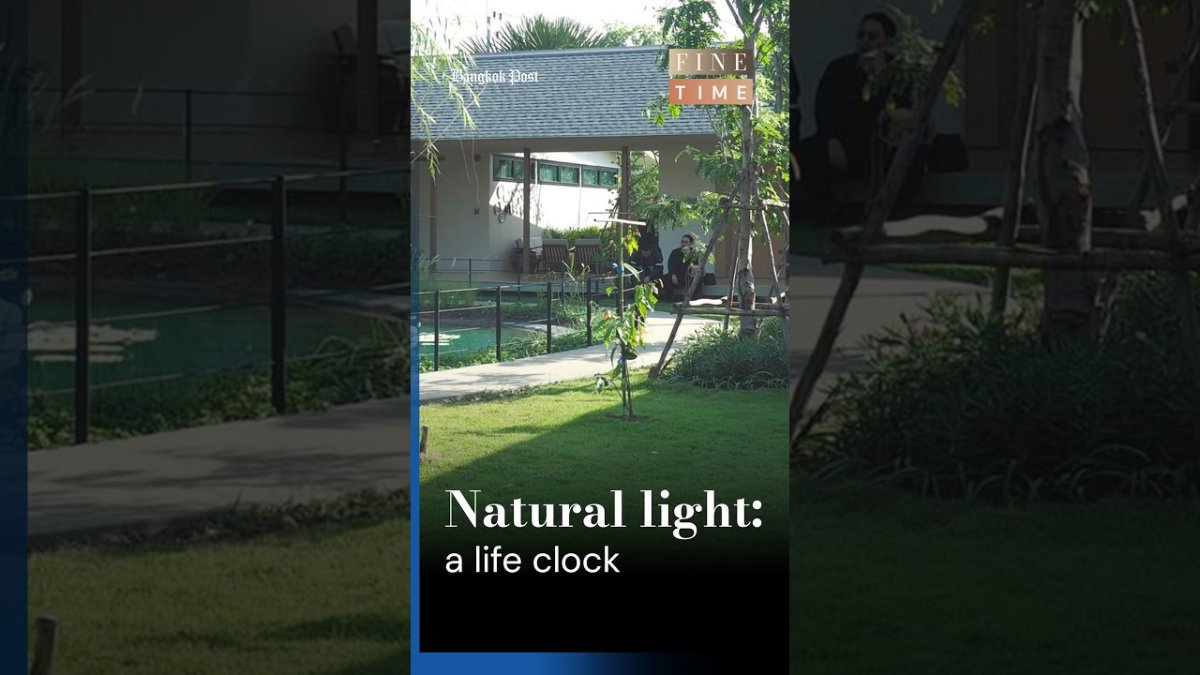
The soft glow of morning light filtering through a wooden window frame has always been a quiet presence in Thai homes, but for our elders, it is becoming something far more profound — a life clock that anchors their days, steadies their steps, and reminds them that life continues to move forward. This week, the Bangkok Post's BKPFineTime series released a video titled "Natural light: a life clock," exploring how thoughtful home design can support the well-being of older adults — a message that arrives as Thailand officially enters its aged society era, with the National Statistical Office reporting that elderly citizens now account for 20.70% of the total population in 2024.
Natural Light as a Life Clock: How Thailand's Aging Society Is Reshaping Home Design, Senior Allowances, and the Future of Care
Bangkok, Thailand — The video, published this week on the Bangkok Post YouTube channel as part of the BKPFineTime series, makes a simple yet powerful argument: natural light is more than just brightness. For older adults, it helps support daily routines, safe movement, and mental well-being — a gentle reminder that life is still moving forward. The timing could not be more relevant. As Thailand grapples with the reality of being an aged society, with projections of becoming "super-aged" by around 2033, the intersection of home design, government policy, and cultural values has never been more critical. In recent days, the Thai government also announced plans to standardize the senior allowance to a flat 1,000 baht per month for all citizens aged 60 and above, a decision that has sparked both relief and debate across the kingdom.
What the Bangkok Post Video Shows
The BKPFineTime video, part of a series that explores the finer aspects of daily living, focuses on how natural light functions as an internal biological clock for older adults. The concept is rooted in circadian rhythm science — exposure to bright daylight in the morning helps regulate sleep-wake cycles, which in turn supports mood, energy levels, and cognitive function. For elderly Thais who may spend most of their time indoors, a well-placed window or a skylight can make the difference between a day that feels purposeful and one that blurs into the next.
The video also highlights the practical safety benefits of natural light. Poor lighting is a leading contributor to falls among the elderly, a serious concern in Thai households where bathrooms and staircases are common sites of accidents. By designing homes that maximize daylight penetration — through larger windows, lighter wall colors, and open floor plans — families can reduce these risks without relying solely on artificial lighting. The message is particularly poignant for the estimated 90% of Thai elderly who prefer to live at home as long as possible, a concept known as "aging in place." For the adult children caring for aging parents, the video offers a gentle nudge: sometimes the simplest design choices carry the deepest care.
Thailand's Graying Demographic Shift
The numbers behind this story are stark. According to the National Statistical Office of Thailand, the elderly population reached 20.70% of the total population in 2024, officially classifying Thailand as an "aged society." But the trajectory is even more concerning: by around 2033 to 2035, Thailand is projected to become a "super-aged society," where people aged 60 and above will exceed 28% of the population, and the elderly will outnumber children and youth for the first time in the nation's history.
The Isaan region in the northeast is on track to become super-aged first, driven by the migration of working-age people to Bangkok and other urban centers, combined with persistently low birth rates. Villages across Khon Kaen, Ubon Ratchathani, and Nakhon Ratchasima are increasingly populated by grandparents raising grandchildren, while their adult children send remittances from factory jobs in Chonburi or construction sites in the capital. The Thailand Development Research Institute (TDRI) has captured this challenge with a memorable phrase: "Thailand has grown grey before it has grown rich." The institute argues that the nation must urgently find ways to turn older people into a driving force for the economy, rather than viewing them solely as a burden on the state.
Aging in Place: Designing Homes for Thai Seniors
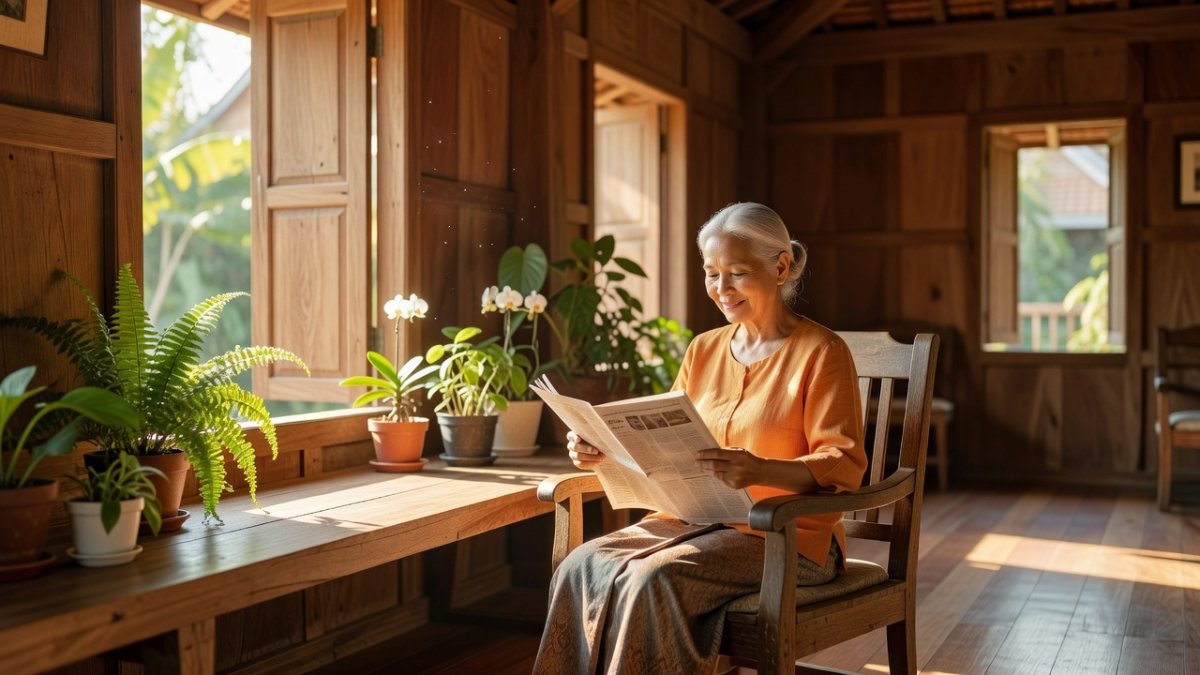
The preference for aging in place is not merely a statistic — it is deeply embedded in Thai cultural values. Research cited by Chiang Mai University's MOOC program indicates that approximately 90% of Thai elderly wish to remain in their own homes for as long as possible. A 2025 Springer study examined aging-in-place readiness in urban versus rural Thailand, using data from the 2021 national survey of the elderly, and found significant disparities in housing conditions, access to healthcare, and social support networks between Bangkok and the provinces.
Thai traditional architecture has long understood the value of natural light and ventilation. The classic raised wooden houses of central Thailand, the open pavilions (sala) found in temple grounds, and the breezy verandas of southern Thai homes all demonstrate a vernacular wisdom that prioritized airflow and daylight. Modern tropical architecture in Thailand continues this tradition, with architects like Duangrit Bunnag and Boonserm Premthada incorporating light wells, shaded courtyards, and floor-to-ceiling glazing to create homes that feel connected to the outdoors. For families retrofitting existing homes for elderly parents, the advice from geriatric specialists is practical: increase window size where possible, use sheer curtains instead of heavy drapes, paint walls in light reflective colors, and ensure that the morning sun reaches the bedroom and living areas where seniors spend most of their time.
The urban-rural divide matters here. In Bangkok condominiums, elderly residents often face the opposite problem — too much artificial light and too little access to natural daylight, especially in units facing interior corridors. In rural Isaan homes, the challenge is often structural aging, with deteriorating roofs and walls that let in drafts but not enough useful light. The Springer study suggests that aging-in-place readiness requires not just individual home modifications but also community-level support, including accessible sidewalks, nearby health clinics, and social gathering spaces where seniors can interact with neighbors.
Policy Response: The Flat 1,000-Baht Allowance
In recent days, the Thai government announced a significant change to the senior allowance system. The Ministry of Social Development and Human Security has approved a uniform monthly allowance of 1,000 baht for all citizens aged 60 and above, replacing the current age-based tiered payments. Under the existing system, seniors receive 600 baht per month for ages 60-69, 700 baht for ages 70-79, 800 baht for ages 80-89, and 1,000 baht for those aged 90 and above. The new flat rate simplifies the system and provides a modest increase for the youngest cohort of seniors, though it leaves the oldest elderly without additional support.
The decision came after a more ambitious proposal to raise the senior allowance to 3,000 baht per month was deemed financially unfeasible. Somkid Cheukong, Secretary to the Prime Minister, clarified that the government rejected three draft bills aimed at boosting senior subsidies, including a public pension scheme that would have cost over 400 billion baht. The rejections were based on financial constraints, with advice from the National Economic and Social Development Council (NESDC) and the Council of State. For many Thai families, the 1,000-baht allowance is a symbolic gesture rather than a living income — it covers perhaps a week of groceries or a few trips to the local clinic. But for elderly Thais living in rural areas where the cost of living is lower, it remains a meaningful supplement to family support and any personal savings.
Thailand Context: Family, Faith and the Aging Society
Understanding Thailand's approach to aging requires looking beyond policy documents to the cultural and spiritual dimensions of care. In Theravada Buddhism, which shapes the moral framework of Thai society, caring for one's parents is considered a form of merit-making (tam bun) that brings spiritual rewards in this life and the next. The traditional Thai value of katanyu — gratitude and filial piety — obligates children to care for their aging parents, a duty reinforced by Buddhist teachings on the debt of gratitude owed to one's mother and father.
Songkran, the Thai New Year festival celebrated each April, embodies this value. During Songkran, younger Thais travel from cities back to their home provinces to pour scented water over the hands of their elders, ask for blessings, and spend time with aging parents and grandparents. The festival is a visible reminder of the family bonds that underpin Thailand's informal care system. However, changing family structures are straining these traditions. Urban migration has scattered families across the kingdom, and many middle-aged Thais find themselves part of the "sandwich generation" — caring for both their aging parents and their own children simultaneously. The rise of single-person households, delayed marriage, and declining birth rates all point to a future where traditional family-based care may no longer be sufficient.
Temple-based care networks offer a uniquely Thai solution. Many wat (Buddhist temples) in rural areas function as informal community centers for the elderly, hosting morning exercise groups, meditation sessions, and communal meals. Some temples have begun offering basic health screenings and referral services, filling gaps left by the formal healthcare system. The challenge for policymakers is to support and scale these community-based initiatives while respecting their grassroots, faith-driven character.
Implications for Southeast Asia
Thailand is not alone in facing this demographic transition. Six ASEAN members — Singapore, Thailand, Vietnam, Malaysia, Indonesia, and Myanmar — are currently experiencing an aging phase, though at different speeds and from different starting points. Singapore, with its advanced economy and comprehensive social security system, is often cited as a regional model for aging policy. Vietnam and Myanmar are aging faster than Thailand did at a similar stage of economic development, raising concerns about their ability to provide adequate support for elderly populations.
Regional cooperation on active aging is growing. The ASEAN Centre for Active Ageing and Innovation, established in recent years, promotes knowledge sharing and policy coordination among member states. Thailand's experience — both its successes and its struggles — offers valuable lessons for neighbors facing similar challenges. The flat 1,000-baht allowance, while modest, represents a pragmatic approach to universal social protection that other middle-income ASEAN countries might consider. Similarly, Thailand's emphasis on aging in place and community-based care aligns with broader regional trends toward de-institutionalization and family-centered support systems.
The demographic dividend that fueled Southeast Asia's economic growth over the past half-century is fading. As working-age populations shrink and dependency ratios rise, the region must find new sources of growth and new ways to support its elders. Thailand's journey toward super-aged status will be watched closely by its neighbors, both as a cautionary tale and as a laboratory for innovative solutions.
Expert Perspectives
Economists at the Thailand Development Research Institute argue that the aging society need not be a crisis if approached strategically. They point to opportunities in the "silver economy" — products and services tailored to older consumers, from healthcare and pharmaceuticals to travel and financial services. Thailand's world-class medical tourism industry, centered in Bangkok and Chiang Mai, could be expanded to serve domestic elderly populations as well as international retirees. The TDRI also emphasizes the importance of lifelong learning and flexible employment options for older workers, allowing them to remain productive and engaged beyond traditional retirement age.
Geriatric specialists in Thailand echo the video's message about natural light. Dr. Sirintorn Chansirikarnjana, a geriatrician at Siriraj Hospital, notes that light exposure is one of the most underappreciated factors in elderly health. "We see patients with sleep disorders, depression, and even cognitive decline that improve significantly when we address their light environment," she explains. "The body's internal clock needs regular cues from daylight to function properly, and many elderly Thais simply don't get enough." Architects specializing in age-friendly design are also weighing in, advocating for universal design principles that benefit people of all ages — wider doorways, non-slip flooring, grab bars in bathrooms, and abundant natural light.
On the allowance reform, reactions are mixed. Some social welfare advocates argue that 1,000 baht is insufficient, pointing to rising food and energy costs that erode the purchasing power of the elderly. Others welcome the simplification, noting that the previous tiered system created confusion and administrative inefficiency. The government's position, articulated by Somkid Cheukong, is that fiscal responsibility must take precedence over expansive welfare promises. "We cannot promise what we cannot deliver," he stated, emphasizing the need for sustainable, long-term solutions.
What to Watch For
The implementation timeline for the flat 1,000-baht allowance will be closely watched in the coming months. The Ministry of Social Development and Human Security must update its payment systems and coordinate with local administrative organizations across the country to ensure smooth disbursement. Budget implications are significant — with over 20% of the population aged 60 and above, even a modest increase in per-capita payments translates into billions of baht in additional annual expenditure.
The NESDC's next national development plan is expected to incorporate aging-related priorities, including housing, healthcare, and social protection. The approaching super-aged milestone around 2033 will require sustained policy attention across multiple government agencies. For families, the message from the BKPFineTime video is both simple and urgent: start adapting homes now, before the need becomes acute. A skylight installed today, a bathroom renovated with grab bars, a bedroom repositioned to capture the morning sun — these are investments in dignity and independence that will pay dividends for years to come.
As Thailand navigates this demographic transition, the interplay between policy, design, and culture will determine whether the nation's elders are seen as a burden or as a source of wisdom and continuity. The natural light that streams through a window is more than illumination — it is a promise that each new day brings possibility, connection, and the quiet reassurance that life, in all its stages, is worth living well.
By Ann Srisawat, Staff Writer
This article was produced with AI-assisted research and editorial support. Reporting is based on sources cited in the article.
What's Your Reaction?
 Like
0
Like
0
 Dislike
0
Dislike
0
 Love
0
Love
0
 Funny
0
Funny
0
 Wow
0
Wow
0
 Sad
0
Sad
0
 Angry
0
Angry
0

Southeast Asia Correspondent at Global1.News. Based in Bangkok, covering Thai and Southeast Asian politics, economy, technology, and culture. Deep regional perspective on one of the world's most dynamic regions.















Comments (0)