
Stolen Matisse artworks recovered by police in Brazil
Brazilian police recovered eight Henri Matisse engravings stolen from Sao Paulo's Mario de Andrade Library in a December daylight heist, arresting a 44-year-old man in Sao Bernardo do Campo who was holding the works for the still-at-large mastermind.
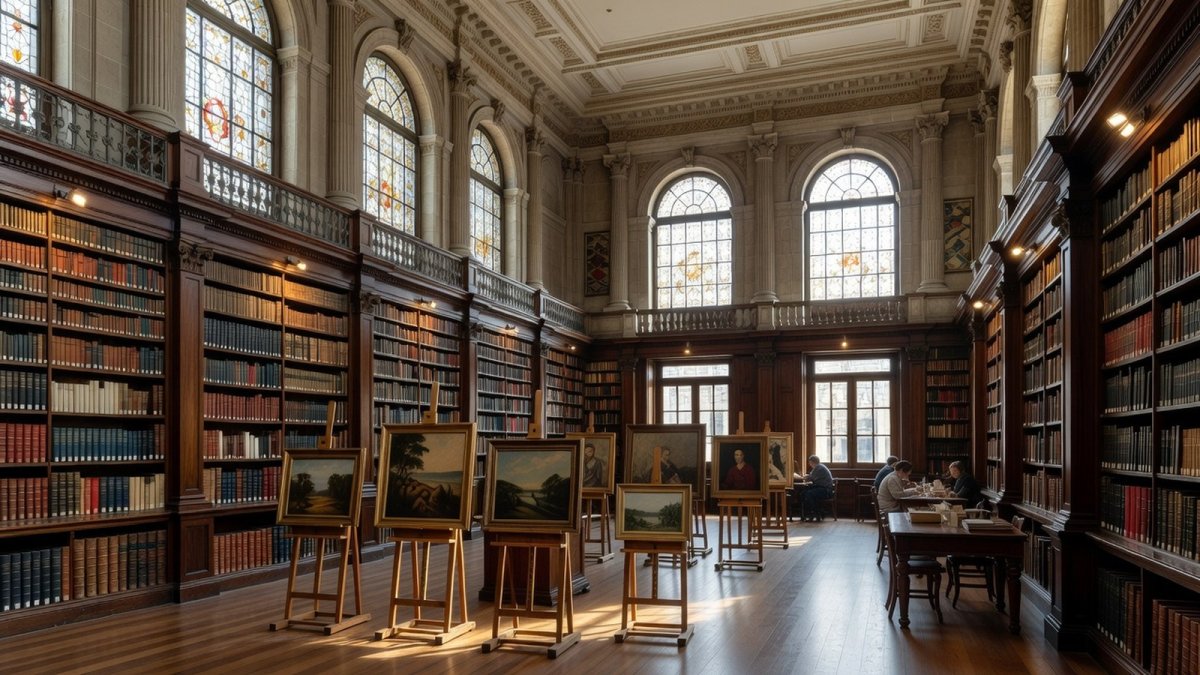
Eight original works by French master Henri Matisse, stolen in a brazen daylight raid on one of São Paulo’s most cherished cultural institutions, have been recovered by Brazilian police this week in an industrial suburb southeast of the city. The discovery marks a significant victory for the Polícia Civil’s specialized art-crime unit, but it also lays bare the vulnerabilities that continue to plague public collections across Latin America. The recovery, confirmed on Thursday, comes more than eight months after armed gunmen walked into the Biblioteca Mário de Andrade during public visiting hours and made off with a trove of irreplaceable artworks, leaving the city’s cultural community shaken and demanding answers.
São Paulo, Brazil — The investigation into one of the most audacious art heists in recent Brazilian history took a decisive turn this week when police located the eight Matisse engravings at a residence in São Bernardo do Campo, a working-class industrial hub approximately 12 miles (19 km) southeast of the capital. A 44-year-old man was arrested at the scene, authorities said, and now faces charges of receiving stolen goods and illegal possession of a weapon. The suspect, according to police, was holding the artworks on behalf of the still-unidentified mastermind of the December robbery.
A Heist in Broad Daylight
The original crime unfolded on 7 December 2025, a Sunday afternoon when the Biblioteca Mário de Andrade, São Paulo’s largest and most historically significant public library, was hosting an exhibition scheduled to close that very day. The library, a landmark of the city’s downtown cultural corridor, had opened its doors to visitors for what was meant to be a final day of appreciation for the works on display. Instead, it became the scene of a violent robbery that would capture national attention.
Two armed gunmen entered the building during public visiting hours, according to police reports. They overpowered a security guard and held up an elderly couple who happened to be in the vicinity, using the threat of violence to control the scene. In a matter of minutes, the assailants made off with more than a dozen artworks, including at least eight engravings by Matisse and pieces by celebrated Brazilian painter Cândido Portinari, one of the most important figures in the country’s modern art movement.
The entire episode was caught on surveillance video, which later circulated widely in Brazilian media. The footage showed the gunmen calmly carrying the works through the streets of downtown São Paulo after exiting the library, a chilling reminder of how brazenly the operation was executed. The fact that the theft occurred in daylight, in one of the busiest areas of Latin America’s largest city, sent shockwaves through the cultural sector and raised immediate questions about the adequacy of security measures at public institutions.
The Recovery in São Bernardo do Campo
On Thursday, officers from the Polícia Civil’s art-crime unit executed a search warrant at a home in São Bernardo do Campo, a municipality known primarily for its automobile manufacturing plants and working-class neighborhoods. There, they found the eight Matisse works, carefully stored and apparently undamaged, according to initial police assessments. The arrest of the 44-year-old man at the scene was described by investigators as a significant breakthrough, though they were quick to emphasize that the operation is far from complete.
Police said the suspect was keeping the artworks for the mastermind of the heist, a figure who remains at large. The man’s role, as described by authorities, was that of a custodian or intermediary, someone entrusted with safeguarding the stolen goods until the orchestrator could arrange for their sale or transfer. He now faces serious legal consequences, with charges of receiving stolen goods and illegal weapon possession carrying substantial prison sentences under Brazilian law.
The combined estimated value of the eight recovered Matisse works is approximately $200,000, a figure that translates to more than 1 million Brazilian reais. While this sum is modest compared to the astronomical prices fetched by major paintings at international auction houses, the cultural and historical value of the pieces is immeasurable. The engravings are part of the library’s permanent collection, a repository of artistic heritage that belongs to the people of São Paulo and, by extension, to the nation.
A Trail of Clues and a Facial Recognition Arrest
The investigation into the December heist has been marked by both frustration and incremental progress. In a notable development, police arrested one suspect in the original robbery just one day after the theft, thanks to the city’s facial recognition system. The technology, which has been deployed across São Paulo’s extensive network of public surveillance cameras, identified the individual as he moved through the city in the aftermath of the crime. That arrest provided investigators with valuable leads, though it did not immediately lead to the recovery of the artworks or the identification of the operation’s mastermind.
The use of facial recognition in this case highlights the growing role of technology in Brazilian law enforcement, particularly in São Paulo, which has invested heavily in smart-city infrastructure. However, it also raises questions about privacy and the limits of surveillance, debates that continue to unfold across Latin America as governments grapple with the balance between security and civil liberties. For the art-crime unit, the technology proved to be a crucial tool in piecing together the puzzle of who was behind the heist and where the stolen works had been taken.
Investigators have not disclosed the identity of the mastermind or provided details about their possible motives, but they have confirmed that the search is ongoing. The recovery of the Matisse works this week is seen as a major morale boost for the team, which has been working on the case for months. Police said they remain confident that the remaining stolen pieces, including the Portinari works, will eventually be found.
The Mário de Andrade Library and Its Cultural Weight
The Biblioteca Mário de Andrade is not just any library. Named after the modernist writer and poet who was a central figure in the 1922 Semana de Arte Moderna, the institution holds a special place in Brazil’s cultural imagination. Located on Rua da Consolação in the heart of São Paulo, it is the city’s oldest and most important public library, with a collection that spans millions of items, including rare books, manuscripts, and a significant art collection that has been built up over more than a century.
The library’s art holdings include works by some of the most important names in Brazilian and international art, making it a target for criminals who recognize the value of such pieces. The December theft was not the first time the institution has faced security challenges, but the brazenness of the daylight robbery and the involvement of armed gunmen marked a new and troubling escalation. The incident prompted an immediate review of security protocols at the library and at other cultural institutions across the city, though critics argue that much more needs to be done.
São Paulo, as Latin America’s financial and cultural hub, is home to some of the region’s most important museums, galleries, and cultural centers. The city’s art scene is vibrant and globally connected, but it also operates in an environment where inequality and crime are persistent challenges. The theft from the Mário de Andrade Library served as a stark reminder that even the most revered institutions are not immune to the forces of criminality that affect the broader society.
Art Security in Brazil and Latin America
The recovery of the Matisse works has been hailed as a major breakthrough for the Polícia Civil’s art-crime unit, a specialized division that has worked to build expertise in a field that is often overlooked in favor of more conventional policing priorities. The unit’s success in this case is a testament to the dedication of its investigators, but it also underscores the scale of the challenge facing cultural institutions across the region.
Art theft is a persistent problem in Latin America, where public collections are often underfunded and security measures are inconsistent. Major cultural institutions in countries such as Mexico, Colombia, and Argentina have faced theft and vandalism over the years, and the region has seen its share of high-profile cases involving stolen works that resurface on the international black market. The Art Newspaper, in its coverage of the Brazilian case, noted that the theft has raised questions about the security of public art collections in Brazil, where the gap between the value of the collections and the resources allocated to protect them is often stark.
The recovery of the Matisse engravings is a positive outcome, but it also highlights the need for systemic change. Experts argue that institutions must invest in better security infrastructure, including advanced surveillance systems, trained personnel, and comprehensive inventory management. They also point to the importance of international cooperation in tracking stolen artworks, as pieces that disappear in one country can quickly surface in another, often with forged provenance documents.
What Comes Next
For now, the eight Matisse works are in the custody of the Polícia Civil, where they will undergo forensic examination before being returned to the Biblioteca Mário de Andrade. The library has not yet announced when the works will be put back on public display, but the expectation is that they will eventually resume their place in the collection, where they can be appreciated by the public once again.
The investigation, however, is far from over. Police are still searching for the mastermind of the heist, and they have not ruled out the possibility of additional arrests. The recovery of the Matisse works is a significant step, but the fact that other pieces, including the Portinari works, remain missing is a reminder that the case is not yet closed. The authorities have appealed to the public for any information that could help locate the remaining artworks or identify those responsible for orchestrating the crime.
For the people of São Paulo, the recovery of the Matisse engravings is a small but meaningful victory. It is a reminder that the city’s cultural heritage is worth protecting and that the institutions tasked with safeguarding it are not alone in their efforts. The case has also sparked a broader conversation about the security of public art collections across Brazil and Latin America, a conversation that is long overdue. As the investigation continues, the hope is that the lessons learned from this case will lead to stronger protections for the region’s irreplaceable artistic treasures.
This article was produced with AI-assisted research and editorial support. Sources: BBC News, The New York Times, The Art Newspaper, Le Monde, Associated Press.
By Elena Vasquez, Staff Writer
What's Your Reaction?
 Like
0
Like
0
 Dislike
0
Dislike
0
 Love
0
Love
0
 Funny
0
Funny
0
 Wow
0
Wow
0
 Sad
0
Sad
0
 Angry
0
Angry
0

Latin America Correspondent at Global1.News. Based in Mexico City, covering politics, economics, energy, and culture across the region. Brings an on-the-ground perspective to stories spanning from the Rio Grande to Patagonia.












Comments (0)