
Nashik 4.3 Quake Hits Amid Ongoing Swarm
A 4.3-magnitude earthquake struck Nashik, Maharashtra, at 22:00:59 IST on Saturday — the strongest jolt yet in an earthquake swarm that has rattled the district since August 5. Folks, tremors have now hit multiple talukas across three days, and while there are no reported casualties or major damage, officials have put the district on a sustained state of alert.
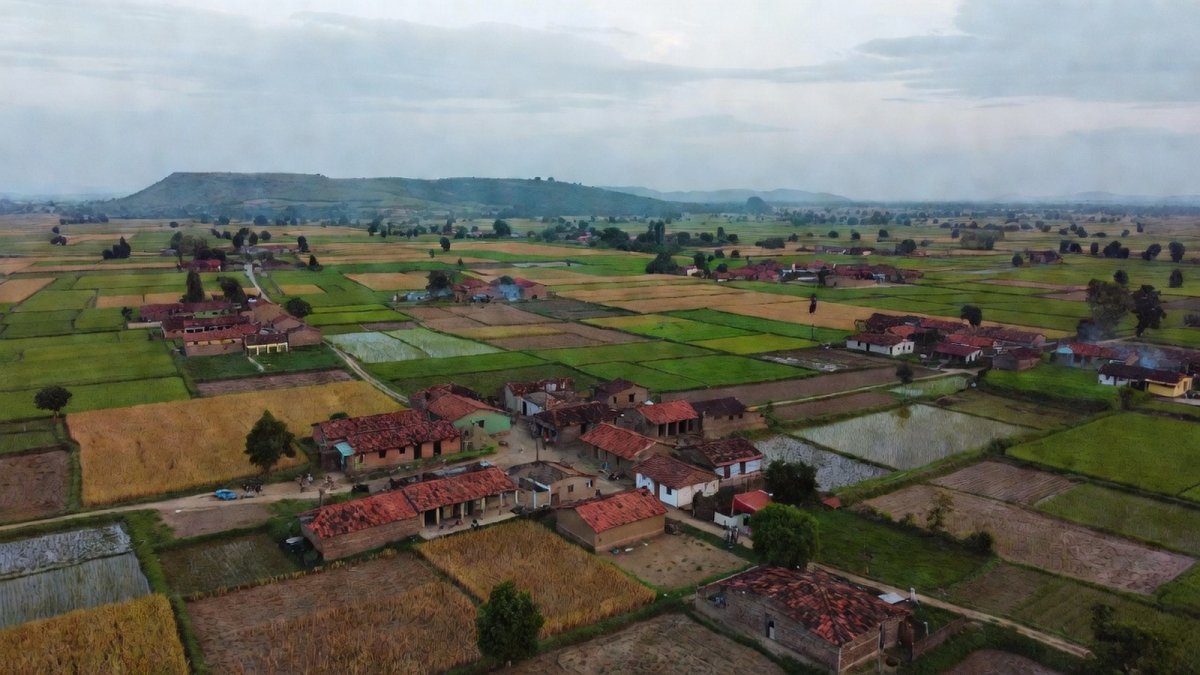
A 4.3-magnitude earthquake struck Nashik, Maharashtra, at 22:00:59 IST on Saturday — the strongest jolt yet in an earthquake swarm that has rattled the district since August 5. Folks, tremors have now hit multiple talukas across three days, and while there are no reported casualties or major damage, officials have put the district on a sustained state of alert. When the ground keeps moving under you — nine times in 36 hours at one stretch — the anxiety is real, and so is the need for clear, verified information.
Nashik 4.3 Quake Hits Amid Ongoing Swarm
Nashik, Maharashtra – August 8, 2026 — The National Center for Seismology recorded the 4.3-magnitude quake at a depth of 5 km, with its epicenter at latitude 20.424 N and longitude 73.682 E, listing the location as Nashik, Maharashtra. NCS posted the details on X, tagging Union Minister for Earth Sciences Dr Jitendra Singh, Ministry of Earth Sciences Secretary Dr N Kalaiselvi, NCS Director G Suresh and the National Disaster Management Authority (NDMA). The agency also promoted its BhooKamp app for verified earthquake alerts.
Latest Strongest Tremor Details
The 4.3 quake struck at 22:00:59 IST on Saturday night. Tremors were felt across parts of Nashik city and the wider district, with the NCS listing Dangrol and Shindpada among the felt areas. Residents reported shaking that sent people out of their homes, and the event was classified by NCS as a reviewed, felt earthquake. It was the largest of the swarm so far — comfortably above the 2.0-to-3.6 range of the events that preceded it — which is why it dominated Saturday night's attention across the district.
Full Swarm Sequence So Far
NCS data shows multiple earthquakes on August 6 with magnitudes of 3.6, 3.0, 2.8, 2.7 and 2.5, plus a 3.0-magnitude event on August 5. NDTV reported a 3.8-magnitude quake at 2:37:41 am IST on Thursday, August 6, at a depth of 5 km with an epicenter at 20.448 N, 73.708 E. The Times of India reported nine quakes of up to 3.2 magnitude in less than 36 hours across Nashik's Surgana, Kalwan, Dindori and Peth talukas — a pattern officials have called an earthquake swarm. Four tremors up to 3.6 magnitude hit within 50 minutes on Saturday morning, and neighboring Palghar was jolted by a 3.1 quake.
Earthquake swarms differ from classic aftershock sequences: instead of one dominant mainshock followed by declining aftershocks, a swarm produces multiple events of similar magnitude spread over days or longer. In parts of the Deccan Plateau, such clusters are often linked to fluid movement or minor fault adjustments rather than a single large tectonic shift — which is why activity can persist without escalating, and why scientists watch the pattern closely rather than issue forecasts. Many swarms subside after days or weeks, but the uncertainty itself is what keeps residents on edge and response teams engaged.
MERI and District Recordings
The Maharashtra Engineering Research Institute (MERI) in Nashik recorded four seismic events on Saturday: a 3.0 at 9:55 am, a 2.2 at 10:01 am, a 2.0 at 10:02 am and a 2.5 at 12:10 pm, all approximately 45-47 km from the Nashik Observatory. District Collector Ayush Prasad said mild tremors were experienced in Borgaon, Vanzhulpada, Harantekdi, Roti, Shinde and Mohpada (Chi.) villages in Surgana taluka between 9:55 am and 12:10 pm. Two mild tremors were also recorded in Bhanwad village of Dindori taluka.
Fresh Overnight Activity
The shaking did not stop at sundown. Fresh tremors were reported between Saturday midnight and early Sunday across Kalwan, Surgana, Dindori and Peth talukas. In Dalwat village in Kalwan, residents said roofs, walls and windows shook for about 20-30 seconds at 11:56 pm. In Surgana, tremors were felt in Borgaon, Surgana town, Sarad and Chikhli at 11:55 pm, followed by another at 2:45 am — and a wall of the government residential school building in Sarad developed cracks. Residents of Nanashi and Badgicha Pada in Dindori felt mild tremors around 11:55 pm, while Shivshet village in Peth taluka recorded tremors around 2:44 am.
Earlier Thursday Reports
Thursday's daytime tremors — at Dalwat in Kalwan taluka at 3:38 pm, Asarbari in Peth taluka at 3:38 pm and Borgaon in Surgana taluka at 3:40 pm — were reported by PTI and Mid-Day, citing the District Disaster Management Office, with no loss of life or property damage. They followed the 3.8-magnitude quake in the pre-dawn hours of Thursday.
That 48-hour arc — a pre-dawn jolt, afternoon shakes, a Saturday morning cluster and then the 4.3 on Saturday night — is what makes the sequence feel relentless to the people living through it. Each new event resets public attention, sends fresh inspection teams into the villages, and keeps the disaster-management machinery in continuous readiness.
Official Checks and Status
Officials from the district administration and local agencies have inspected the affected areas — including Borgaon, Vanzhulpada, Harantekdi, Roti, Shinde and Mohpada (Chi.) in Surgana taluka — and found no significant damage. So far, the only reported structural impact is a wall of the government residential school building in Sarad that developed cracks. No casualties and no major property damage have been reported anywhere in the district, though the repeated tremors have created understandable panic among residents.
Nashik sits in India's seismic Zone III — the moderate-risk band on the official seismic zoning map. This is not the district's first encounter with a swarm: four earthquakes hit the Harsul area of Trimbakeshwar in 24 hours in February 2026, and the district administration went into alert mode on July 29, 2026 after earlier tremors. This time, experts from MERI and other technical agencies are continuously analyzing seismic activity, and the District Disaster Management Control Room remains fully operational — applying lessons from those earlier episodes to keep reporting chains fast and verification rigorous.
What the Swarm Says About the Region
Maharashtra is no stranger to intraplate seismicity — earthquakes that happen far from the boundaries of tectonic plates. The Koyna-Warna region in the western part of the state, for example, has recorded earthquakes for decades, including the destructive 6.3-magnitude Koynanagar earthquake of December 1967, one of the most studied reservoir-triggered seismic events in the world. Northern Maharashtra's tremors are far smaller in scale, but they belong to the same broad reality: the Indian subcontinent sits on a plate that is still pushing northward into Eurasia, and the stress from that collision shows up in unexpected places.
What makes the current Nashik sequence notable is not the size of any single event — a 4.3 is moderate by any measure — but the sheer persistence of the shaking. The Times of India's reporting put the pattern in sharp relief: nine quakes in less than 36 hours, spread across Surgana, Kalwan, Dindori and Peth, with Palghar catching a 3.1 on Saturday as well. For seismologists, a swarm is a puzzle to be monitored rather than a prediction to be made. For the district administration, it is a test of readiness — and so far, the inspections after every cluster have come back with the same answer: no significant damage, no casualties, but no all-clear either.
How the Response Is Being Coordinated
The nerve center of the response is the District Disaster Management Control Room, which remains fully operational around the clock. Emergency assistance is available through the toll-free number 1077 and the landline 0253-2314181. District Collector Ayush Prasad has been the public face of the effort, with administration and local-agency teams dispatched to every cluster of reported tremors — checking schools, government buildings and village homes for cracks or structural concerns.
At the national level, the NCS is publishing every event on its official channels, including its BhooKamp app, which delivers verified earthquake alerts straight to phones. The agency's X posts on Saturday's quake were addressed to the NDMA, the Ministry of Earth Sciences and the NCS directorate — a signal that the swarm is being tracked at the highest levels of India's disaster-management apparatus. For residents, the working rule is simple: rely on official channels for information, and treat forwarded messages as unverified until confirmed.
What Residents Can Do Now
Authorities have issued clear guidance: during shaking, stay away from windows, glass, cupboards and heavy objects; take shelter under a sturdy table if possible; do not use elevators or attempt to run outside. After the shaking stops, move to an open area at a safe distance from buildings, power lines, trees and damaged structures. Take special care of children, senior citizens and people with disabilities.
Rumor control matters just as much as the physical safety rules. With tremors recurring, unverified claims spread fast on WhatsApp and social media in rural Maharashtra, and authorities are urging citizens not to spread rumors or unverified information and to follow official advisories. Families with elderly members should have a plan in advance: know the sturdiest table or interior wall in each room, keep emergency numbers written down, and agree on a meeting point outside. Schools in the affected talukas should review their earthquake drills, and property owners should photograph any new cracks for the record and report structural concerns to local authorities.
By Jessica Ali, Staff Writer
This article was produced with AI-assisted research and editorial support. Reporting is based on sources cited in the article.
What's Your Reaction?
 Like
0
Like
0
 Dislike
0
Dislike
0
 Love
0
Love
0
 Funny
0
Funny
0
 Wow
0
Wow
0
 Sad
0
Sad
0
 Angry
0
Angry
0

Editor-in-Chief at Global1.News. Atlanta-based journalist who cuts through the BS and tells it like it is. Lead anchor, host, and the voice you hear when the spin stops and the truth starts.















Comments (0)