
Kyiv Under Fire: Three Killed Including a Child as Zelensky Pleads for Interceptors
In a recent BBC News report, at least three people — including a three-year-old boy and his grandparents — were confirmed dead after Russian drones and missiles struck the Kyiv region overnight, as Ukraine's President Volodymyr Zelensky renewed his plea for Patriot interceptor missiles and took his case for support to Serbia.
In a recent BBC News report, at least three people — including a three-year-old boy and his grandparents — were confirmed dead after Russian drones and missiles struck the Kyiv region overnight, as Ukraine's President Volodymyr Zelensky renewed his plea for Patriot interceptor missiles and took his case for support to Serbia.
Kyiv Under Fire: Three Killed Including a Child as Zelensky Pleads for Interceptors
Kyiv, Ukraine – 8 August 2026 — Overnight Russian strikes killed three people, including a child, in the Brovary district northeast of Kyiv, hours after Ukraine's military struck two oil refineries deep inside Russian territory and as President Zelensky pressed allies for more air-defence systems during his first trip to Serbia.
Overnight Strikes: A Family Destroyed in Brovary
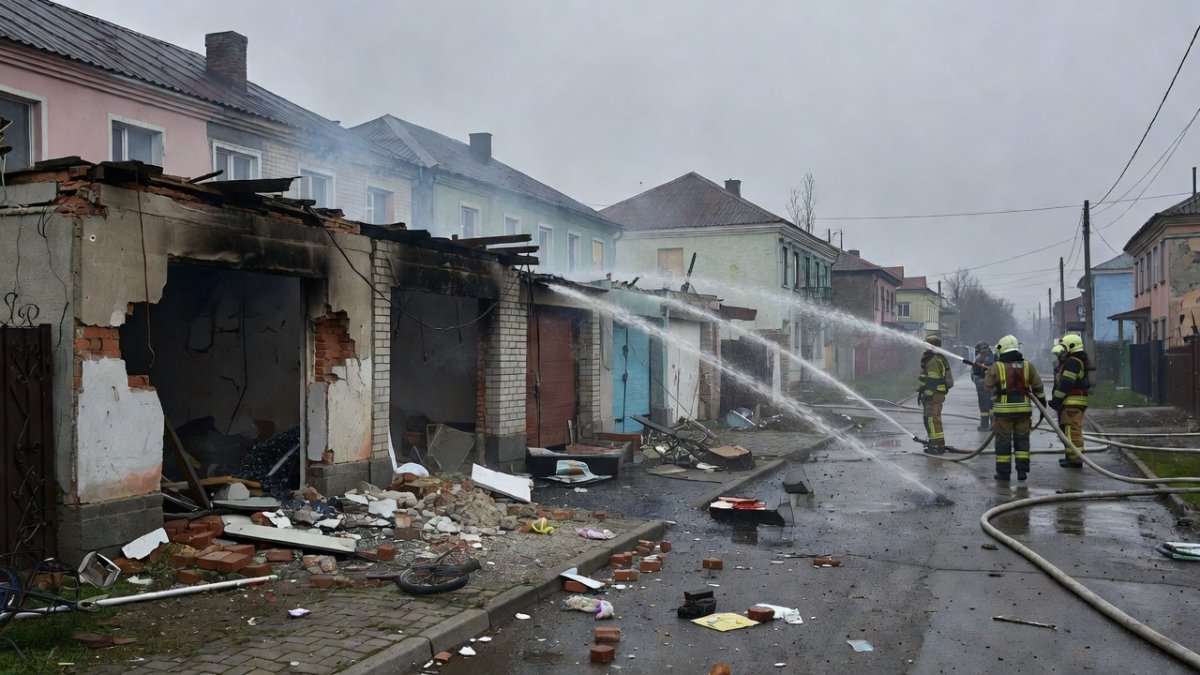
Multiple Russian drones destroyed a family home in the Brovary district of the Kyiv region in the early hours of Saturday, killing a three-year-old boy and his two grandparents. Three other people were injured. Debris from intercepted drones and missiles damaged homes, vehicles and other buildings across the district. The head of the regional military administration, Timur Tkachenko, confirmed the toll. Local emergency services worked through the night to clear wreckage and search for survivors amid scattered debris fields that stretched across residential streets. Witnesses described sudden explosions that shook the area, leaving families to sift through rubble for personal belongings while officials tallied the human cost. The incident underscored the direct impact on civilians living near the capital, where even partial interceptions can send fragments into populated zones.
The strike came just days after 21 people were killed in a separate Russian barrage, as Moscow intensifies its nightly campaign aware that Ukraine is running out of Western-donated interceptor missiles. In a recent BBC News report these attacks have become an almost nightly occurrence, with Russian forces probing Ukrainian air defences repeatedly. The pattern reflects a deliberate strategy to exhaust limited resources and force difficult choices about which areas to protect. Residents in Brovary and surrounding districts now face heightened anxiety each evening, knowing that any lull in supplies could allow more strikes to reach their targets.
The destruction of an entire family in one strike illustrates the profound human cost borne by civilians in the Kyiv region, where emergency responders must navigate debris-strewn streets to reach those affected. Local teams continue to assess structural damage to nearby homes while residents confront the immediate aftermath of lost loved ones and disrupted lives. This pattern of overnight attacks leaves communities bracing for further incidents, with limited resources available to reinforce shelters or provide rapid psychological support.
Air Defences Under Strain: The Interceptor Shortage
Zelensky said on Saturday the supply of interceptors from allies had been significantly reduced this year, and that what Ukraine was receiving was not enough. Patriot systems are advanced surface-to-air missile batteries capable of engaging multiple incoming threats at long range, making them essential for shielding Kyiv and critical infrastructure such as power plants and transport hubs. Without adequate numbers, Ukrainian forces must ration launches and accept higher risks of breakthrough attacks. The shortage has forced commanders to prioritise certain sectors, leaving others more exposed during sustained barrages. This limitation directly affects the safety of millions of civilians who rely on these systems for protection against nightly threats.
Trump appeared to go back on a promise to grant Ukraine a licence to manufacture the defensive systems. Ukraine's European allies have been buying expensive US supplies such as Patriot missiles and donating them to Ukraine. According to statements from Kyiv, this arrangement has become the primary channel for replenishment since direct US aid flows were scaled back. European purchases help maintain some flow but cannot match the volume needed to counter Russia's production of drones and missiles. The resulting gap leaves Ukrainian skies increasingly vulnerable as the conflict drags on.
Zelensky stated: "Ukraine does not have, nor will it ever have, the sort of funds that Russia has, which it is using to finance the war." He added: "We have what we need, thanks to European aid and support from other countries. But additional funding specifically for Ukrainian production is what is needed."
The reduced flow of interceptors could indicate that Kyiv's layered defences around the capital are becoming less reliable against massed drone and missile salvos. Analysts suggest this shortage places greater strain on remaining Patriot batteries, whose long-range engagement capability remains vital for protecting dense urban areas and key energy nodes from saturation attacks. Without accelerated European resupply, the margin for error in air defence operations narrows considerably.
Belgrade Diplomacy: Zelensky's First Visit to Serbia
Zelensky conducted his first trip to Serbia, meeting President Aleksandar Vucic in Belgrade to discuss economic ties, security and EU relations. Vucic, a close ally of Putin, has refused to impose sanctions on Russia. Serbia is trying to join the EU, has provided aid to Ukraine and promised to help rebuild. At the joint news conference Vucic focused on Ukraine's European accession and pledged support. The visit highlights Ukraine's effort to broaden its diplomatic base beyond traditional Western partners, seeking leverage even in countries with historical ties to Moscow. Discussions touched on potential reconstruction projects and energy cooperation that could benefit both nations once the conflict ends. Analysts note that such outreach tests Serbia's balancing act between EU aspirations and longstanding Russian relations. The meetings produced no immediate breakthroughs on sanctions but opened channels for future humanitarian and economic assistance. This approach allows Ukraine to maintain pressure on multiple fronts while reinforcing its European orientation.
Serbia's position underscores the delicate equilibrium it maintains between pursuing EU membership and preserving longstanding ties with Moscow. This balancing act could shape the extent of future assistance Belgrade offers Kyiv, particularly in reconstruction efforts that align with European integration goals while avoiding direct confrontation with Russian interests.
Ukraine Strikes Back: Oil Refineries and Black Sea Targets
The Ukrainian military hit Russia's Ilsky and Syzran oil refineries overnight, causing fires at both, according to the Ukrainian general staff. Moscow-linked vessels in the Black Sea were also hit. Zelensky says the intention is to limit the oil revenues Russia uses to finance its war. These deep strikes demonstrate Ukraine's growing capability to reach far into Russian territory with advanced drones. The attacks aim to disrupt the economic foundation supporting Moscow's military operations by targeting key energy infrastructure. Such operations have become a central element of Ukraine's strategy to impose costs on Russia amid the interceptor shortage. By striking refineries and shipping assets, Kyiv seeks to reduce the funds available for sustained aggression. The campaign illustrates the attritional nature of the conflict, where both sides target each other's economic and military capacities. Continued success depends on maintaining drone production and avoiding escalation that could draw in additional actors.
Targeting Russia's oil revenue streams reflects a deliberate effort to undermine the financial base that sustains prolonged military operations. In the current attritional phase, these strikes could gradually constrain Moscow's capacity to fund drone and missile production, though their long-term impact depends on sustained Ukrainian operational reach.
Spillover Fears: Drone Incident in Bulgarian Airspace
A drone entered Bulgarian airspace on Saturday and exploded near an international gas pipeline after crossing from Romania. President Rumen Radev said it carried a significant amount of explosives but caused no casualties. Bulgaria's defence ministry said it appeared to be a Maya decoy drone known to be used by Ukraine, and that there was no reason to believe the incident was intentional. The event raises concerns about unintended consequences spreading into NATO territory. Neighbouring countries must now enhance monitoring to prevent similar occurrences. While officials downplayed deliberate intent, the episode shows how drone warfare can create risks beyond the immediate battlefield. Regional security arrangements may require adjustments to address these new threats. The incident serves as a reminder that the conflict's effects extend beyond Ukraine's borders, affecting energy infrastructure and civilian safety in adjacent states.
The episode highlights the broader risk that the war poses to NATO neighbours, where even unintentional drone incursions could necessitate upgraded surveillance and rapid-response protocols along alliance borders.
Analysis and Implications
The interceptor shortage threatens to erode Kyiv's ability to shield its population and infrastructure from sustained Russian pressure. With supplies significantly reduced, Ukrainian forces face mounting difficulties in maintaining an effective defensive screen. This situation could accelerate damage to energy facilities and increase civilian casualties in the weeks ahead. Faltering US mediation has coincided with intensified exchanges, allowing both sides to pursue deeper strikes without immediate diplomatic restraint. Ukraine's expanding campaign against Russian oil infrastructure reflects a calculated response to the resource imbalance, aiming to degrade Moscow's war financing over time. The Serbia visit signals Kyiv's intent to cultivate broader European support and advance its long-term integration goals even as battlefield conditions remain static. If interceptor deliveries are not restored, Kyiv may be forced into more selective defence postures that leave larger areas exposed. This could shift the war's momentum toward greater Russian gains in the east while prompting further Ukrainian deep strikes. Regional stability risks rising if spillover incidents multiply, drawing NATO members into heightened alert postures. The coming weeks will test whether European donors can compensate for reduced US involvement or whether the attritional dynamic will favour the side with greater production capacity.
Without renewed interceptor flows, Ukrainian cities face repeated exposure to Russian barrages that could overwhelm remaining defences and accelerate infrastructure degradation. The diplomatic push through Serbia and other channels offers limited immediate relief but may lay groundwork for sustained European backing. Continued Ukrainian strikes on Russian energy assets could gradually constrain Moscow's resources, yet the overall trajectory points toward prolonged attrition unless external supplies improve markedly.
If interceptor supplies are not restored in the coming weeks, analysts suggest Kyiv could face increasingly difficult choices about which population centres to prioritise, potentially allowing more Russian breakthroughs and raising the prospect of accelerated infrastructure damage across wider areas.
By Irina Volkov, Staff Writer
This article was produced with AI-assisted research and editorial support. Reporting is based on sources cited in the article.
What's Your Reaction?
 Like
0
Like
0
 Dislike
0
Dislike
0
 Love
0
Love
0
 Funny
0
Funny
0
 Wow
0
Wow
0
 Sad
0
Sad
0
 Angry
0
Angry
0
Russia/Eastern Europe Correspondent at Global1.News. Covering Russian politics, energy, security, and the shifting dynamics of the post-Soviet space. Provides clear-eyed analysis on one of the world's most opaque regions.














Comments (0)