
Mexico Supreme Court to Hear Mahahual Land-Use Fight
MAHAHUAL, Mexico -- The fight over a proposed cruise megaproject on Mexico's Caribbean coast is not over.
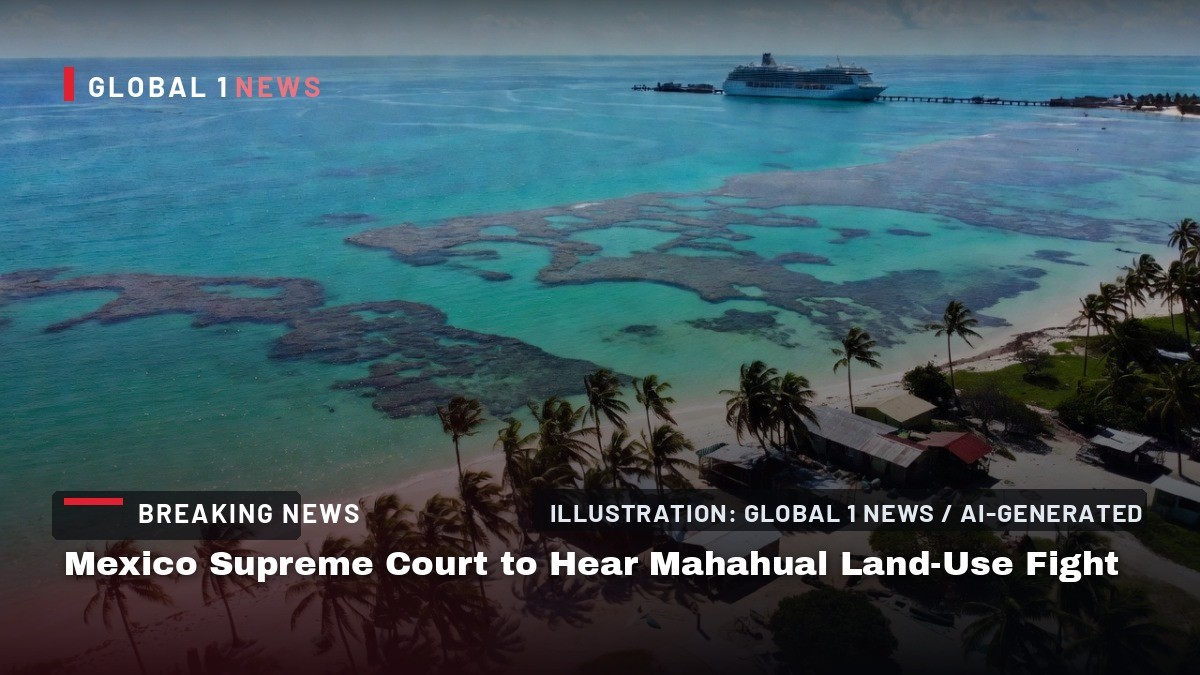
MAHAHUAL, Mexico -- The fight over a proposed cruise megaproject on Mexico's Caribbean coast is not over. On August 10, 2026, the Supreme Court of Justice of the Nation (SCJN) agreed to hear three legal challenges that could determine whether the residents of Mahahual -- and communities across Mexico -- have a real voice when authorities fast-track land-use changes with potentially irreversible environmental consequences.
The case centers on Royal Caribbean's "Perfect Day Mexico," a planned private beach and water park destination that would have transformed this fishing town into a hub for up to 21,000 cruise passengers a day. While the project appeared dead in May when the federal government announced it would not approve the environmental permit, the company has not walked away. And now, the nation's highest court is stepping into a legal battle that residents say is about something far bigger than one water park: it is about whether ordinary people can challenge decisions made behind closed doors.
Tags: Perfect Day Mexico, Royal Caribbean, Mahahual, Costa Maya, SCJN, Supreme Court, Semarnat, environmental justice, land-use, Quintana Roo, Mesoamerican Reef, cruise tourism
Supreme Court Takes Up Mahahual Land-Use Challenges
The SCJN's plenary session unanimously agreed to review three challenges -- recursos de queja 76/2026, 112/2026 and 113/2026 -- that arose from amparo cases filed by Mahahual residents. These cases had been stalled before the First Collegiate Tribunal of the Twenty-Seventh Circuit in Quintana Roo. The motion to bring them to the full court came from Justice Irving Espinosa Betanzo.
The court is not deciding whether Royal Caribbean can build its resort. Instead, the justices will answer a procedural question with enormous practical consequences: are modifications to urban development programs "self-executing general norms" that take effect the moment they are published in the state's official gazette? Or are they administrative acts with specific effects, which would give citizens a longer window to challenge them?
That distinction determines how much time ordinary people have to file an amparo -- Mexico's constitutional injunction -- against land-use decisions. For the residents of Mahahual, it could mean the difference between having their day in court and being shut out entirely.
A Land-Use Change Approved in Less Than Three Weeks
The story begins in December 2025, when the municipality of Othón P. Blanco approved sweeping changes to the Mahahual urban development program. The modifications covered 107.67 hectares -- roughly 200 football fields -- and were pushed through in less than three weeks.
Attorney Irma Morales of the civil association Defendiendo el Derecho a un Medio Ambiente Sano (DMAS) says that timeline is deeply suspicious. A process like this normally takes eight months to a year, she told reporters, and the changes were approved without the studies and public participation that Mexican law requires.
Among the most dramatic changes: the maximum permitted building height on part of the property jumped from roughly four stories to about 20. That was exactly what Royal Caribbean needed for its planned record-breaking water park, which included "Jaguar's Peak," a waterslide tower of more than 170 feet that the company touted as the tallest in North and South America.
The project was designed to cover about 230 acres -- roughly 93 hectares -- as a private beach and water park destination for cruise visitors. Mahahual is Mexico's second-largest cruise port; Costa Maya welcomed about 2.8 million guests in 2025. The designs described six areas: Hideaway, Arrival, Family Cove, Loco Waterpark, Service Area and Natural Areas. There would have been more than 30 waterslides, artificial beaches and rivers, a canal for trajineras, a wastewater treatment plant with an injection well, and a reverse-osmosis drinking water plant with extraction wells and brine disposal. The reported investment: about US $1 billion.
Residents Shut Out of the Legal Process
When Mahahual residents tried to challenge the land-use changes, they hit a wall. Federal First District Judge Eugenia Maritza Valencia Hernández rejected their amparo petitions, ruling that residents had only 15 days after publication in the state's official gazette to contest the changes.
That window, plaintiffs argued, is far too short for ordinary people who do not monitor government announcements. Fishermen, dive operators, hotel workers and small business owners in Mahahual do not spend their days reading the Quintana Roo state gazette. By the time they learned what had been approved -- and what it meant for their town -- the deadline had already passed.
This is the crux of the Supreme Court's review. If urban development program modifications are treated as self-executing general norms, the 15-day window stands. If they are administrative acts with specific effects, residents would have more time to challenge them. The court's ruling could set ground rules for when and how communities across Mexico can contest land-use decisions with potentially irreversible environmental consequences.
In a related matter, the court also agreed to review a case involving a military rest house beside Bacalar Lagoon -- a sign that the justices see a broader pattern worth addressing.
Environmental Stakes: The Mesoamerican Reef and 306 Species
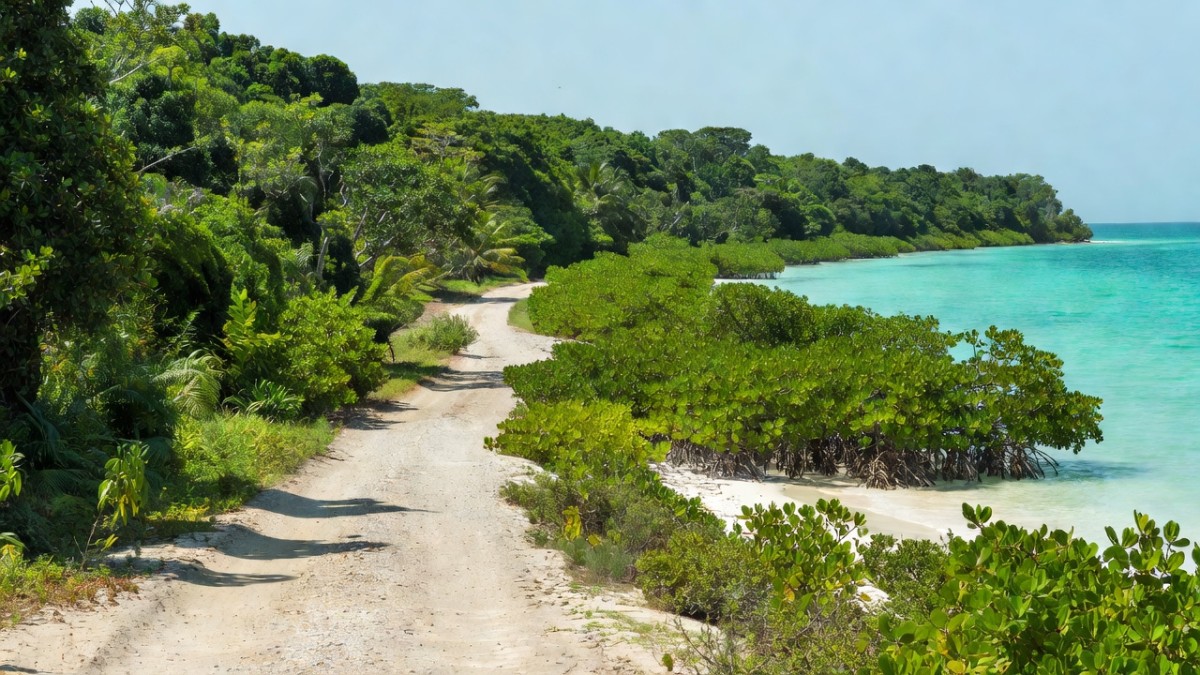
The proposed site sits near the Mesoamerican Reef, the world's second-largest barrier reef system, and within the Mexican Caribbean Biosphere Reserve. Environmental groups cataloged 306 species living in the Mahahual area, 45 of them endangered -- including jaguars, ocelots, sea turtles, manatees and spider monkeys.
The warnings were stark: risks to mangroves, jungle, the aquifer that supplies the town's drinking water, and the coastal ecosystems that sustain both wildlife and the local economy. Mahahual lacks a sewage system entirely. The proposal included a wastewater treatment plant with an injection well -- a method of disposing of treated water underground that raises concerns about aquifer contamination -- and a reverse-osmosis plant with extraction wells and brine disposal.
DMAS alleged that the land-use changes covered properties containing mangrove forests, which are protected under Mexican law. "We cannot ignore the complicity of the municipal government regarding the land-use changes in Mahahual," Morales said.
Greenpeace Mexico warned that the project reflected a wider pattern of tourism and real estate expansion in fragile ecosystems. The organization's petition opposing Perfect Day drew 846,646 signatures, and the wider campaign gathered more than five million petition signatures, according to Mexico News Daily.
The opposition was not limited to environmental groups. High-profile Mexican content creators, including film critic Javier Ibarreche and travel creator Alan Estrada, spoke out against the project. Mexican BTS and Taylor Swift fan networks mobilized their massive social media followings to support the opposition -- an unusual alliance that amplified the local fight into a national conversation.
The Federal Government Steps In -- But the Company Stays
The political tide turned in May 2026. On May 18-19, President Claudia Sheinbaum signaled the decision, and Environment Minister Alicia Bárcena announced that Semarnat -- Mexico's environment ministry -- would not approve the project. The environmental impact authority, DGIRA, had requested additional information in March and later said the company had not adequately shown how significant environmental impacts would be avoided.
On May 19, 2026, Royal Caribbean withdrew its environmental application before Semarnat issued a formal rejection. The move left the cruise giant free to return later with a revised proposal -- a strategic retreat rather than a surrender.
That became clear on July 28, 2026, when Royal Caribbean CEO Jason Liberty told investors on an earnings call that the company was continuing "to develop a tourism destination" in Mahahual. He acknowledged that negotiations with government and community stakeholders would affect the company's previously planned timeline.
The company's persistence is not surprising. Costa Maya is a strategic location for the cruise industry, and the investment was reported at about US $1 billion. But for the residents of Mahahual, the message was clear: the fight is not over.
Other local actors have also come under scrutiny. Mayor Yensunni Martínez Hernández of Othón P. Blanco and the state Sustainable Territorial and Urban Development Secretariat (Sedetus), headed by Alberto Alonso Ovando, were named in DMAS complaints over the legality of the land-use change. Environmental groups Salvemos Mahahual and DMAS pushed for rejection, while Greenpeace staged protests including one at Bellas Artes in Guadalajara.
What to Watch For
The Supreme Court's ruling on the procedural question could have implications far beyond Mahahual. Communities across Mexico face similar pressures from tourism and real estate development in fragile ecosystems. If the court rules that fast-tracked land-use changes can be challenged beyond a 15-day publication window, it would give citizens a powerful new tool to hold local governments accountable.
There is also precedent for hope. A community in Loreto, Baja California Sur, previously stood up to the cruise industry and reversed a presidential decree -- an example that residents' defenders in Mahahual cite as proof that ordinary people can win.
For the families of Mahahual -- the dive operators who depend on the health of the reef, the fishing families whose livelihoods are tied to the sea, the hotel and cruise workers along the Costa Maya coast -- the stakes are deeply personal. This is not an abstract legal debate. It is about whether they get to decide the future of the place they call home.
The Supreme Court has agreed to hear the case. The justices will not decide whether Royal Caribbean can build Perfect Day Mexico. But their ruling on legal procedure could determine whether communities across Mexico have a real chance to challenge development decisions that could permanently change the places where they live.
For now, the residents of Mahahual wait -- and watch -- as the highest court in the land takes up their cause.
This article was produced with AI-assisted research and editorial support. Sources: Mexico News Daily, Riviera Maya News, Eje Central, Reuters, Mexico Business News.
By Rosa Martinez, Staff Writer
What's Your Reaction?
 Like
0
Like
0
 Dislike
0
Dislike
0
 Love
0
Love
0
 Funny
0
Funny
0
 Wow
0
Wow
0
 Sad
0
Sad
0
 Angry
0
Angry
0

Latin America/Andes Correspondent at Global1.News. Based in Bogota, covering politics, environment, energy, and social movements across the Andean region. Passionate about environmental journalism and communities protecting their land.













Comments (0)