
Ontario byelections: Ford's trade-war stance holds for PCs
In a recent CBC News Power & Politics panel, analysts weighed whether the escalating Canada-U.S. trade war had effectively neutralised the Ford government’s recent scandals and propelled the Progressive Conservatives to victory in Thursday’s three Ontario byelections. The results, which left the legislature’s composition essentially unchanged, offered a crucial mid-mandate snapshot of voter sentiment in a province bracing for steel tariffs and economic uncertainty.
In a recent CBC News Power & Politics panel, analysts weighed whether the escalating Canada-U.S. trade war had effectively neutralised the Ford government’s recent scandals and propelled the Progressive Conservatives to victory in Thursday’s three Ontario byelections. The results, which left the legislature’s composition essentially unchanged, offered a crucial mid-mandate snapshot of voter sentiment in a province bracing for steel tariffs and economic uncertainty.
Ontario byelections show Ford's trade-war posture still resonates with voters
Toronto, Ont. — Premier Doug Ford’s Progressive Conservatives successfully defended two of three seats in Thursday’s provincial byelections, while the NDP held its ground in Scarborough Southwest, signalling that the premier’s combative stance against U.S. President Donald Trump remains a potent political asset despite a summer of self-inflicted controversies. The results, delivered against the backdrop of an ongoing trade war and just days after the federal Liberals swept three byelections nationally, suggest that economic anxiety is cutting in Ford’s favour as he positions himself as Ontario’s chief defender against American tariffs.
Riding-by-riding results: A split decision with a status-quo outcome
The Progressive Conservatives held Hamilton East–Stoney Creek, where longtime Hamilton city councillor Jeff Beattie captured nearly 39 per cent of the vote, defeating NDP candidate Monique Taylor, who took 33 per cent. Liberal Heino Doessing finished third with 23 per cent. The riding, which PC cabinet minister Neil Lumsden had wrested from the NDP in 2022, remains in conservative hands following Lumsden’s retirement from the legislature on Aug. 4.
In York–Simcoe, the PCs cruised to a more comfortable victory, with Susan Lahey winning 49.8 per cent of the vote against Liberal Naomi Davison’s 38.8 per cent. Lahey inherits the seat vacated by former Treasury Board president Caroline Mulroney, who resigned in June. The riding has been a conservative stronghold since its creation in 2007, and Thursday’s result did little to disrupt that pattern.
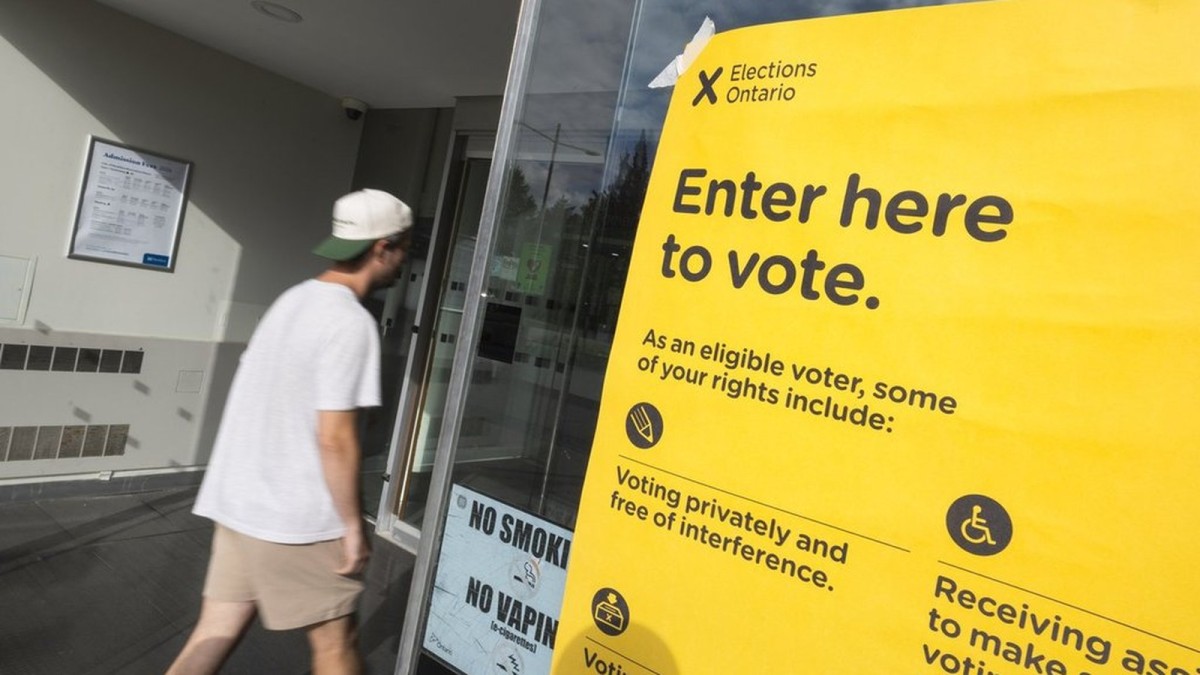
The NDP, meanwhile, held Scarborough Southwest, where Fatima Shaban won with more than 40 per cent of the vote in what emerged as a two-way race between the New Democrats and the Liberals. Shaban, who had lost a federal byelection in the same riding to former NDP deputy leader Doly Begum in April, secured the provincial seat for her party. Voter turnout across all three races was just over 25 per cent, according to Elections Ontario’s unofficial results — a figure that underscores the challenge of generating enthusiasm in off-cycle contests.
The trade-war factor: Ford’s framing resonates in a steel town
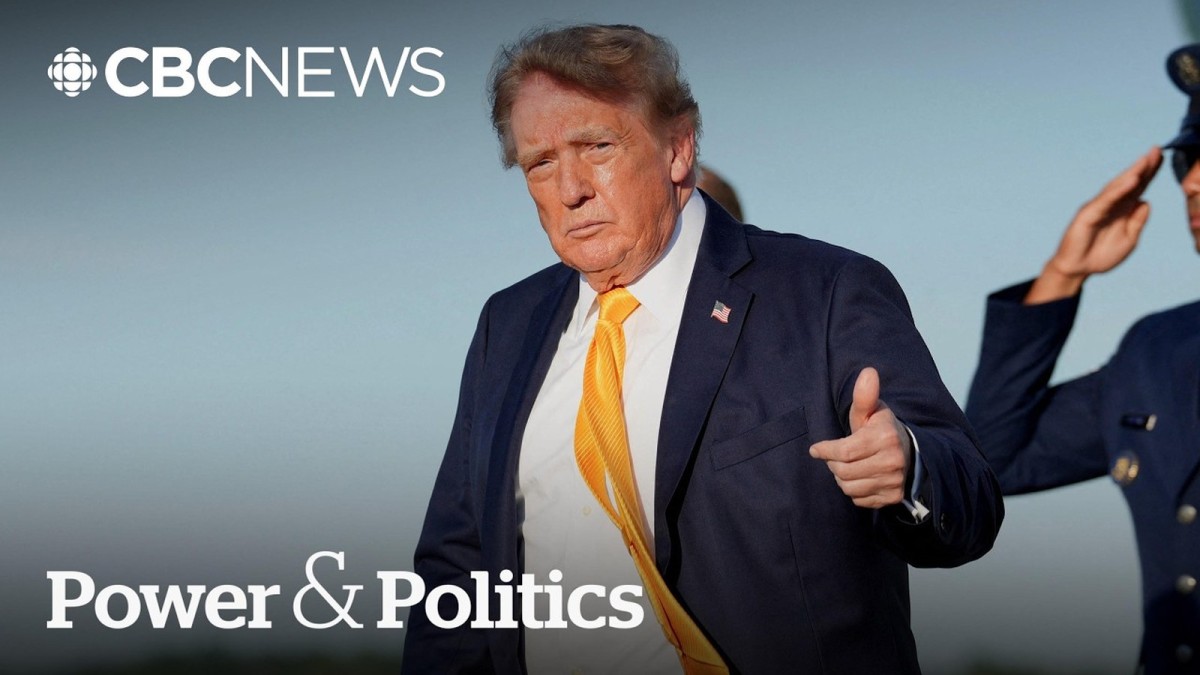
The defining narrative of Thursday’s contests was the Canada-U.S. trade war, and Ford leaned into it heavily. Speaking at Beattie’s campaign party in Hamilton, the premier framed the byelections as a referendum on leadership during economic peril. “We’re going to fight against Donald Trump. We’re going to make sure that we protect people’s jobs, protect their communities and protect them,” Ford said, congratulating his party’s victorious candidates.
Beattie echoed that sentiment, describing his win as “the honour of a lifetime” and acknowledging that voters in his new riding were feeling “incredible anxiety” and “some real fear” over the uncertain relationship with Canada’s largest trading partner. He argued that Ford is “really best suited as the champion of Ontario” during these turbulent times — a message that appears to have landed, particularly in Hamilton East–Stoney Creek, where the impact of steel tariffs is expected to be felt most acutely.
Peter Graefe, a political science professor at McMaster University, said the escalating trade tensions have provided Ford with a political tailwind. “Somewhat naturally, people tend to look for the leader to bring them through tough times, and I think it’s benefiting Doug Ford again in this moment, and maybe particularly in a place like Hamilton East–Stoney Creek where the steel tariffs are going to bite most directly,” Graefe said. He noted that the trade-war focus made it harder for opposition parties to turn the vote into a referendum on other issues, including urban boundary expansion in Hamilton and controversies swirling around the Ford government.
Why the scandals failed to move voters
The Ford government entered Thursday’s byelections carrying significant political baggage. In recent months, the premier faced a public uproar over his decision to purchase a private jet for nearly $29 million — a purchase he reversed days later following intense criticism. More damaging still was the controversy over Toronto-area ministers expensing hotel stays in the city on the public dime, which led to the resignation of Tourism Minister Stan Cho, who had expensed approximately $16,000 in Toronto hotel stays. Several other legislators also repaid expenses, and Ford pledged that caucus members would pay back “every single penny.”
Yet these controversies appeared to have little measurable impact on Thursday’s results. Laryssa Waler, founder and CEO of Henley Strategies and a former director of communications in Ford’s office, argued that the premier’s trade-war posture effectively inoculated his candidates against scandal fatigue. “He’s done a really good job coming off as (doing) the best defending Ontario, it’s sort of his natural sweet spot. And that’s important for voters, especially in Hamilton, to see because it’s a steel town,” Waler said.
The byelection results suggest that voters, at least in the ridings contested, are prioritising economic security over ethical grievances. With the trade war dominating headlines and threatening Ontario’s manufacturing sector, the hotel-expense scandal and the private-jet episode may have receded in voters’ minds — a dynamic that opposition parties will need to confront as they prepare for the next general election.
Scarborough Southwest: Doly Begum’s shadow and the opposition dynamic
The NDP’s hold on Scarborough Southwest carries particular significance given the riding’s recent political history. Doly Begum, the NDP’s deputy leader, resigned her provincial seat in February to defect to the federal Liberals, subsequently winning the federal byelection in the same riding on April 13 — a seat once held by former Liberal minister Bill Blair. Shaban, who ran as the NDP candidate in that April federal contest and lost to Begum, rebounded to capture the provincial seat in September.
NDP Leader Marit Stiles framed the result as evidence of her party’s unique position to challenge Ford’s majority. Speaking at Shaban’s victory party, Stiles declared: “It is more clear than ever before in these three byelections, these historic three byelections, that there is only one party that is going to defeat Doug Ford and the conservatives, and it is the New Democratic Party.”
Shaban, for her part, struck a distinctly affordability-focused tone in her victory remarks. “Today they spoke loud and clear that affordability is a must. It is not an afterthought,” she said, promising voters she would “fight like hell” to make their lives more affordable. The emphasis on cost-of-living pressures reflects a broader concern across Ontario, even as the trade war has come to dominate the political agenda.
What the results mean for Queen’s Park and the opposition parties
Thursday’s outcomes leave the composition of the legislature essentially unchanged, with Ford’s Progressive Conservative majority remaining intact. For the premier, the results provide a measure of validation for his government’s focus on trade-war messaging and his personal brand as a pugilistic defender of Ontario’s economic interests. The PC holds in Hamilton East–Stoney Creek and York–Simcoe suggest that Ford’s approach continues to resonate with voters in both urban-industrial and suburban-rural settings.
For the opposition, the results offer a more complex picture. The NDP can claim a defensive victory in Scarborough Southwest, but the party’s inability to flip Hamilton East–Stoney Creek — a riding it held as recently as 2022 — will be a source of concern. The Liberals, meanwhile, finished a distant third in Hamilton East–Stoney Creek and failed to break through in York–Simcoe, raising questions about the party’s capacity to regain relevance in Ontario outside of select urban strongholds.
Graefe noted that the trade-war environment has made it difficult for opposition parties to gain traction on other files. The controversies around Ford’s government, including the urban boundary expansion in Hamilton, were effectively sidelined by the overriding focus on Trump and tariffs. Whether that dynamic persists will depend on the trajectory of the trade war and the government’s ability to manage its fallout.
What happens next: The fall sitting and the continuing trade war
The byelections arrive at a pivotal moment for Ontario and Canada. They were held just days after federal byelections on Aug. 31, in which the governing federal Liberals swept three seats — Beaches–East York in Ontario, Chicoutimi–Le Fjord in Quebec, and North Vancouver–Capilano in British Columbia. That result, combined with Thursday’s provincial contests, suggests that incumbents and established parties are benefiting from a rally-around-the-flag effect during the trade war, even as voters express deep anxiety about the economic road ahead.
For Ford, the immediate priority will be preparing for the fall sitting of the legislature, where the trade war and its economic consequences are expected to dominate the agenda. The premier’s messaging around protecting jobs and communities will face its stiffest test as the realities of tariffs begin to bite in manufacturing-dependent regions like Hamilton. The government will also need to address lingering questions about expense accountability and the aborted private-jet purchase, issues that opposition parties are unlikely to let fade quietly.
The stakes extend beyond Ontario’s borders. Ford’s posture toward the Trump administration has positioned him as a key voice in federal-provincial relations, often operating in parallel with — and occasionally in tension against — the federal government’s own trade strategy. As the trade war continues, the interplay between Ottawa and Queen’s Park will shape Canada’s overall response, and Thursday’s results suggest that Ford’s approach retains significant public support.
For the opposition parties, the path forward is less certain. The NDP will need to build on its Scarborough Southwest hold while finding a message that can break through the trade-war fog in industrial ridings. The Liberals face an even steeper climb, needing to demonstrate relevance in a province where the two-party dynamic between the PCs and NDP appears increasingly entrenched. With the next general election still on the horizon, Thursday’s byelections offered a glimpse of the political landscape — one where Ford’s trade-war leadership continues to define the terrain, for better or worse.
By Alex Thompson, Staff Writer
This article was produced with AI-assisted research and editorial support. Reporting is based on sources cited in the article.
What's Your Reaction?
 Like
0
Like
0
 Dislike
0
Dislike
0
 Love
0
Love
0
 Funny
0
Funny
0
 Wow
0
Wow
0
 Sad
0
Sad
0
 Angry
0
Angry
0
Canada Correspondent at Global1.News. Based in Toronto, covering Canadian politics, energy, trade, and US-Canada relations. Provides the Canadian perspective on North American and global affairs.










Comments (0)