
I've been stuck on a tiny Pacific island for years and can't get a transit visa to fly home
Ruchira Ranasingha, a 50‑year‑old Sri Lankan who left her home country a decade ago, has been unable to leave the Cook Islands for three years. She moved to Hong Kong to work as a domestic caregiver, looking after the elderly and children, before travelling to New Zealand in December 2022.
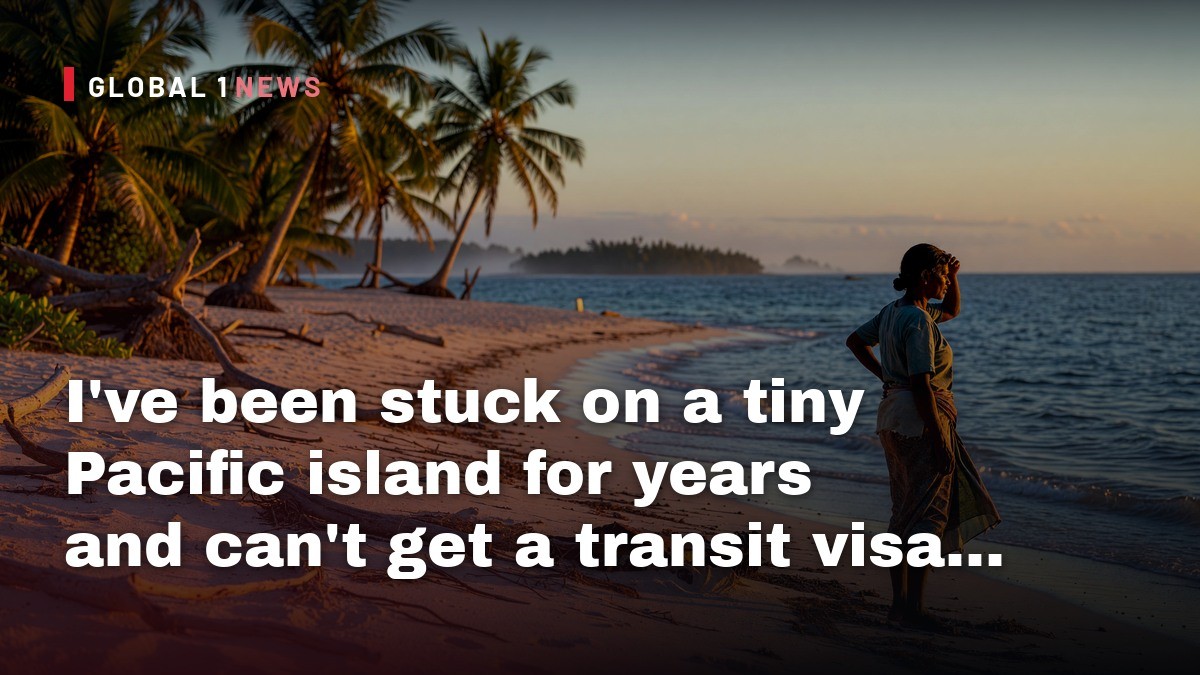
Ruchira Ranasingha, a 50‑year‑old Sri Lankan who left her home country a decade ago, has been unable to leave the Cook Islands for three years. Her case highlights the growing complexity of trans‑Pacific migration pathways, where a combination of asylum claims, visa‑policy rigidity and a market of unregulated immigration advisers can trap individuals in legal limbo. The story, first reported by BBC News Asia, underscores how New Zealand’s strict transit‑visa rules intersect with Australia’s parallel refusals, leaving a woman who once ran a small T‑shirt factory stranded on a remote archipelago.
From a Sri Lankan factory to a Cook Islands hotel
Ranasingha’s journey began in 2018 when she was forced to close her modest T‑shirt business in Sri Lanka after a loss of business and mounting loan repayments. She moved to Hong Kong to work as a domestic caregiver, looking after the elderly and children, before travelling to New Zealand in December 2022. There she stayed with a cousin on a two‑month visitor visa. As that visa neared expiry, an immigration interpreter assisted her in applying for asylum, citing threats from lenders back home.
New Zealand granted her an “open work visa” for asylum seekers, allowing employment with almost any employer for a year. She secured a restaurant job, which later offered to sponsor an employment visa that she hoped would provide longer‑term stability. However, asylum seekers are generally barred from applying for other visas while their claims are processed, and her employment‑visa request was declined.
The ill‑advised overseas application
Ranasingha turned to a private firm, Immigration & Secretarial Services, whose manager, Sylviane Gallant, promised to initiate a fresh employment‑visa application from overseas. Email correspondence obtained by the BBC shows Gallant stating she would act once Ranasingha left New Zealand. Acting on this advice, Ranasingha booked a short stay in the Cook Islands while the overseas application was prepared.
The overseas application was also rejected, and by leaving New Zealand she breached the conditions of her existing asylum‑linked visa. New Zealand officials subsequently made clear they would not grant her any future visas, effectively closing the door on her attempt to regularise her status from abroad.
Transit‑visa refusals compound the stalemate
With her New Zealand visa void, Ranasingha sought a transit visa that would allow her to fly home to Sri Lanka. She applied three times for a New Zealand transit visa and four times for an Australian transit visa; each application was rejected. New Zealand’s refusals cited doubts about her genuine intention to transit, noting that she had previously made an asylum claim asserting danger in Sri Lanka.
Alternative routes through Tahiti (French Polynesia) and Hawaii (USA) also proved unviable. Both jurisdictions required biometric data to be collected in person in New Zealand, a step that was impossible without a transit visa. Consequently, Ranasingha’s latest New Zealand application, which detailed her son’s upcoming wedding and her mother’s deteriorating health, was also denied.
Human impact amid bureaucratic gridlock
The prolonged ordeal has taken a heavy toll on Ranasingha’s wellbeing. She describes herself as “scared something is going to happen to me” and reports that the stress is affecting her health. Her son’s wedding in November and her mother’s frequent hospital visits are cited as urgent personal reasons for leaving the islands.
Despite the hardships, the Cook Islands community has extended modest support. The hotel where she resides has allowed her to stay in staff accommodation free of charge, and a director provided a sewing machine that enables her to earn a small income. Local residents have also offered food and clothing, reflecting a degree of hospitality that contrasts sharply with the administrative barriers she faces.
Legal analysis of the visa impasse
Immigration law specialist Alastair McClymont, based in Auckland, explains that New Zealand’s refusal to issue a transit visa stems from the perception that Ranasingha lacks a genuine intention to depart for Sri Lanka after having claimed asylum. He notes that New Zealand coordinates closely with Australia, which has mirrored the transit‑visa refusals, and that France and the United States are likely to adopt a similar stance given the biometric‑data requirement.
McClymont also points to the broader issue of unregulated immigration consultants. He characterises the advice Ranasingha received from Immigration & Secretarial Services as “terrible” and suggests that the firm’s fees—amounting to thousands of New Zealand dollars—were extracted without a full understanding of the risks involved. The case illustrates how vulnerable migrants can be misled by entities that are not bona‑fide legal practitioners.
Policy implications and possible avenues forward
The Ranasingha episode raises questions about the adequacy of current transit‑visa policies in the Pacific region. While New Zealand’s caution reflects legitimate security concerns, the blanket refusals leave little room for humanitarian exceptions, even in cases where the individual has no criminal record and faces genuine health and family emergencies.
Potential policy adjustments could include a more nuanced assessment of transit‑visa applications from asylum seekers who have demonstrated compliance with local laws and who present compelling humanitarian grounds. Introducing a limited, time‑bound transit permit that obliges the holder to depart the next flight could balance security with compassion. Until such reforms are considered, individuals like Ranasingha remain caught in a legal limbo, reliant on the goodwill of distant island communities while awaiting a resolution that may never arrive.
This article was produced with AI-assisted research and editorial support. Reporting is based on the source material cited below. Sources: BBC News Asia; bbc.co.uk; Global1.News (02 November 2026).
By Kenji Tanaka, Staff Writer
What's Your Reaction?
 Like
0
 Dislike
0
 Love
0
 Funny
0
 Wow
0
 Sad
0
 Angry
0

Japan Correspondent at Global1.News. Tokyo-based voice covering Japanese politics, technology, economy, and culture. Tracks the intersection of tradition and innovation in one of the world's most dynamic societies.














Comments (0)