
Ángel Aguirre Trial Ordered in Ayotzinapa 43 Case
Former Guerrero Governor Ángel Aguirre has been ordered to stand trial for his alleged role in the 2014 disappearance of 43 students from the Ayotzinapa Rural Teachers College. Judge Mario Elizondo Martínez cites evidence that video footage was concealed and destroyed. The families of the 43 continue to demand truth.
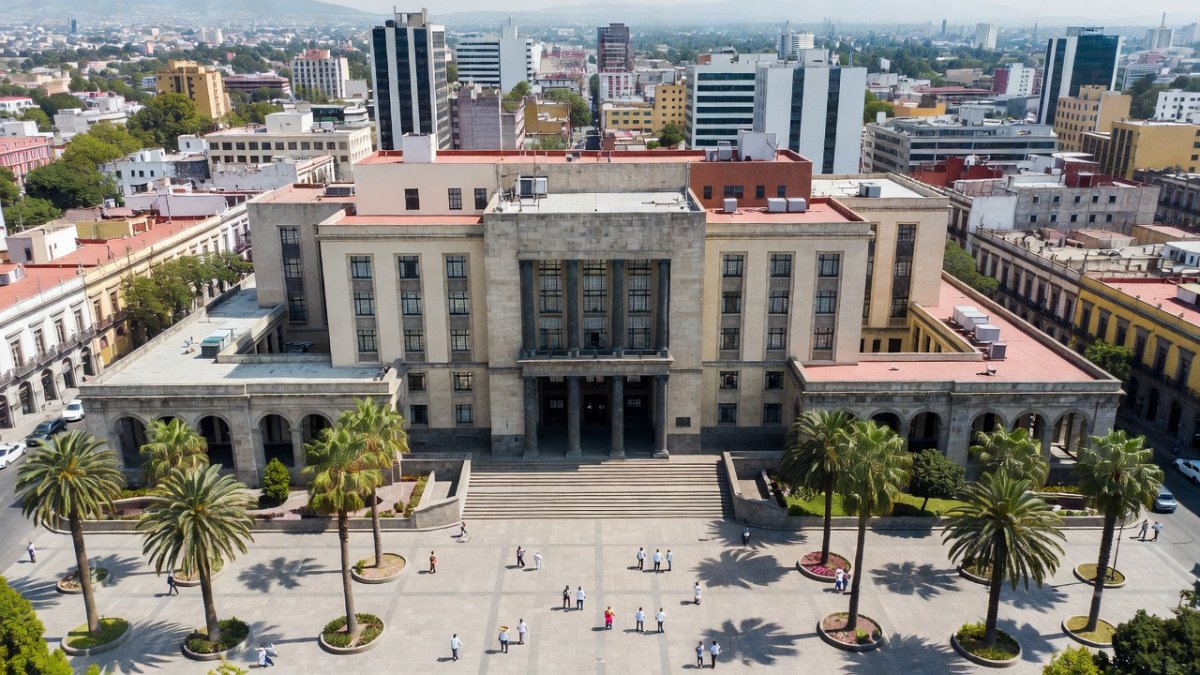
A Long-Awaited Day in Court for Ayotzinapa
The sun had not yet risen over the State of Mexico when a judge’s gavel fell, sending a tremor through the political and social fabric of the nation. After a marathon 15-hour hearing that stretched from Tuesday into the early hours of Wednesday, a federal judge ordered former Guerrero Governor Ángel Aguirre to stand trial for his alleged involvement in the 2014 disappearance of 43 students from the Ayotzinapa Rural Teachers College. For the families who have spent over a decade demanding truth, this was not just a legal procedure; it was a crack in the wall of impunity that has surrounded one of Mexico’s darkest chapters.
The ruling, delivered by Mario Elizondo Martínez, a pre-trial judge at the Altiplano federal prison in México state, marks a significant escalation in a case that has haunted the nation since the night of September 26, 2014. Aguirre, who governed Guerrero from 2011 until his resignation roughly a month after the students vanished in Iguala, was arrested just last week in México state. He now faces charges of enforced disappearance, a crime that carries a potential sentence of up to 60 years in prison if he is convicted.
For the families of the 43—who have camped out in the Zócalo, marched through the streets of Chilpancingo, and carried the faces of their sons on banners for years—this order to proceed to trial is a bittersweet victory. It acknowledges that the highest levels of state power may have been complicit in the erasure of evidence, but it does not bring their children home. The remains of only three of the 43 young men have ever been found, leaving 40 families still waiting for answers that may never come.
The Allegations: A Governor and a Missing Disk
At the heart of the FGR’s case against Aguirre is a specific, damning allegation: that he ordered the concealment and destruction of security camera video footage from the State Palace of Justice in Iguala. That footage, captured on the night the students were stopped by police, reportedly showed armed individuals forcing the young men to transfer from one bus to another, which then fled in an unknown direction. According to the newspaper La Jornada, the Federal Attorney General’s Office believes this footage “contained fundamental evidence for identifying who was on board the bus and the route they took to flee Iguala.”
The timeline of the alleged cover-up is precise. On September 29, 2014, at 8:30 p.m., a former official of the Guerrero Superior Court of Justice, Blanca María del Rocío Estrada Ortega, told authorities she stole a disk containing the Iguala video footage from the office of Lambertina Galeana Marín, the former president of the Guerrero Superior Court of Justice. Estrada claims she then handed that disk directly to Aguirre. From there, the FGR alleges, Aguirre passed the footage to former Guerrero Attorney General Iñaki Blanco with orders for it to be destroyed.
The FGR’s accusation goes further, suggesting a motive rooted in family ties. According to La Jornada, the accusation against Aguirre is “based on testimonies from two witnesses who allege that the governor... ordered that all evidence of what happened on the night of September 26 [2014] be destroyed mainly because his nephew, Ernesto Aguirre, who served as his adviser, was aware of what happened to the Ayotzinapa students from the very beginning, since he had ties to the Guerreros Unidos criminal group.” This connection, if proven, would place the former governor not just as a passive observer but as an active participant in a coordinated effort to bury the truth.
The Defense: An Alibi and 31 Pieces of Evidence
In the courtroom, the defense mounted a vigorous challenge. Aguirre’s lawyers argued that their client, now 70 years old, was not even in Guerrero at the time he is alleged to have received the footage. They presented an alibi: on the evening of September 29, 2014, Aguirre was traveling back to Chilpancingo, the state capital, after attending a meeting in Mexico City with then Interior Minister Miguel Ángel Osorio Chong. To support this claim, the defense presented 31 pieces of evidence, including what they described as documentation of the governor’s movements that day.
But the judge was not persuaded. In its statement, the FGR said that Elizondo Martínez determined “the arguments presented were not objective and failed to prove that Ángel ‘N’ was not in the state of Guerrero, as was claimed in an attempt to exonerate him from the events.” The judge’s ruling was grounded in the standards of the National Code of Criminal Procedure, which at this pre-trial stage requires only that there is a “likelihood that the crime was committed,” not proof beyond a reasonable doubt. That higher bar is reserved for the trial itself, where both the prosecution and the defense will have the opportunity to present their full cases.
For legal analysts, this is a crucial distinction. The order to stand trial does not mean Aguirre is guilty; it means the FGR has presented enough evidence to justify moving forward. The judge has allocated a period of four months for prosecutors to continue their investigation and for the defense to prepare its case. This means the earliest Aguirre could actually face trial is in December, a timeline that will keep the families of the 43 in a state of anxious limbo for the rest of the year.
Witnesses and the Weight of Testimony
The case against Aguirre rests heavily on the testimony of two protected witnesses, both of whom have come forward in recent months to corroborate the existence and fate of the video footage. Attorney General Ernestina Godoy has been explicit about the timeline of these revelations. In January, she said, a cooperating witness provided testimony that “confirmed the existence of the video recordings” captured by the security cameras outside the Palace of Justice in Iguala. That witness identified the person who “removed” the recordings in order to “deliver them directly” to Aguirre.
Then, in May, a second protected witness strengthened the case. Godoy stated that this witness declared Aguirre “ordered, in a meeting with top officials from his government,” the concealment of “any evidence related to the events that occurred in the vicinity of the Iguala Palace of Justice.” The two witnesses referenced are Lambertina Galeana Marín, the former president of the Guerrero Superior Court of Justice, and Blanca María del Rocío Estrada Ortega, the former official who allegedly stole the disk from Galeana’s office.
The testimony of Estrada is particularly damning because it provides a direct chain of custody for the evidence. She has told authorities that she took the disk on September 29, 2014, and handed it to Aguirre at 8:30 p.m. that very evening. If her testimony holds up under cross-examination, it would place the former governor at the center of the alleged cover-up, receiving the most critical piece of evidence in the case and then ordering its destruction. The FGR’s statement emphasized that Aguirre’s probable involvement lies in his role as a public servant who “concealed highly relevant information related to the investigation into the disappearance of the 43 students.”
A Nation’s Wound Reopened
The Ayotzinapa case is not just a legal matter; it is a national trauma that has shaped Mexico’s political landscape for over a decade. The disappearance of the 43 students sparked outrage in Mexico and around the world, triggering large protests in Mexico City and across the country. It was a major blight on the 2012-18 presidency of Enrique Peña Nieto, who survived widespread calls for his removal from office but whose legacy remains permanently stained by the case. The students, who had commandeered buses to travel to a protest in Mexico City, were stopped by police in Iguala and allegedly handed over to members of the Guerreros Unidos crime gang. All 43 young men were presumably murdered, although the remains of just three have been found.
The arrest of Aguirre is one of the most prominent detentions in connection with the case, but it is far from the first. Scores of people have been arrested, including soldiers, police, and former Attorney General Jesús Murillo Karam. Yet no one has been convicted of the crime, and some suspects have been released from prison. This pattern of arrests followed by releases or stalled trials has fueled deep skepticism among the families and human rights organizations about the willingness of the Mexican justice system to deliver accountability. The fact that a former governor is now facing trial is a significant departure from that pattern, but it also raises the stakes: if Aguirre is acquitted, it could deal a devastating blow to the families’ already fragile trust in the system.
In a 2023 report, the previous federal government led by former President Andrés Manuel López Obrador outlined three “possible reasons” for the abduction of the students, one of which was “the possible presence of drugs, weapons or money” on the buses the students had commandeered. This official acknowledgment of alternative theories, while controversial, has kept the case in the public eye. Now, under the administration of President Claudia Sheinbaum, the FGR under Attorney General Godoy has taken a more aggressive stance, reexamining the case and pursuing charges against high-level officials like Aguirre.
What This Means for Guerrero and the Families
For the people of Guerrero, a state already burdened by violence, poverty, and a long history of state repression, this trial is a moment of reckoning. The Ayotzinapa students came from rural, often indigenous and marginalized communities. They were training to become teachers in some of the poorest schools in Mexico, and their disappearance was a brutal reminder of the vulnerability of those who dare to demand their rights. The fact that their own governor is now accused of covering up their disappearance resonates deeply in the colonias and pueblos of the state, where trust in public institutions is already fragile.
The families of the 43 have been unwavering in their demand for justice, but they have also been clear that a trial against Aguirre is not the end of their struggle. They want to know what happened to their sons. They want the remains of the 40 who have not been found. They want the full truth about the roles played by the army, the police, and the federal government. The trial of Aguirre may provide some of those answers, but it will not bring their children back. Their demand, repeated for more than a decade in marches across the country, has remained unchanged: not revenge, but the truth — and an answer to where their children are.
For now, Aguirre remains in preventive detention at the Altiplano prison, the same maximum-security facility that has housed some of Mexico’s most notorious criminals. The four-month investigation period will be critical. Prosecutors will have the opportunity to gather more evidence, potentially including testimony from other former officials who may have been involved in the alleged cover-up. The defense, meanwhile, will continue to press its alibi and challenge the credibility of the witnesses. The trial, when it comes, will be watched closely not just in Mexico but around the world, as a test of whether the country can finally deliver justice for the 43.
Tags: Ángel Aguirre, Ayotzinapa, 43 students, Guerrero, enforced disappearance, FGR, Ernestina Godoy, Iguala, trial, justice, Mexico, human rights
By Rosa Martinez, Staff Writer
This article was produced with AI-assisted research and editorial support. Sources: Mexico News Daily, La Jornada, El Economista, Reforma, Infobae, MVS Noticias and statements from the Federal Attorney General's Office (FGR).
What's Your Reaction?
 Like
0
Like
0
 Dislike
0
Dislike
0
 Love
0
Love
0
 Funny
0
Funny
0
 Wow
0
Wow
0
 Sad
0
Sad
0
 Angry
0
Angry
0
Latin America/Andes Correspondent at Global1.News. Based in Bogota, covering politics, environment, energy, and social movements across the Andean region. Passionate about environmental journalism and communities protecting their land.











Comments (0)