
Trump weighs new Iran strikes as Hamas signals readiness to disarm
The latest developments in the Middle East underscore the intertwined challenges of Iranian regional activities, energy route security, and efforts to resolve the Gaza conflict through a US-brokered framework.
The latest developments in the Middle East underscore the intertwined challenges of Iranian regional activities, energy route security, and efforts to resolve the Gaza conflict through a US-brokered framework. President Donald Trump’s administration has signaled readiness for further military action against Iran while Hamas has indicated willingness to disarm under specific conditions tied to Palestinian statehood. These moves occur against a backdrop of Sunni-Shia geopolitical competition and Gulf state concerns over shipping lanes vital to global energy supplies.
Trump Weighs New Iran Strikes as Hamas Signals Readiness to Disarm
Washington/Cairo - The White House warned Friday that President Donald Trump is considering additional military strikes on Iran as Washington steps up pressure on Tehran to reopen the Strait of Hormuz and comply with a cease-fire agreement that unraveled shortly after it was reached last month.
White House Warning and US Posture
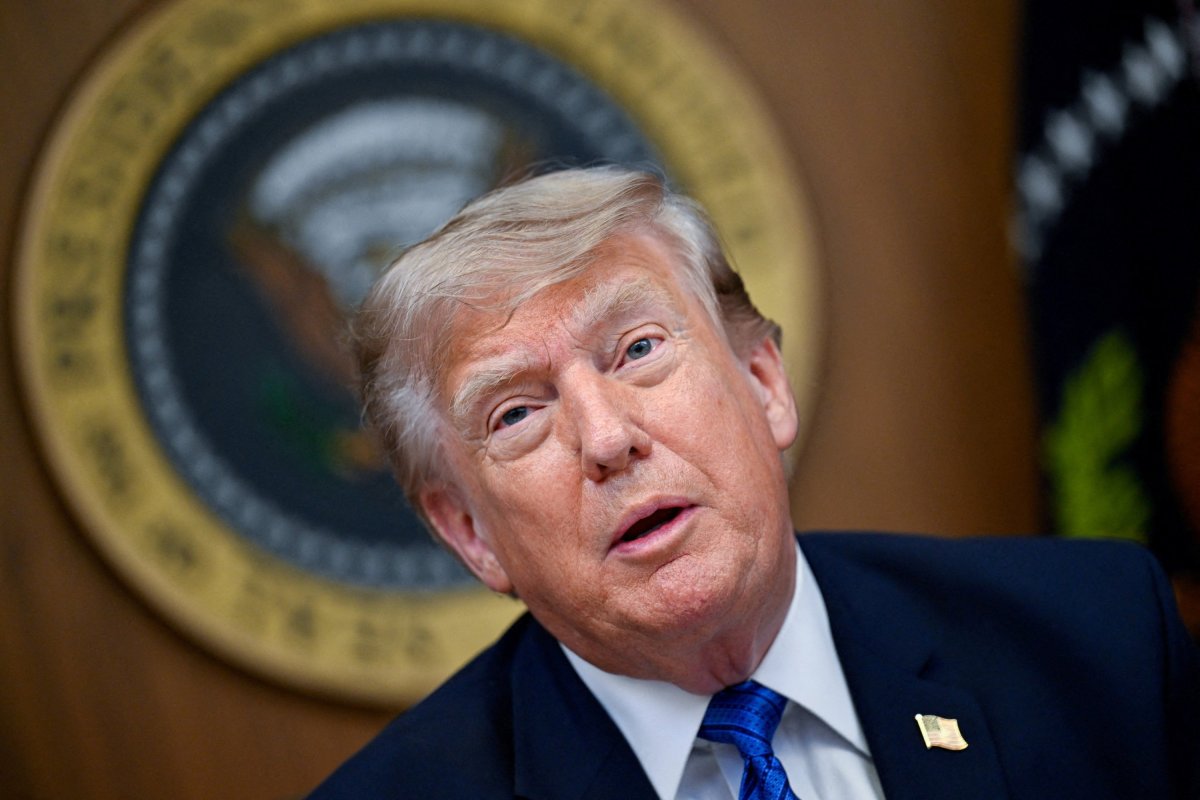
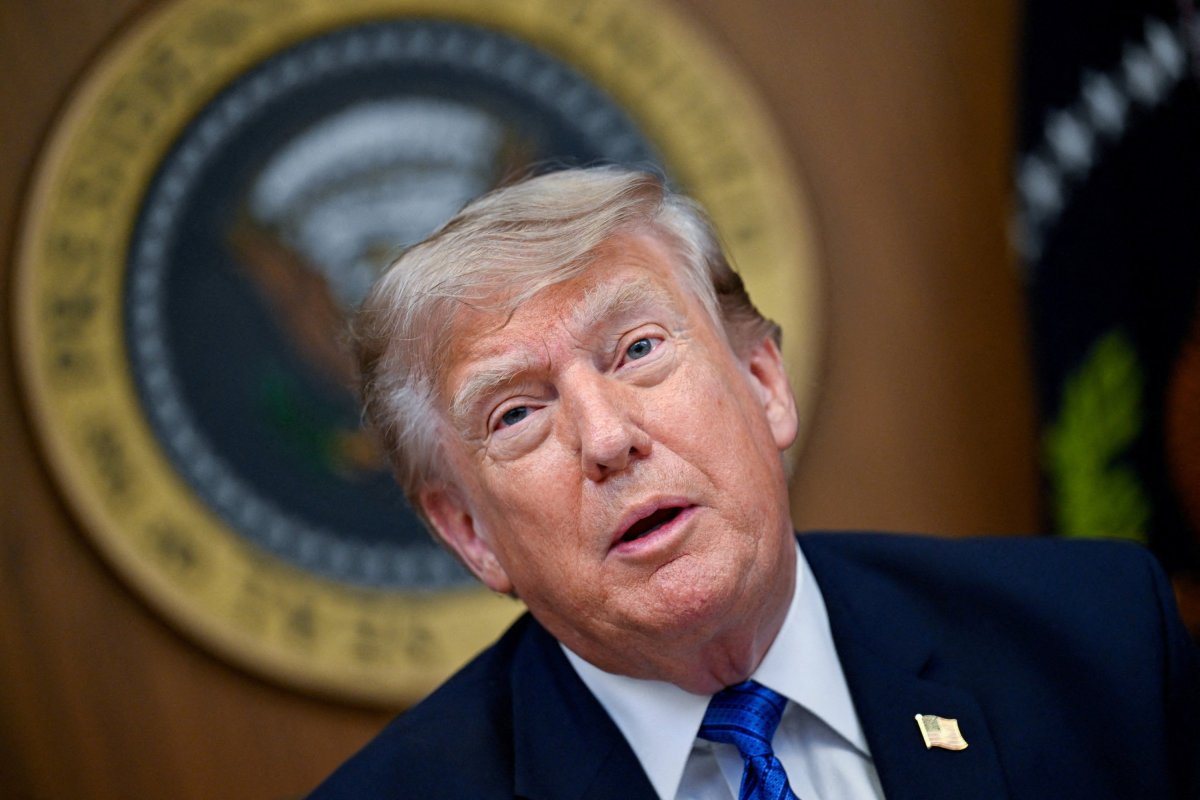
White House press secretary Karoline Leavitt accused Iran of violating the truce by attacking commercial shipping and killing American service members after agreeing to a memorandum of understanding with the United States. "President Trump is not going to stand by and allow this terrorist behavior to occur," Leavitt said Friday. "Iran will continue to pay until they come to the table in what President Trump deems a meaningful way." Trump echoed that message earlier in the day during a Cabinet meeting at Camp David, saying the U.S. campaign against Iran is likely to continue. "We just want to win," Trump told reporters. "We'll be hitting them very hard. At some point they're going to say, 'We just can't take it anymore.'" This posture reflects Washington’s strategic calculus of maintaining leverage through sustained pressure rather than immediate full-scale confrontation.
The reference to an earlier memorandum of understanding between Washington and Tehran frames the current standoff as a direct breach of negotiated commitments, with Leavitt’s statement that Iran will continue to pay signaling a deliberate choice to sustain calibrated military and economic pressure rather than seek immediate de-escalation. Trump’s remarks at Camp David about hitting Iran hard until it concedes underscore a maximum-pressure approach that treats incremental strikes as leverage to force compliance on Hormuz access and cease-fire terms, avoiding the binary of full-scale war while testing Tehran’s tolerance for attrition.
Strait of Hormuz Energy Dimension
The continued disruption has intensified concerns over global energy supplies as the strategic waterway remains heavily affected by the ongoing conflict. Iran’s paramilitary Revolutionary Guard claimed responsibility for striking two oil tankers attempting to pass through the Strait of Hormuz, one of the world’s most important shipping lanes for crude oil and natural gas. Iranian media added that four additional tankers turned back, though it offered no details about the vessels, their ownership or possible casualties. The waterway’s vulnerability directly impacts Gulf state economic diversification plans and broader OPEC+ dynamics, as any prolonged closure risks sharp spikes in oil prices that could affect importers worldwide.
The Revolutionary Guard’s strikes on two tankers and the reported turn-back of four others directly threaten the strait’s role as a critical chokepoint for crude and natural gas flows, amplifying global supply concerns at a time when any sustained disruption could drive price volatility for importers reliant on Gulf exports. Kuwait’s interception of retaliatory drones targeting its U.S.-hosted facilities illustrates how energy-route coercion extends to neighboring Gulf states, raising insurance costs for shippers and complicating OPEC+ efforts to manage spare capacity amid heightened regional risk.
Iran's Regional Escalation: Kuwait Drones and Tanker Attacks
Kuwait’s Defense Ministry said its armed forces intercepted Iranian drones that entered Kuwaiti airspace after targeting several military facilities. Officials said falling debris caused material damage but no casualties. The ministry did not disclose how many drones were shot down. Iranian state media said the drone strikes targeted an air base in Kuwait in retaliation for U.S. attacks carried out a day earlier. Kuwait hosts American military forces and remains a key U.S. ally in the Gulf. Iran’s Revolutionary Guard also claimed responsibility for the tanker strikes in the Strait of Hormuz. These actions illustrate Tehran’s use of proxy networks and direct retaliation to counter U.S. and allied pressure across multiple fronts.
Hamas Disarmament Announcement and Its Conditions
Amid the regional tensions, Hamas announced what could become a major diplomatic breakthrough by confirming it is prepared to begin disarming under a proposed agreement backed by the United States. The group said it would first surrender lighter weapons, while the handover of its heavier arsenal would depend on the establishment of an independent Palestinian state, a condition firmly rejected by Israel’s current government. U.N. Secretary-General Antonio Guterres welcomed Hamas’ announcement, describing it as the only encouraging development in a region gripped by escalating violence. He urged all parties to fully implement the agreement without attempts to weaken or undermine it.
Hamas’s offer to surrender lighter weapons first while conditioning heavier arsenal handover on Palestinian statehood reflects a phased strategy aimed at preserving core military capabilities until political guarantees materialize, a position that directly clashes with Israel’s insistence on complete disarmament prior to any withdrawal. Guterres’s description of the announcement as the sole encouraging development highlights the UN’s interest in sequencing concessions to revive the U.S.-backed process, though the statehood precondition remains a flashpoint that could stall implementation without additional mediation from regional actors.
Broader US-Brokered Cease-Fire Framework
The proposed disarmament forms part of a broader U.S.-brokered cease-fire framework first announced last October. Under the plan, Hamas would surrender its weapons and transfer governing authority in Gaza to an independent Palestinian administration. In return, Israel would withdraw its forces, while an international stabilization mission would oversee security. Implementation of the agreement has repeatedly stalled, with Israel insisting Hamas must fully disarm before any withdrawal, while Hamas has accused Israel of violating cease-fire commitments through continued military operations. The framework’s repeated setbacks highlight the leverage each side holds and the difficulty of sequencing security guarantees with political concessions.
The October framework’s repeated stalls trace back to the original Oct. 7, 2023 Hamas incursion that killed about 1,200 Israelis and took 251 hostages, after which Israel’s campaign produced more than 73,000 Palestinian deaths according to Gaza’s Health Ministry, creating a cycle of accusations where each side cites the other’s violations to justify non-compliance. The proposed international stabilization mission is intended to bridge the gap between Hamas’s demand for phased disarmament and Israel’s requirement for full weapons surrender before force withdrawal, yet the pattern of collapsed truces since the war’s outset suggests that sequencing security and political steps remains the central obstacle.
Gaza War Toll and Humanitarian Context
The war began after Hamas’ Oct. 7, 2023 incursion into southern Israel, killing about 1,200 people and taking 251 hostages. Israel’s military campaign in Gaza has since killed more than 73,000 Palestinians, according to Gaza’s Health Ministry, a figure that includes casualties recorded after previous cease-fire efforts collapsed. Israeli airstrikes hit several areas across the territory Friday, killing at least one Palestinian and injuring at least four others, including a child, according to nearby hospitals. The Israeli military did not immediately comment on the strikes. These numbers underscore the humanitarian stakes that continue to shape international diplomacy and Arab public opinion.
Regional Implications for the Gulf, Energy Markets, and Diplomacy
The convergence of U.S. military signaling, Iranian actions in Kuwaiti airspace and the Strait of Hormuz, and Hamas’s conditional disarmament offer creates second-order effects across the region. Gulf states such as Kuwait face direct spillover risks from Iranian drone operations, testing their balancing act between U.S. security partnerships and avoidance of wider conflict. Energy markets remain exposed to Hormuz disruptions, potentially influencing OPEC+ production decisions and diversification timelines for Saudi Arabia and the UAE. On the diplomatic front, the U.S. framework’s survival depends on whether Hamas’s phased disarmament can bridge gaps with Israeli demands, while Iran’s proxy posture continues to complicate Sunni-Shia dynamics and Arab-Israeli normalization efforts under the Abraham Accords. Great power competition adds another layer, as sustained U.S. pressure on Iran intersects with Chinese and Russian interests in stable energy flows and regional influence. The coming weeks will test whether these pressures produce meaningful de-escalation or further fragmentation.
The interplay between sustained U.S. pressure on Iran over Hormuz and Kuwaiti airspace and the parallel Gaza disarmament track creates overlapping risks of miscalculation, as Iranian retaliation could draw Gulf states deeper into the conflict while Hamas’s conditional offer tests whether the October framework can still anchor diplomacy. Kuwait’s balancing act between its U.S. alliance and avoidance of wider confrontation, alongside energy-market exposure for Asian importers and Gulf producers, will likely determine whether the coming weeks produce incremental de-escalation or further spillover across Sunni-Shia and Arab-Israeli fault lines.
By Malik Hassan, Staff Writer
This article was produced with AI-assisted research and editorial support. Reporting is based on sources cited in the article.
What's Your Reaction?
 Like
0
Like
0
 Dislike
0
Dislike
0
 Love
0
Love
0
 Funny
0
Funny
0
 Wow
0
Wow
0
 Sad
0
Sad
0
 Angry
0
Angry
0

Middle East Correspondent at Global1.News. Based in Beirut, covering politics, conflict, energy, and society across the Middle East. Brings context and depth to a region often reduced to headlines.











Comments (0)