
Taiwan Should Be Kept Off the Negotiating Table
In the wake of the recent China‑U.S. summit, analysts of Korean foreign policy circles are scrutinizing the subtle yet consequential shift in Washington’s stance on Taiwan—a shift that, while not overtly articulated, bears implications for the security architecture of Northeast Asia.
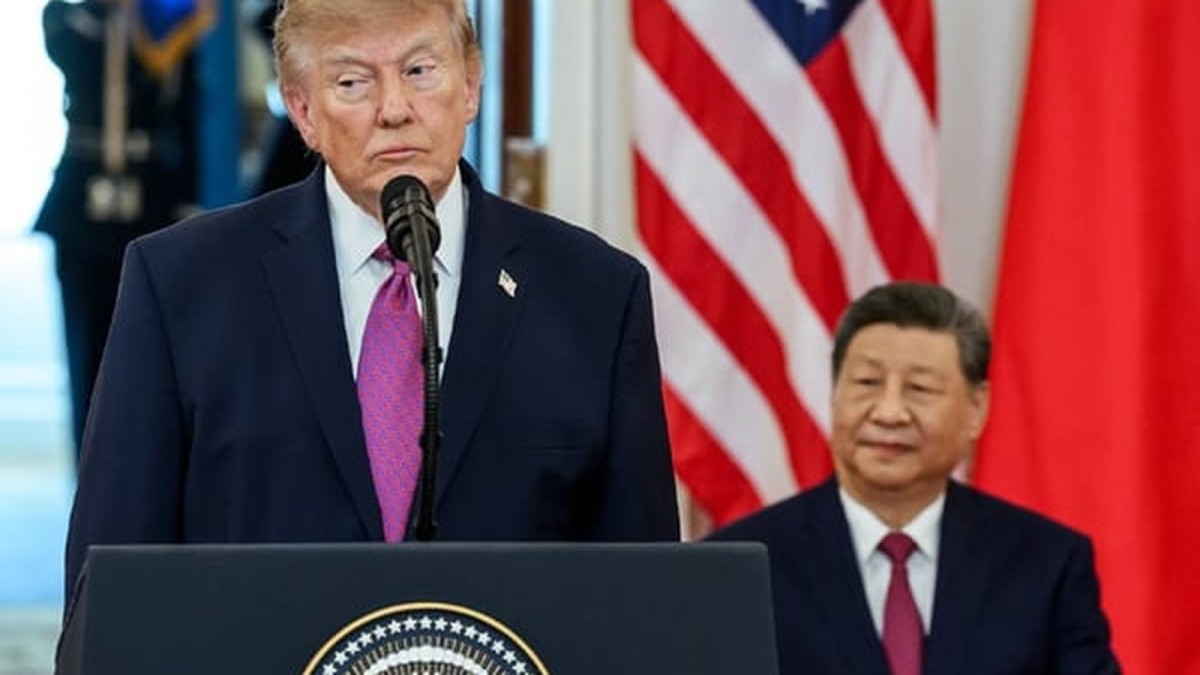
In the wake of the recent China‑U.S. summit, analysts of Korean foreign policy circles are scrutinizing the subtle yet consequential shift in Washington’s stance on Taiwan—a shift that, while not overtly articulated, bears implications for the security architecture of Northeast Asia. The summit, held in early October 2026, produced a modest trade truce and dialogue on artificial intelligence, but, as The Diplomat reported on 29 September 2026, it also marked the culmination of a series of unilateral concessions by President Donald Trump that have moved the United States closer to Beijing’s preferred equilibrium on the Taiwan question.
From Reagan to Trump: The Evolution of U.S. Taiwan Policy
The historical anchor of America’s Taiwan policy is the 1979 Taiwan Relations Act (TRA), which obligates Washington to provide defensive arms to the island “based solely upon” its security needs. President Ronald Reagan famously affirmed this commitment in 1982, explicitly refusing to consult Beijing on arms sales. By contrast, President Trump, as documented in February 2026, openly discussed prospective arms sales with President Xi Jinping—a practice not seen since Reagan’s era. This dialogue, reported by The Diplomat, signaled a departure from the long‑standing “no‑consultation” norm and introduced the notion of Taiwan as a “negotiating chip.”
In May 2026, Trump labeled a $14 billion arms package as such a chip, and later, on his return flight from the summit, he reiterated that the sales had again been a topic of conversation with Xi. Although the package remained unsigned, its very framing as leverage in bilateral talks marks a substantive shift away from the TRA’s principle of autonomous decision‑making. The Korean Ministry of Foreign Affairs (MOFA) has long monitored these developments, noting that any erosion of U.S. resolve reverberates across the regional security calculus, especially for Seoul’s own deterrent posture.
The Summit’s Immediate Outcomes and Their Symbolic Weight
The October summit produced a renewed trade truce and a shared interest in artificial intelligence, yet, as The Diplomat emphasizes, it yielded “nothing of substance” regarding Taiwan. The absence of a new agreement, however, is itself a strategic signal: by refraining from further concessions, Trump allowed Beijing to “bank the new status quo” that he had already created earlier in the year. This tacit acceptance of a lower‑intensity stance—holding the line without expanding it—has been interpreted by Korean think tanks such as the Asan Institute for Policy Studies as a quiet win for China, because it normalizes a reduced U.S. commitment without overtly breaking the TRA framework.
For South Korea, which relies on the U.S. security umbrella against North Korean aggression, the perception that Washington’s guarantees can be treated as bargaining chips raises concerns about the durability of allied assurances. The Korea Development Institute (KDI) has warned that “hedging” behavior among allies could undermine the cohesion of the U.S.–Japan–South Korea trilateral security architecture, a concern echoed in recent policy briefs from the Korea Institute for International Economic Policy (KIEP).
Domestic Pressures Shaping Trump’s Taiwan Calculus
The Diplomat notes that Trump entered the summit amid soaring inflation, a protracted war with Iran, and dwindling approval ratings ahead of the 2026 midterms. These domestic pressures created an incentive to secure a symbolic “win” that could be touted to a restless electorate. Yet, rather than offering additional concessions on Taiwan, Trump opted for a restrained approach, allowing the status quo to persist. This decision, while seemingly modest, nonetheless altered the baseline from which future U.S.–China negotiations will proceed, as it signaled a willingness to accept a lower‑intensity engagement on the Taiwan issue.
Korean analysts view this as a classic case of domestic politics influencing foreign policy outcomes—a pattern observed in previous administrations. The Ministry of Education (MOE) has incorporated case studies of such dynamics into its curriculum on diplomatic history, underscoring how internal economic and electoral concerns can reshape a nation’s external posture, with ripple effects across the region.
Implications for Regional Security Alliances
One of the most consequential ramifications of Trump’s approach is the potential erosion of confidence among U.S. allies. The Diplomat argues that the perception of U.S. promises as “negotiable” could prompt Japan and South Korea to recalibrate their own security strategies, possibly seeking greater self‑reliance or diversifying partnerships. In Seoul, the Ministry of National Defense has already begun contingency planning for scenarios where U.S. support may be less predictable, a process documented in internal briefing papers circulated to senior officials.
Furthermore, the upcoming APEC summit in Shenzhen (November 2026) and the G20 in Miami (December 2026) will provide additional venues for Xi to test Trump’s resolve. Korean diplomatic corps, represented by senior officials at both forums, will be closely watching whether the United States maintains a consistent line or yields further to Beijing’s pressure. Any perceived wavering could embolden China to press harder on other regional flashpoints, such as the East China Sea dispute with Japan or the maritime claims in the South China Sea, where Korean fishing interests are also at stake.
The Taiwanese Perspective and Domestic Politics
Public opinion in Taiwan remains a crucial variable. The Diplomat cites a poll indicating that 85 percent of Taiwanese favor the status quo, effectively endorsing de facto independence while avoiding formal declaration. This domestic consensus reinforces Taiwan’s demand for a clear U.S. commitment that does not hinge on diplomatic bargaining. Korean scholars of comparative politics note that Taiwan’s democratic resilience offers a model for how small states can leverage popular legitimacy to secure external support, a lesson that informs Seoul’s own democratic consolidation efforts.
From a policy standpoint, the TRA’s language—mandating arms sales “based solely upon” Taiwan’s needs—remains unaltered. The Diplomat’s analysis stresses that consulting Beijing about such sales is “difficult to square with the law.” Korean legal scholars, referencing Korea’s own constitutional provisions on treaty obligations, argue that adherence to established legal frameworks is essential for maintaining credibility in the international system.
Pathways Forward: Reasserting Legal and Strategic Consistency
Given the nuanced shift outlined above, the corrective measure advocated by The Diplomat is straightforward: the U.S. president should publicly reaffirm that Washington’s Taiwan policy has not changed and should sign the pending arms package. For Korean policymakers, this recommendation carries weight because a clear U.S. stance would reinforce the credibility of the broader security architecture that underpins the Korean Peninsula’s stability. The Ministry of Foreign Affairs, in coordination with the Ministry of National Defense, is likely to issue joint statements emphasizing the importance of upholding the TRA as a cornerstone of regional order.
In addition, Korean think tanks such as the Asan Institute and KDI are expected to produce policy briefs urging Washington to avoid “quiet concessions” that can be interpreted as tacit acquiescence to Beijing. By foregrounding the legal continuity of the TRA and the strategic necessity of a firm U.S. line, these institutions aim to shape the narrative in upcoming multilateral venues, including the APEC and G20 summits.
Looking Ahead: The Strategic Landscape in 2027 and Beyond
As the year draws to a close, the trajectory set by the October 2026 summit will influence the diplomatic calculus of 2027. If President Trump—or his successor—maintains a consistent, law‑based approach to Taiwan, the regional equilibrium may stabilize, allowing Korean policymakers to focus on other priorities such as North Korean denuclearization and economic integration within the Indo‑Pacific. Conversely, any further dilution of U.S. commitments could accelerate a shift toward “hedging” among allies, prompting Seoul to deepen its own defense capabilities and seek alternative security partnerships, perhaps with Australia or the European Union.
In sum, the subtle re‑orientation of U.S. Taiwan policy, as detailed by The Diplomat, underscores the interconnectedness of domestic politics, bilateral negotiations, and regional security dynamics. For Korea, the imperative is clear: monitor the evolving U.S.–China dialogue, reinforce the legal foundations of allied commitments, and prepare contingencies that safeguard the peninsula’s stability regardless of how the Taiwan question is ultimately resolved.
This article was produced with AI-assisted research and editorial support. Reporting is based on the source material cited below. Sources: The Diplomat; thediplomat.com; Global1.News (03 October 2026).
By Prof. David Park, Staff Writer
What's Your Reaction?
 Like
0
Like
0
 Dislike
0
Dislike
0
 Love
0
Love
0
 Funny
0
Funny
0
 Wow
0
Wow
0
 Sad
0
Sad
0
 Angry
0
Angry
0
East Asia/Technology Correspondent at Global1.News. Seoul-based voice covering Korean politics, technology, business, and culture. Analyzes how technology and geopolitics intersect across East Asia.













Comments (0)